You know that sinking feeling. You are two weeks away from a major product launch. You open your email and type the same message you have sent ten times before: "Hi, any update on my container?" You hit send. You wait. Hours pass. You refresh your inbox. Nothing. You cannot plan your warehouse staffing. You cannot confirm your marketing calendar. You cannot tell your retail buyers an accurate in-stock date. Your entire business is waiting on an email reply that may or may not come today. That feeling of helplessness is the cost of blind shipping.
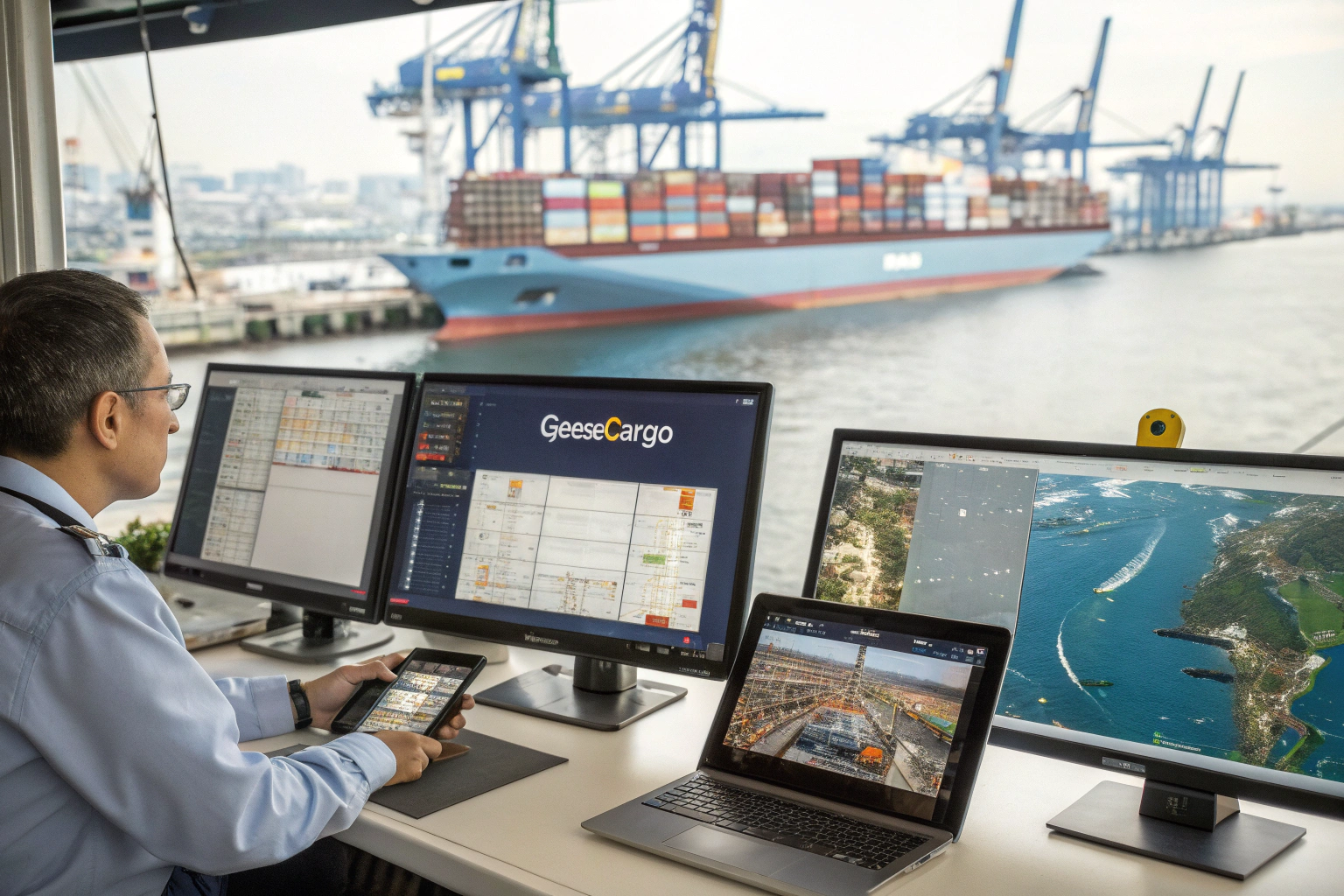
GeeseCargo’s real-time cargo tracking transforms your import operations from reactive guesswork into proactive management. We provide live GPS tracking on every ocean container, automated milestone updates pushed to your phone and inbox, a visual dashboard that shows exactly where your goods are at every moment, and predictive ETAs that update dynamically based on actual vessel speed and port conditions. You stop chasing information and start making decisions based on real data. The black hole between "departed China" and "arrived at destination port" disappears.
Real-time tracking is not a luxury feature. It is the central nervous system of a modern supply chain. When you know where your goods are, you can manage your inventory, your cash flow, and your customer promises with precision. When you do not know, you are forced to build expensive buffer stock, pad your delivery promises, and manage by panic. I want to show you exactly how our tracking system works, what data you get, and how that data changes the way you run your business.
How Does GeeseCargo’s Container GPS Tracking Actually Work?
You imagine a GPS tracker as something you stick on a package. You wonder how it works on a metal container in the middle of the ocean, far from cell towers. You have seen "tracking" from other forwarders that just shows the vessel’s position, not your container’s. You want to know if our tracking is real container-level tracking or just vessel tracking repackaged with a marketing label.
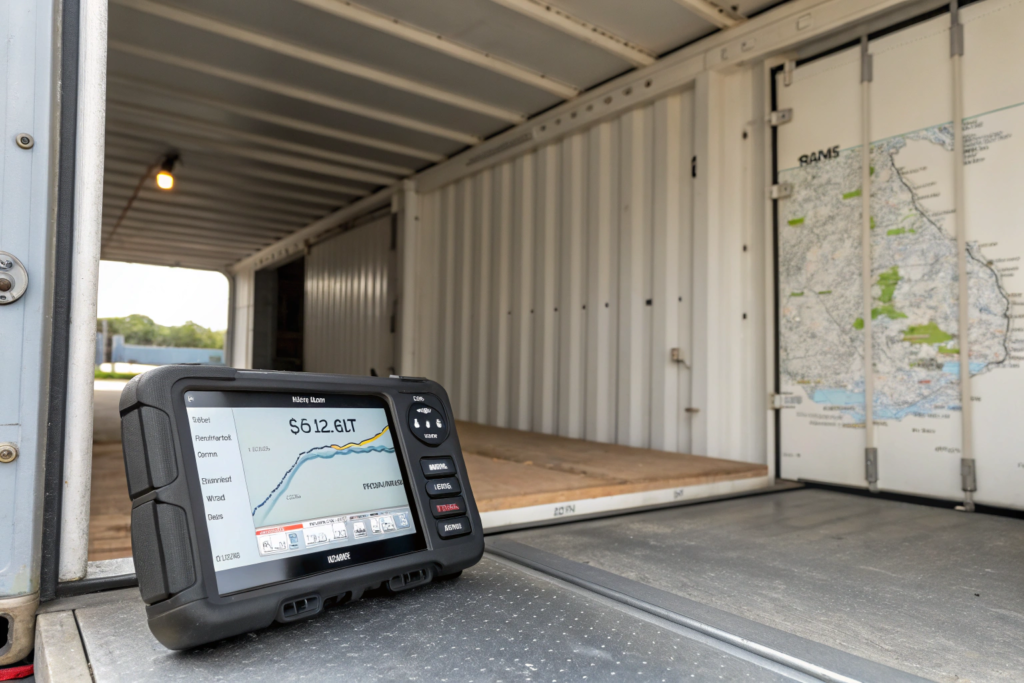
Our container GPS tracking uses physical satellite trackers placed inside your container at the origin warehouse. The tracker is a rugged, battery-powered device that reports its precise GPS location, along with temperature, humidity, and shock data, via satellite and cellular networks. It transmits an update every few hours while at sea and every few minutes while on the road. You see your container’s exact location on a map, not just the vessel’s general position. You also receive alerts if the container experiences a physical shock, if the temperature exceeds your set thresholds, or if the container deviates from its planned route. This is container-level, not vessel-level, visibility.
The distinction between vessel tracking and container tracking is critical. Most forwarders offer vessel tracking. They give you the vessel name and you look it up on a marine traffic website. That shows you where the ship is. It does not tell you if your container is actually on that ship. It does not tell you if the container was accidentally offloaded at the wrong port. It does not tell you if the container is sitting in a terminal stack or moving on a truck. Vessel tracking is better than nothing, but it is not real container visibility.
Our trackers are placed inside the container, on the door or on the ceiling, after loading is complete and before the doors are sealed. The device is magnetically mounted and tamper-resistant. It uses a combination of GPS satellites for location, low-earth-orbit satellites for data transmission when cellular networks are unavailable at sea, and cellular networks for high-frequency updates on land. The battery life exceeds 60 days, covering the entire door-to-door journey from China to the US interior. When the container arrives at your warehouse, you remove the tracker and return it to us in a pre-paid envelope. The tracker is reused on future shipments. The data from every journey feeds into our AI models to improve our predictive ETAs.
You access the tracking data through your client portal or our mobile app. The map shows your container’s position with a pin. The pin moves as the container moves. You can see the history trail showing the entire journey so far. You see the last reported time, the current speed, and the estimated arrival at the next milestone. You also see the environmental data: the internal temperature, the humidity level, and any shock events. If the temperature inside the container spikes above 30 degrees Celsius, you get an alert. If the container experiences a shock above a certain G-force, you get an alert. This is the level of visibility that transforms how you manage your supply chain.
What Data Points Does the GPS Tracker Provide?
You think tracking just means a dot on a map. The dot is useful, but the surrounding data is what enables you to make operational decisions.
The tracker provides ten key data points. Geographic coordinates giving you latitude and longitude. Speed over ground, telling you how fast the container is moving. Heading direction. Timestamp of the last report. Internal temperature in degrees Celsius. Internal relative humidity percentage. Shock events with the magnitude and time of the impact. Geofence alerts, notifying you when the container enters or leaves a defined area, such as a port or a warehouse zone. Battery level of the tracker. And the signal source, whether it is using GPS, satellite, or cellular. This data stream is available in real-time. You do not wait for a daily batch update.
How Does the Tracking Data Integrate with Your Operations?
You receive a tracking link. You click it and see a map. That is useful for your peace of mind. But you need the data to flow into your business systems so your team can act on it without manually checking a website.
Our tracking data integrates with your operations through automated notifications and API access. You can set notification triggers in your portal. "Alert me when the container departs the origin port." "Alert me when the container arrives at the destination port." "Alert me when the container is within 50 miles of my warehouse." These triggers send an email and a push notification to your phone. You can also share a read-only tracking link with your warehouse manager, your retail buyer, or your customer. They see the container’s location without needing a login. For larger clients with their own ERP or inventory management systems, we provide an API that pushes tracking data directly into your system. Your inventory planning software knows the container is two days away and adjusts the stock projection automatically.
How Do Real-Time Milestone Updates Eliminate the "Black Hole"?
The "black hole" is the period between the container leaving the Chinese port and arriving at the US port. In traditional freight forwarding, this is a two-to-four-week information void. You know it left. You hope it arrives on time. You have no data in between. You manage your business on hope.
We replace the black hole with a series of automated milestone updates. The milestones are triggered by a combination of our GPS tracker data, carrier EDI messages, and terminal event notifications. The milestones include: goods collected, arrived at origin warehouse, export customs cleared, container gated at port, vessel departed, vessel at sea, vessel approaching destination, vessel arrived, container discharged, import customs cleared, out for delivery, and delivered. Each milestone triggers an email, a portal update, and an optional push notification. You move from hoping to knowing.
The psychological difference between hope and knowledge is enormous. When you hope your shipment is on schedule, you are anxious. You make conservative decisions. You hold extra buffer stock just in case. You do not commit to launch dates. You do not run promotions because you might not have inventory. When you know your shipment is on schedule, you are confident. You run your business with precision. You reduce your safety stock because you know exactly when the new stock will arrive. You commit to marketing campaigns. You tell your retail buyers a firm in-stock date. The milestone updates transform your entire operational posture from defensive to offensive.
Each milestone update includes more than just the status. It includes the date and time the milestone was achieved, the location where it occurred, and the next expected milestone with its estimated date. You see the journey as a series of completed steps, not a single uncertain event. If a milestone is delayed, you know immediately. The system compares the actual milestone date against the planned date. A delay is highlighted in yellow. A critical delay that jeopardizes your delivery ETA is highlighted in red. You are not surprised at the end of the journey. You are informed at every step.

What Happens When a Milestone Is Missed or Delayed?
Your planned vessel departure was Tuesday. Tuesday comes and goes. The status still says "Waiting for vessel departure." In the old model, you would not know about this delay until you asked. By then, days have passed, and your options have narrowed.
Our system detects a missed milestone within hours of the scheduled window passing. The system sends an alert to your account manager. Your account manager investigates the cause. Did the factory deliver the container late to the terminal? Did the vessel omit the port call? Was the booking rolled? Your account manager updates you with the reason and the new expected milestone date. You know about the delay on the day it happens, not a week later. This early warning gives you time to react. You can expedite the inland delivery to recover some time. You can adjust your launch date. You can communicate proactively to your customers.
Can You Customize the Milestones You Receive?
You care deeply about customs clearance status. You care less about the vessel’s mid-ocean position. You want alerts for the milestones that matter to your specific role and skip the rest.
Our notification settings are fully customizable. In your portal, you choose which milestones trigger an email, which trigger a push notification, and which you only see when you log in. You can also set quiet hours during which notifications are held. You can add additional recipients for specific milestones. Your warehouse manager receives the "out for delivery" notification but not the export clearance notification. Your finance team receives the "delivered" notification with the POD attached. You control the flow of information to your team.
How Does Predictive ETA Technology Change Your Inventory Planning?
Your forwarder gives you an ETA of "March 20th." You plan your warehouse receiving for March 20th. March 20th arrives. The container is not there. The forwarder says, "It was an estimate. The vessel was delayed." The word "estimate" just cost you a day of idle warehouse labor and a day of missed sales.
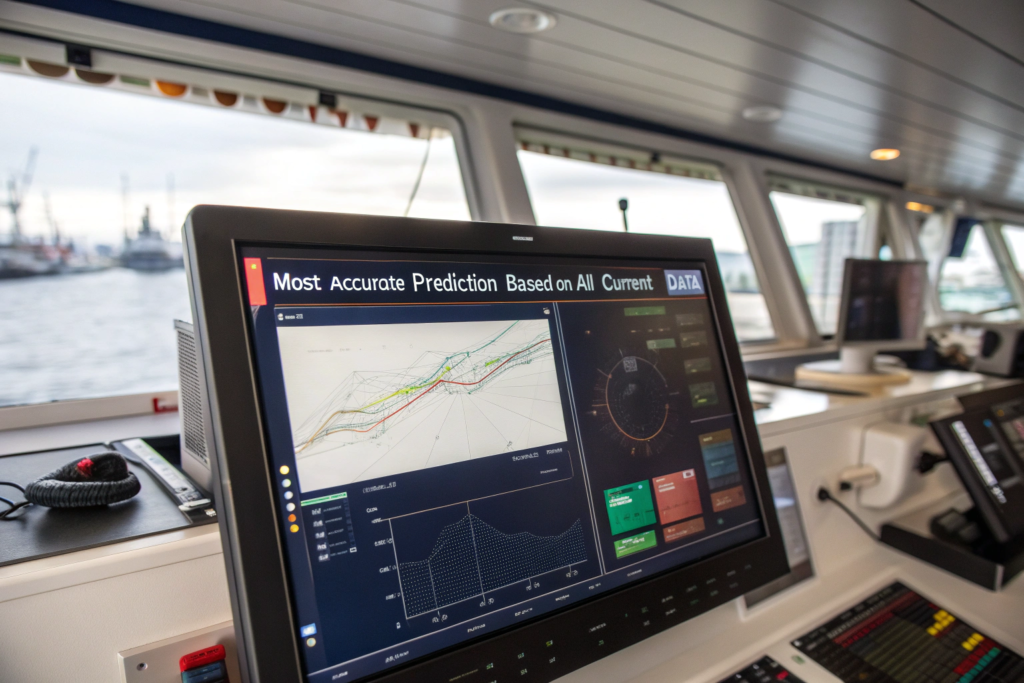
Our predictive ETA is not a static estimate made at the time of booking. It is a dynamic, algorithmically calculated arrival time that updates daily based on the vessel’s actual position, speed, weather conditions, port congestion levels, and historical performance on that route. The ETA displayed in your portal today is the most accurate prediction available based on all current data. As the vessel gets closer, the prediction narrows to a specific day, then a specific time window. You plan with increasing precision as the delivery approaches.
Traditional ETAs are static. The forwarder gives you a date at booking. That date is based on the carrier’s published transit time. It does not account for port congestion, weather, vessel speed adjustments, or any other dynamic factor. The ETA remains unchanged in the forwarder’s system even as reality diverges. You only find out the ETA was wrong when the container fails to arrive.
Our predictive ETA engine pulls data from multiple sources. The vessel’s actual position and speed from our GPS tracker and AIS data. The scheduled port arrival and berth availability from the terminal systems. The current port congestion metrics from the Marine Exchange. The historical transit time performance of that specific vessel and that specific route. The weather forecast along the remaining route. The algorithm weighs all these factors and produces an updated ETA. The ETA is recalculated daily. You see the current ETA and the confidence interval. Fourteen days out, the confidence interval might be plus or minus two days. Three days out, it narrows to plus or minus twelve hours. The day before delivery, you have a two-hour delivery window. This progressive precision allows you to schedule warehouse labor, book receiving appointments, and plan your inventory cutover with confidence.
How Accurate Is the Predictive ETA Compared to Traditional Methods?
You have been burned by inaccurate ETAs before. You are skeptical that any forwarder’s estimate can be trusted. You want hard numbers on accuracy.
Our predictive ETA system has a measured accuracy of over 90% within a one-day window for ocean shipments when measured three days before arrival. Traditional static ETAs have an accuracy of approximately 60% to 70% within the same window. The improvement comes from the dynamic recalculation. A traditional ETA issued 30 days before arrival is essentially a guess. Our ETA recalculates daily, incorporating the vessel’s actual progress. The accuracy improves every day as the vessel gets closer. For air freight shipments, the accuracy is even higher because the transit is shorter and less subject to major disruptions.
How Does Predictive ETA Help You Reduce Safety Stock?
You hold an extra two weeks of inventory because you cannot trust the delivery date. That extra inventory ties up cash, occupies warehouse space, and risks obsolescence. It is a tax on uncertainty.
When your ETA is reliable, you can reduce your safety stock. If you know with 90% confidence that your container will arrive between March 18th and March 20th, you can set your reorder point to trigger when you have seven days of stock remaining, not twenty-one days. The difference is two weeks of inventory that you no longer need to hold. For a business with $100,000 in average inventory, reducing safety stock by two weeks frees up approximately $50,000 in cash. This cash can be reinvested in new products, marketing, or simply held as a stronger cash reserve. The ROI of reliable tracking is not just peace of mind. It is measurable in freed-up working capital.
How Does Tracking Visibility Improve Your Customer and Partner Relationships?
Your retail buyer calls and asks, "When is the shipment arriving? We need to plan the floor set." You look at the old email from your forwarder that says "ETA March 20th." You repeat that date, but your voice wavers because you are not confident. The buyer hears your uncertainty and loses trust in your reliability as a supplier.
With real-time tracking, you never guess at an ETA. You open your portal, see the current predicted arrival date with the confidence interval, and give your buyer a data-backed answer. You can even share a read-only tracking view with the buyer so they can see the progress for themselves. You move from being a supplier who is always "checking on it" to a supplier who has instant, accurate answers. This builds trust and sets you apart from competitors who are still managing by email and guesswork.
Transparency with partners is a competitive advantage. Most importers are vague about delivery dates because they are themselves in the dark. When you can provide a specific, data-backed ETA and share the tracking to prove it, you are not just delivering goods. You are delivering reliability. Your retail buyer can plan their staffing, their shelf space, and their promotions around your delivery. Your 3PL can schedule receiving labor precisely. Your marketing team can set a launch date and commit advertising spend with confidence. The visibility flows outward from you to your entire ecosystem.
This transparency is particularly powerful when there is a delay. Delays happen in global shipping. The difference is whether you communicate the delay proactively or reactively. With our tracking, you know about the delay the day it occurs. You call your buyer immediately and say, "The vessel was delayed by port congestion in Busan. The new ETA is March 23rd. Here is the tracking link so you can follow along." The buyer is not happy about the delay, but they trust you because you told them early and gave them the data. Compare that to the buyer calling you on March 20th asking where the goods are, and you having no answer. One builds trust. The other destroys it.

Can You Share Tracking Access with Your Warehouse or 3PL?
Your 3PL emails you every other day asking for container ETAs. You are the middleman, forwarding tracking updates you receive from the forwarder. It is a wasteful information relay.
You can generate a shared tracking link from your portal. The link provides a read-only view of your container’s location and ETA. You send this link to your 3PL, your warehouse manager, or your retail buyer. They can check the status anytime without needing a login or sending you an email. You are removed from the information relay. The 3PL sees the ETA update in real-time and adjusts their receiving schedule accordingly.
How Do You Use Tracking Data in Your Own Customer Communications?
You run an e-commerce brand. You have a product on pre-order. Your customers are asking when it will ship. You are currently telling them a vague "sometime next month" because you do not know when the container will arrive.
With the container ETA known, you can communicate a specific ship date to your customers. Your product page can display "Ships week of March 22nd" instead of "Ships in March." Specificity increases conversion rates on pre-orders. When the container clears customs and is out for delivery, you can trigger an automated email to your pre-order customers: "Your order has arrived at our warehouse and will ship within 48 hours." The tracking data feeds your customer communication automation. Your customers experience a brand that has its supply chain under control.
Conclusion
Real-time cargo tracking is not a technology feature. It is a strategic capability that changes how you run your import business. When you know where your goods are, when you know exactly when they will arrive, and when you know immediately if something goes wrong, you operate from a position of control rather than a position of anxiety.
At GeeseCargo, we built our tracking infrastructure to provide container-level visibility, not just vessel-level estimates. Our GPS trackers report live location, temperature, humidity, and shock data from the container door. Our milestone system updates you automatically at every key stage of the journey. Our predictive ETA engine gives you a dynamic, increasingly accurate arrival time. Our sharing tools let you extend that visibility to your partners and customers.
The result is not just fewer emails asking "where is my container?" The result is lower safety stock, more confident launch planning, stronger retail buyer relationships, and a supply chain that is a competitive advantage rather than a source of constant worry. You stop chasing information and start running your business.
If you are tired of the black hole and ready for real visibility, go to GeeseCargo.com and request a demo of our tracking platform. I will show you a live container on the map and walk you through the data you will have for your own shipments. See the difference between hoping and knowing.