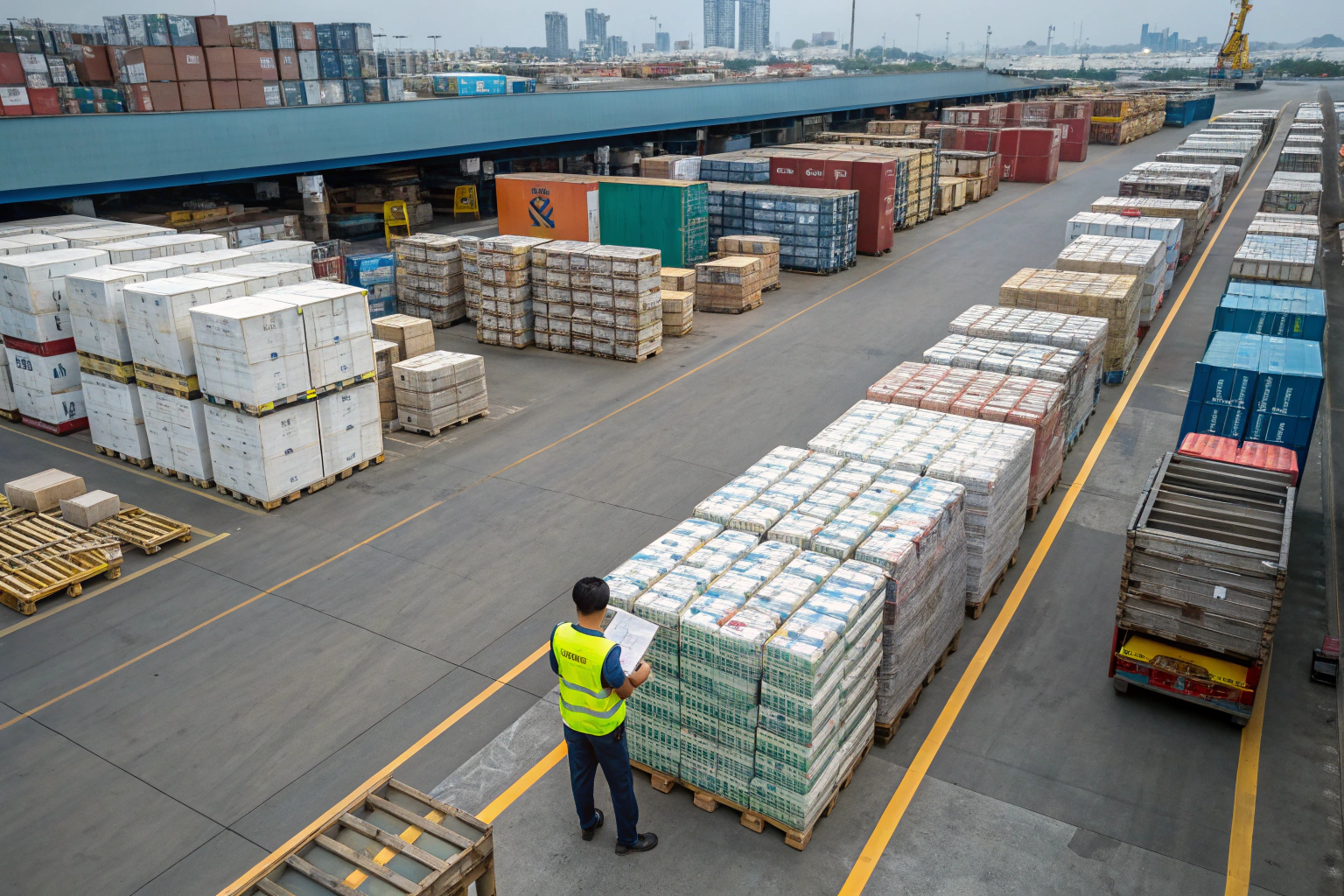
You finally landed a big-box retailer order. 50,000 units of kitchen gadgets, 20,000 units of storage bins, and 15,000 units of seasonal decor. The purchase order is the biggest you have ever signed. Then you start doing the math on the freight. Twenty different SKUs spread across four factories in three different Chinese provinces. Your previous forwarder quoted you a price per container, but they have no plan for consolidating the cargo, no timeline that guarantees the sailing date, and no answer when you ask how they will prevent a container from being "rolled" at the port.
At GeeseCargo, we ship large quantities of consumer goods efficiently by using a hub-and-spoke consolidation model. Your goods from multiple factories are collected, sorted, and cross-docked at our central warehouse in Shenzhen. We then build full container loads optimized by weight and volume, book guaranteed vessel space using our annual carrier allocations, clear customs in advance, and ship on a fixed-day weekly sailing schedule. You get a predictable, repeatable pipeline that turns chaotic multi-factory production into a steady flow of inventory.
Efficiency in high-volume shipping is not just about speed. It is about eliminating the hidden waiting times that accumulate between production and delivery. Every day a container sits idle at a factory, at a port, or at a cross-dock is a day of inventory carrying cost. When you are shipping 50,000 units, those idle days compound into real money. I want to walk you through the physical and digital system we built specifically to handle large-scale consumer goods shipments without dropping a single box.
How Do You Consolidate Consumer Goods from Multiple Chinese Factories?
You have one factory in Yiwu making plastic storage containers, another in Shantou making toys, and a third in Guangzhou making gift wrap. Each factory has 10 pallets ready. None of them have a full container load. You are stuck with three LCL shipments that will travel at different speeds, arrive at different times, and incur three separate destination handling fees. Your warehouse team will hate you.
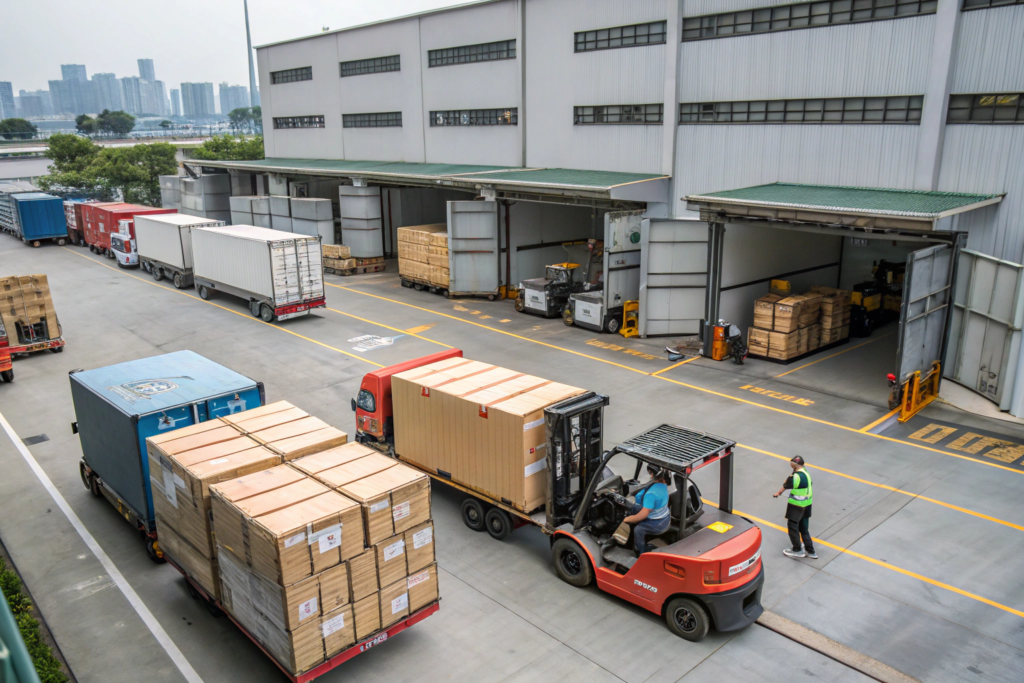
We consolidate by operating a central cross-dock warehouse in Shenzhen. Our own trucks or contracted carriers pick up the partial loads from each factory on a coordinated schedule. All goods arrive at our warehouse within the same 48-hour window. Our team then sorts by SKU, builds full container loads, and stuffs the container using a load plan that maximizes cube utilization. The container departs as a single FCL shipment on a direct vessel. You pay one FCL rate instead of three LCL rates with higher per-unit costs.
The inefficiency of LCL for high-volume consumer goods is something I see sellers discover the hard way. Let me give you a real cost comparison. A client was shipping 12 cubic meters of plastic bins from Yiwu and 18 cubic meters of toys from Shantou. Two separate LCL shipments. The LCL rate was $85 per cubic meter. The total ocean freight was $2,550. But he also paid origin CFS fees twice, destination CFS fees twice, and trucking from two different CFS warehouses to his 3PL. The total landed cost was over $4,200. We combined both lots into one 30-cubic-meter FCL container. The FCL rate was $2,800 all-in to the destination port. The single container was discharged and trucked directly to his warehouse without any CFS handling. He saved over $1,400 and received his goods three days faster.
Our consolidation process starts with a pickup schedule. We map the factory locations and plan the truck routes. The Yiwu factory is picked up on Monday, the Shantou factory on Tuesday morning, and both trucks arrive at our Shenzhen warehouse by Wednesday evening. We do not wait for all goods to arrive to start working. As the first truck unloads, our team checks the carton counts against the packing list and scans a sample of barcodes. By Thursday morning, we have all goods checked and staged. By Thursday afternoon, the container is stuffed, and the export declaration is filed. By Friday, the container is gated into the Yantian terminal for a Saturday vessel departure. This rhythm repeats every week. Our regular clients do not even send us emails anymore. Their factories know the pickup days. The system runs on a schedule.
How Do You Prevent Cargo Confusion When Consolidating Multiple SKUs?
You ship 15 different SKUs of consumer electronics accessories. All the boxes look similar from the outside. A tired warehouse worker mixes a carton of USB-C cables into the pallet of phone cases. The pallet goes to the wrong Amazon fulfillment center. The inventory is mis-shipped, and your shipment is flagged for a bin check.
We prevent mix-ups with a strict scan-and-label protocol. Every carton that arrives at our consolidation warehouse receives a unique GeeseCargo barcode label. This label is scanned and linked to your SKU number in our system. When our team builds the pallet, they scan each carton as they place it. The system verifies the SKU against the pallet manifest. If a carton from the wrong SKU is scanned, the handheld scanner beeps an error and the screen shows a red warning. The worker cannot proceed until the correct carton is placed. This scan-verification process is the same method pharmaceutical warehouses use to prevent medication errors. It is simple, but it eliminates the human error that causes cross-shipment contamination. We also apply a color-coded pallet label for each SKU. The color makes it visually obvious if a carton is on the wrong pallet during the final walk-around inspection.
What Is a Load Plan and Why Does It Maximize Container Utilization?
You watch the factory workers toss cartons into the container. They start at the back and work forward, filling the floor and then stacking. When the container is "full," there is a chaotic void space near the ceiling and gaps between irregularly shaped boxes. You just paid for a 40-foot container and shipped 15% air.
A load plan is a diagram that maps exactly where each SKU’s cartons will go inside the container. We create this plan using software that knows the carton dimensions of every SKU. The software calculates the optimum arrangement: heavy, dense cartons like glass jars go on the bottom layer at the nose of the container. Light, crushable cartons like paper gift bags go on the top layer near the door. Tall, uniform cartons are stacked in columns. Irregularly shaped cartons are nested together to fill the odd spaces. The goal is to hit a utilization rate above 92%. This means less than 8% of the container’s cubic capacity is empty air. On a 68-cubic-meter container, a 7% improvement in utilization adds nearly 5 cubic meters of cargo. That is often an entire extra pallet of goods you do not pay extra freight for. We send the load plan to the warehouse team, and they follow it exactly. The container is loaded layer by layer, with airbags placed in any remaining gaps to lock the stack in place. A well-loaded container is a Tetris masterpiece that saves you money on every shipment.
How Do You Secure Consistent Vessel Space for High-Volume Shipments?
You have 10 containers ready to ship in October for the holiday season. You call your forwarder. They say the vessel is full and the next available spot is in three weeks. Your goods sit at the port, accumulating storage charges. The retailer you sold to is calling daily asking where the containers are. You learn that spot-rate bookings during peak season are unreliable.
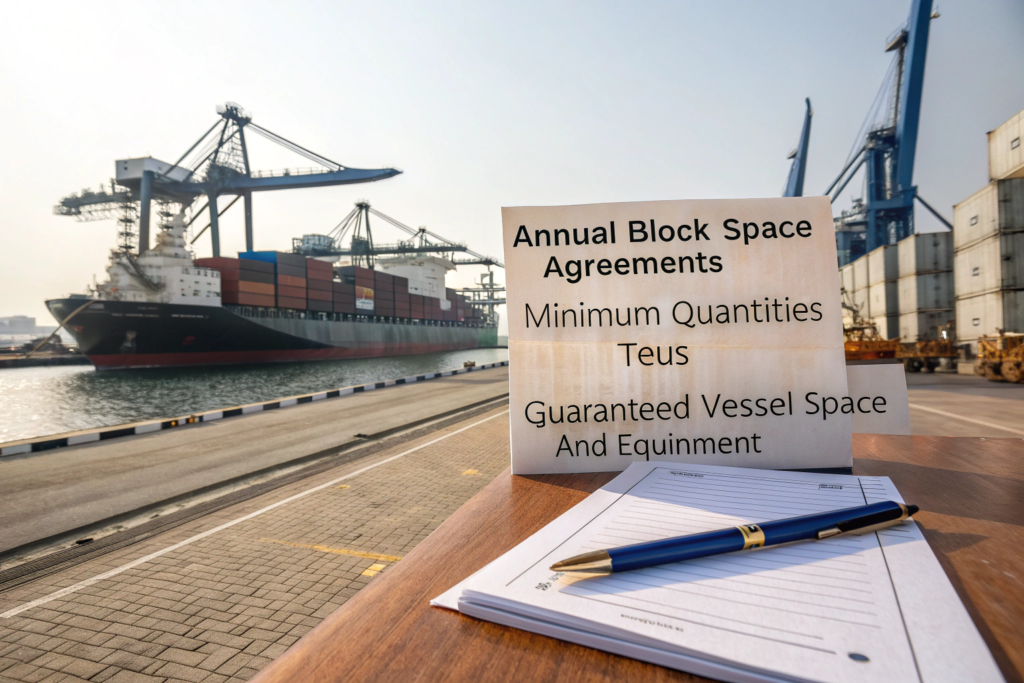
We secure vessel space by using annual block space agreements with multiple ocean carrier alliances. We commit to a minimum quantity of TEUs per month with each carrier, and in return, they guarantee us space and equipment on their vessels. We do not rely on the spot market for our regular high-volume clients. When you book with us, your container is placed into our pre-allocated slot on the ship. Even during the peak pre-Christmas rush, your container loads on the scheduled sailing date.
The ocean freight market is a commodity market, but access to capacity is a relationship market. Spot-rate forwarders buy space on the open market after you book with them. If the vessel is full, they are the first to get rolled. We have multi-year relationships with the sales directors at COSCO, Maersk, and CMA CGM. We negotiate annual service contracts that include a guaranteed space allocation. This is called a "named account" arrangement. The carrier reserves physical slots on specific sailings for our account. When we send a booking request, the carrier’s system recognizes our contract code and confirms the space instantly. This does not mean the rate is the cheapest on the market every single week. It means the rate is stable and the space is certain. For a business shipping 50,000 units to a retailer with penalty clauses for late delivery, certainty is worth far more than a $100 spot market saving.
We also manage the equipment availability. During peak season, there is often a shortage of 40-foot high-cube containers at inland depots. Our team monitors the equipment forecast from each carrier and reserves empty containers two weeks before your cargo is ready. We arrange for the empty container to be dropped at the factory or at our warehouse on a specific date. You do not wait for a box to become available. We also have contingency carriers. If one alliance has a vessel delay, we switch to another alliance’s vessel leaving on the same day from the same port. We maintain active bookings with two carriers until the container is physically on the ship. This belt-and-suspenders approach is how we deliver a 98% on-time sailing rate for our high-volume clients.
How Do Carrier Alliances Affect Your Shipping Options?
You think there are ten different shipping lines, so there must be plenty of choice. But the carriers operate in three main alliances: Ocean Alliance, 2M Alliance, and THE Alliance. They share vessel space on specific routes. A ship operated by CMA CGM might also carry COSCO and Evergreen containers. If one alliance’s vessel breaks down, the entire alliance’s schedule is disrupted.
We spread your shipments across multiple alliances. We do not put all ten of your containers on one vessel from one alliance. If that vessel has a mechanical failure or a port omission, all ten containers are delayed. We split the booking: six containers on an Ocean Alliance vessel and four on a 2M vessel. Both vessels sail within 48 hours of each other on the same route. Your inventory arrives in two waves, providing a natural risk hedge. This strategy also helps with destination port congestion. If one vessel waits three days for a berth at Los Angeles, the other vessel might be docking at Long Beach with no wait. We also track the vessel schedule reliability data published by maritime analytics firms. If a particular service string has a reliability rating below 70%, we avoid it and route your cargo through a more dependable service, even if it adds a day to the transit time.
What Happens When a Container Gets Rolled and How Do You Prevent It?
Your container is booked on the "Ever Lucky." You receive the booking confirmation. The trucker delivers the container to the terminal. Then the forwarder emails you: "Vessel overbooked. Container rolled to next vessel, sailing in 10 days." You have no control over this situation, and your forwarder just shrugs and blames the carrier.
We prevent rolling with two tools: premium loading guarantees and early gate-in. A premium loading option is a small surcharge that the carrier offers to guarantee the container will not be rolled. For high-value, time-critical shipments, we automatically add this surcharge and bill it transparently. The carrier commits that the container will be loaded on the intended vessel no matter what. If the vessel is overbooked, another shipper’s container gets rolled, not yours. The second tool is timing. Rolled containers are often the ones that were gated in last. We always gate in at least 24 hours before the documented cut-off time. This puts your container in the terminal’s stack early. When the terminal planners build the vessel load plan, early-gated containers are loaded first. Late-gated containers are the first to be rolled. We also use a terminal early receipt program where available. This allows containers to be received before the official receiving window opens, further reducing the risk of a late gate-in.
How Do We Optimize Customs Clearance for Large-Scale Consumer Goods?
You have 20 different SKUs spanning multiple tariff codes. A standard broker files the entry with a generic description like "household goods." CBP flags it for a documentation review. The container sits at the terminal for five days while the broker scrambles to provide the detailed product specifications. Demurrage charges start accruing on day four.
We optimize customs clearance for high-volume consumer goods by pre-classifying every SKU before the goods leave the factory. We create a master tariff database for your product catalog. Every SKU is assigned the correct HTSUS code, and we file the entry summary electronically 48 hours before the vessel arrives. The entry is pre-cleared while the ship is still at sea. The container is discharged and immediately available for pickup, often bypassing the exam hold area entirely.
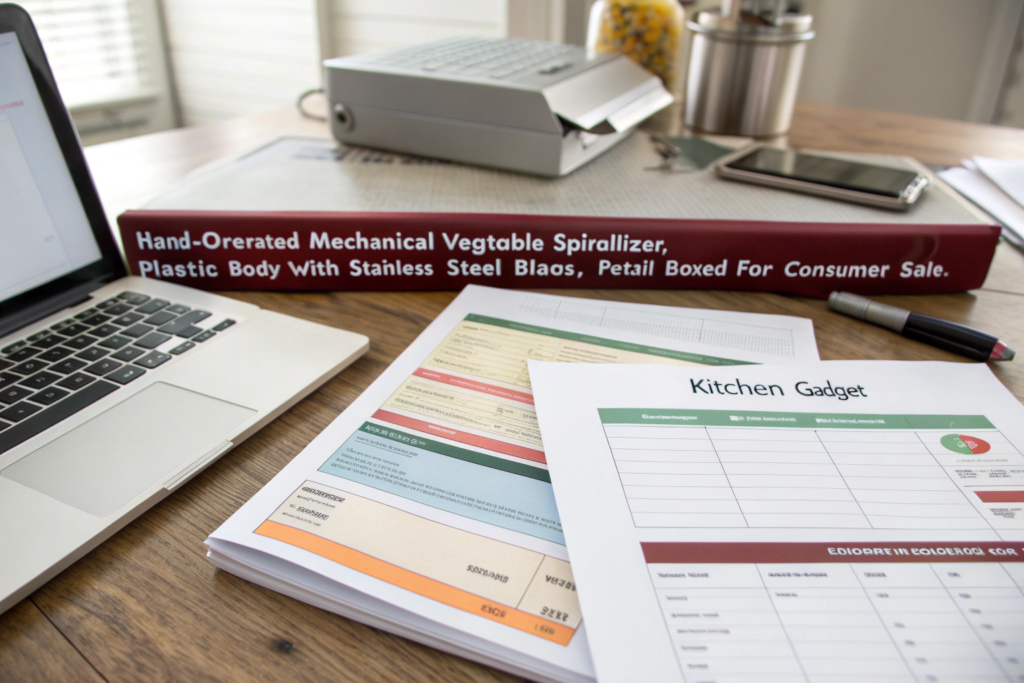
The key to fast customs clearance on large shipments is the data package. A vague commercial invoice creates questions. A detailed invoice answers them before they are asked. For consumer goods, CBP wants to see the material composition, the intended use, and the retail packaging description. We provide all of this in a structured data format that CBP’s automated targeting system can process without a human officer needing to look at it. For example, instead of writing "kitchen gadget," we write "Hand-operated mechanical vegetable spiralizer, plastic body with stainless steel blades, retail boxed for consumer sale." This level of detail matches the subheading descriptions in the HTSUS and satisfies the system’s logic checks.
We also handle the partner government agency requirements. Some consumer goods have additional regulatory hurdles. A shipment of kitchen storage containers with a plastic food-contact surface needs FDA facility registration. A shipment of toys needs CPSC compliance certification. A shipment of electronics needs FCC declarations. We flag these requirements during the quoting process. We do not wait until customs to discover that a product needs a FDA prior notice. We ask you for the certificates before we book the shipment. If the certificates are missing, we help you identify a testing lab in China that can provide them. We solve the compliance problem at origin so the customs clearance at destination is a clean, pre-approved transaction.
How Do You Handle the Multi-HTS Tariff Complexity of Mixed Consumer Goods?
You ship a container with a mix of products: bamboo cutting boards, silicone spatulas, ceramic mugs, and cotton tea towels. Each category has a different HTS code and a different duty rate. If the entry is filed with one catch-all code, the entire shipment is misclassified. CBP can issue a penalty and back-duties on the whole container.
We itemize the entry by SKU. The commercial invoice lists each SKU on a separate line with its own HTS code, quantity, unit value, and total value. The customs entry reflects this line-by-line detail. This is more work for the brokerage team, but it is the legally correct way to file. It also allows you to pay the exact duty for each product, rather than overpaying on a blanket rate. We maintain a shared spreadsheet with our high-volume clients. The spreadsheet lists every active SKU, its product description, its HTS code, and any applicable Section 301 tariff rate. When you send a new shipment, we cross-reference the packing list against this master database. If a new SKU appears, we classify it immediately and add it to the database. This living document ensures consistency across every shipment. If CBP ever audits your entries, we have a clean, well-documented paper trail showing the classification logic for every single product.
What Is the ACE System and How Does It Speed Up Your Release?
You picture a customs broker stamping paper forms at a counter. That image is 30 years out of date. Modern US customs clearance happens inside a computer system called the Automated Commercial Environment, or ACE. The broker transmits the entry data electronically. The ACE system runs it through risk algorithms and either releases it or flags it for review, all within minutes.
We use a direct EDI connection to the ACE system. Our entry data is transmitted in the exact format the system expects. The system scores every entry based on importer risk, product risk, and data quality. Because our entries are data-rich and filed under our low-risk continuous bond, they pass the algorithmic screening quickly. The release is often "automatic conditional release," meaning no human officer looked at it because the system saw no red flags. This speed is critical for high-volume consumer goods, where the demurrage clock on 20 containers is a very expensive ticking sound. We also use the ACE portal to monitor the status of every entry in real-time. If a shipment is flagged, we know instantly and can respond with the required documentation within minutes, often resolving the hold before the vessel has even docked.
How Do We Manage Last-Mile Delivery for Large Consumer Goods Orders?
The container arrives at the port and is cleared. Your previous forwarder hands it off to a random trucking company. You get a delivery window of "sometime next week." Your warehouse staff are not ready. The trucker arrives, there is no dock door available, and you get charged $500 in waiting time. The delivery process is as chaotic as the origin consolidation was smooth.
We manage last-mile delivery with a network of pre-vetted trucking partners and a strict delivery appointment system. We schedule the delivery with your warehouse at least 48 hours in advance. We provide the trucker’s ETA, driver name, and truck plate number. We confirm the warehouse has a dock door and a forklift ready. For large orders going to multiple destinations, we transload the container at our cross-dock in Southern California and dispatch separate trucks to each final location, avoiding cross-country empty miles.
The last mile is where many freight forwarders lose control. They treat the destination trucking as a commodity they sub-contract to the lowest bidder. You get a driver who has never delivered to a retail distribution center, does not know the check-in procedure, and arrives without the correct paperwork. We treat the last mile as a core part of our service. We have direct contracts with regional trucking companies in Los Angeles, Chicago, New York, and Atlanta. These companies know us and know our expectations. They know they must call the receiver 24 hours before delivery to confirm the appointment. They know they must bring a pallet jack if the warehouse does not have a dock-level fork. They know they must get the delivery receipt signed and stamped.
For very large orders that require multiple truckloads, we use our Southern California cross-dock. The container is delivered to our warehouse. We de-van the pallets, sort them by final destination, and load them onto outbound trucks. A single 40-foot container might have goods for a distribution center in Nevada, a store in Arizona, and an Amazon fulfillment center in California. We split the load at our cross-dock and dispatch three separate LTL or full-truckload shipments. This transloading is faster and cheaper than trucking the whole container to Nevada and then paying the trucker to deadhead back. It also allows each shipment to go on the exact trailer type needed: a lift-gate truck for a retail store without a dock, or a standard 53-foot dry van for a large distribution center.
What Is the Advantage of a Transload Operation for Retail Distribution?
You have a container destined for three different retail DCs across the Midwest. You could hire a drayage trucker to pull the container to each DC, but the container chassis is heavy, and the fuel cost is high. The container per diem charges start accumulating. Plus, most retail DCs do not accept live unload from an ocean container; they want pallets offloaded from a standard trailer.
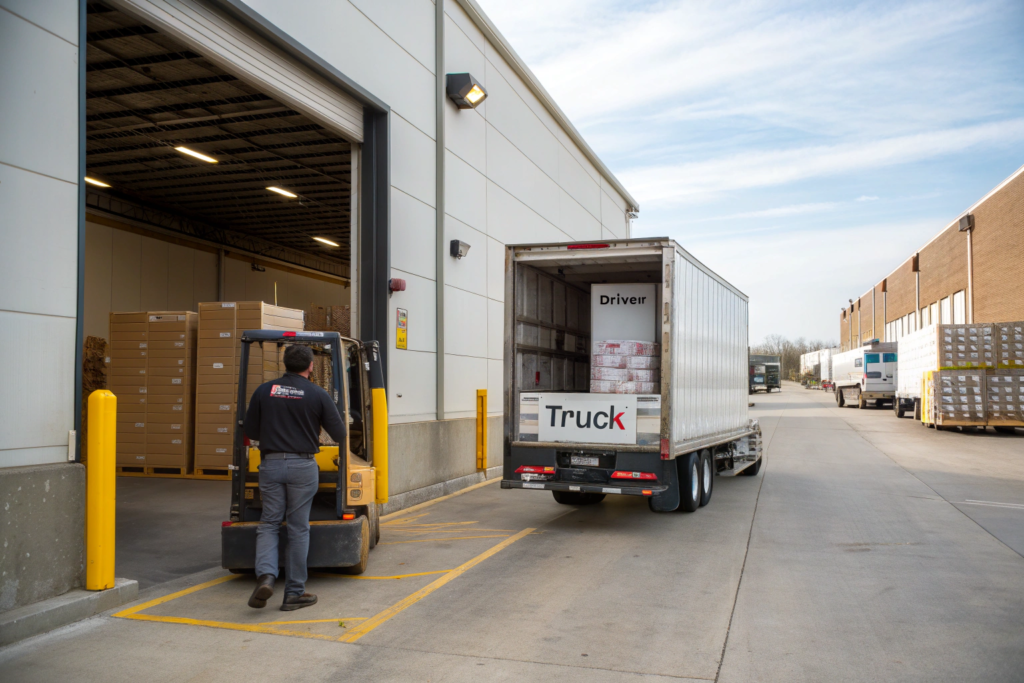
Transloading solves this. The ocean container is trucked from the port to our nearby transload facility. The trip is short, minimizing the drayage cost and the container per diem. Inside our facility, the container is unloaded in under an hour. The pallets are staged. Three separate dry-van trailers are loaded, each going to a different DC. The trailers are lighter than a container chassis, so the line-haul fuel cost is lower. The trailers are also more maneuverable at the DC’s tight dock areas. Most importantly, the delivery appointment can be made for a standard trailer, which the DC readily accepts. The transload process adds a day to the total transit, but it saves hundreds of dollars in drayage and per diem, and it guarantees the DC will accept the load on the first attempt.
How Do You Handle the POD and Proof of Delivery Documentation?
You shipped a $40,000 order to a big-box retailer. The retailer’s AP department says they never received 50 units. They issue a chargeback. You call the forwarder for the proof of delivery. They send you a blurry scan of a hand-scrawled signature on a grease-stained piece of paper. The retailer rejects it. You lose the dispute.
We capture a clean, digital POD for every delivery. Our truckers use a mobile app that captures the receiver’s signature, the printed name, and the time-date stamp. The app also takes a photo of the delivered pallets at the dock. This data is uploaded to the cloud instantly. We email the POD to you within 24 hours of delivery. The document is a clear PDF with all the required information: the shipment ID, the carton count, the pallet count, the signature, and the photo. This level of documentation is acceptable to any retailer’s accounts payable department for chargeback disputes. We also retain the PODs for seven years, which is the standard record-keeping requirement for customs and commercial law. If you ever get audited or need to prove delivery for an insurance claim, the document is in your client portal, ready to download.
Conclusion
Shipping large quantities of consumer goods from China efficiently is a system, not a transaction. It is a system that starts with a coordinated multi-factory pickup schedule, passes through a scan-verified consolidation warehouse, locks into guaranteed vessel space, clears customs with pre-classified tariff data, and finishes with a scheduled, documented last-mile delivery. Each step is a dependency. If the consolidation is sloppy, the container is under-utilized, and the per-unit cost rises. If the vessel booking is on the spot market, the container gets rolled, and the delivery date fails. If the customs entry is vague, the container sits and accrues demurrage.
Our clients who ship 50,000, 100,000, or even 500,000 units per year do not call us every day to check on their shipments. They do not need to. They log into their client portal, see the status of every container, and know that the schedule we built together is executing as planned. The system runs on rhythm and reliability. The freight cost is a known, budgeted line item. The delivery dates are met. The retailer receives the goods on time, and the purchase orders keep coming.
If you are scaling your consumer goods brand and need a logistics partner who can handle the complexity of high-volume, multi-factory shipping without dropping the ball, reach out to us at GeeseCargo.com. Share your next purchase order with me, and I will send you a detailed consolidation plan with a guaranteed sailing schedule and a transparent cost breakdown. Let’s turn your supply chain into your competitive advantage.