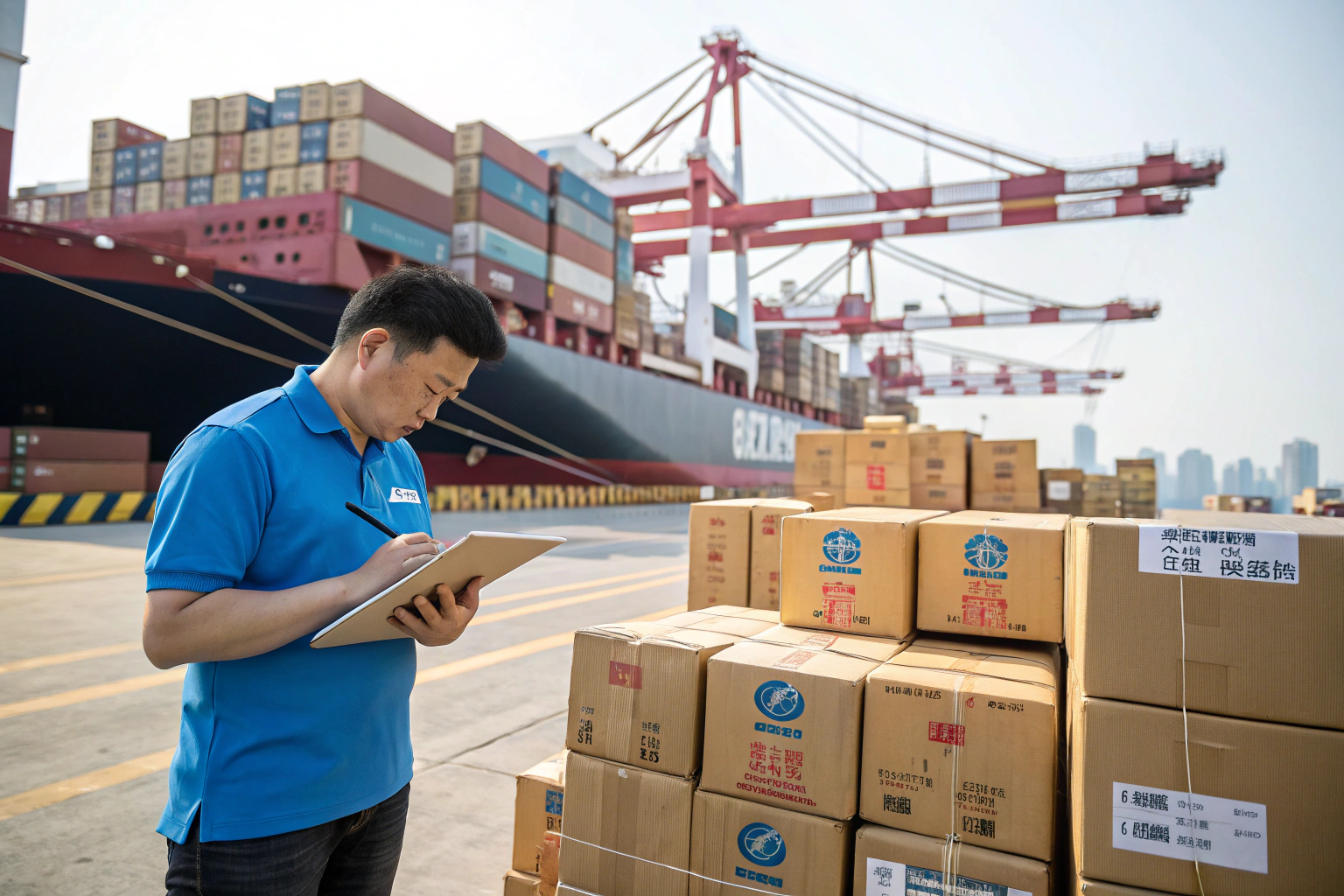
When a shipment of t-shirts or winter coats gets stuck at the Long Beach port, your profit margin starts bleeding out. Every day of delay and every surprise fee cuts into the cash you worked hard to earn. You planned the designs, you paid the factory, and you booked the orders. But if the freight partner drops the ball, your brand takes the hit. I know that sinking feeling because I have seen it happen to too many business owners.
At GeeseCargo, we move your clothing and accessories from any factory in China directly to your warehouse or Amazon FBA center in the USA. We control the entire journey. We use our own network of trucks, our long-term contracts with ocean carriers, and our in-house customs brokers on both sides. This means you get a single price, a fast schedule, and zero finger-pointing between different middlemen.
You should not have to chase three different companies just to find out where your cargo is. We built our service specifically for owners like you who ship large volumes and need hard numbers on pricing and transit time. I want to show you the exact road map we use, so you can finally feel safe about your supply chain.
Why Is Ocean Freight from China to the USA the Best Choice for Bulk Clothing?
You might be looking at your shipment volume and thinking air freight is the only way to meet your deadline. That panic is real. But paying for air freight on a 500kg shipment of hoodies will wipe out your landed cost advantage instantly. There has to be a better way that balances speed and the cost of goods sold.
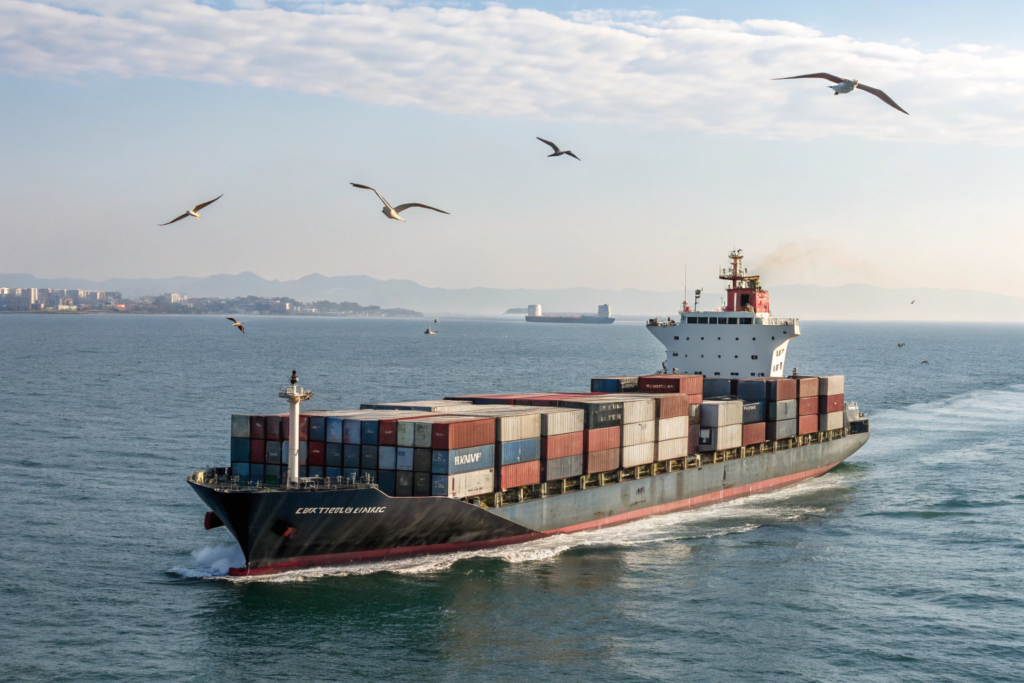
Ocean freight is the most cost-effective and scalable method for shipping bulk clothing from China to the USA. For volumes over 2 cubic meters, the cost per unit drops dramatically compared to air freight, often saving you 60% to 70%. Modern container services now deliver from Shanghai to Los Angeles in as fast as 12 to 14 days, making it highly competitive for restocking seasonal apparel.
I remember a client named Ron, much like you, who ran a mid-sized clothing brand in Texas. He was shipping about 1,000 units of custom denim every month. Before finding us, he was splitting his supply chain between air freight for “urgent” restocks and slow boat services for basics. He was losing track. When we consolidated everything into our express ocean consolidation service, he actually improved his average restock speed because he stopped waiting for customs to process small, chaotic air cargo shipments.
The real magic of ocean freight lies in the standardized process for garments. Clothing is not hazardous; it is generally easy to classify, and it stacks efficiently in a container. We use 40-foot high-cube containers for bulky winter items like puffer jackets to give you maximum volume. For dense, heavy items like denim jeans, a standard 20-foot container often hits the weight limit before it fills up, which saves you money.
Why Does Garment Weight and Volume Impact My Total Ocean Freight Cost?
I always ask my clients one question: “Do you know if your product is heavy or light?” A box of silk ties takes up a lot of space but weighs almost nothing. A box of heavy leather jackets weighs a ton but fits in a tight stack. If you do not understand the difference between actual weight and volumetric weight, you are leaving the door open for surprise invoices.
The freight industry charges based on whichever is higher: the gross weight or the dimensional weight. You calculate dimensional weight by multiplying the length, width, and height of your carton in centimeters, then dividing by 6000. If you ship light, bulky sweaters, you pay for the space they occupy, not the actual pounds on the scale. We always guide our clients to use vacuum packaging or compression for items like puffer jackets to minimize the chargeable volume, protecting your profit margin right from the factory floor.
Here is a quick look at how different types of apparel can change your freight costs. This is based on a typical shipment from Yantian Port to Los Angeles.
| Apparel Type | Carton Dimensions (cm) | Actual Weight | Volumetric Weight | You Pay For |
|---|---|---|---|---|
| T-Shirts (Compressed) | 60x50x40 | 18 kg | 20 kg | 20 kg |
| Puffer Jackets (Loose) | 60x60x60 | 12 kg | 36 kg | 36 kg |
| Denim Jeans (Tight stack) | 60x40x40 | 25 kg | 16 kg | 25 kg |
When you control the packing, you control the freight spend. We always send our team to the factory to inspect the loading if the client’s purchase volume justifies it. It is the only way to ensure the carton volumetric weight calculation matches your bill.
How Can I Avoid Clothing Cargo Damage During Long Sea Voyages?
Moisture is the silent killer of fashion. You might pack a perfect white cotton dress in a carton in sunny Guangzhou. Four weeks later, it arrives in Miami smelling like mold and covered in mildew stains. That is a total loss, and standard insurance policies often fight you tooth and nail on mold claims because they call it “improper packing.”
We stop this by using heavy-duty container desiccants in every shipment. These are not the little silica gel packets you find in shoe boxes. We install industrial-strength desiccant poles that absorb moisture from the air inside the container for the entire voyage. We also insist that all shipping cartons are double-walled and have a waterproof inner lining. For high-value designer items like silk dresses or tailored suits, we wrap them in poly bags inside the cartons before they even touch the cardboard. This creates a moisture barrier that is almost impossible to break.
How Does GeeseCargo’s DDP Service Solve Your USA Customs Headache?
I know why you hate the term “DDU” or “DAP.” It is because you never know the final cost until a customs broker holds your cargo hostage at the destination port. You sit there, looking at an entry summary with bond fees, merchandise processing fees, and storage charges, and you realize you made zero profit on that pallet. That feeling of being trapped is exactly what we fix.
Our DDP (Delivered Duty Paid) service gives you a single, all-inclusive price upfront. You pay the product cost and our freight bill, and we handle every single step until the goods are sitting in your US warehouse. We use our own continuous customs bond and our standing relationship with US Customs and Border Protection to clear your goods faster than a random broker on an internet directory.
When I say we handle everything, I mean it literally. We have a dedicated team in Long Beach and New York. They file the ISF 10+2 filing 48 hours before your vessel sails. This is critical. If that filing is late, the fine is $5,000. Many small forwarders forget this. We also ensure the actual tariff code (HTS) is correct for your specific garments. A simple mix-up between a men’s cotton woven shirt and a knit shirt can mean a difference of 5% in tariff costs. That percentage on a $50,000 shipment is real money.
We act as the Importer of Record (IOR) for you. This is the biggest relief for my clients like Ron. You do not need to set up a US entity just to clear customs if you are a non-resident importer. We take the legal responsibility for the import, pay the duties to US Customs using our own account, and then deliver to you. You see only the final delivery cost, and you pay it before the ship even docks. There are no hold-ups, no bond applications, and no frantic calls to a customs house you found on Google.
What Happens If US Customs Examines My Garment Shipment?
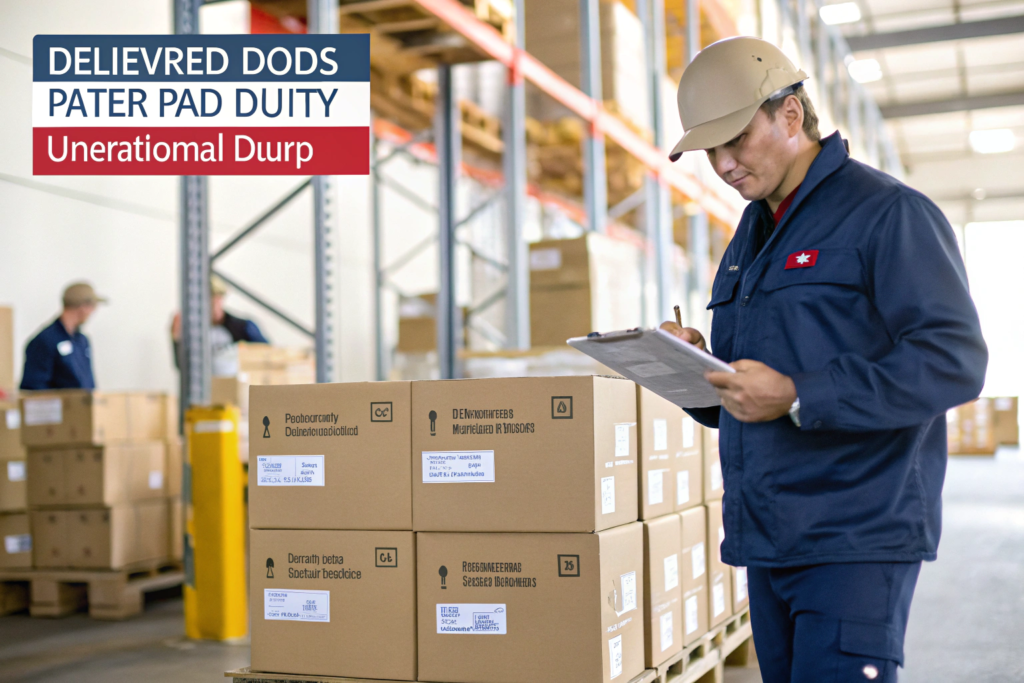
You will panic if you are not prepared for it. Seeing the status "CBP Exam Hold" on the tracking makes your stomach drop. You imagine officers slashing open your pallets of party dresses with box cutters and leaving them in a torn-up mess. That image is scary, but the reality of how we handle it is very boring and safe.
When an exam happens, you have basically three outcomes. The X-ray scan shows a clean picture and they release it. That is 90% of cases with properly packed clothing. Or, the X-ray shows a dense mass that looks suspicious, and they want to open the door. We have a local team that goes to the Centralized Examination Station (CES) to physically oversee the opening. We make sure the officers open the boxes exactly where we point, and we have a repacking crew waiting on standby with fresh tape and pallet wrap. The third outcome is the worst: they send a sample to the lab to test for illegal materials or fibers. This can take 10 days. Because we file the correct fiber content in the original packing list and use accurate HTSUS codes, we rarely see this for standard apparel. Our packing lists are so detailed, down to the knit and weave pattern, that the exam often clears in a day.
How Can a Continuous Customs Bond Speed Up My Delivery?
You probably do not think about customs bonds until the broker says you need to buy a single-entry bond for $200. That is a transaction killer if you ship frequently. A single-entry bond works for a one-time shipment, but if you ship three containers a month, you are burning money and time filling out bond forms every single time.
We use our annual continuous customs bond to cover all our clients’ shipments. Because the bond is already active and linked to our IOR profile, US Customs instantly validates our entry. There is no waiting for a new bond to be underwritten. This lets us submit the entry summary the moment the vessel departs China. When the ship arrives, the cargo can be immediately released from the terminal, often skipping the holding area because the payment and bond security are already verified. This single step cuts 24 to 48 hours off the standard delivery window for every single container.
Why Is Air Freight a Smart Backup for Your Fast Fashion Line?
Your ship is delayed by two days because of a port congestion in Busan, and your big summer launch is next Friday. You feel helpless. You have an entire Facebook ad campaign set to launch, and the influencers are waiting for their samples. This is not a failure of planning; this is a reality of global logistics. You need a recovery plan that does not eat your entire year’s profit.
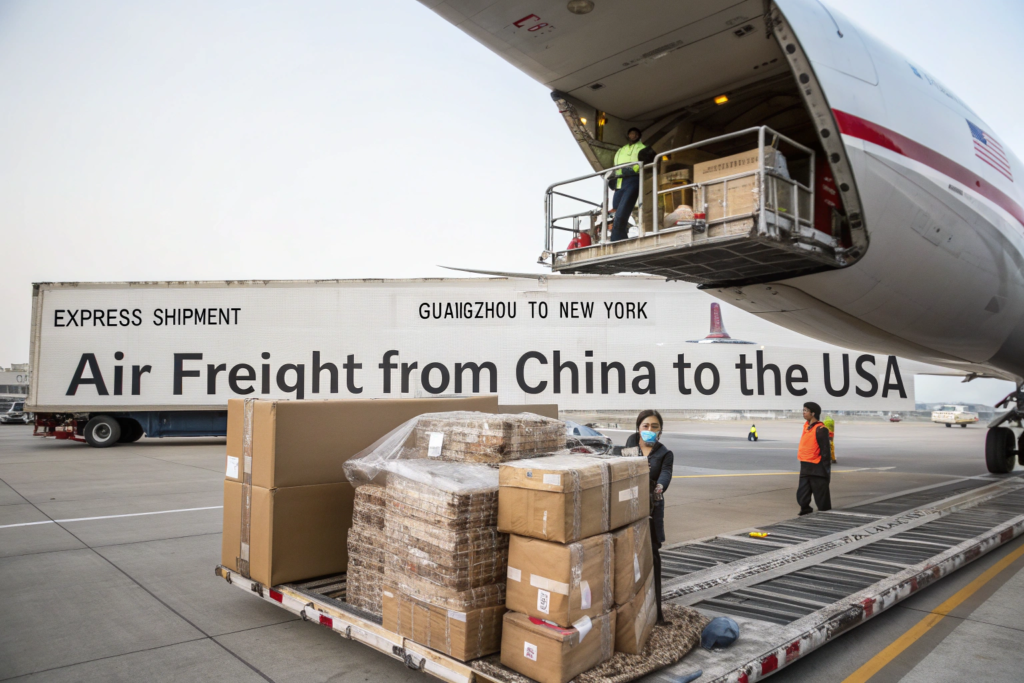
Air freight from China to the USA is the ultimate safety net for high-value, time-sensitive clothing. While it costs roughly 5 to 8 times more than sea freight, a 500kg express shipment of new sample designs can fly from Guangzhou to New York in just 3 to 5 days. We use air freight not just as a primary method, but as a strategic inventory tool to fill stock gaps while the bulk shipment is still on the water.
Let me tell you about a real emergency we handled. A client had a container of winter fleece jackets stuck in Vancouver during the flood crisis. His US east coast customers were about to cancel orders. We convinced him to air freight 150 cartons of the most popular sizes directly from the factory in Ningbo to JFK airport. We had our trucking team pick up the loose cargo that very afternoon. The goods arrived at the airport by 8 PM, were loaded onto the next morning’s direct flight, and cleared US customs in our bonded warehouse in Queens by sunrise the following day. He never lost a single sale.
Clothing is actually a great commodity for air freight when you need speed. It is non-dangerous goods and easy to palletize. However, you must be careful with accessories that contain batteries or liquids. Even a tiny lithium battery in a smart watch bundled with a shirt can change the classification to “Dangerous Goods” and delay the flight. But for pure cotton, polyester, and denim, we can book space on passenger or cargo aircraft very quickly. We keep a standing allocation with major carriers, so I can usually secure you a spot within 24 hours notice, even during the peak pre-Christmas rush.
What Are the Hidden Fees in Express Air Shipping for Garments?
You see a rate of $3.50 per kilo and think it is a good deal. Then you get the final invoice with a fuel surcharge of $1.20, a security surcharge of $0.45, a terminal handling fee, and an air waybill fee. The real price ends up being $6.00 per kilo. This is the classic trick of under-quoting the base rate to hook you.
We never quote the “rate per kilo” without the all-in price. Airline fuel surcharges change monthly. We lock in the total price at the time of booking. We also watch your dimensional weight like a hawk. If you ship empty puffer jackets, they take up a lot of space on a pallet but weigh nothing. Airlines use a volumetric divisor of 6000. If we do not control the box size, you pay for air you are shipping. We often re-carton the goods at our Chinese warehouse into smaller, stronger boxes specifically designed for air freight to save you space and money.
How Does a Bonded Courier Service Keep My Samples Moving?
You send five sample dresses to a buyer in Manhattan. They arrive, but UPS holds them because there is a $45 duty due. The buyer refuses to pay, and the package gets returned. It is a disaster for client relationships. You need a logistics process that makes the experience friction-free for your US contacts.
We use a bonded courier service for samples and small packages. The way it works is simple: we use our own shipping account with the courier. We bill all the duty and tax charges directly to our GeeseCargo account through our broker. The package goes straight to the buyer’s front door, duty paid. They just sign and smile. We then add that small $45 charge to our consolidated invoice to you. This stops the delivery truck from ever knocking on the door and asking for cash. It makes your small brand look like a massive, professional operation. For any shipment under the de minimis value, we actually clear it duty-free instantly, saving you the tax cost entirely.
What Is the Fastest Way to Move Large Clothing Inventory for Restocking?
Your warehouse manager calls and says the top-selling size of your yoga pants is completely out of stock. The next shipment is predicted to arrive in three weeks, but you need it in one week. You are now looking at the fastest possible option. You might think it is just “send by air.” But loading a 68 cubic meter container onto an airplane is physically and financially impossible. You need a hybrid solution.
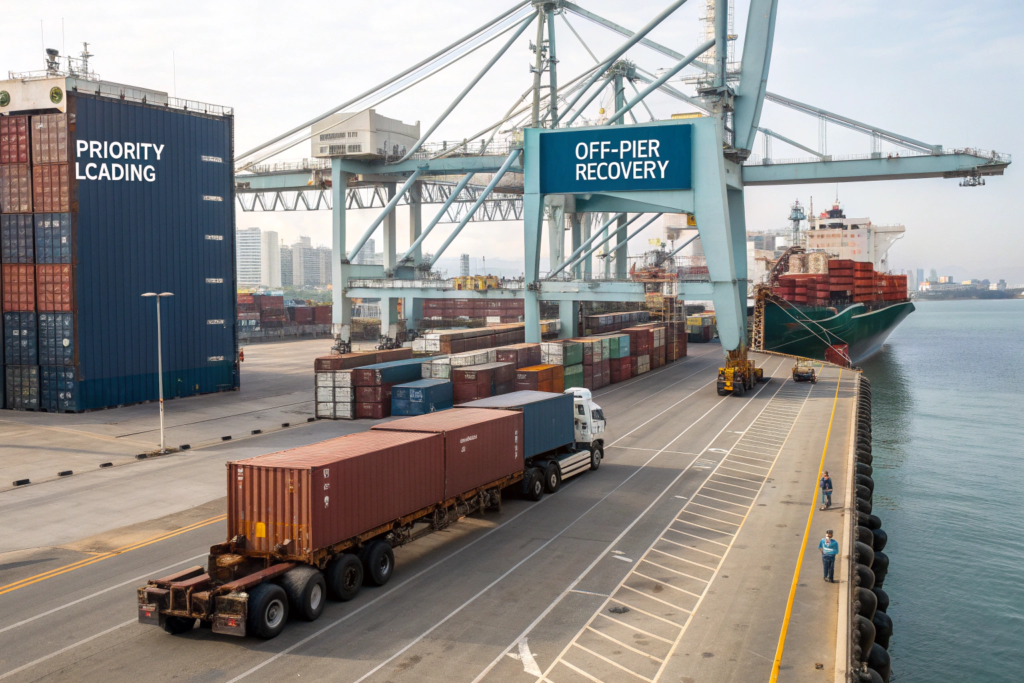
The fastest cost-effective method for large restocks is our expedited sea freight combined with immediate trucking. We use "priority loading" at the origin port and "off-pier recovery" at the destination. This means the container is the last one loaded onto the ship in China and the first one lifted off in Los Angeles, moving it to a chassis in under 12 hours after docking.
The key metric here is “port-to-door transit.” Standard service is 25 to 30 days. Our premium ocean service is 15 to 18 days. How do we shave off almost two weeks? It is about cutting the waiting times. In Shenzhen, we do not leave the container sitting at the terminal waiting for the cut-off time. We use a "hot hatch" service where the truck waits at the factory until the last minute and rushes the sealed container directly to the vessel crane.
On the US side, we do not wait for the vessel to discharge all the containers into a giant stack. We use a “peel-off” pile. This is a pre-arranged section of the terminal where specific containers are placed directly onto a chassis. Our trucker can pick it up immediately without waiting for a general appointment slot at the pier. We have a Universal Intermodal Services chassis pool agreement in place to ensure a chassis is always available, which is a common bottleneck.
How Do Rail Ramps Accelerate East Coast Deliveries?
If your warehouse is in New Jersey, but your ship lands in California, you face a 4,500-kilometer truck journey. That truck trip can take five or six days with rest stops and weigh station checks. The risk of a breakdown or a weather delay in the Rocky Mountains is high. The truck door-to-door from LA to NJ is simply not the fastest option by road.
We switch the container to the railroad. Intermodal rail transport from Los Angeles to Chicago or New York is consistently 3 to 4 days, which is almost a full 48 hours faster than a solo truck driver can legally drive. The train moves non-stop. We use on-dock rail where the train tracks go right into the marine terminal. The container is lifted directly from the ship onto a waiting railcar. You do not even pay for a local truck move to the rail yard. Once the train hits the destination ramp in Chicago, our local drayage partner is already scheduled to take it for the final delivery to your warehouse door. This cuts the California to New York transit time down to roughly 7 days after the vessel docks, compared to 9 or 10 days by truck.
How Do We Strategically Schedule Factory Pickups to Catch the Vessel?
The vessel cut-off is Friday at 5 PM. Your factory finishes packing on Friday at 2 PM. It is a three-hour drive to the port. You are sweating. A normal trucking company will tell you they can’t make it. This situation happens almost every week before Chinese holidays.
We solve this with our pre-clearance and late-gate strategy. First, we do something against the grain: we send the customs paperwork to the ocean carrier and Chinese customs 24 hours before the truck even leaves the factory. The export declaration is pre-filed. The container is pre-cleared. So, when the truck arrives at 4:55 PM, the gates accept it because there is no paperwork left to process. The driver just shows a barcode, drops the container at the marshalling yard, and the terminal tractor takes it to the ship. If you just tried to show up with paperwork in hand, you would be turned away. But with our pre-clearance, we make cut-offs that are impossible for others to make.
How Does GeeseCargo Protect Your Clothing from Tariff Shocks and Security Risks?
You check your email and see a news alert about a new Section 301 tariff threat on apparel. Your heart races. You have $80,000 worth of goods already on the water. There is nothing you can do now but worry and wonder if your profit is about to evaporate into the US Treasury’s pocket. This anxiety is part of the importing life, but you do not have to face it alone.
We protect your clothing supply chain by using binding rulings, advanced tariff engineering, and strict origin verification. We do not just guess the duty rate; we lock it in with legal rulings from US Customs before you even ship. Our team monitors the Federal Register daily, so if a tariff exclusion is about to expire, we rush your shipment out of Asia to beat the deadline.
Tariffs on clothing can be tricky. A cotton t-shirt might have a 16.5% duty, while a polyester shirt might have a 32% duty. Getting the fiber content wrong on the commercial invoice is not just a mistake; it is a liability. If you underpay the duty, US Customs can issue a penalty bill six months later for the difference plus interest. That kills your retrospective profit analysis.
We use a “first article inspection” approach for customs classification. Before we ship your first bulk order of a new design, we send the spec sheet and a physical sample to our US customs lawyer. They get a binding ruling on the exact HTS code. This piece of paper is a legal shield. If a customs officer challenges the classification at the port, we present the ruling letter, and the challenge ends. We also structure your cargo insurance correctly. We use an “all-risk” marine cargo policy that covers acts of terrorism, theft, and general average. If the ship catches fire, like the recent incidents we have seen, our policy pays out the full commercial invoice value, not just a fraction.

How Do We Verify the Real Origin of Your Goods to Avoid Fines?
The factory says the sweaters are “Made in Cambodia.” But the zipper and the label were put on in China. If you export that from China with a Cambodian certificate of origin, and US Customs finds out, this is misrepresentation. It is customs fraud. You can be blacklisted and have your cargo seized.
We are incredibly strict on country of origin rules. For textiles, the origin is where the fabric is woven, not where it is cut and sewn. We check the fabric mill invoices. If the cloth is Chinese but stitched in Vietnam, the origin is still China for US trade purposes, and it will be subject to the China tariffs. If a factory tells you they can “just give you the papers,” we stop the transaction. We always physically inspect the "Origin" tags sewn into the neck of the garment during our pre-shipment inspection. We take photographs and attach them to the shipment file. This guarantees that the physical product matches the customs declaration exactly.
How Does a Secure IT Framework Stop Cargo Theft for Your Brand?
You have a hot new sneaker design that has been hyped on social media. The container sits at a warehouse in Compton for the weekend. On Monday morning, the lock is cut, and the container is empty. Thieves target high-value apparel. They know your schedule better than you think.
Our security protocol starts with GPS tracking of the physical container. But the physical lock is only half the battle. The real risk is a cyber thief intercepting an email and sending a fake release order to the terminal. We use a strict, multi-factor authentication process for all cargo releases. Our IT systems run on a closed-loop EDI communication with the terminals. We do not send release orders by simple email or PDF, which can be easily photoshopped. Furthermore, we place non-negotiable "no-park" orders on high-value loads. The trucker must drive straight from the port to the receiver without stopping. We monitor the truck’s speed and idle time via telematics. If the truck deviates from the geo-fenced route or stops for more than 15 minutes, our operations desk in Shenzhen gets an instant alarm and calls the driver to verify his status.
Conclusion
Shipping clothing from China to the USA is never just about moving boxes from point A to point B. It is about protecting the cash flow of your business, defending your brand’s reputation for in-stock reliability, and navigating a maze of duties that can wipe out your margin in a single stroke.
I have watched business owners go from tearing their hair out over split shipments and unexpected demurrage bills to sleeping soundly because they know exactly when their cargo arrives and exactly how much it costs. Our team at GeeseCargo earns our stripes by doing the little things right. We install the desiccants to stop the mold before it starts. We send the runner to the CES exam site so the officials don’t slash your party dresses to shreds. We file the binding ruling so the code is black and white, not a guess.
If you are shipping large quantities of clothing and accessories from China to the US, you need a partner who treats your cargo like their own inventory. You need a team with boots on the ground at the major Asian ports and a desk inside the Western terminals. We offer that end-to-end grip on the supply chain.
Stop letting logistics be the variable that determines your success. Let’s lock down a stable route, fix your landed cost, and make sure your goods arrive safely and on time. Contact me through our website at GeeseCargo.com today, and let’s map out a tailored freight strategy for your next order.