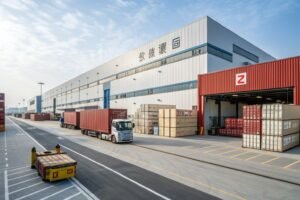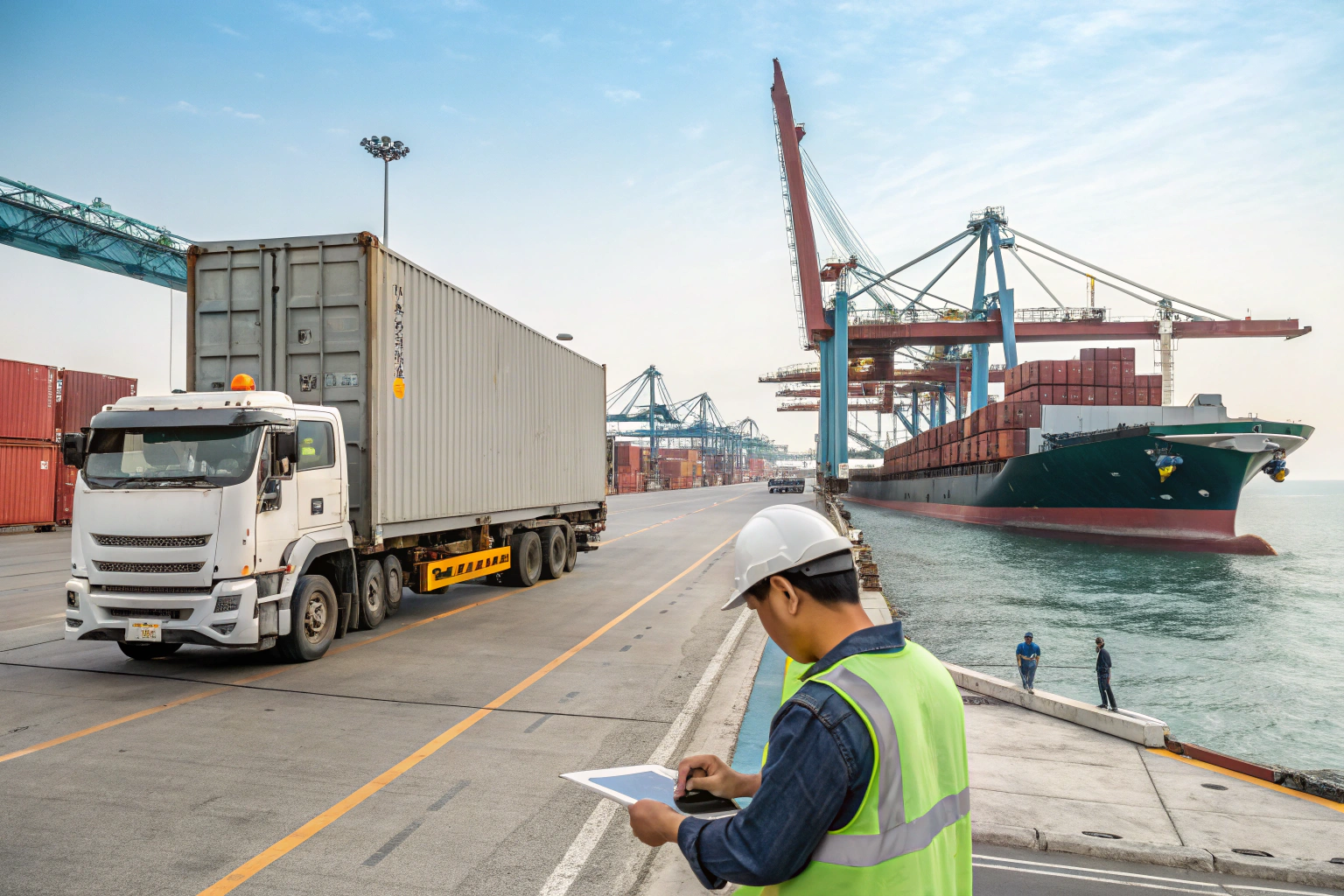
Your supplier just sent you a photo of finished goods stacked on their factory floor. You feel a mix of excitement and dread. Excitement because your product is finally real. Dread because between that factory floor in Yiwu and your warehouse in Dallas are 7,500 miles, an ocean, two customs agencies, three different truckers, and a dozen handover points where something could go wrong. You are not physically moving the goods, but you are responsible for them. That gap between factory and warehouse is where freight forwarders earn their reputation.
At GeeseCargo, we move your goods from factory to warehouse through a managed, six-stage pipeline. Stage one is the factory pickup. Stage two is the origin consolidation and export clearance. Stage three is the ocean or air transit. Stage four is the destination customs clearance. Stage five is the port handling and drayage. Stage six is the final delivery to your warehouse. At each stage, we control the physical movement, manage the documentation, and communicate the status to you. You do not coordinate six different vendors. You coordinate with one account manager who oversees the entire pipeline.
This end-to-end process is the core service of a freight forwarder. Understanding how it works gives you confidence that your goods are not disappearing into a black hole. They are moving through a defined, monitored system. I will walk you through each stage in detail, sharing real examples from actual shipments, so you can visualize exactly how your next order will travel.
Stage One: How Do We Pick Up Your Goods from the Factory?
Your goods are packed and ready. The factory manager is waiting. You need a truck to arrive on the right day, at the right time, with the right paperwork. If the truck is late, the factory charges storage. If the driver does not have the correct pickup order, the factory refuses to load. If the carton count is not verified at pickup, a shortage discovered later becomes a finger-pointing argument.
We schedule the factory pickup after confirming cargo readiness through a three-step verification call. We dispatch a pre-approved trucker with a printed pickup order that includes the shipment reference number, the carton count, and the loading address. The trucker counts the cartons during loading, checks for external damage, and issues a signed pickup receipt. The goods enter GeeseCargo custody at the factory gate. You receive a "Goods Collected" notification with the pickup time and the carton count.
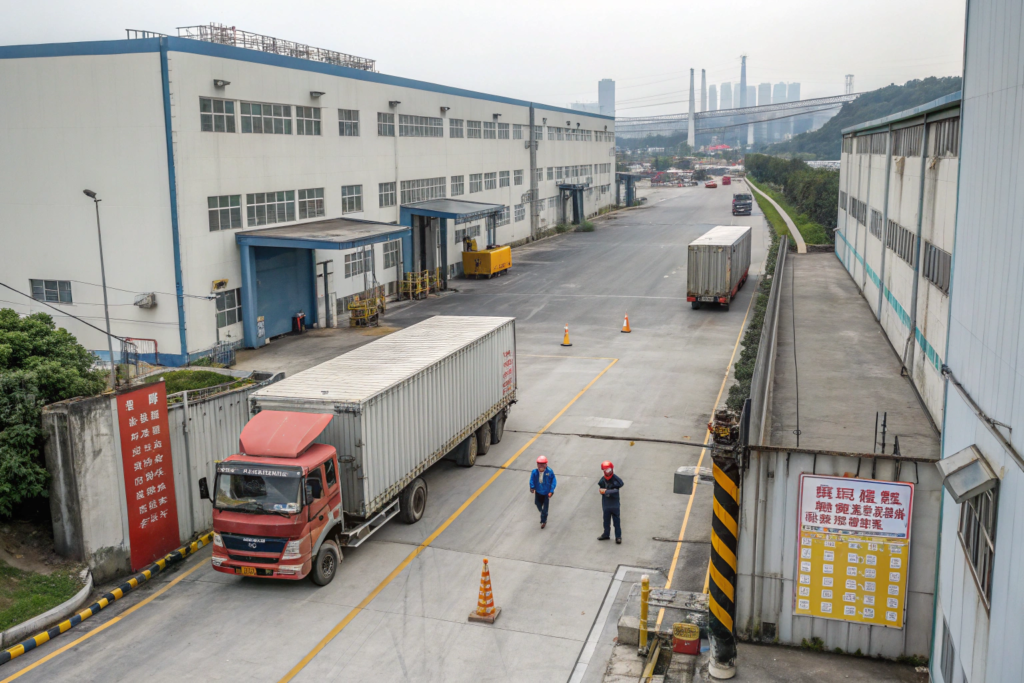
The factory pickup is not as simple as calling an Uber. Chinese factories are often in industrial zones with narrow access roads that require smaller feeder trucks. The factory might have specific loading hours, such as 9 AM to 11 AM and 2 PM to 4 PM. The loading crew might be unavailable during lunch. These local details matter. Our operations team in Shenzhen knows the industrial zones and the factory rhythms. We call the factory contact and confirm the pickup in Mandarin. We verify the loading dock dimensions so we send the right truck size. We verify the cargo weight so the truck is not overloaded at the first weigh station.
When the trucker arrives, they present our pickup order. The order is printed on GeeseCargo letterhead and includes a barcode. The factory scans the barcode or enters the reference number into their system. This links the physical pickup to our digital record. The trucker counts the cartons as they are loaded. If a carton is visibly crushed, wet, or torn, the trucker notes it on the pickup receipt and photographs it. You receive these photos in your shipment update. The pickup receipt is your evidence that the goods were loaded in a specific condition. If a dispute arises later about damaged goods, the pickup receipt is the first document we reference.
What Happens If the Factory Is Not Ready on the Scheduled Pickup Day?
You arranged the pickup for Monday. The trucker arrives. The factory manager looks surprised and says, "Production finished, but packing not done. Come back Wednesday." The trucker charges a dry run fee. Your vessel booking is now at risk.
We do not send a trucker without confirmed readiness. One week before the scheduled pickup, we call the factory and ask, "Will the goods be 100% packed and ready by the pickup date?" We call again 48 hours before, and a final time 24 hours before. If the factory says yes at all three checkpoints, the trucker is dispatched. If the factory admits a delay at any checkpoint, we reschedule the pickup before the trucker is assigned, avoiding the dry run fee. This triple-confirmation discipline is built into our operations process. It is a simple, low-tech practice that prevents the single most common pickup problem: a truck arriving for cargo that is not ready.
How Do You Know Your Goods Are in Our Custody and Not the Factory’s?
The factory says they shipped the goods. You have no independent confirmation. The next update you receive is a week later, from a port you do not recognize. The goods were in a black hole for seven days.
The moment the trucker signs the pickup receipt, your goods are in our custody. You receive an automated "Goods Collected" email. The email includes the pickup date and time, the trucker’s name and plate number, and the carton count verified at loading. You also receive a photo of the loaded truck, taken by the driver before departure. This is your independent confirmation. The goods are no longer on the factory floor. They are on a GeeseCargo-contracted vehicle, moving toward our warehouse. The blackout period between factory and port is eliminated because you have visibility from the factory gate.
Stage Two: How Do We Consolidate Your Goods and Clear Chinese Export Customs?
Your goods arrive at our Shenzhen consolidation warehouse. They are loose cartons with factory shipping marks. They need to be checked, labeled, consolidated, and cleared for export. This stage is where individual cartons become a coherent shipment ready for international transit.
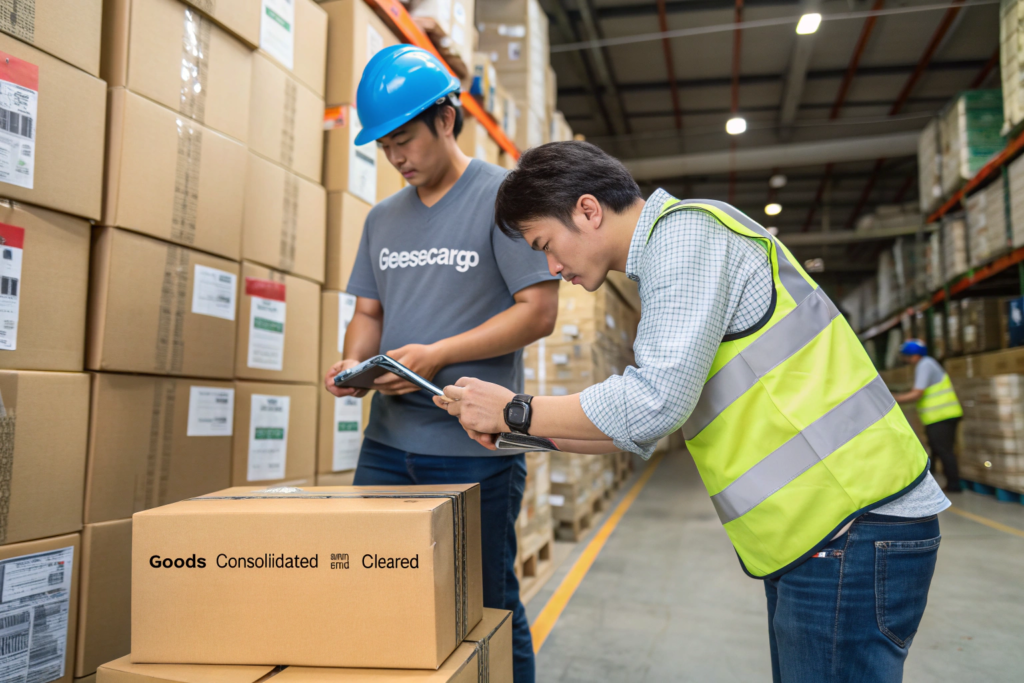
At our warehouse, we receive your cartons against the packing list. We inspect for external damage. We apply a GeeseCargo barcode label to each carton and scan it into our inventory system. If your shipment is LCL, we consolidate it with other compatible cargo into a shared container. If it is FCL, we load it into your dedicated container. We then prepare and file the Chinese export customs declaration. The goods are cleared for export, and the container is sealed. You receive a "Goods Consolidated and Cleared" notification.
The consolidation warehouse is the control center of the origin process. When your cartons arrive, our receiving team unloads them, counts them, and checks the external condition against the pickup receipt. Any damage noted at pickup is verified and photographed. The cartons are then labeled with a unique GeeseCargo barcode. This barcode is your shipment’s digital identity. It links the physical carton to your shipment file in our system. When the carton is scanned at each subsequent handover point, the scan updates the status in your client portal. This barcode-based tracking is how we maintain chain-of-custody visibility from origin to destination.
For LCL shipments, we group your cartons with other shipments destined for the same US region. Your cartons are physically separated from other importers’ goods with clear divider sheets and markings. For FCL shipments, we load your container according to a pre-planned load diagram. Heavy cartons on the bottom, light cartons on top, and dunnage airbags in any void spaces to prevent shifting. We photograph the loaded container before closing the doors. You receive these load photos. You can see your goods inside the container, properly packed.
What Is the Chinese Export Declaration, and Who Files It?
You think customs clearance only happens in the US. But China requires an export declaration for every shipment leaving the country. The Chinese customs system needs the product name, the HS code, the value, and the exporter’s registration.
We file the Chinese export declaration on your behalf. If your supplier has export rights, we use their registration. If they do not, we use our own export license. The declaration is filed electronically through the China Customs EDI system. We list the product description in Chinese, the HS code, the quantity, and the value in USD. The system processes the declaration and issues an electronic release. This step must be completed before the container can be loaded onto the vessel. A missing or rejected export declaration delays the entire shipment. We handle it silently, in the background, because it is a routine part of our origin process. You do not provide any additional documents for this step. The packing list and commercial invoice you provided at booking contain all the required data.
How Do We Ensure Your Cartons Are Not Mixed with Another Importer’s Goods?
You have a recurring fear. Your cartons get mixed up with someone else’s cartons inside a shared LCL container. Their goods are delivered to you. Your goods are delivered to them. Neither of you can sell the wrong inventory.
Our barcode system prevents this. Each carton receives a label with a unique barcode that is linked to your shipment ID and delivery address. When the container is loaded, each carton is scanned. The system records exactly which cartons are in which container. When the container is deconsolidated at the destination CFS, each carton is scanned again as it is unloaded. The system tells the warehouse worker which shipment the carton belongs to and which delivery pallet it should go on. A carton from Shipment A cannot end up on the delivery truck for Shipment B because the barcode scan at deconsolidation would flag the mismatch. This scan-verification loop from origin loading to destination unloading is how we achieve near-zero mis-shipment rates in LCL consolidations.
Stage Three: How Does the Ocean or Air Transit Work?
The container is sealed and gated into the port. The vessel is scheduled to depart in three days. For the next two to four weeks, your goods are in transit, either on a ship crossing the Pacific or on a plane flying over it. This is the longest single stage of the journey, and for many importers, it is the most anxious because the goods feel physically inaccessible.
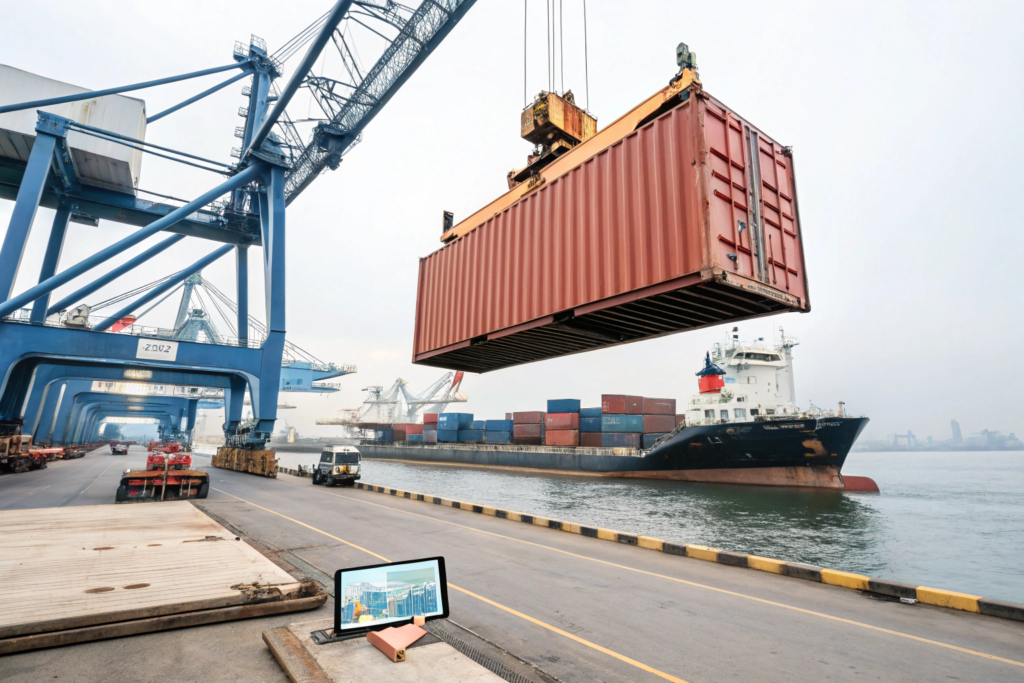
We book your container or air cargo on a confirmed vessel or flight. We provide you with the vessel name, voyage number, or air waybill number, and the estimated departure and arrival dates. We file the ISF with US Customs during this stage. We send you a departure confirmation when the vessel sails or the flight takes off, and a mid-transit status update. You can track the vessel’s real-time position on a marine traffic website. The transit is not a blackout period. You know exactly where your goods are.
The ocean transit from a major Chinese port to a major US West Coast port is 12 to 18 days. To the East Coast via the Panama Canal, it is 25 to 35 days. Air transit is 1 to 2 days in the air, with the total door-to-door time being 5 to 8 days. The transit time depends on the specific port pairs, the vessel speed, and any intermediate port calls. We give you an estimated arrival date at the time of booking and update it if the vessel schedule changes.
During the transit, we file two critical documents with US Customs. The ISF, or Importer Security Filing, is filed at least 48 to 72 hours before vessel departure. The customs entry summary is filed while the vessel is at sea, so it is processed and conditionally released before the vessel docks. This pre-filing is what allows your container to be discharged and immediately available for pickup, bypassing the days of delay that occur when the entry is filed after arrival. You receive a "Customs Entry Filed" notification during the transit. No action is required from you. The paperwork is happening while your goods are moving.
How Do You Track Your Container During Ocean Transit?
You have the vessel name. You type it into Google. You find a marine traffic website with a map and a little ship icon. You want to know if that icon is accurate and if you can trust the ETA.
The vessel tracking websites like MarineTraffic and VesselFinder use satellite and terrestrial AIS data to show the real-time position of ships. The vessel name on your booking confirmation is the search term. Type the vessel name, and you see its current position, speed, and heading. The ETA shown on public sites is an estimate based on the current speed and course. The official ETA from the carrier is more accurate and is the one we provide in our status updates. Public tracking is a useful tool for your peace of mind. You can watch your container move across the ocean. Many of our clients do this daily. It makes the long transit feel less abstract.
What Happens If the Vessel Is Delayed?
Your ETA was March 15th. The date comes and goes. The vessel is still showing as "at sea" on the tracking website. You have a retail promotion scheduled for March 20th. You are panicking.
Vessel delays happen for many reasons: port congestion at a previous call, bad weather, mechanical issues, or labor actions. We monitor the vessel schedule daily using carrier updates and port terminal data. If a delay affects your ETA by more than 24 hours, we notify you proactively. We do not wait for you to notice and ask. The notification includes the reason for the delay, the new ETA, and our assessment of the impact on your delivery timeline. If the delay jeopardizes a critical deadline, we discuss contingency options. Can we switch the inland delivery to a faster trucking service? Can we transload instead of draying the container directly? Sometimes the lost time can be recovered in the destination handling. Sometimes it cannot. In either case, you know about the delay early enough to adjust your plans.
Stage Four: How Do We Clear US Customs?
The vessel is approaching the US port. The customs entry has been pre-filed, but clearance is not automatic. CBP reviews the entry data, runs risk algorithms, and either releases the shipment or flags it for examination. This is the regulatory gate between the international voyage and the domestic delivery.
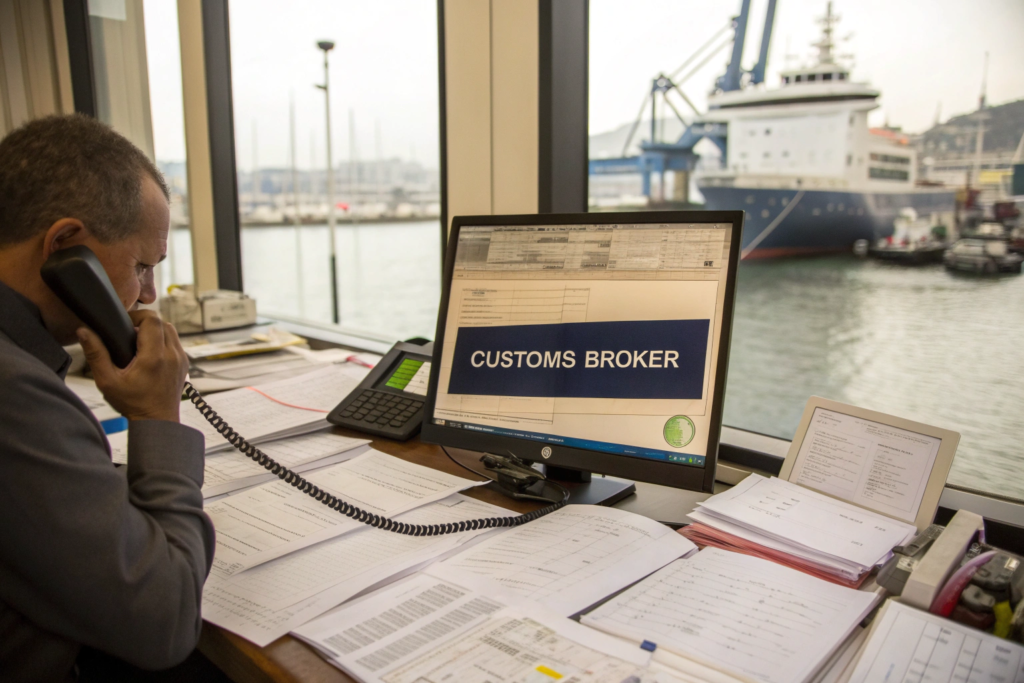
We clear US customs on your behalf using our in-house customs brokerage. The entry is pre-filed while the vessel is at sea. When the vessel docks, the entry is typically already conditionally released. We pay the duties and taxes to CBP using our continuous customs bond. If CBP flags the shipment for examination, our local team manages the exam process at the Centralized Examination Station. You receive a "Customs Cleared" notification, or an exam status update if applicable. The clearance process is managed entirely by us.
For a first-time importer, US customs is the most intimidating part of the process. The reality is that standard consumer goods, correctly classified and honestly valued, clear customs smoothly over 95% of the time without an exam. The problems arise when importers misclassify goods, under-declare values, or fail to meet partner government agency requirements.
We prevent these problems by classifying your goods correctly before we file the entry. We use the detailed product information you provide to assign the correct HTS code. We declare the true transaction value from your commercial invoice. We check for any agency requirements: FDA for food-contact items, CPSC for children’s products, FCC for electronics. If your product needs a specific certificate or registration, we tell you before we file the entry. The customs entry is a legal document. We treat it with the accuracy it requires. You approve the key data elements before we file. You are not a passive bystander in the clearance process; you are an informed participant.
What Happens During a CBP Examination?
Your shipment status changes to "CBP Exam Hold." You imagine your cartons being ripped open and your goods damaged. You do not know how long it will take or what it will cost.
A CBP exam is a routine screening, not an accusation. There are three types. A VACIS X-ray scan is non-intrusive and usually clears in 24 to 48 hours. A tailgate exam involves opening the container doors and inspecting a sample of cartons. An intensive exam involves unloading the entire container. Most exams are X-ray or tailgate. We have a local team at the port that goes to the CES exam site. We are present when the container is opened to ensure careful handling. We arrange repacking after the exam. The exam cost is included in our quote up to a standard amount. The timeline for a routine exam is 3 to 5 days. We update you on the exam status and the expected release date. The vast majority of exams result in a clean release.
How Do We Pay the Import Duties on Your Behalf?
You read that you need to pay duties to CBP, but you do not have a CBP account. You do not know how to make the payment. You are worried the goods will be held until you figure it out.
For DDP shipments, we pay the duties on your behalf. We calculate the duty amount based on the HTS code and the declared value. We include the duty in your single invoice. We pay CBP directly from our duty account using our continuous bond. You receive a copy of the CBP Form 7501 Entry Summary, which shows the duty paid. For FOB shipments where you manage your own customs, your customs broker handles the duty payment using your bond. We provide all the necessary documentation to your broker. The duty payment process is invisible to you in a DDP arrangement, and it is supported by us in an FOB arrangement.
Stage Five: How Do We Handle the Port and Drayage?
Customs is cleared. The container is discharged from the vessel and sitting in the terminal stack. It needs to be picked up and moved to the next point, either a transload warehouse, a rail ramp, or directly to your warehouse. This is the drayage stage, and it is the most operationally unpredictable leg of the entire journey.
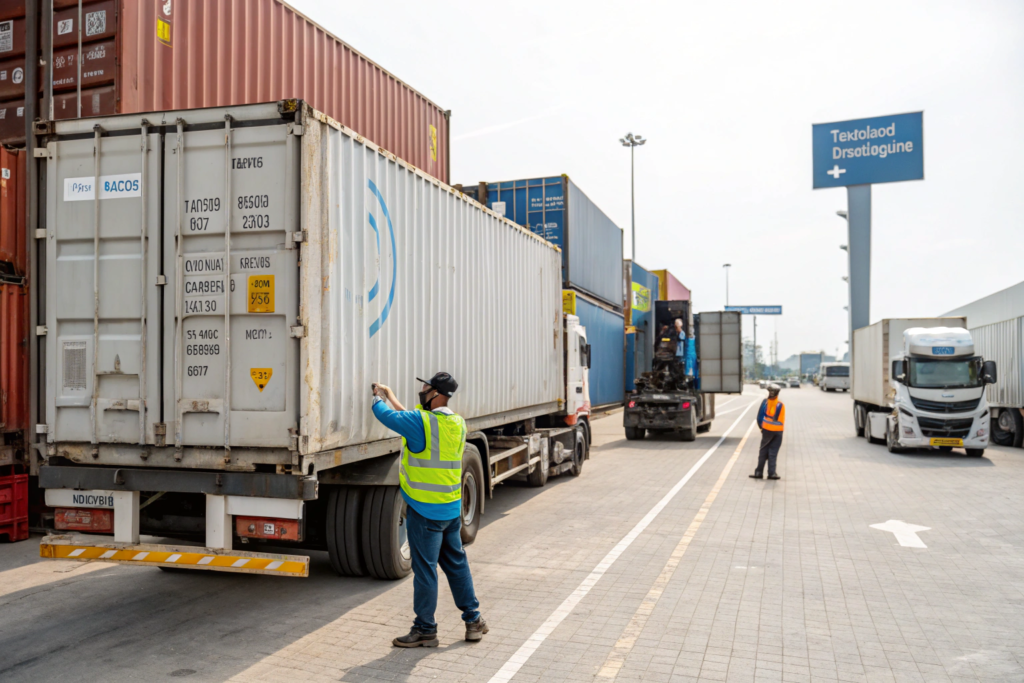
We arrange drayage with our pre-vetted trucking partners. We book a delivery appointment at the terminal as soon as the container is discharged and customs is released. We confirm chassis availability at the time of booking. The trucker picks up the container, and we update your status to "Out for Delivery" if going directly to your warehouse, or "En Route to Transload" if a transload is planned. The drayage leg is managed with real-time GPS tracking on the truck.
Drayage is a specialized trucking service. The driver must have a Transportation Worker Identification Credential to enter the port. The trucking company must have an appointment booked through the terminal’s system. The chassis must be available and in roadworthy condition. These three requirements cause the most common drayage delays. A driver without a TWIC card is turned away. A missed appointment slot means the trucker must rebook, sometimes days later. A chassis shortage means the container cannot leave the terminal even if the trucker is ready.
We manage these risks actively. Our drayage coordinator monitors the terminal appointment system and books the earliest available slot. We have chassis pool agreements in place at major ports. We confirm chassis availability before the trucker is dispatched. We do not send a trucker to a terminal without a confirmed appointment and a confirmed chassis. This coordination prevents the dry runs and delays that plague poorly managed drayage. You see the drayage status in your client portal: "Appointment Booked," "Trucker Dispatched," "Container Picked Up."
What Is the Difference Between Direct Drayage and a Transload?
Your container is at the Port of Los Angeles. Your warehouse is in Phoenix, Arizona. You could dray the container directly to Phoenix, but the trip is 370 miles each way. The container needs to be returned empty to the port. The trucker charges for the return trip.
Direct drayage is moving the container intact from the port to your warehouse. This is the simplest option for local deliveries within 100 miles of the port. For longer distances, transloading is often more cost-effective. The container is drayed a short distance to a transload warehouse near the port. The goods are unloaded from the container and loaded into a domestic 53-foot dry van trailer. The dry van is lighter, more fuel-efficient on the highway, and does not need to return to the port. The empty container is returned to the port quickly, avoiding detention charges. We analyze your delivery address distance from the port and recommend direct drayage or transloading based on cost and transit time.
How Do We Prevent Demurrage and Detention Charges?
Your container arrived on Monday. You have five free days. You do not arrange delivery until Thursday, and the trucker cannot come until the following Tuesday. You are now on day eight. Three days of demurrage have accrued.
We track the free days for every container. When the container is discharged, we send you a notification that includes the "Last Free Day" date. We book the delivery appointment before that date. If a delay is unavoidable, we tell you the demurrage cost before it accrues so you can make an informed decision. We also coordinate with your warehouse to ensure a crew and a dock are available on the delivery day. The combination of proactive tracking, early appointment booking, and receiver coordination keeps most of our shipments within the free day window. Demurrage and detention are avoidable costs, and we treat them as a process failure to be prevented, not a revenue stream to be collected.
Stage Six: How Do We Deliver Your Goods to Your Final Warehouse?
The container is on the truck, or the dry van is loaded. The final miles of the journey are underway. You are about to see your goods for the first time. This is the moment of truth, and it needs to go smoothly. A botched delivery creates a terrible lasting impression, even if the previous 99% of the journey was flawless.
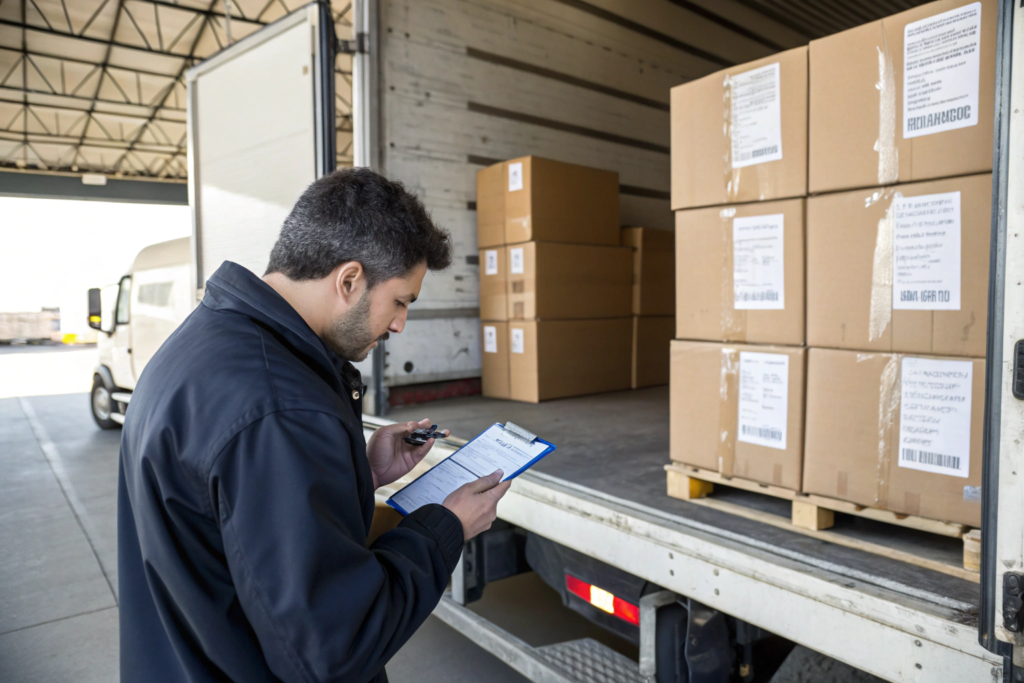
We schedule the delivery appointment with your warehouse at least 48 hours in advance. We provide the delivery ETA, the trucker’s contact information, and the vehicle details. The trucker calls you one hour before arrival. You inspect the cartons for visible damage, count the cartons against the packing list, and sign the delivery receipt. If there is any damage, you note it on the receipt before signing and photograph it. We send you the digital POD within 24 hours. The journey from factory to warehouse is complete.
The final delivery is the only stage you physically witness. We want it to be uneventful and professional. The delivery appointment is scheduled with your receiving team. We confirm the dock door availability, the forklift availability, and the receiving hours. If your warehouse requires a lift-gate truck because there is no dock-level loading, we dispatch a truck with a lift gate. If your warehouse is in a residential area with truck restrictions, we dispatch a smaller box truck. The delivery vehicle is matched to the delivery conditions.
When the trucker arrives, they present the delivery receipt. The receipt lists the shipment reference number, the pallet or carton count, and the container or trailer number. You count the pieces as they are unloaded. You check for crushed, torn, or wet cartons. If everything is in order, you sign the receipt clean. If there is damage, you note it on the receipt. Your notation is the basis for any insurance claim. We email you the signed POD within 24 hours. The POD is the final document in the shipment file. It proves the goods were delivered and received. We archive it in your client portal alongside the BOL and the customs entry.
What Should You Do If You Discover Damaged Goods at Delivery?
You signed the delivery receipt clean. Then you open the cartons an hour later and find broken products inside. You think you have no recourse because you already signed. You may still have options, but the process is harder.
Inspect the cartons before you sign. If the external carton is crushed, cut, or wet, open it while the driver is still there. If the contents are damaged, note the damage on the delivery receipt. Write "Carton #5 crushed – contents damaged – subject to inspection." Take clear photos of the damaged carton and the damaged products. Sign the receipt with the notation. Then contact us immediately. We will guide you through the insurance claim process. If you discover concealed damage after the driver has left, photograph the damage and the carton, and contact us within 48 hours. Concealed damage claims are harder to win because the carrier will argue the damage occurred after delivery. The best protection is to inspect the cartons at the time of delivery.
How Do We Handle a Delivery Appointment That the Warehouse Misses?
The trucker arrives at the scheduled time. Your warehouse manager says, "We are not ready. Come back tomorrow." The trucker cannot wait and cannot come back tomorrow. The delivery is aborted.
A missed delivery appointment is costly. The trucker charges a dry run fee, typically $200 to $400. The delivery must be rebooked, which can add days to the timeline and push you into demurrage or detention. We reduce this risk by confirming the appointment with your receiving team 48 hours before delivery and again 24 hours before. We ask for a contact name and a direct phone number. If your warehouse has a history of missed appointments, we discuss the pattern with you and suggest alternative receiving arrangements, such as delivery to a third-party warehouse that is more reliable. We cannot control your warehouse, but we can build a process that minimizes the risk of a missed appointment.
Conclusion
Moving goods from a factory in China to a warehouse in the USA is a complex, multi-stage process. But when you break it down into its six component stages, it becomes a manageable, understandable system. Factory pickup. Origin consolidation and export clearance. Ocean or air transit. Destination customs clearance. Port handling and drayage. Final warehouse delivery.
At GeeseCargo, we have built our operations around this six-stage pipeline. We control the physical movement at each stage. We manage the documentation. We communicate the status. You have a single point of contact who oversees the entire journey. You do not coordinate a Chinese trucker, a Chinese customs broker, an ocean carrier, a US customs broker, a port trucker, and a delivery trucker. You coordinate with your GeeseCargo account manager, who coordinates all of them on your behalf.
The journey from factory to warehouse is the physical manifestation of your business. It is your product, your investment, and your brand reputation, moving through a global supply chain. It should not feel like a black box. It should feel like a process you understand and control. That is the service we provide.
If you have a shipment ready to move, or if you just want to understand what the journey would look like for your specific product, go to GeeseCargo.com and send me the factory address and your warehouse address. I will map out the six-stage pipeline for your specific route and give you a transparent, all-inclusive quote. Let’s move your goods with confidence.