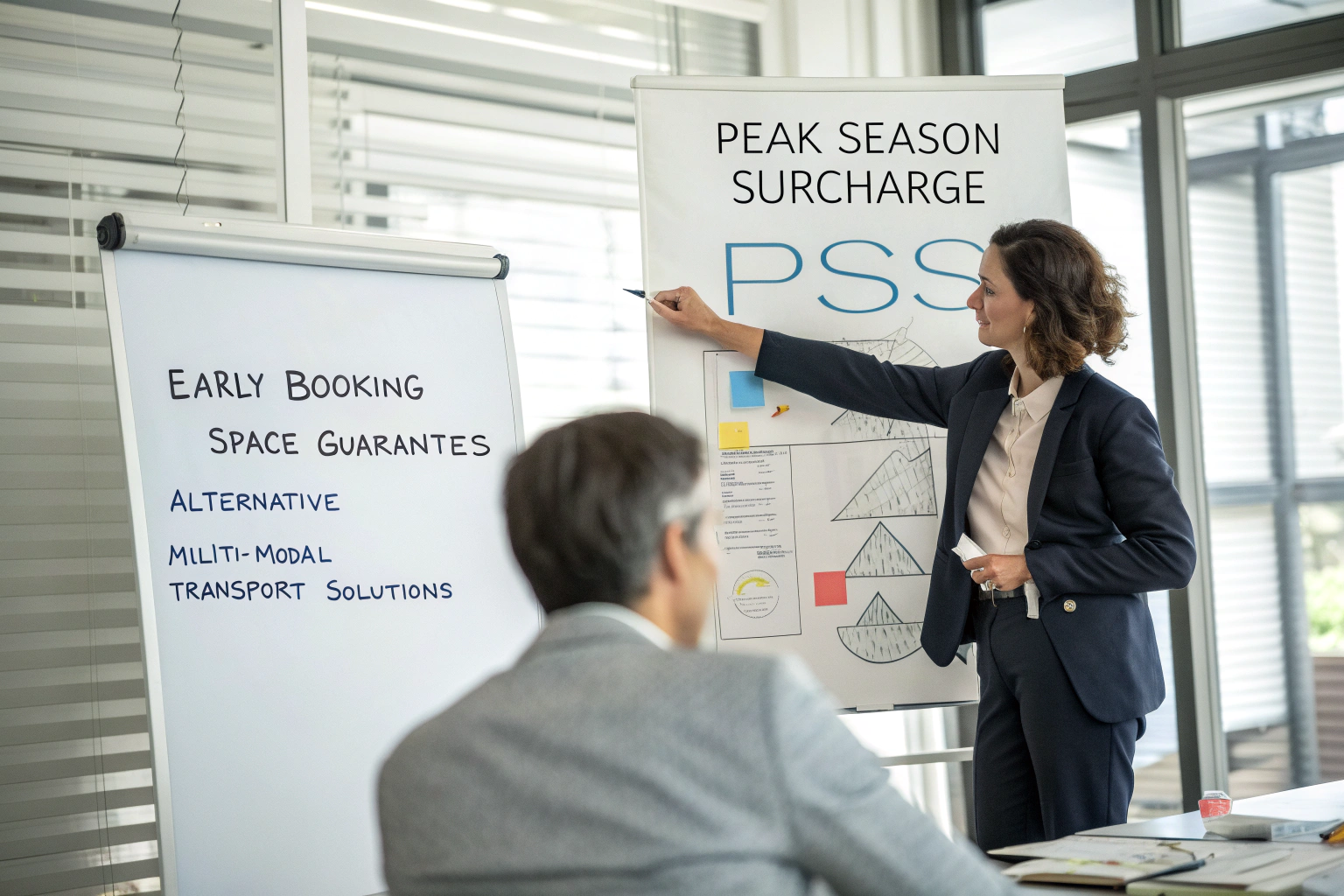
You feel it coming every year. The weather turns cold. The holidays approach. Your factory tells you the goods are ready. You call your forwarder for a rate. The number makes you choke. It is triple what you paid in June. You did not budget for this. Your margin evaporates. You cannot raise your retail price overnight. You are trapped.
I built GeeseCargo to break this cycle. The Peak Season Surcharge, or PSS, is a fee that carriers impose when demand exceeds supply. It is legal. It is standard. But it is not inevitable. I have spent years creating a system that routes around the surcharge, not through it. I use early booking, space guarantees, alternative gateways, and multi-modal tricks. I treat the peak season like a chess game, not a weather disaster. You do not have to be a victim of the calendar. You can be the one who planned ahead and paid the normal rate while your competitors panicked. Let me show you exactly how we kill the PSS before it kills your budget.
What Is Peak Season Surcharge and When Does It Apply?
You see "PSS" on a bill. You pay it. You do not question it. You think it is just a fact of life. It is not. It is a specific fee with specific triggers. Understanding the definition is the first step to killing it.
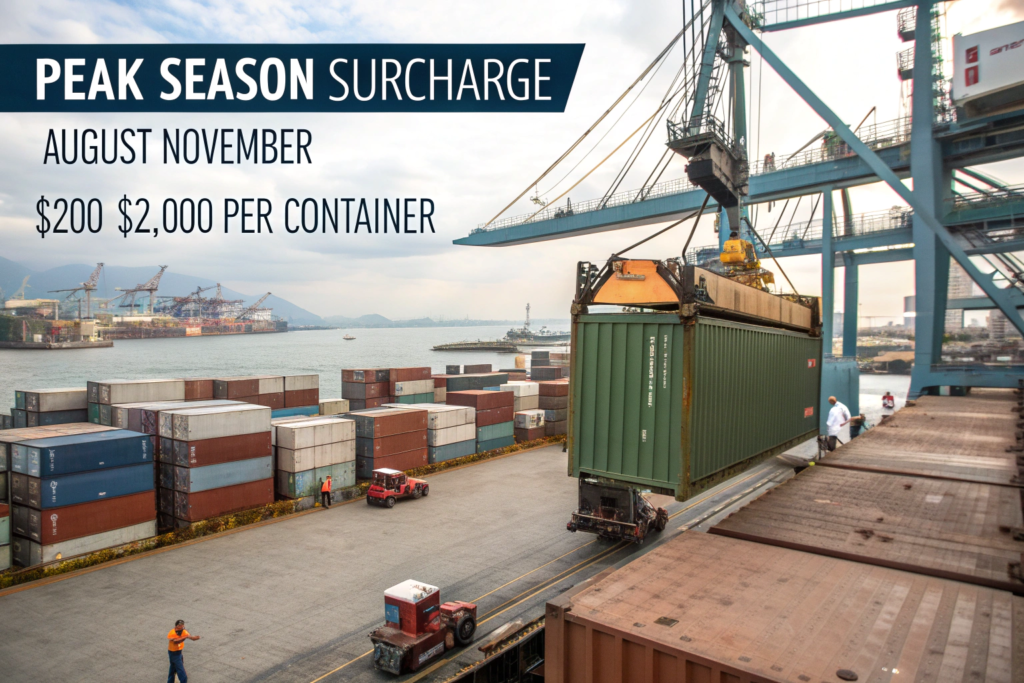
A Peak Season Surcharge is a temporary fee added by the steamship lines. It usually activates from August to November. It covers the Christmas and back-to-school rushes. The carriers justify it as a cost for deploying extra ships and equipment. In reality, it is often a pure supply-and-demand lever. When the ship utilization hits 95%, they push the button. The surcharge can range from 200 dollars to 2,000 dollars per container. It applies per box, not per kilogram. If you ship a 40-foot container of clothing, you pay it regardless of how much the goods inside are worth. At GeeseCargo, I separate the real physical costs from the opportunistic fees. I teach my clients which surcharges are mandatory government taxes and which ones are negotiable. PSS is negotiable if you have a strong contract and a smart forwarder.
Let’s break down the timing and the specific triggers that give the carriers the right to charge you more.
Why Do Carriers Announce PSS During the Back-to-School Rush?
The shipping lines are smart. They follow the retail calendar. The back-to-school rush in July and August kicks off the rate hikes. Factories in China are pumping out clothing and accessories for American students. Every brand is desperate to get goods on the shelf by mid-August.
This desperation is what the carriers exploit. They announce a Rate Restoration Initiative or a PSS just as the booking volume spikes. They know you cannot say no. I prepare for this rush in April. I look at your sales projections and pre-book the space before the carrier rate announcement is even drafted. I reserve empty containers at the dry ports before the shortage hits. By the time the official surcharge letter lands in my inbox, your box is already loaded and sailing at the old rate. Early action is our first defense against the back-to-school squeeze.
Does the Chinese Golden Week Create a Double Surcharge Spike?
October hits. China closes for National Day. Factories stop. Ports slow down. The week before the holiday, everyone panics. They try to ship everything out before the gates shut. This panic creates a second, vicious spike. Right after the holiday, the backlog is huge, and carriers impose another round of surcharges to "manage the flow."
I navigate this double spike by adjusting your production schedule. I communicate with your factory directly. We aim to pull your cargo out of the factory gates two weeks before the Chinese National Holiday madness begins. If we miss that window, we do not fight the rush. We wait. We ship immediately after the holiday, using the "post-holiday recovery" slots which are often cheaper than the pre-holiday panic slots. It takes close coordination with the port terminal operations, but we save you the massive pre-Golden Week premium.
How Can Early Booking Strategies Block Unexpected Surcharges?
Time is the cheapest thing in logistics. You don’t believe me. You think speed costs money. True. But planning costs nothing. An empty vessel has zero value to a carrier. They need your booking forecast more than you need their ship. When you give them a forecast early, you give them stability. They reward stability with lower rates.
Early booking is my favorite tool. It does not require a big deposit. It does not require a complex contract. It just requires a decision. In March, we forecast your September space. We sign a forward contract. The carrier does not know if the market will be hot or cold in September. They are hedging their own risk. They give us the base rate with no PSS. When September rolls around and the spot rate is sky-high, we simply load your containers under the March agreement. You skip the chaos entirely. This is not insider trading. It is smart purchasing.
Let’s look at the specific mechanisms that make early booking a profit-saver.

What Is a Forward Freight Agreement and How Does It Lock Rates?
A Forward Freight Agreement is a contract that sets the price today for a shipment that moves in the future. It is a common tool in the dry bulk world, but I have adapted it for containerized clothing and gift imports.
I sit with you and lock the all-in rate for a specific lane, say Shenzhen to Los Angeles, for the September sailing window. We agree on a volume commitment. You commit to shipping 5 containers. I commit to moving them at a fixed price of 3,000 dollars each, with a written clause that PSS is capped or waived. If the spot market jumps to 6,000, you still pay 3,000. This works because the carrier values volume certainty over spot price potential. This tool eliminates the "budget guessing game" that plagues your quarterly planning.
Why Does Rolling Cargo Forward During Slack Season Cut Costs?
You cannot just book space and leave it empty. The carrier will cancel the booking. But what if you have a flexible product? What if your accessories or gifts are not strictly seasonal? You can manufacture and ship before the peak.
I call this strategy "Building the Buffer." In June and July, the factories are quieter. The rates are lower. I advise you to produce your classic, non-trendy items early. Ship them in the slack season. Store them in your US warehouse. Yes, you pay a bit of warehouse storage, but the freight savings are often three times the storage cost. This also hedges against factory delays in the busy months. By rolling cargo forward, we skip the August stampede completely. Your goods are already safely on American soil while your competitors are fighting for a spot on the vessel.
Which Alternative Routing Options Bypass Congested Ports?
The West Coast is a bottleneck. Los Angeles and Long Beach are the default. Everyone goes there. When everyone goes to the same place, the place breaks. The surcharges pile up. The congestion fees kick in. Your box sits for a week.
I don’t force your cargo through a clogged pipe. I use alternative gateways. The United States has a massive coastline. We can enter through the Pacific Northwest. We can enter through the Gulf. We can even go direct to the East Coast. This is not about geography. It is about fluidity. A port with no queue is a cheap port. I calculate the total door-to-door cost, not just the ocean freight to the gateway. Sometimes paying 400 dollars more for ocean transport to a quiet port saves you 1,200 dollars in waiting penalties and trucking chaos. This is the multi-port advantage that my relationships at major global ports give you.
Here is how we break the mold of the standard California route.
Can East Coast All-Water Routes Be Cheaper During Peak Season?
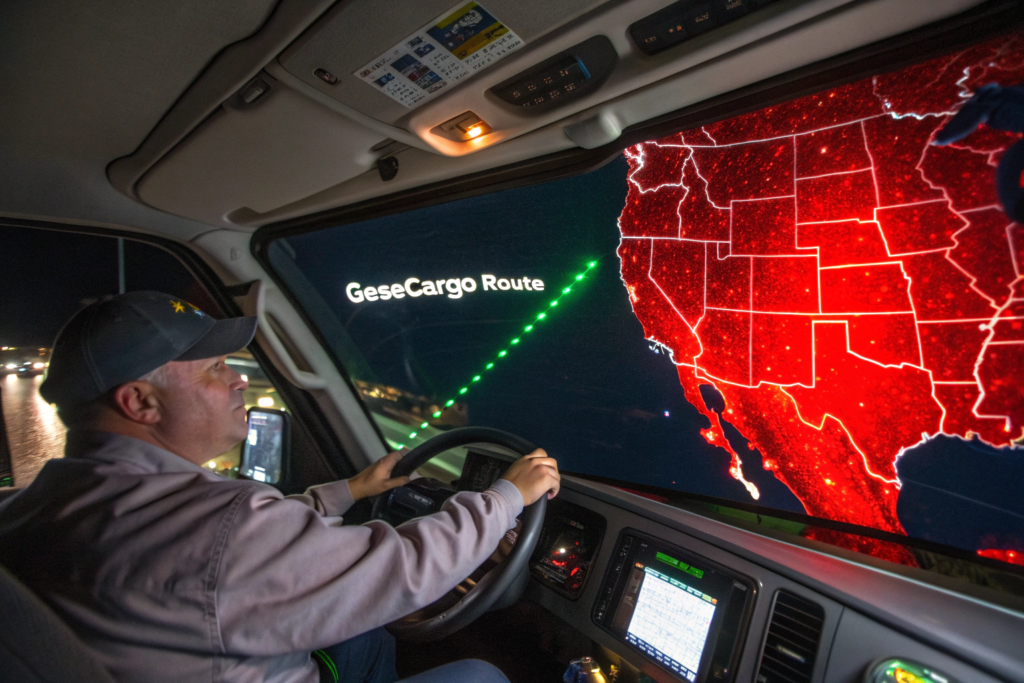
The standard route is Shanghai to Los Angeles, then rail to Chicago. The alternative is Shanghai through the Panama Canal directly to Savannah or New York. The ocean leg is longer. The fuel cost is higher. The base rate is usually slightly higher.
But during peak season, the math flips. The West Coast PSS can be brutal. The intermodal rail delay in Chicago can add weeks. By going all-water to the East Coast, you often pay a lower all-in landed cost for East Coast destinations. You skip the West Coast congestion surcharge entirely. You skip the rail transfer risk. I use this route heavily for my clients who distribute to the Eastern Seaboard. The Panama Canal transit is predictable and avoids the trucking shortages that plague California. This is not a detour. It is a bypass.
How Does Using Gulf Ports Help You Dodge West Coast Gridlock?
Houston. Mobile. New Orleans. These ports are often forgotten by importers. They shouldn’t be. The infrastructure is strong, and the labor is stable. For goods destined for the Midwest and South, the Gulf route is a secret weapon.
I route a significant volume of gifts and apparel through the Gulf Coast ports during the autumn peak. The dwell time is often measured in hours, not days. The chassis availability is better. The trucking radius is wide open. By diverting here, we effectively dodge the Pacific Maritime Association labor volatility and the LA gridlock. The base ocean freight might have a small delta, but the absence of the "Congestion Mitigation Fee" makes the landed cost highly competitive. It’s about choosing the path of least resistance.
What Value-Added Services Keep Your Door-to-Door Costs Down?
Moving the box is the easy part. The handover points are where money leaks. The factory load. The customs exam. The final mile delivery. Each touchpoint hides a surcharge. If you only shop for the ocean freight rate, you miss the 20 other fees that hit you at the door.
I sell a Door-to-Door DDP service. That means I take responsibility from the factory floor to your warehouse shelf. You pay one price. That price absorbs the peak season chaos. If the port is congested, I pay the storage, not you. If the truck is late, I pay the waiting time. This forces my internal team to be obsessive about efficiency. We do in-house customs brokerage. We do our own trucking coordination. We pre-assemble the documents so US Customs clears the goods instantly. We don’t give the system a reason to charge a penalty. This integrated service model is the ultimate surcharge killer.
Here are the specific services bundled into our DDP that neutralize hidden fees.
How Does In-House Customs Brokerage Reduce Clearance Delays?
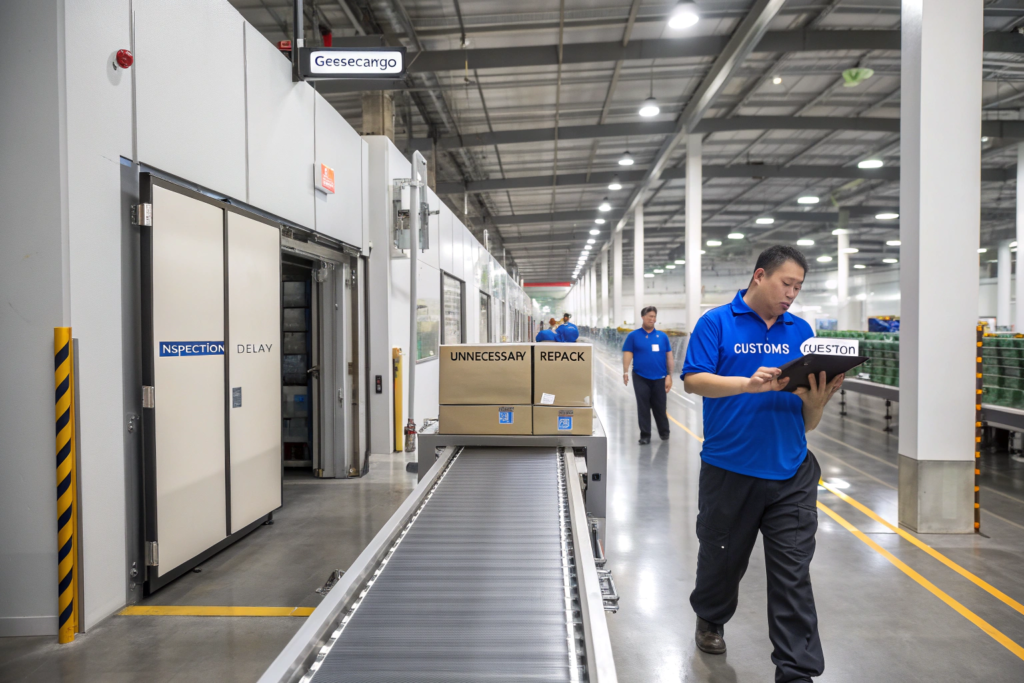
You hire a separate broker. They don’t talk to the forwarder. The left hand ignores the right. A box arrives. The broker hasn’t filed the entry. The clock ticks. The terminal charges storage.
At GeeseCargo, the broker sits next to the operations team. We file the Customs Entry before the vessel docks. We use your shipment’s arrival notice to trigger an immediate clearance. If there is a question about a tariff code, we don’t send an email and wait. We walk over to the compliance desk. We fix it. This in-house synergy means your container gets released hours after docking, not days. The terminal storage fees never have a chance to accumulate. This is the most effective way to keep the peak season port costs at zero.
Why Does Professional Repacking at Origin Eliminate Destination Fees?
Your factory throws the goods in a box. The box is bulging. It’s 3 inches too tall for the pallet. The US warehouse charges a "breakdown fee" for non-standard sizes. Or Customs inspects it because it looks messy.
We stop this at the start. Our consolidation centers in China offer professional repacking and palletization services. We measure the box. We check the stackability. We use standard pallet heights. We label everything clearly with the Fulfillment Center code. When the goods arrive in the US, they flow straight onto the shelf. This preemptive tidiness eliminates the hidden handling charges and the manual labor fees that American warehouses love to add during the busy season.
Conclusion
The Peak Season Surcharge is a choice. It feels like a force of nature. It is announced with authority. But you can choose not to participate. You can choose to plan your production in the spring. You can choose to ship before the rush or through a different door. You can choose a partner who has the relationships and the infrastructure to shelter you from the storm.
I have given you the blueprint. We talked about the calendar triggers. We talked about early booking commitments and forward freight agreements. We talked about the quiet ports that welcome your cargo with open arms. We talked about wrapping these strategies inside a true DDP service where the risk shifts to us.
My job at GeeseCargo is to make your logistics boring. I want your freight bill to be predictable. I want it to be flat. I want you to focus on the design of the gift, the quality of the stitching, and the excitement of the sale. When the PSS announcement comes out, I want you to glance at it, smile, and delete the email, because you know it does not apply to your shipment.
This holiday season, let’s run a different play. Let’s lock in your space early. Let’s pick the quiet port. Let’s keep your margin intact.
Your goods are ready in the factory. I am ready to move them. Let’s beat the surcharge together.