Your spring collection launch is in six weeks, and your factory just told you the fabric dyeing is delayed by ten days. You feel the blood drain from your face. You have already paid for the influencer campaign, the retail buyer appointment is locked in, and the warehouse slot is booked. A late shipment does not just delay sales; it kills the whole season. I have sat with fashion brand owners during these exact moments of panic, and I can tell you that the problem is rarely just the factory. The problem is a supply chain that has no buffer.
At GeeseCargo, we manage seasonal inventory shipping by reverse-engineering your launch calendar. We start with your in-store date and work backward through every logistics checkpoint: ocean transit, customs clearance, trucking, and de-vanning. We then build a buffer into each leg and give you three shipping speed tiers: economy ocean for baseline stock, express ocean for peak replenishment, and air freight for emergency voids. You never miss a floor-set date because of a logistics surprise.
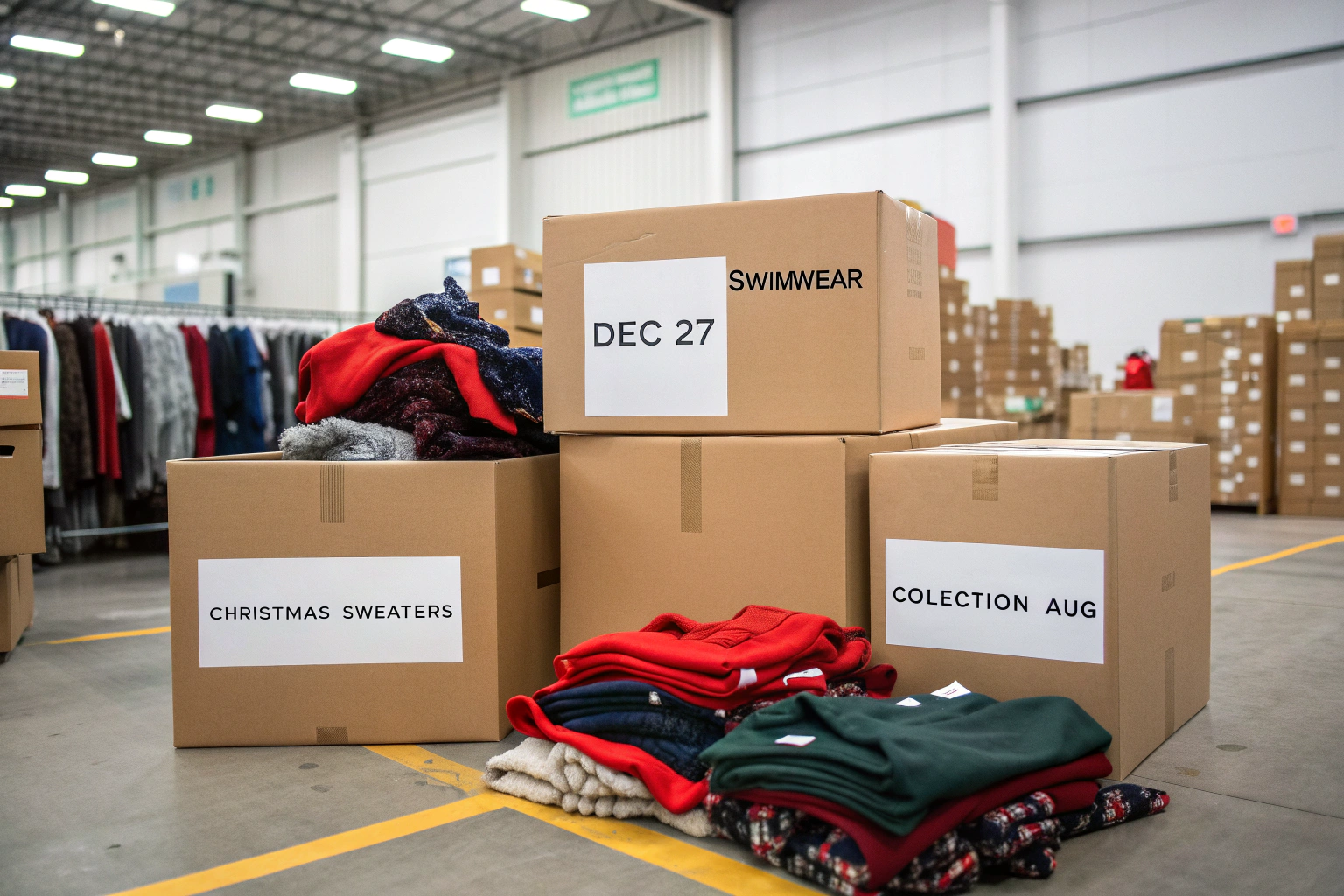
Seasonality punishes bad planning without mercy. A Christmas sweater delivered on December 27th is worthless. A swimsuit collection that lands in August just sits in the warehouse accumulating storage fees. You need a freight partner who understands the fashion calendar as well as you understand your design sketches. Let me show you exactly how we time your shipments so that your inventory arrives not just "on time," but exactly when your customers are reaching for their wallets.
How Do You Plan a Fashion Shipping Calendar for Peak Selling Seasons?
You probably have a launch date in your head, and you tell your forwarder to "get it here by then." But you do not know that the week before Chinese New Year, every factory in Guangdong is rushing containers to the port, and the vessel space sells out at triple the price. You missed the booking window. Now you pay a peak season surcharge of $800 and your container gets rolled to the next ship.
We build your shipping calendar together before you even cut the fabric. We overlay your production timeline onto our logistics risk calendar. This calendar marks every known disruption: Chinese New Year, Golden Week, peak retail shipping season from August to October, and the Atlantic hurricane window. We then lock in vessel space 30 days in advance using our allocation contracts with the ocean carriers. You get a fixed price and a guaranteed loading slot.
I remember working with a women’s fast-fashion brand that had four major drops per year. They were always late on the Fall/Winter drop because they started production in late June, right when the back-to-school shipping rush was starting. Their container sat at Yantian port for five days waiting for an empty spot on the vessel. By the time the coats hit the store in New York, the competitor’s racks were already half empty.
We flipped their timeline. We looked at the Fall delivery target of August 15th. We subtracted 14 days for ocean transit from Shanghai to Los Angeles. We subtracted 5 days for US customs clearance and trucking to their warehouse in Dallas. We subtracted another 7 days for Chinese export customs and drayage to the port. That gave us a cut-off date of July 20th for the container to be at the terminal. We then told the factory the absolute last day they could pack the goods was July 10th. We built a five-day buffer just for trucking from the factory to the port. Then, because we knew Golden Week bookings would start to tighten space in late July, we booked the vessel slot on June 20th. The space was confirmed before the rush. The coats arrived on August 12th, three days early. The client finally had breathing room to inspect the goods and stage the retail distribution.

How Does Chinese New Year Disrupt My Spring Inventory Flow?
Every January, you send an email to your factory asking for a progress update, and you get an out-of-office reply: "Factory closed from January 20th to February 10th." Then you remember: Chinese New Year. It is not just a one-week holiday. Production stops for two to three weeks, and the entire logistics network bottlenecks for a month before and after.
We solve this with a pre-CNY rush program. We tell our fashion clients to treat January 15th as a hard deadline for all Spring inventory to be ex-factory. Everything must be packed and ready for pickup before the migrant workers leave for their hometowns. We send our trucks to the factories on January 10th for early pickups. We stuff containers early and store them at the off-dock container yard near the port. This yard is secure and has a direct gate lane into the terminal. On the first day the terminal opens after the holiday, our containers are already sitting at the front of the queue. While other brands are still waiting for their factories to reopen and pack boxes, our containers are already on the water, steaming toward Los Angeles. This strategy alone has saved our clients three to four weeks of delay on Spring collections. We learned this lesson the hard way years ago, and now we never let a fashion brand walk blindly into the Chinese New Year logistics shutdown.
What Is a Rolling Vessel Cut-Off and Why Does It Kill Your Launch Date?
You booked a container on the "Ever Lucky" vessel sailing on March 10th. Your truck delivers the container to the terminal on March 9th. You think you are safe. Then the forwarder emails you: "Vessel cut-off advanced. Your container rolled to next vessel, sailing March 17th." Your launch just lost a week.
A rolled container means the shipping line overbooked the vessel and your box got bumped. It happens often during peak season. We protect you with a "premium loading" option. For a small additional fee, the carrier guarantees that the container will not be rolled. It is an insurance policy on the sailing date. We also use multiple carrier alliances. If the Ocean Alliance vessel is overbooked, we check the 2M Alliance vessel leaving the same day from the adjacent terminal. We do not put all your eggs in one carrier basket. We also physically track the container gate-in. Our operations team in Shenzhen monitors the terminal receiving window in real-time. If the terminal announces a sudden early cut-off, our trucker receives an instant alert and adjusts the departure time. We often get the container into the gate with hours to spare while other forwarders miss the window and get rolled. A seven-day roll costs you a full week of prime selling time. We fight to keep your cargo on schedule.
What Is the Best Freight Mode for Your Spring Collection Baseline Stock?
Your Spring collection is your biggest volume of the year. You have 50 SKUs of floral dresses, linen shirts, and lightweight jackets. You need to ship 3,000 cubic meters. If you pick air freight, you will lose money on every unit. If you pick the slowest, cheapest boat, your goods might arrive after the cherry blossoms have already bloomed and fallen. You need the middle path.
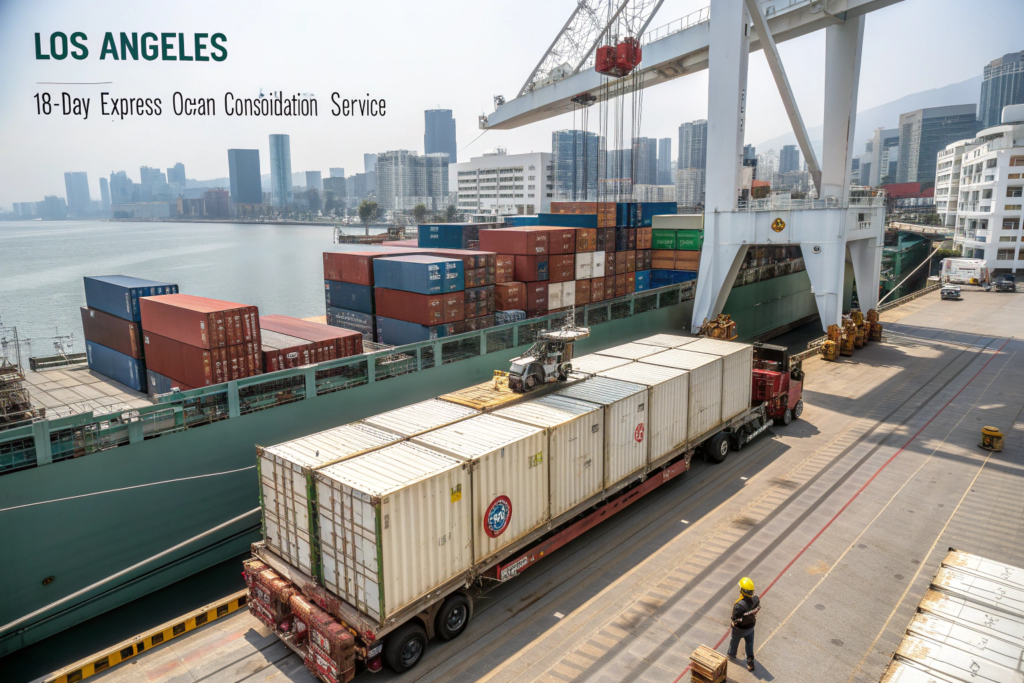
For Spring baseline stock, we recommend our 18-day express ocean consolidation service. Your goods are collected from multiple factories across China, consolidated in our Shenzhen warehouse into full container loads, and shipped on the fastest direct vessel to Los Angeles. The transit time is 12 days on the water. We clear customs within 24 hours of arrival using our continuous bond. The truck delivers to your US warehouse within 48 hours after release. You get a total door-to-door time of 18 days at a cost that is 70% lower than air freight.
I want you to understand why consolidation matters for seasonal volume. If you have factories in Ningbo, Guangzhou, and Shanghai each producing 10 pallets of goods, you have a problem. A full container holds 20 pallets. You do not have 20 pallets from any one factory. If you ship Less than Container Load (LCL) from each city, your goods get mixed with cargo from other companies, handled at multiple cross-docks, and delayed at every transshipment point. LCL Spring dresses arriving in late April are dead inventory.
Our consolidation warehouse in Shenzhen solves this. We pick up the LCL lots from Ningbo, Guangzhou, and Shanghai using our own domestic trucking network. They all arrive at our warehouse within three days. Our team sorts and palletizes them by SKU, by store destination if needed, and builds full container loads. We stuff the container to maximize density without crushing the cartons. Then we put that container on a direct express service to Long Beach. Because it is a Full Container Load (FCL) now, it does not wait for consolidation at the destination port. It is discharged and immediately available for pickup. This hybrid model gives you the low cost of LCL pickup with the speed and security of FCL ocean transit. For Spring deliveries, this is the sweet spot. You maximize margin on the bulk stock while hitting the March shelf date.
Why Is LCL Shipping Risky for Seasonal Fashion Timelines?
You choose LCL because it is cheaper per cubic meter when you only have a few pallets. The forwarder says it will arrive in 25 days. You budget for that. But LCL has hidden waiting times. Your goods sit at the origin CFS warehouse for three days waiting for the master container to fill. At the destination, the container sits for another four days waiting for deconsolidation. You have no control over when the other shippers’ goods arrive.
Every extra day in a CFS warehouse is a risk. Warehouses are dusty and not climate-controlled. We have seen spring dresses arrive wrinkled and musty from sitting in a humid origin CFS for a week. For seasonal fashion, the precision of timing outweighs the small LCL savings. If you miss the season by one week, you mark down the goods by 30%. That markdown is ten times more than the LCL savings. We only use LCL for permanent replenishment items, like basic t-shirts that sell all year. For seasonal collections, we always push for consolidation into FCL, even if we have to hold the first batch of cargo for three extra days to fill the box. The math works out because the FCL transit time is predictable, while LCL is variable.
How Do You Manage Multiple Factory Pickups for One Consolidated Shipment?
You have three factories in different cities. Factory A is ready on Monday. Factory B is ready on Wednesday. Factory C is delayed until Friday. You do not want to pay for the container to sit idle, but you cannot miss the Friday vessel cut-off. This coordination is like conducting an orchestra where the musicians are in different time zones.
We use a just-in-time pickup schedule. We do not send the truck to Factory A on Monday and let it sit. We schedule the pickup for Wednesday, the same day Factory B is ready. Factory C’s goods are picked up Thursday night by a dedicated sprinter van and rushed to our warehouse. By Friday noon, all three lots are in our warehouse. Our team has pre-printed all the labels and pre-filed the export customs declaration. The container is loaded Friday afternoon and gates into the terminal by 5 PM for an 8 PM vessel departure. We use a shared online tracking board that the factories can update. When Factory A finishes packing, they click "Ready." Our logistics coordinator immediately adjusts the truck routing. This real-time visibility stops the typical chaos of multiple factory collections. You see the status of every lot on your phone. No more guessing if the factory "forgot" to tell you they were late.
How Do You Rush a Winter Collection Restock Using Air Freight?
A cold snap hits the Midwest in early November, and your puffer jackets start flying off the shelves. Your warehouse manager calls: you have two weeks of stock left, and the next ocean container is still on the water, stuck in a Panama Canal queue. You need 500 jackets in Chicago by next Friday, or you lose the Black Friday sales peak to your competitor.
We activate our air freight express bridge for winter restocks. We keep a standing space allocation with major cargo airlines on the China-US lane. Within 24 hours of your call, we pick up the emergency stock from your factory, process it through our airport bonded terminal, and load it onto the next direct flight to ORD or JFK. The total door-to-door time is 5 to 7 days. You capture the Black Friday sales without paying air freight for the entire season’s inventory.
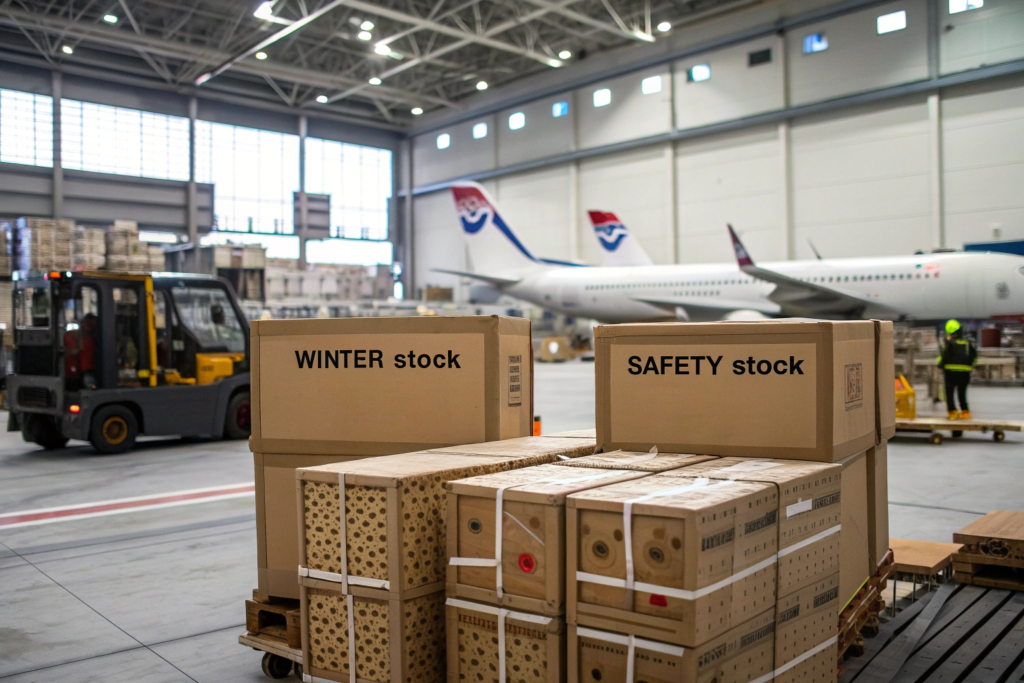
I want you to think of air freight not as your primary shipping method, but as your inventory insurance policy. You ship 80% of your winter stock by ocean at a low cost. That is your margin driver. You hold 20% of your stock back at the factory, unpacked but ready. This is your safety stock. When the sell-through data shows a spike in a specific size or color, we air freight that safety stock to fill the gap. You pay a premium on the logistics for that 20%, but you sell the jackets at full price. The alternative is losing the sale entirely, which costs you 100% of the profit on that unit.
The key to making air freight work for winter clothing is managing the dimensional weight. Puffer jackets are full of air. If the factory packs them in large, loose cartons, you pay for the space, not the weight. Before we fly anything, we ask the factory to vacuum-pack the jackets. A machine sucks the air out of the polybag, compressing the jacket into a flat tile. The volumetric weight drops by 60%. The freight cost per unit drops proportionally. We then pack these flat tiles into sturdy double-wall air freight boxes. Upon arrival in Chicago, our team at the bonded warehouse unpacks the tiles, and the jackets naturally loft back to their original shape within an hour. They are immediately ready for the store floor. This vacuum-pack technique is standard for us on any air-freighted down or synthetic fill jacket. It is the difference between a profitable emergency restock and a panic move that loses money.
What Are the Key Air Freight Gateways for Winter Fashion into the USA?
You need to get the jackets to Chicago, but the flight lands in Los Angeles. A cross-country truck adds two days. You need a faster route. Your forwarder just puts it on the first available plane to wherever is cheapest. You need a strategic entry point.
For Midwest and East Coast winter fashion emergencies, we route through Chicago O’Hare (ORD) or New York JFK. These are direct air freight gateway airports with on-site bonded warehouses and USDA inspection stations for natural down-filled items. If you land in LAX and truck to Chicago, you add 48 hours of ground time and winter road risk. We use direct flights from Hong Kong or Shanghai to ORD. The flight is 14 hours. Customs clearance at the Chicago O’Hare CBP facility is fast because the airport is a major courier hub with ample staff. We can clear the goods and have them on a truck to your suburban warehouse within 8 hours of the wheels touching down. For the West Coast, LAX remains the fastest entry. We have a standing recovery team there that picks up loose cargo immediately from the airline shed and drives it directly to your door, bypassing intermediate warehouses.
How Does Customs Clearance Speed Work for Air Freight vs. Ocean?
You might assume customs is customs, and it takes the same time regardless of transport mode. That is wrong. Air freight customs is inherently faster because the cargo arrives in small, easily scannable units. An entire aircraft of loose cargo can be cleared in hours. An ocean container carries thousands of boxes from dozens of shippers. One flagged box can hold up the whole container.
We leverage the Air AMS (Automated Manifest System) to pre-file your entry. Before the plane leaves Shanghai, we have already transmitted the cargo manifest and the entry summary to CBP in Chicago. The system screens the data in the air. When the plane lands, the goods are often already conditionally released. We also use a special "express consignment" clearance procedure for shipments under a certain value threshold, which speeds up the release even further. For ocean freight, we file the entry 48 hours before arrival, but the physical release still depends on the container being discharged, stacked, and available for examination. Air freight skips the terminal stack entirely. The airline pulls the pallet off the plane, drives it to the bonded shed, and our trucker can back up to the dock as soon as the release is electronic. This process is why a winter restock can land on a Tuesday morning and be on your sales floor by Tuesday afternoon.
How Do You Avoid Dead Inventory with Late-Season Delivery Management?
Your wool sweater shipment arrives on February 1st. The winter selling season is over. The retailers have already switched their floor sets to Spring. You have 2,000 units of sweaters that now go into a dark warehouse corner, accruing storage fees, waiting for a clearance sale nine months from now. The money you "saved" on cheaper freight is eaten up by warehousing costs and deep markdowns.
We prevent dead inventory by shifting you to a split-shipment model with hard final-drop-dead dates. We work with you to define the absolute last date a seasonal item can arrive and still sell at full margin. We then back-schedule the shipping to guarantee delivery before that date. If production misses the deadline for ocean freight, we do not put it on the boat to arrive as dead stock. We immediately escalate to air freight or cancel the shipment at origin, saving you the destination warehousing and markdown cost.
I worked with a boot brand that shipped a Fall line from China every year. They always had a "final order" that left the factory in late October. By the time it arrived by ocean in mid-November, the winter boot rush was already peaking. Those late boots sold, but at a lower velocity. The real problem was the "end-of-season order" that left in November and arrived in December. Those boots sat in the warehouse until the following September, an entire year of storage. When they finally went on sale, they sold at 50% off. The brand lost money on every pair in that December container.
We ran the numbers with them. The ocean freight cost was $4 per pair. The air freight cost was $12 per pair. But the storage cost for holding them for 10 months was $2 per pair per month, totaling $20. The markdown cost was $40 per pair. The total loss from shipping late by ocean was $60 per pair. The extra air freight cost was only $8 more than ocean. We showed them that air freight was actually the cheaper option for that final late batch because it avoided the holding cost completely. Now, we have a hard rule with that client: any order ready after October 15th automatically switches to air freight. They no longer carry winter dead stock. This is the type of decision you cannot make if your forwarder only quotes you the freight price. You need a partner who also understands your inventory carrying cost and your markdown risk.
What Is a Final-Drop-Dead Date and How Do We Enforce It?
You tell your forwarder, "Ship it." They put it on a boat. You do not have a system that says, "If it is not ready by this time, do not ship it." So, the goods arrive anyway, and you own the problem of disposing of them. The decision to ship should be an active, calculated choice, not a reflex.
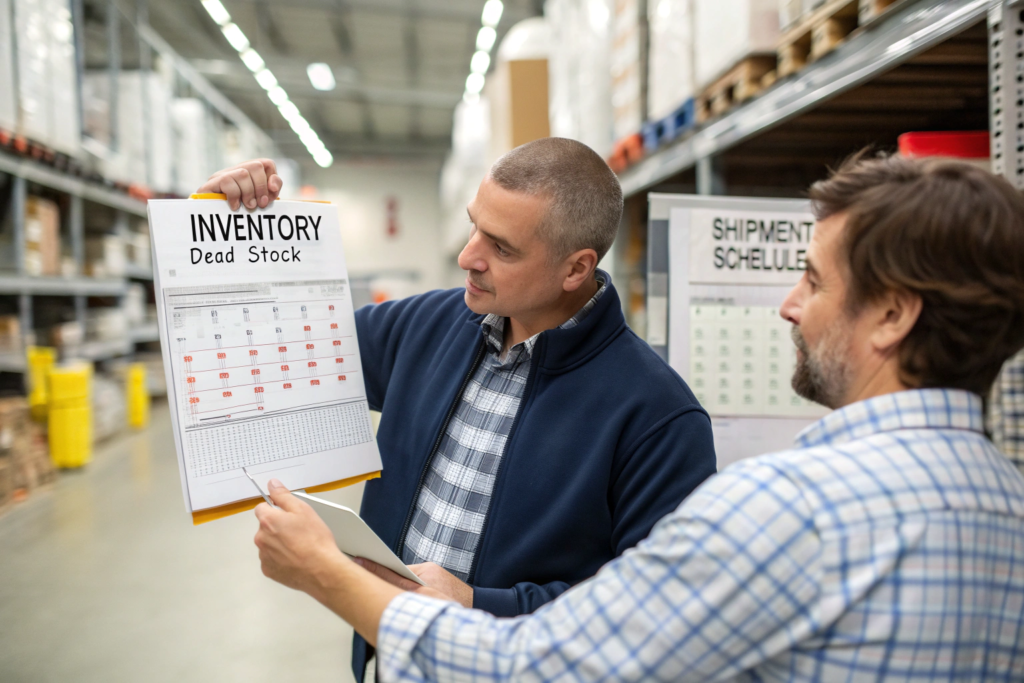
We sit with you and set a Final-Drop-Dead Date (FDDD) for every seasonal PO. This is the date the goods must depart the origin port. If they miss this date, we stop the shipment and call you. We present two options: upgrade to air freight at an additional cost, or cancel the shipment and deal with the stock in China. The cancellation option is sometimes the best financial choice. You can sell the goods to an off-price local Chinese retailer, donate them for a tax write-off, or repackage them for next year. This is a hard conversation, but it saves you money. We act as your financial gatekeeper. Our system automatically flags any shipment that does not gate-in by the FDDD. We do not let it slide. This discipline is what separates a seasonal inventory strategy from a warehouse full of write-offs.
How Can You Sell Late-Season Goods Before They Reach the USA?
The goods are late. You cancel the ocean shipment. Now you have 500 units of a trendy bomber jacket sitting in a warehouse in Guangzhou. You cannot sell them to your US accounts; the season is gone. Do you just take the loss?
We connect you with our network of off-price inventory buyers in Asia and Eastern Europe. Sometimes, a jacket style that is out of season in the US is perfectly in season in Australia or South America. We have logistics partners who can redirect the shipment. Instead of shipping from China to Los Angeles, we ship from China to Sydney or Santiago. The transit is shorter, and the season is flipped. If a global redirect is not possible, we help you sell the goods domestically in China through factory outlet channels. The factory often has relationships with Chinese discount retailers who will buy the branded goods at a low price, provided the labels are cut out or altered. We manage the transaction and the domestic trucking to the local buyer. You recover some cash instead of burning it on US warehouse fees. This is a service that goes beyond standard freight forwarding, but it is essential for fashion brands that live and die by the season.
Conclusion
Managing seasonal inventory is a chess game, and the clock is always ticking. The right move is not always to ship everything by the cheapest method. Sometimes the cheapest method creates the most expensive outcome: a warehouse full of dead stock and a clearance rack full of markdowns.
Our job at GeeseCargo is to align your logistics costs with your retail reality. We use express ocean consolidation to deliver your baseline stock at a margin-protecting cost. We use air freight as a surgical tool to fill the demand spikes without overpaying on the entire volume. And we use hard final-drop-dead dates to stop you from shipping goods that will only create storage bills and heartache. Every decision is backed by a spreadsheet that compares freight spend to markdown risk.
You do not need to become a logistics expert. You need a logistics partner who understands that a winter coat has a sell-by date, and a spring dress has a launch window that cannot be missed. If you want to map out your shipping calendar for the next season, visit us at GeeseCargo.com and share your collection launch dates with me. Together, we will build a logistics timeline that puts your inventory on the floor exactly when your customer is ready to buy.