You find the perfect product in China. The design is beautiful. The factory price is unbeatable. You calculate your margin, and it looks fantastic. Then you remember the tariffs. Section 301. The additional duties. The uncertainty. Your stomach tightens. You do not know what the actual tariff rate will be when your goods arrive. You do not know if a new executive order will change everything overnight. You feel like you are gambling every time you place an order.
GeeseCargo handles US tariffs on Chinese goods by locking in your landed cost before shipment, performing tariff engineering to find the lowest legal duty rate, and monitoring policy changes daily so you never face a surprise tax bill when your container arrives.
I have navigated US trade policy for over a decade. I remember the chaos when the first Section 301 tariffs hit. I saw containers stuck at ports while importers scrambled to pay unexpected bills. I built our customs compliance team specifically to shield our clients from that chaos. In this article, I will explain exactly how tariffs work right now, where the risks are hiding, and how our process keeps your costs predictable and your goods moving.
What Are the Current US Tariffs on Chinese Goods in 2026?
The tariff landscape in 2026 is a patchwork. There is no single rate for all Chinese goods. Some products face only the base Most Favored Nation duty, which ranges from zero to 20% depending on the product. On top of that, many goods still face Section 301 additional duties from the original trade actions. And then there are newer tariff actions on specific sectors.
The current baseline is that most consumer goods from China carry a total duty burden between 10% and 45%. Clothing and accessories often fall into higher brackets. Electronics can be lower. The exact rate depends entirely on the ten-digit HTS code assigned to your specific product. You cannot guess based on the general category. A men’s cotton jacket and a men’s synthetic jacket have different codes and different combined duty rates.

How Do Section 301 Tariffs Still Apply to Clothing and Accessories?
The Section 301 tariffs originated during the trade disputes several years ago. Many of those tariffs remain in effect. For clothing and accessories, most items fall under List 4A, which carries an additional 7.5% duty on top of the base rate. Some items on earlier lists still face the full 25% additional duty.
The base duty for a cotton shirt might be 19.7%. Add the 7.5% Section 301, and your total is 27.2%. On a $30,000 shipment, that is $8,160 in duties alone. If you budgeted for only the base rate, you just lost over $2,000. We check every HTS code against the current USTR Section 301 exclusion lists before we quote your landed cost. We never assume a rate. We verify it.
Are There Any New Tariff Exclusions Available in 2026?
Exclusions come and go. Some are temporary and get extended. Some expire without renewal. In 2026, certain medical products and consumer electronics have regained exclusions. A few clothing items related to safety gear have also been excluded. But the exclusion landscape changes quarterly.
We track the Federal Register notices every week. When a new exclusion is announced, we cross-check it against our active shipments and our clients’ product catalogs. If your product suddenly qualifies for a lower rate, we notify you immediately. We file the necessary paperwork to claim the exclusion on your next entry. We also check if retroactive refunds are available for past shipments. This is proactive tariff management. It is not something you should have to do yourself.
How Does GeeseCargo Help You Find the Lowest Legal Duty Rate?
Tariff engineering is the practice of designing or classifying your product to minimize the legal duty. It is not evasion. It is informed classification using the exact text of the Harmonized Tariff Schedule. The difference between two similar codes can be 10% or more in duty. That difference goes straight to your bottom line.
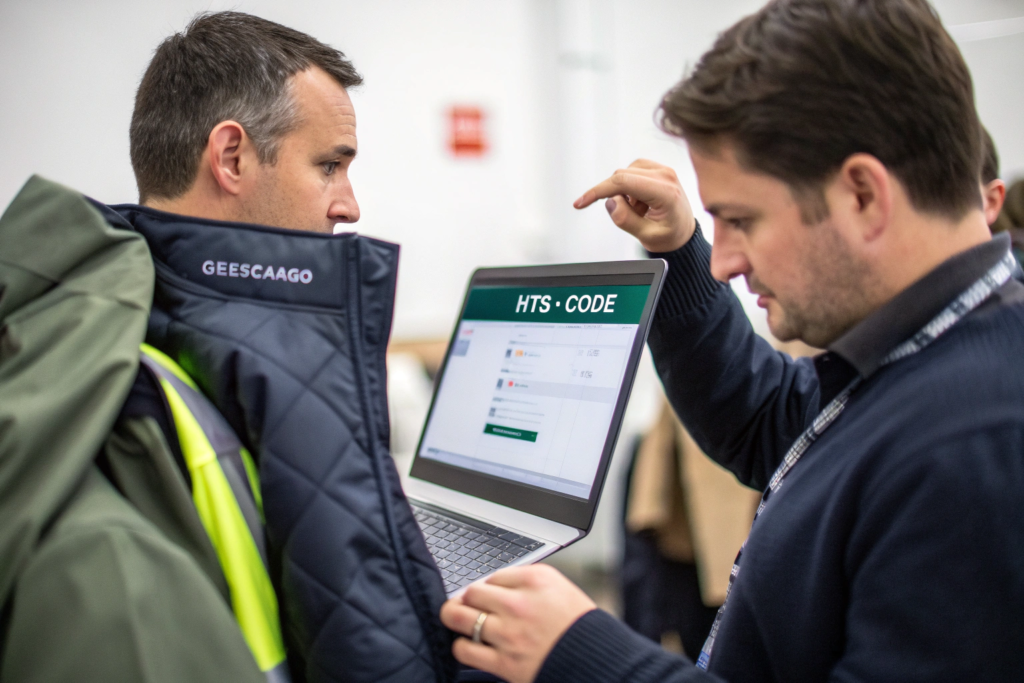
I tell my clients to send me a sample of their product before they finalize the order. My customs team examines the fabric, the stitching, the function. We look at the legal notes in the tariff schedule. We identify the exact subheading that matches the product but carries the most favorable rate. Then we document our reasoning in a binding ruling request if necessary.
Can a Simple Material Change Reduce Your Clothing Duty?
Yes. Natural fibers and synthetic fibers often have different duty rates. A jacket made of 100% cotton might face 15.8% base duty. The same jacket made of 100% polyester might face 27.7%. If you can switch the shell fabric without changing the product function, you can cut the duty nearly in half.
I do not tell you to change your product. I show you the math. "Your current fabric incurs 27.7%. A cotton blend would incur 18.5%. On 10,000 units, that saves $9,200 per year." You decide if the fabric change is worth it. Sometimes the brand identity requires synthetic. But at least you know the cost of that choice. Most importers never see this breakdown. Their factory picks a code arbitrarily, and they pay whatever the bill says.
How Do You Handle the De Minimis Rule for Small Shipments?
Shipments valued under $800 can enter the US duty-free under the Section 321 de minimis provision. This is a powerful tool for samples, small ecommerce orders, and replacement parts. But you must structure the shipment correctly. You cannot break a $5,000 order into seven $800 boxes and claim de minimis. That is illegal structuring.
We advise on legitimate de minimis usage. If you are sending a sample line to a buyer before the bulk order, we clear it through de minimis. If you ship direct-to-consumer from China, we use our DDP ecommerce lanes that leverage the de minimis threshold where legal. The savings on a $750 shipment are the entire duty amount. This is especially useful for gift and accessory brands testing new products in the US market.
What Happens When Tariff Policy Changes While Your Cargo Is at Sea?
This is the nightmare scenario. You ship a container. The tariff rate was 7.5% when the vessel left Shanghai. While the ship crosses the Pacific, the government announces a new executive order raising the rate to 15%. What rate applies when the container arrives?
US Customs applies the tariff rate that is in effect on the date of importation, not the date of shipment. This means your container is exposed to any policy change that happens during the transit. A 20-day ocean voyage is a 20-day window of vulnerability. If a major tariff announcement happens on day ten, you owe the new, higher rate.
How Does GeeseCargo Protect You from Mid-Transit Tariff Changes?
We cannot change the law. But we can manage the risk. First, we monitor the policy environment constantly. If we see a risk of imminent tariff action, we warn you before you ship. "There are hearings next week on new clothing tariffs. Do you want to accelerate this shipment or wait for clarity?"
Second, we structure our DDP quotes to include a tariff buffer. We build in a small percentage above the current rate to cover potential changes. If no change occurs, the buffer becomes a credit on your next shipment. If a change does occur, the buffer absorbs the hit, and your landed cost does not change. This buffer model gives you budget certainty even in volatile times.
Can You Use a Customs Bonded Warehouse to Delay Tariff Payment?
Yes. If you are not ready to pay the tariff, or if you want to defer the duty payment until the goods are actually sold, we can place your container in a bonded warehouse. The goods enter the US but do not formally clear customs. The duty clock does not start. You can withdraw inventory in smaller batches and pay duties only on what you withdraw.
This strategy is useful for large importers with fluctuating demand. You ship a full container of seasonal goods. You store them in a bonded facility. You pay duties in weekly batches as you ship to retailers. You improve your cash flow. We arrange the bonded storage and manage the withdrawal entries. This is an advanced strategy that most small forwarders cannot execute.
How Does GeeseCargo Handle the Customs Bond and Payment Process?
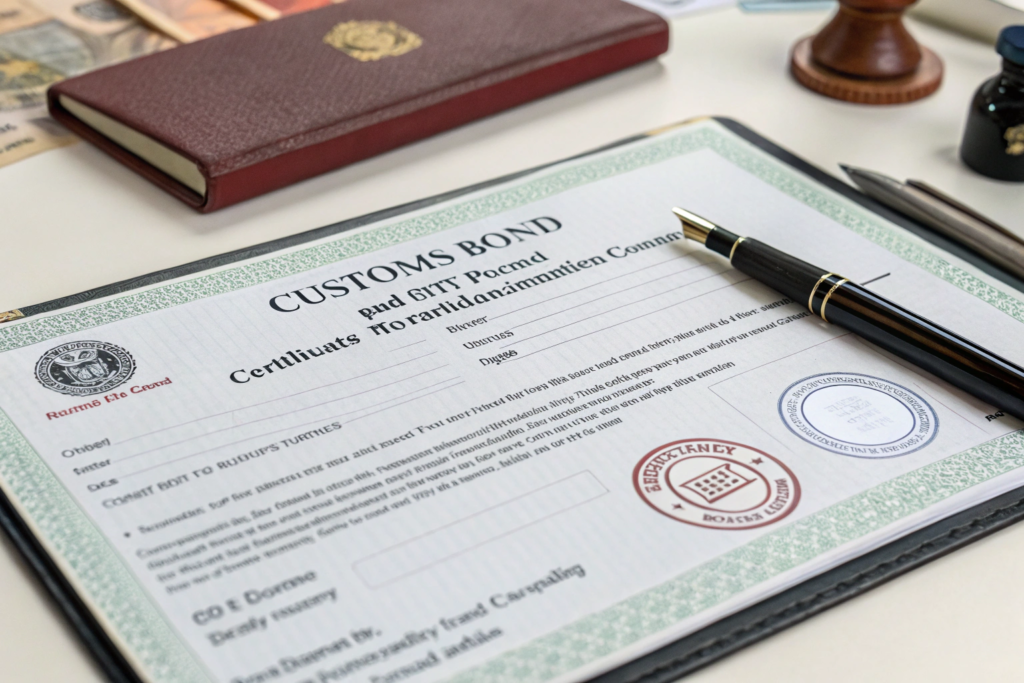
Every formal import entry over $2,500 requires a customs bond. The bond guarantees that the government gets paid even if you vanish. You need a bond to clear customs. Getting the bond wrong causes delays, and delays cause demurrage.
Recraft指令– A GeeseCargo financial officer sits at a desk reviewing a customs bond certificate. A computer screen shows an online payment portal for US Customs duties with a confirmation checkmark. The officer is smiling and organized. The atmosphere is clean and professional. No text except "PAID" on the screen. Faces sharp and trustworthy.
We handle the bond acquisition for you. We have a standing relationship with major surety companies. We can issue a single-entry bond for one shipment or an annual bond that covers all your shipments for a year. I recommend the annual bond if you ship more than three times a year. It saves money and administrative hassle.
Who Is the Importer of Record on a GeeseCargo DDP Shipment?
This is the critical legal question. On a DDP shipment, GeeseCargo acts as the Importer of Record. We take legal responsibility for the customs entry. We pay the duties directly to US Customs. We then bill you for the duties as part of our landed cost invoice.
This means the government deals with us, not you. If there is an audit, we handle it. If there is a dispute over classification, we argue it. You are not in the direct line of fire. This is the value of using an experienced freight forwarder for DDP. We carry the compliance risk so you do not have to. You focus on selling your products.
How Do You Reconcile the Estimated Duty with the Actual Duty Paid?
We quote you an estimated duty based on the agreed HTS code. When the entry is filed, we pay the actual duty to customs. We send you a reconciliation statement showing the estimate versus the actual. If we overestimated, you get a credit. If we underestimated, we explain why and you pay the small difference.
Our estimates are accurate over 95% of the time. We do not profit from duty overestimation. The duty is a pass-through cost. We want the estimate to match the actual as closely as possible. This honest reconciliation process builds trust. You always know exactly what you paid to the government and what you paid to us for our service.
Conclusion
US tariffs on Chinese goods are complex, unpredictable, and expensive. But they are not unmanageable. You do not need to become a trade lawyer. You do not need to read the Federal Register every morning. You need a freight forwarder who treats customs compliance as a core competency, not an afterthought.
At GeeseCargo, we have built a team that lives and breathes US import regulations. We find the lowest legal duty rate for your products. We track exclusion announcements and file for refunds on your behalf. We structure our DDP pricing to protect you from mid-transit policy shocks. We handle the customs bond, the duty payment, and the Importer of Record responsibility. You ship your goods. You receive one invoice. You know your landed cost before the container leaves the factory.
If you are worried about the next tariff announcement, or if you suspect you have been overpaying duties for years, I invite you to contact GeeseCargo. Send us your product details and your last few customs entry summaries. We will perform a free tariff audit. We will identify if there is a lower legal rate available and calculate how much a DDP partnership could save you in 2026 and beyond.