You’re unhappy with your current freight forwarder. Missed sailings. Hidden fees. Zero communication. You know you need to switch. But the thought of transitioning mid-contract paralyzes you. What happens to the containers already on the water? Who handles the customs clearance for shipments in progress? Will your factory deliveries get mixed up? Will your retail deadlines get blown up? The fear of disruption keeps you locked into a bad relationship longer than you should be.
GeeseCargo handles mid-contract transitions through a structured onboarding process that maps every active shipment, assumes customs and documentation responsibility at a defined cutover point, and coordinates directly with your suppliers to prevent any gap in service. We don’t just take over. We orchestrate a handover so smooth your downstream operations never feel the change.
I’ve transitioned dozens of frustrated importers away from underperforming forwarders. I know the anxiety. I also know that a well-managed transition is a non-event for your business. The key is preparation, clear communication with all parties, and a phased cutover that never leaves a shipment orphaned between two providers. Let me walk you through exactly how we make switching forwarders painless.
What Is the First Step in Transitioning Your Freight Operations to GeeseCargo?
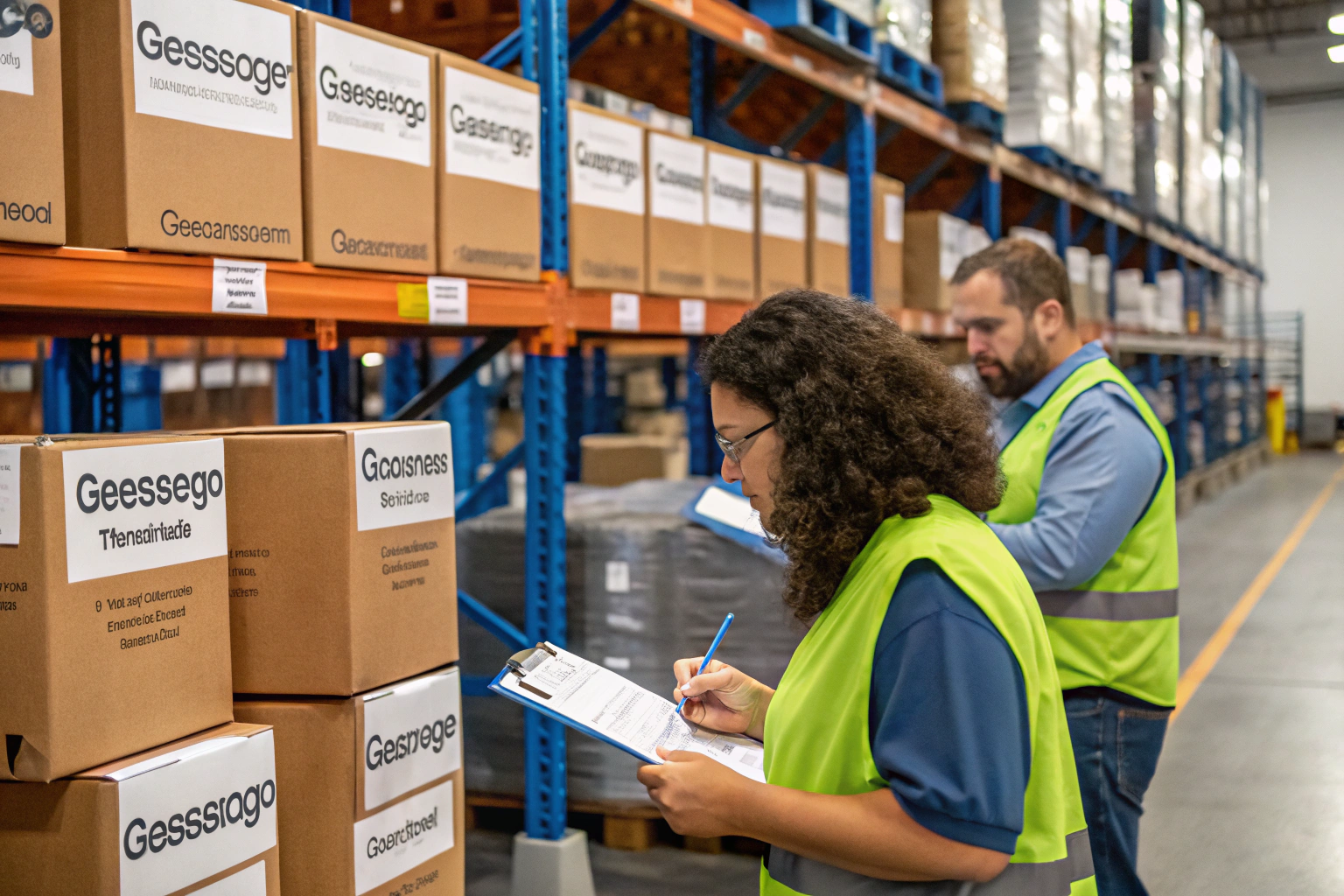
The first step is not booking a new shipment. The first step is understanding everything that’s currently moving. You have containers on the water. You have goods at a consolidation warehouse. You have purchase orders that haven’t shipped yet. You have customs entries that are partially processed. Mapping all of this inventory and documentation status is the foundation of a disruption-free transition.
We begin every transition with a comprehensive shipment audit. We sit down with you, virtually or in person, and inventory every active logistics commitment. We categorize each one by status: shipped and in transit, booked but not yet loaded, ready at factory but not yet booked, and purchase order issued but production not complete. This map becomes our transition playbook.
I recently transitioned a giftware importer who thought he had "about ten containers" in various stages. During our mapping session, we discovered fourteen active shipments, including two he had forgotten were at a transshipment port. His previous forwarder hadn’t updated him in weeks. We located every container. We established status for each one. That mapping exercise alone gave him more visibility than he’d had in months. A structured transition starts with knowing exactly what you’re transitioning.

How Do You Inventory Active Shipments Without Alerting the Incumbent Forwarder?
You don’t need to alert your current forwarder that you’re conducting an internal review. You’re simply gathering your own records. Purchase orders. Booking confirmations. Bills of lading. Recent email updates.
We help you compile this information from your own systems. We review the documents you already have. We identify gaps. We suggest specific questions you can ask your current forwarder as routine status inquiries, without signaling the transition. The information gathering is done discreetly and professionally. This logistics transition planning protects your operational continuity until the cutover is ready.
What Information Do You Need to Gather from Your Current Forwarder Before Leaving?
You need the master bill of lading numbers for all in-transit shipments. You need the customs entry numbers and the customs broker contact information. You need the container numbers and vessel names. You need the terminal handling agent details for any shipments approaching destination.
We provide you with a checklist of exactly what to request. These are standard shipment details that any forwarder should provide upon request. Collecting them does not signal your intent to leave. It signals that you’re an organized importer managing your supply chain.
How Does GeeseCargo Manage the "Dual-Running" Phase During a Transition?
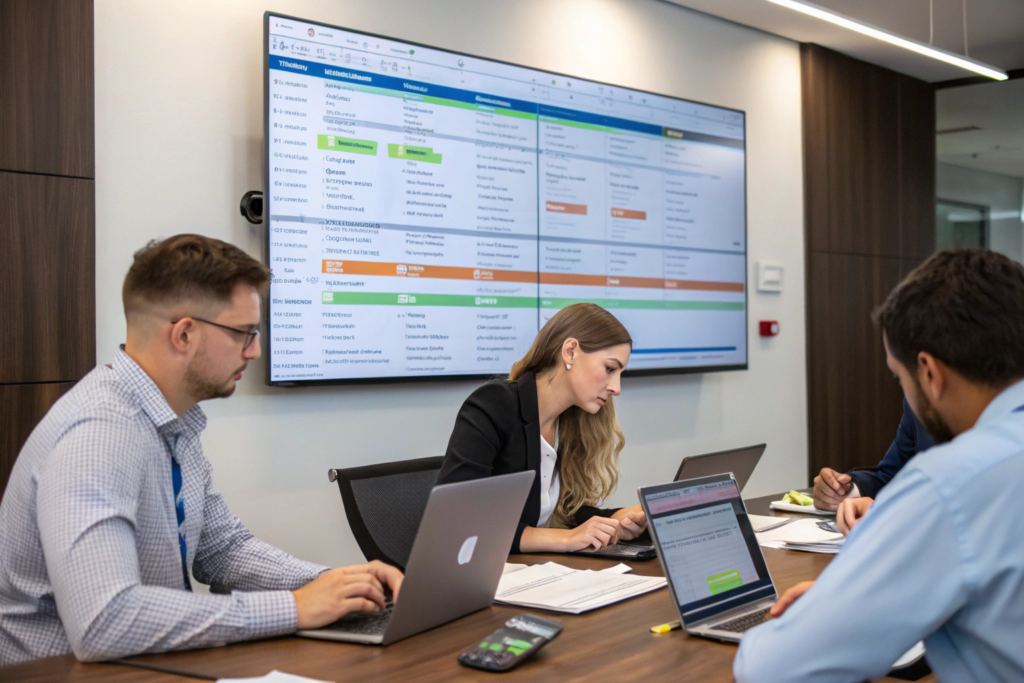
You can’t flip a switch and change forwarders instantly. Active shipments must complete their journey with the incumbent. New shipments can start with GeeseCargo. For a brief period, you’re running with two providers. This dual-running phase is where most transitions fail. Shipments get confused. Factories receive conflicting pickup instructions. Customs brokers receive duplicate filings. Without careful management, the dual-running phase becomes chaos.
We manage the dual-running phase with a precise cutover date and clear supplier communication. We work with you to send a standardized notice to every factory, telling them exactly which forwarder to contact for which purchase orders. We track both active tracks until the last incumbent shipment is delivered and the last GeeseCargo shipment is smoothly in motion.
During a recent clothing importer transition, we identified a two-week dual-running window. Four containers were in transit with the old forwarder. Three new bookings were starting with us. We created a simple reference table for the client’s factories. PO numbers 1001-1004: contact Old Forwarder. PO numbers 1005-1007: contact GeeseCargo. We even provided the factories with our contact details and a pickup request template. Zero confusion. Zero missed pickups. The dual-running phase was invisible to the factories.
How Do You Prevent Factories from Shipping to the Wrong Forwarder?
Factory confusion is the most common transition failure. A production manager who has sent cargo to Forwarder A for years might default to old habits. A single misdirected shipment can disrupt a retail launch.
We prevent this by sending clear, bilingual pickup instructions to every factory contact. We call the factory logistics managers directly to introduce ourselves. We confirm they received the new shipping instructions. We follow up before each scheduled pickup to reconfirm. This proactive factory communication eliminates the risk of cargo going to the wrong place.
What Happens to In-Transit Shipments When You Switch Forwarders Mid-Journey?
In-transit shipments generally stay with the incumbent forwarder until delivery. The contract for that shipment is in progress. The customs entry is filed. Changing the forwarder on a container already at sea is complex and risky.
We advise letting in-transit shipments complete their journey with the incumbent. We monitor them for you during the transition. We review the documentation. We ensure the destination delivery proceeds smoothly. We provide oversight while the incumbent finishes their obligation. Then the door closes, and all future shipments move through GeeseCargo. This supply chain continuity approach minimizes risk.
How Does GeeseCargo Assume Customs and Documentation Control Seamlessly?
Customs clearance is the most sensitive part of a transition. The incumbent forwarder has your customs bond information. They have your importer of record profile. They have your harmonized tariff codes on file. If the customs handover is mishandled, you can face duplicate entries, missed duties, or even customs penalties. The paperwork must transfer cleanly.
We manage the customs transition by establishing a clear cutover date for all new entries. For DDP clients, we become the importer of record on the cutover date, assuming full customs liability. For FOB clients, we coordinate with your existing customs broker or transition you to our recommended broker with a signed power of attorney filed before the first shipment.
A client transitioning to us had a nightmare experience with his previous forwarder’s customs broker. The broker filed entries late, with incorrect classifications. During the transition, we audited the last three months of entries. We found errors that were risking penalties. We worked with the client to file corrected entries and establish clean records before the first GeeseCargo shipment cleared. The transition actually improved his compliance standing.
How Is the Customs Bond and Power of Attorney Transferred?
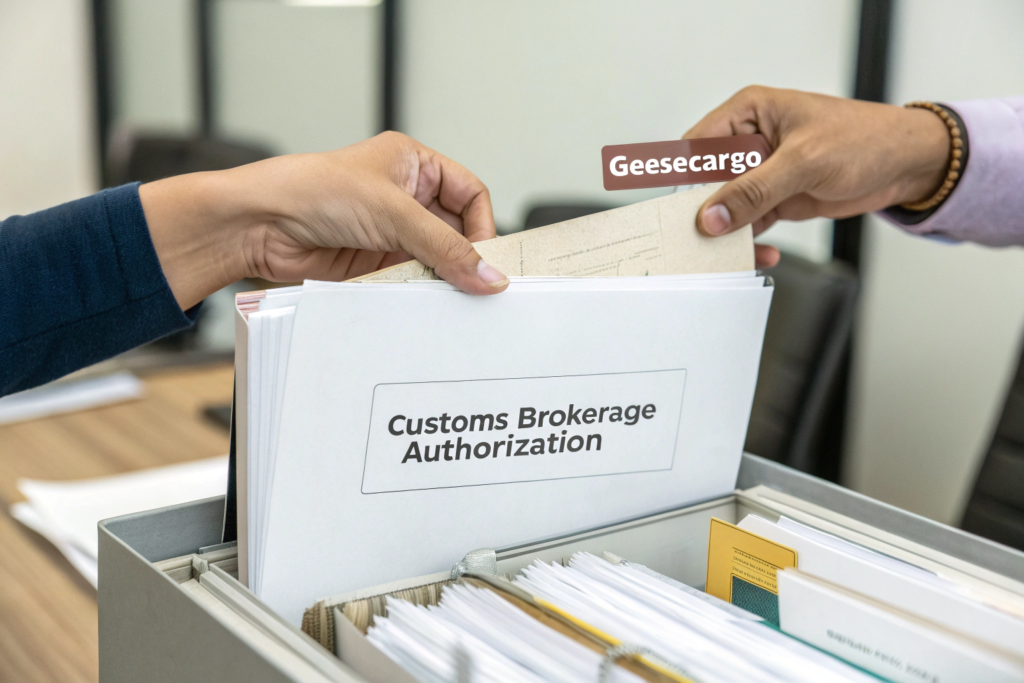
For continuous customs bonds, the bond stays with the importer. You simply authorize a new customs broker by signing a power of attorney form. The old broker’s authorization is revoked or left to expire.
We provide you with the power of attorney form during the transition planning phase. You sign it. We file it with our broker. On the cutover date, all new entries are filed under the new authorization. There is no gap in coverage. There is no period without a broker on file. The transfer is administrative and immediate.
What Happens to Duty Payments and Tariff Classifications During the Switch?
Duty payments on in-transit shipments are handled by the incumbent broker. For new shipments, we establish your tariff classifications during the onboarding process. We review your product catalog. We verify the HS codes. We flag any classification risks or opportunities for duty optimization.
This proactive classification review often uncovers savings. We recently transitioned an accessories importer and discovered three SKUs classified under a higher-duty heading. We reclassified them correctly before the first shipment. His duty bill dropped immediately. The transition didn’t just maintain continuity. It improved his cost structure.
How Does GeeseCargo Onboard Your Suppliers and Factories Without Confusion?
Your factories are the origin of your supply chain. If they don’t know who to call for pickup, your cargo sits. The average forwarder transition ignores the factory communication piece. They assume you’ll tell the factories. You tell one contact. That contact forgets to tell the shipping department. The shipping department calls the old forwarder. The old forwarder sends a truck, or worse, ignores the call. Chaos.
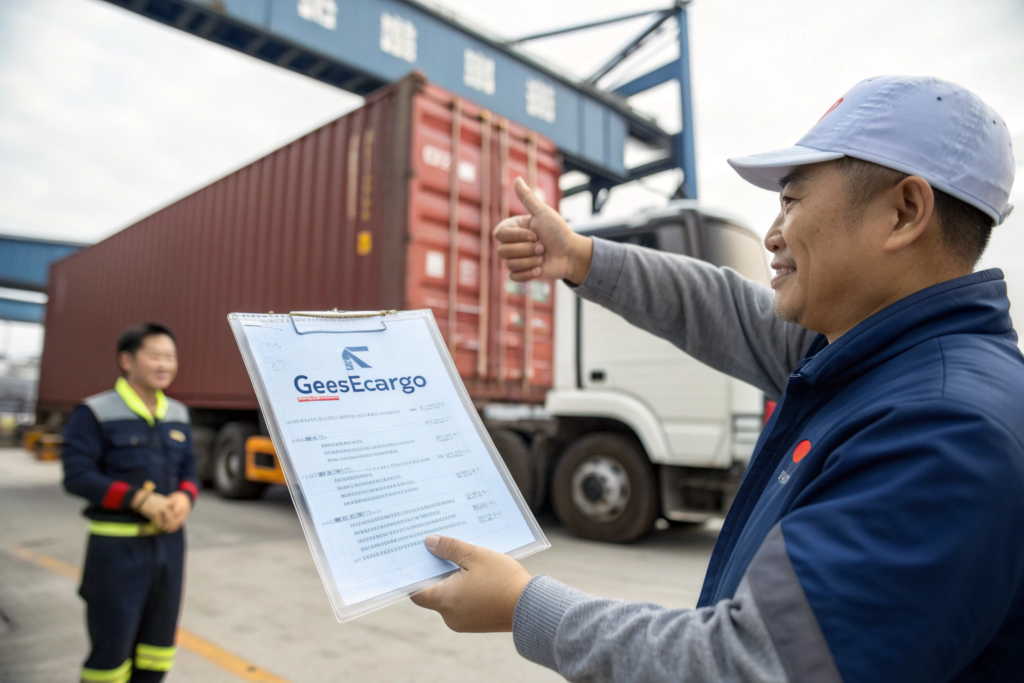
We take ownership of factory onboarding. We contact every supplier directly, in Chinese, with clear pickup instructions. We introduce our local operations team. We confirm the booking process, the documentation requirements, and the contact person for urgent issues. We don’t rely on you to translate our process to your supply base.
A clothing importer transitioning to us had twelve active factories across Zhejiang and Guangdong. His previous forwarder had a single email for booking. Factories often waited days for a pickup confirmation. Our team called every factory within 48 hours of the transition. We gave each factory manager a direct WeChat contact. We explained our 24-hour pickup confirmation policy. The factory managers were relieved. Several told the client it was the first time a forwarder had ever called them directly.
How Do You Communicate New Shipping Procedures to Chinese Suppliers Effectively?
Chinese factories communicate primarily through WeChat, not email. They value direct relationships, not anonymous booking portals. A transition that relies on email instructions to a general factory address will fail.
We communicate in Mandarin via WeChat. We build a direct relationship with the factory’s shipping clerk. We provide a simple, visual pickup request template. We confirm receipt of every booking request within hours. We treat the factory as a partner in the transition, not an obstacle to work around.
What Happens If a Factory Accidentally Contacts the Old Forwarder After Cutover?
Mistakes happen. A factory worker uses an old address book entry. A new shipping clerk wasn’t informed of the change. We don’t panic. We don’t blame.
If we learn that a factory contacted the old forwarder, we immediately contact the factory directly and clarify the instruction. We coordinate with you to ensure the old forwarder doesn’t dispatch a truck. We confirm the correct booking with our system. The error is caught and corrected before any cargo moves in the wrong direction. This freight forwarder transition vigilance prevents misrouted shipments.
How Long Does a Full Transition Take, and When Will You See the Benefits?
A full transition doesn’t happen overnight, but it doesn’t take months either. The timeline depends on what’s in your pipeline. If you have containers on the water, those must complete their journey. New bookings can start immediately. The dual-running phase typically lasts two to four weeks. After that, GeeseCargo handles everything.
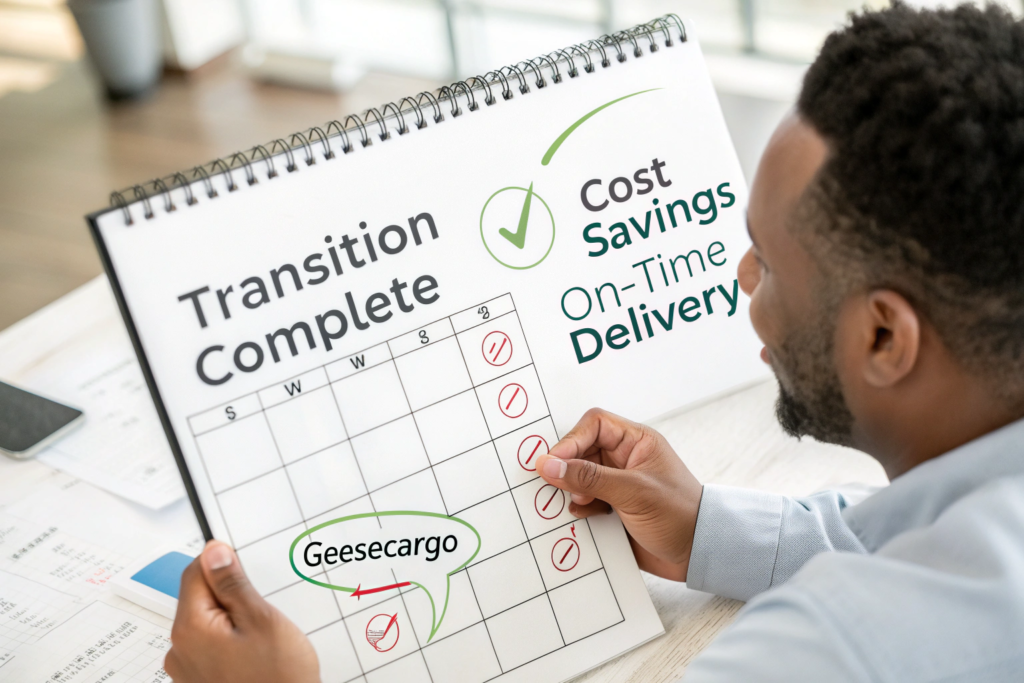
Most clients complete the transition within 30 to 45 days. They start seeing benefits immediately. The first GeeseCargo booking comes with transparent pricing, proactive communication, and direct carrier access. By the third shipment, the new normal is established. The old frustrations are a memory.
A recent client told me he regretted not switching sooner. He had tolerated poor service for eight months because he feared the transition. The actual transition took five weeks, most of which was waiting for in-transit containers to deliver. The first GeeseCargo shipment arrived two days early. His landed cost was exactly as quoted. He said the transition was the easiest part of the whole ordeal.
What Is a Realistic Timeline for Switching Forwarders Mid-Season?
Mid-season transitions are faster because in-transit shipments are fewer. If you have minimal cargo on the water, new bookings can start within a week. The supplier communication and customs paperwork take a few days. The first GeeseCargo shipment can be booked almost immediately.
We’ve completed emergency transitions in under two weeks when a client’s previous forwarder failed during peak season. The key is having a structured process that compresses without breaking. Our transition playbook works on accelerated timelines when necessary.
When Will You See the Financial and Operational Impact of the Switch?
The financial impact is immediate. Your first quote from us is transparent and all-inclusive. You see the difference between our real price and your previous forwarder’s bait-and-switch pricing instantly.
Operational benefits build over the first few shipments. Proactive communication means fewer fires to fight. Better carrier access means fewer rolled bookings. Smarter customs clearance means fewer exam delays. By the third or fourth shipment, most clients report a dramatic reduction in logistics-related stress and a measurable improvement in delivery reliability. The freight management benefits compound over time.
Conclusion
Switching freight forwarders feels like open-heart surgery on your business. The fear of disruption is real and justified. But staying with a bad forwarder is a guaranteed loss of money, time, and sanity. A well-managed transition is a short, controlled process that ends with you in a better place.
We’ve walked through the structured approach that makes GeeseCargo transitions painless. It starts with comprehensive shipment mapping, so nothing gets lost. It continues through a carefully managed dual-running phase where factories know exactly who to call. It includes a clean customs and documentation handover that maintains your compliance standing. And it ends with full GeeseCargo service delivering the transparent pricing, proactive communication, and reliable execution you should have had all along.
Don’t let the fear of transition keep you in a bad logistics relationship. The process is easier than you think when you have an experienced partner managing it. Contact GeeseCargo today. Tell us about your current situation. We’ll walk you through the transition plan step by step. You’ll wonder why you waited so long.