You launched your product on Amazon, drove traffic with PPC ads, and finally got the Buy Box. Then you get the dreaded email from Seller Central: "Your shipment was refused at the fulfillment center because the carton labels were smudged." Your inventory is now stranded in a carrier facility, your listing is out of stock, and your Best Seller Rank is tanking by the hour. I have talked to sellers who cried actual tears over a rejected FBA pallet.
At GeeseCargo, we handle Amazon FBA shipping from China as a closed-loop service. We do not just move your boxes to a US port and hand them off to a stranger. We pick up from your factory, label every carton to Amazon’s exact barcode specifications, palletize to the FBA prep standards, file the customs entry with Amazon as the ultimate consignee, truck the goods directly to the assigned fulfillment center, and provide the POD with the Amazon-stamped delivery receipt. You get a single point of contact from factory floor to fulfillment center dock door.
Amazon FBA is not a standard freight delivery. It is a compliance test. If the carton dimensions are wrong in the portal, the shipment is refused. If the polybags do not have a suffocation warning, the units are stranded. If the pallet is too tall, the warehouse sends it back. Every mistake costs you storage fees, re-delivery charges, and lost sales. You need a freight partner who knows the FBA rulebook as well as you know your product margin. Let me walk you through exactly how we keep your inventory flowing into Amazon without interruption.
What Are the Strict Amazon FBA Packaging and Labeling Requirements?
You ship your products to a friend’s warehouse, and they just need a basic shipping label. You assume Amazon is the same. Then your shipment gets rejected because the carton label was printed on a thermal printer that faded, or because the polybag had no suffocation warning printed on it. Amazon has zero tolerance for non-compliance. The penalty is a stopped shipment.
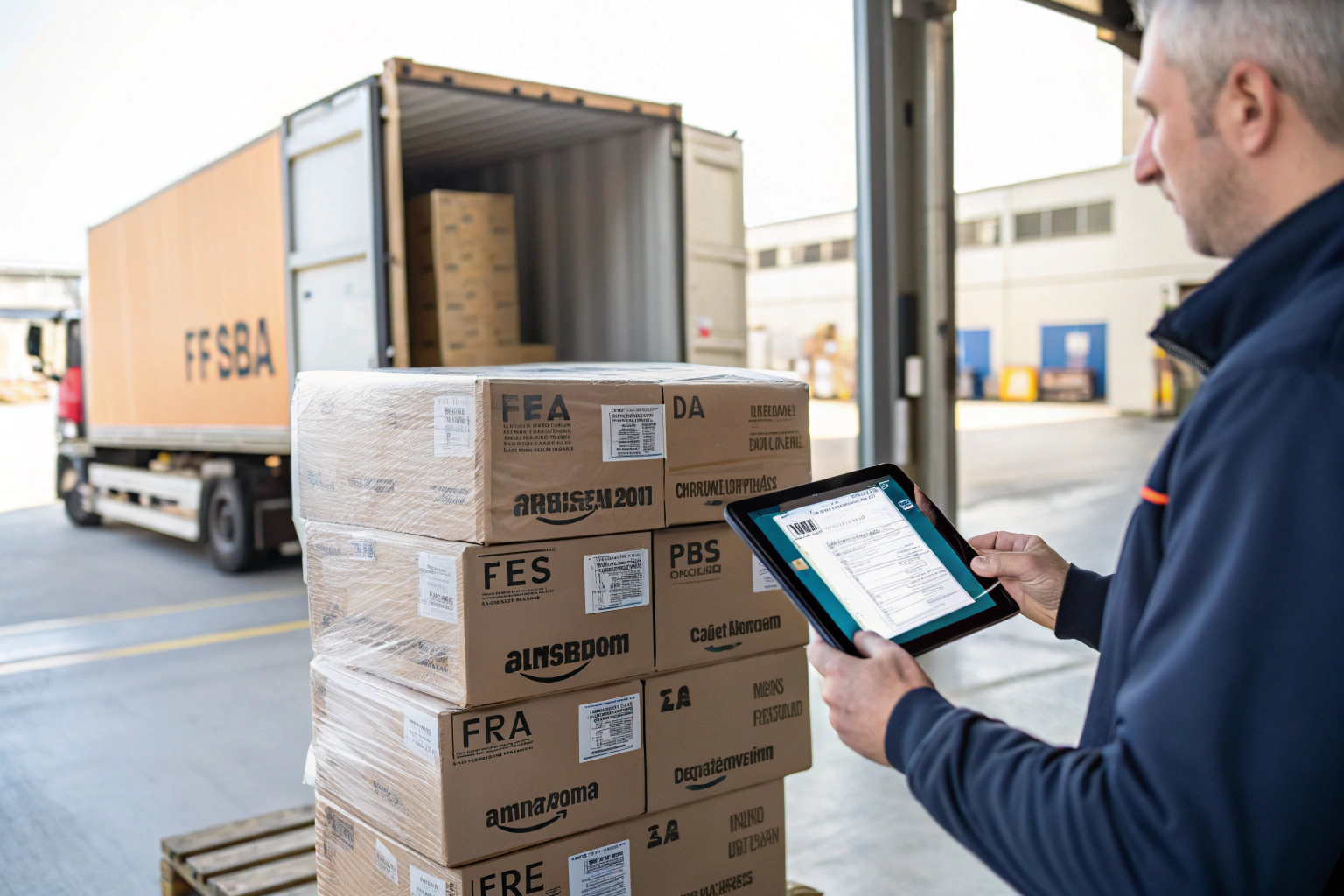
Amazon FBA requires a specific set of physical and digital compliance steps. Each unit must have a scannable FNSKU barcode. Each carton must have a unique FBA carton ID label printed with a laser printer at 300 DPI. The carton must fall within standard size and weight limits. Polybagged items must have a printed suffocation warning. Expiration-dated products must have the date printed in the correct format. We audit every single unit against these rules before the container leaves China.
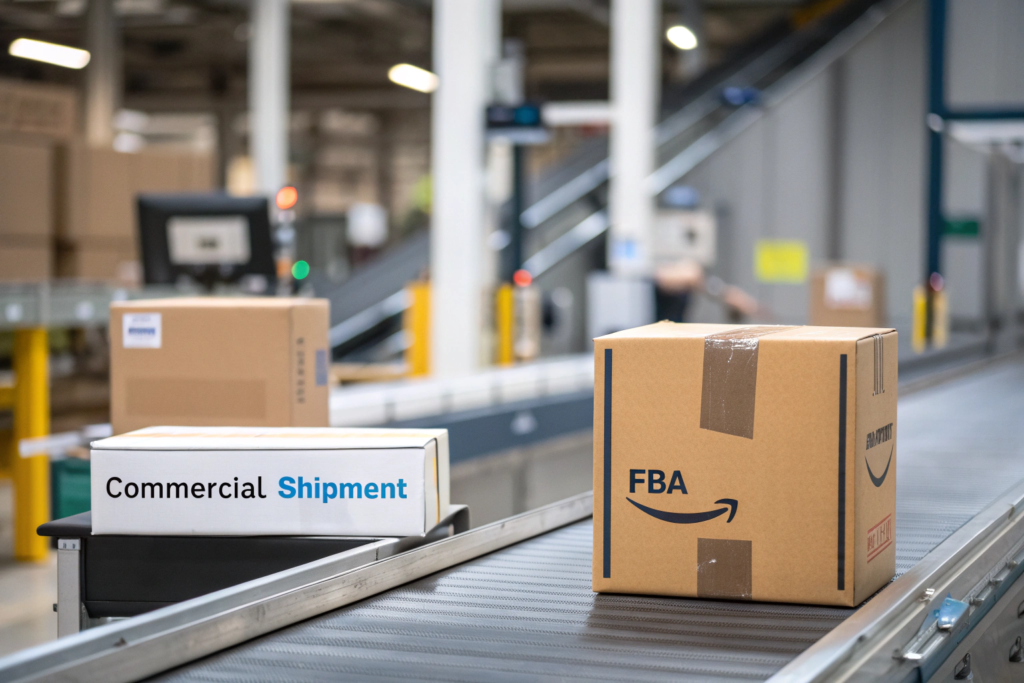
I want you to understand the difference between a commercial shipment and an FBA shipment. If you ship to a distributor, a blurry label is a minor annoyance. If you ship to Amazon, a blurry label is a hard stop. The fulfillment center uses an automated optical scanner system. The carton moves on a conveyor belt, and a camera reads the label in a fraction of a second. If the barcode contrast is too low, or if the label is wrinkled, the scanner cannot read it. The box is kicked off the line into a problem-solving area. It can sit there for two weeks. Meanwhile, your inventory is not available for sale.
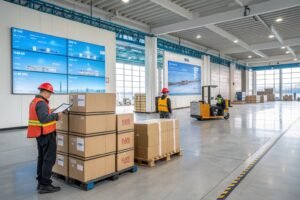
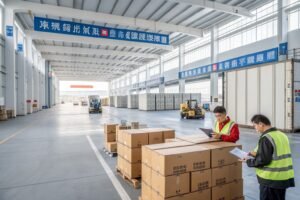
We built a specific FBA prep station in our Shenzhen consolidation warehouse. We print all labels ourselves using industrial thermal-transfer printers, not the cheap direct-thermal printers that fade in heat. The barcode is checked with a handheld verifier that grades the print quality. We apply the label to a flat surface on the carton, never over a seam or a corner. The label is covered with a clear protective tape that does not create glare. We also confirm that the carton dimensions and weight entered in the Seller Central shipment plan exactly match the physical carton. A 2-centimeter discrepancy can cause a refusal. We use a calibrated scale and a dimension scanner at our dock door. Every carton is measured and weighed. The data is checked against the shipment plan. If there is a mismatch, we stop and fix it before the container is loaded. This prep step takes time, but it eliminates the costly returns that happen when a seller skips compliance.
What Are the Specific FBA Carton Weight and Dimension Limits?
You pack a heavy box of cast iron cookware and label it for FBA. It arrives at the fulfillment center and gets refused. You read the notice: "Carton exceeds 50 lb weight limit." You had no idea there was a maximum carton weight. You assumed all boxes were accepted.
Amazon has strict carton limits. A single carton must not exceed 50 pounds (22.7 kg) unless it contains a single oversized item. The carton dimensions must not exceed 25 inches (63.5 cm) on any side. For standard-size items, the carton should be a standard box size from Amazon’s approved list. We know these limits by heart and we check every carton. If a carton is too heavy, we split the shipment into two cartons. If a carton is oversized for standard inventory, we flag it and work with you to either change the packaging or accept the oversize fulfillment fees. We also apply the required "Team Lift" label to any carton weighing over 30 pounds. This label is printed in black on a white background and placed on two adjacent sides of the carton. Missing this label is a common reason for refused heavy cartons. We also apply the suffocation warning label to every polybag with an opening larger than 5 inches. The warning must be printed in English and be clearly legible. We use a pre-printed polybag supplier who embeds the warning in the plastic. This avoids the risk of a sticker peeling off.
How Do You Ship Expiration-Dated Gifts and Consumables to FBA?
You sell a gift set that includes scented candles and artisan chocolates. The chocolates have a six-month shelf life. You ship them to FBA with five months of life left. Amazon receives them and marks them as "expired" because their system requires a minimum of 90 days of shelf life remaining, but you used the wrong date format on the label.
Amazon’s expiration-date policy is one of the strictest compliance areas. For any product with a shelf life, you must print the expiration date on the unit in the format MM-DD-YYYY or MM-YYYY. The date must be on the master carton and on each individual unit. We verify that the date on the physical product matches the date you entered in the FBA shipment creation workflow. We also calculate the remaining shelf life at the time of delivery. Amazon requires a minimum of 90 days remaining at the time of receipt at the fulfillment center. If the product will arrive with less than that, we do not ship it. We instead alert you and suggest alternative channels for that batch, such as selling to a discount retailer or shipping to a 3PL for direct-to-consumer fulfillment. For gift sets that contain both non-expiring items and consumables, we ensure the expiration date label is placed on the outer gift box, not just on the chocolate wrapper inside. Amazon will open the gift box, scan the internal item, and reject it if the date is not visible externally. We learned this through a painful experience with a client who sold bath and body gift sets. Now we have a standard checklist specifically for consumable gift items.
How Does Our DDP Service Simplify Amazon FBA Customs Clearance?
You create an FBA shipment in Seller Central and Amazon gives you an address. You give that address to your freight forwarder. They clear customs using their own broker and then try to deliver to Amazon. The broker files the entry with Amazon as the "ultimate consignee" but your company as the "importer of record." This mismatch causes a customs hold because the paperwork does not align.
We use our DDP service to act as the Importer of Record (IOR) for your FBA shipments. We clear the goods under our continuous customs bond, paying all duties and taxes upfront. The entry paperwork lists Amazon only as the delivery address, not the importer. This avoids the legal entanglement where customs asks Amazon, a company that is notoriously unresponsive to these requests, for import documentation. We then deliver the goods to the fulfillment center with the customs entry already fully resolved and paid.
This is a critical distinction that many sellers miss. Amazon is not your importer. Amazon’s terms of service explicitly state they will not act as the IOR. If you or your forwarder lists Amazon as the IOR on the customs entry, the shipment will be held, and Amazon will not help resolve it. The shipment could be abandoned. We have stepped in to rescue abandoned FBA containers at the port for new clients who made this mistake with their previous forwarder.
Our process is clean. We list GeeseCargo as the IOR. We use our own customs bond. We provide our own tax ID. We pay the duties directly to CBP. The delivery address on the trucking documents is the FBA fulfillment center code, such as ONT8 or LGB8, with the FBA shipment ID clearly referenced. The customs broker files a customs entry type 11 for informal entries or a type 01 for formal entries, with the IOR clearly identified as GeeseCargo. This separation keeps the import liability with us and the delivery obligation with us. Amazon simply receives a clean, duty-paid, domestic delivery. The seller receives a single invoice from us that includes the freight, duty, and delivery charges. No separate broker bills. No surprise storage charges from the port. No frantic calls to Amazon seller support.
Why Can’t Amazon Be Listed as the Importer of Record?
You see the delivery address is Amazon’s warehouse. You think it is logical to list them as the importer. You type "Amazon.com Services LLC" in the IOR field on the shipping documents. The broker submits the entry to CBP. The system flags it. The shipment is held for an IOR verification. Amazon ignores the CBP request for a tax ID. The goods sit in a bonded warehouse accumulating storage fees.
Amazon’s legal structure is not set up to act as a customs IOR for third-party sellers. They are a logistics and technology company, not your importing agent. If you list them as the IOR, you are essentially making a false statement on a customs document. This can lead to penalties, seizures, and a black mark on your import record. We always use GeeseCargo as the IOR for Amazon FBA shipments. This is legal because we have a financial interest in the goods as the freight service provider and we take temporary ownership for customs purposes under a DDP arrangement. We have the tax ID, the bond, and the legal standing. This practice is standard for experienced FBA forwarders, but many small brokers do not understand it and accidentally create a customs disaster for their clients.
How Do We Handle the Customs Value for FBA Shipments?
You declare a low customs value to save on duty. You use the factory price. But your product sells on Amazon for $30. CBP sees a declared value of $3 per unit on a shipment of 1,000 units. They flag it for undervaluation. They issue a penalty and a demand for back duties.
We declare the correct transaction value based on the price you paid the factory, which is the legally correct method under US customs valuation rules. We do not use the Amazon retail price, and we do not under-declare. If your product is a new item with no prior sales history, we use the factory invoice value. If CBP questions the value, we provide the factory payment records, the purchase order, and the wire transfer receipt. We never falsify a commercial invoice. The short-term duty savings from undervaluation are not worth the risk of a full customs audit and a shipment seizure. We also ensure the value on the FBA shipment matches the value on the customs entry. A mismatch here is a red flag for CBP’s automated systems. Our software cross-checks the numbers before submission. Transparency keeps your supply chain safe.
How Do You Schedule Deliveries to Avoid Amazon Warehouse Rejections?
Your trucker arrives at the ONT8 fulfillment center in California on a Tuesday morning. They are turned away. The reason: "No delivery appointment." Your trucker sits in the cab for six hours, incurring detention charges, waiting for a window that never opens. You assumed you could just show up. Amazon does not work that way.
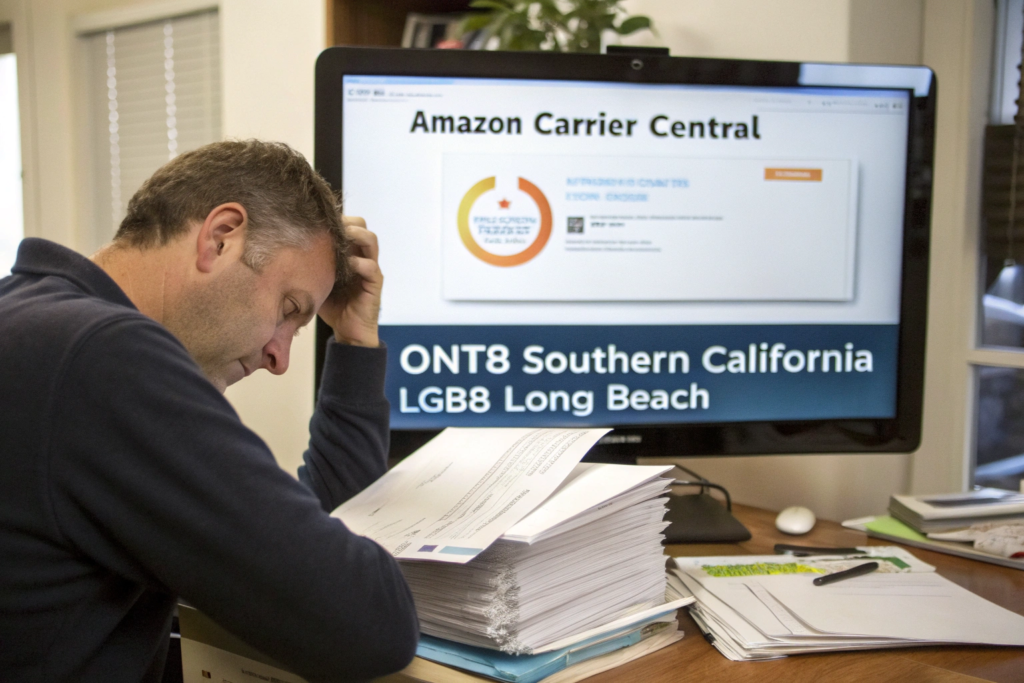
We schedule delivery appointments through Amazon’s Carrier Central portal the moment we have the customs release and the delivery-ready date. We book a specific time slot, usually a 2-hour window. Our trucker arrives 30 minutes early and checks in at the gate with the FBA shipment ID and the appointment confirmation number. We never dispatch a truck without a confirmed appointment. If the fulfillment center is busy and the earliest slot is three days out, we hold the goods at our local warehouse at no extra cost and deliver on time.
The appointment scheduling system is the bottleneck that breaks most unprepared forwarders. Amazon’s Carrier Central portal shows available slots for each fulfillment center. During peak season, from September through December, the slots are scarce. ONT8 in Southern California and LGB8 near Long Beach are the two highest-volume centers and are often fully booked for days. A forwarder who does not know this will just hand the goods to a random trucker who then cannot get a slot. The trucker will dump the pallets at a third-party warehouse, and the seller will get an "undeliverable" notice in Seller Central.
We have a dedicated FBA delivery coordinator in our US office. As soon as the container is discharged and cleared, we log into Carrier Central and look for the soonest available appointment at the assigned fulfillment center. We have accounts with regional trucking companies who are familiar with Amazon’s check-in procedures. They know that ONT8 has a specific truck entrance lane, that LGB8 requires the pallet label to face outward, and that the security guard will check the appointment ID against the driver’s license. We provide the trucker with a delivery packet that includes the FBA shipment ID barcode, the appointment confirmation, and the pallet count. The check-in is smooth. The goods are floor-loaded onto a pallet jack and taken into the receiving area. We get the Amazon-stamped POD within 24 hours and upload it to our system and to yours. That POD is your proof of delivery and your protection against "shipment not received" claims.
What Happens When Amazon Redirects Your Shipment to a Different FC?
You created a shipment plan, and Amazon assigned it to ONT8. You put the ONT8 address on all the carton labels. The container is on the water. Then you log into Seller Central and see a notification: "Shipment destination changed to FTW1 in Dallas." You panic. The labels are wrong. The goods are going to the wrong state.
Amazon sometimes redirects shipments mid-transit to balance inventory across their fulfillment network. This is a real headache for sellers. We solve it by re-labeling the cartons at our US warehouse before delivery. We do not just slap a new label over the old one; we completely remove and replace it to avoid scanner confusion. We also update the shipment in Carrier Central to reflect the new destination and book a new delivery appointment. This rework costs a small handling fee, but it is much cheaper than letting the shipment go to the wrong center, where it will be refused and returned at your expense. We also monitor the shipment ID daily during transit. If Amazon changes the destination while the goods are still in China, we re-label at our Shenzhen warehouse before loading the container. A quick check of Seller Central before the truck departs for the port has saved our clients from cross-country misroutes multiple times.
How Do You Handle Less-Than-Truckload and Small Parcel FBA Deliveries?
You only have 200 units, not a full pallet. You create a shipment plan, and Amazon splits it across three different fulfillment centers. You now have three small shipments going to three different states. The cost of three separate pallet deliveries would destroy your margin on a small test order.
For small shipments, we use Amazon’s partnered carrier program for the final mile. We clear the goods through customs and deliver them to our US warehouse. We then break down the bulk shipment, palletize it by fulfillment center destination, and either deliver it ourselves if it is local or use a Less-Than-Truckload carrier that is Amazon-approved. We create the shipment labels and input the tracking numbers into your Seller Central account. This allows you to meet Amazon’s shipping requirements without paying for full truckload deliveries to three different locations. We also handle the labeling and palletizing for the split shipments. We ensure each pallet going to a different FC has the correct pallet label and the correct carton labels inside. A carton labeled for ONT8 cannot end up on the pallet for LGB8. We scan each carton barcode as we build the pallet and cross-reference it with the shipment ID. This scan-verification step prevents the dreaded "mis-shipped unit" notification in Seller Central.
What Are the Most Common FBA Shipping Mistakes We Help You Avoid?
You think you have everything under control. You used a standard commercial invoice, packed the boxes neatly, and shipped them off. Then the shipment gets stranded. The invoice did not have the FBA shipment ID printed on it. The cartons did not have Amazon’s specific box content label. The pallet was built with the wrong type of wood and was rejected at customs. These small, specific mistakes are what separate a smooth FBA experience from a logistics nightmare.
We help you avoid the top FBA shipping mistakes by using a pre-shipment checklist that mirrors Amazon’s own warehouse receiving audit. We check for the FBA shipment ID on the commercial invoice, the FBA carton ID on every box, the correct pallet label placement, the ISPM-15 heat-treated pallet stamp, and the suffocation warning on polybags. We catch these errors in China, where they are cheap to fix, rather than at the Amazon dock, where they are expensive and reputation-damaging.
I want to share a specific example. A new client came to us after his first FBA shipment was completely rejected. He sold yoga mats. The mats were rolled and put in individual polybags. The polybags had no suffocation warning. The shipment was refused. The goods sat in a carrier warehouse for three weeks. He paid $1,200 in storage and re-delivery fees. His listing went out of stock for a month. He lost his Best Seller Rank. He lost thousands in sales. The total cost of the missing $0.02 polybag warning was over $10,000 in direct costs and lost revenue. When he switched to us, we audited his packaging. We found five other compliance issues he was unaware of. We fixed them all before the next shipment. That shipment sailed through receiving in 48 hours. He has been our client for three years now.
Another common mistake is the pallet height. Amazon requires pallets to be no taller than 72 inches, including the pallet itself. If you stack boxes to 74 inches, the fulfillment center will refuse the entire pallet. We measure every built pallet with a measuring stick. If it is over 72 inches, we rebuild it. We also ensure the pallet is stable and the stretch wrap is applied correctly, with the pallet label clearly visible on the outside of the wrap. The pallet label must be placed on the forklift-accessible side, not facing a wall. These physical details are simple, but they are the reason shipments get sent back.

Why Is the ISPM-15 Stamp a Critical Requirement?
You load your FBA pallets onto beautiful, brand-new wooden pallets from a local Chinese supplier. The container arrives in the US, and the CBP agriculture inspector looks at the pallets. There is no ISPM-15 stamp. The whole container is placed on hold for treatment or re-export.
All wood packaging material entering the US must be heat-treated and stamped with the ISPM-15 certification mark. This mark is a specific wheat-ear logo with a country code and a treatment code. Amazon will not accept a pallet without this stamp. We source all our FBA pallets from certified suppliers who provide the stamp. We verify the stamp is present and legible on every pallet before we use it. If a client insists on using their own pallets, we inspect them for the stamp. If the stamp is missing, we transfer the goods to our certified pallets. This is non-negotiable. The cost of a customs hold for wood packaging material is a $500 to $1,000 inspection fee and a two-to-five-day delay. It is completely avoidable.
How Do You Correctly Build an FBA Commercial Invoice?
You send a generic commercial invoice that you use for all your other wholesale orders. The FBA shipment arrives at customs. The broker cannot find the FBA shipment ID on the invoice. They cannot link the entry to the Amazon shipment. The clearance is delayed while the broker emails you for clarification. You are asleep in a different time zone.
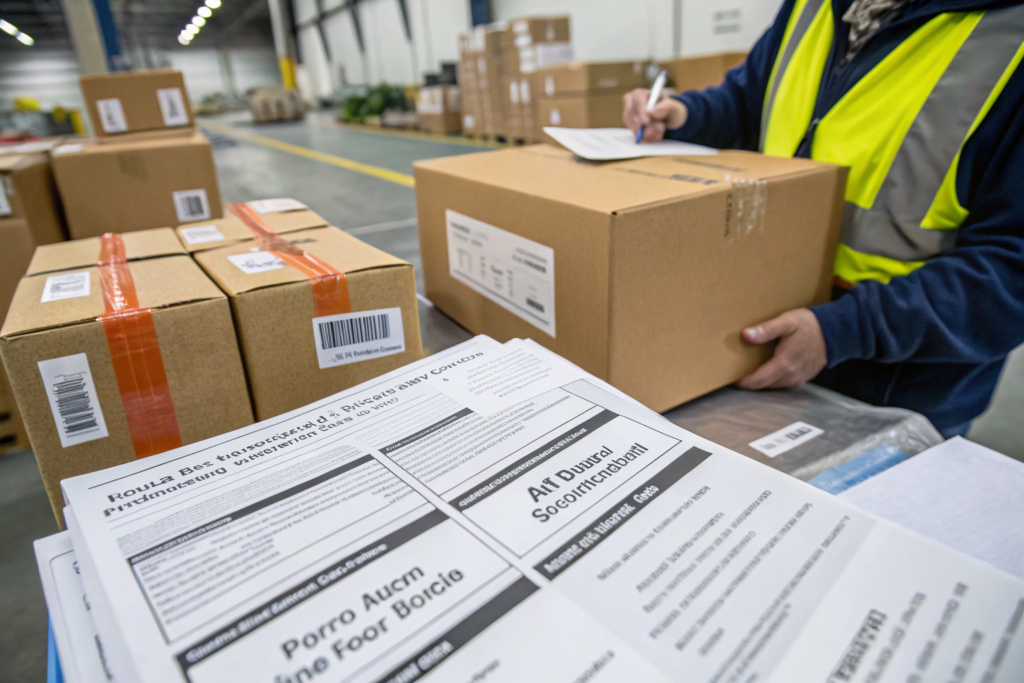
The FBA commercial invoice needs specific data points that a standard wholesale invoice does not. We include the FBA shipment ID prominently at the top of the invoice. We list the FBA fulfillment center address as the delivery address. We list the seller’s legal name and address as the shipper. We itemize each SKU with the FNSKU and the quantity. We declare the transaction value in USD. We include the terms of sale, which for our DDP service are "Delivered Duty Paid." We ensure the total carton count and weight match the shipment plan exactly. We prepare this invoice ourselves, using the data you provide from your Seller Central shipment plan. We send you a draft for approval before we submit it to customs. This level of precision in the paperwork ensures the customs broker can file the entry within minutes of receiving the documents from us. A clean invoice equals a fast customs release.
Conclusion
Shipping into Amazon FBA from China is a test of attention to detail. The rules are not secret. Amazon publishes them clearly in Seller Central. But the volume of rules is overwhelming, and the penalty for missing even one small detail is harsh. A rejected shipment is not just a logistics delay; it is a business interruption that directly hits your account health, your inventory performance score, and your organic ranking.
Our job at GeeseCargo is to absorb that compliance burden entirely. We translate Amazon’s 50-page FBA shipping manual into a physical, checked, and verified process. Every label is verified with a barcode scanner. Every carton is weighed and measured. Every pallet is measured for height and checked for the ISPM-15 stamp. Every commercial invoice includes the FBA shipment ID. We do the tedious work so you can focus on product development, advertising, and growing your brand.
You should not have to learn the difference between a thermal-transfer label and a direct-thermal label. You should not have to know the ONT8 truck entrance procedure. You just need to know that your inventory will be available for sale on the date we promised. If you are launching a new product on Amazon or scaling an existing FBA brand, go to GeeseCargo.com and send me your next shipment plan. I will personally walk you through our FBA checklist and give you a fixed, transparent quote that covers factory pickup to fulfillment center delivery. Let’s keep your inventory in stock and your Buy Box secure.