You’ve been burned before. A freight forwarder who was incredibly responsive during the first shipment. Then the second shipment had a problem, and they vanished. Emails went unanswered. Phone calls went to voicemail. You realized you were just a transaction to them, not a relationship. The industry is full of forwarders who chase new business but neglect existing clients. They promise the world to get your signature, then hand you over to a junior operations team while they chase the next deal.
At GeeseCargo, we build long-term partnerships through consistent senior-level attention, proactive supply chain optimization, transparent fixed pricing that never surprises you, and a genuine commitment to understanding your business goals. We don’t measure success by the number of new clients we sign. We measure it by how many years our existing clients stay with us.
I started this company because I wanted to work with people, not account numbers. I wanted to know what my clients were building, what kept them up at night, and how I could make their logistics so smooth they never had to think about it. Many of my first clients are still with me today. That retention isn’t an accident. It’s the result of a deliberate partnership model that I’ll explain in detail.
Why Does Consistent Communication Matter More Than a Low Initial Quote?
A low quote buys attention for one shipment. Consistent communication earns loyalty for years. When you find a forwarder who answers your emails within hours, who calls you before you even know there’s a problem, and who remembers that your biggest concern is your Q4 holiday delivery, you don’t leave them for a cheaper rate. You’ve found something rarer than a discount. You’ve found reliability.
We invest in communication infrastructure and staffing ratios that allow us to be proactive, not reactive. Your dedicated account manager isn’t juggling a hundred accounts. They have the bandwidth to know your business, anticipate your needs, and update you before you have to ask. This consistent presence builds trust that no low quote can replace.
I once asked a long-term client why he had stayed with us for seven years. He said, "Because I’ve never once had to chase you for an update." That hit me. He wasn’t staying because of our rates. He was staying because we gave him time back. Every hour he didn’t spend tracking containers was an hour he spent growing his brand. Communication isn’t a soft skill. It’s a hard economic benefit.

How Does a Dedicated Account Manager Change Your Daily Experience?
A rotating support queue treats you like a ticket number. You explain your situation from scratch every time you call. You hope the person on duty understands your specific shipment. A dedicated account manager knows your product lines, your preferred ports, your retail deadlines, and your communication preferences.
When you email your GeeseCargo account manager, they already know the context. They know your last three shipments. They know you prefer WhatsApp messages for urgent updates. They know your LA warehouse receives on Tuesdays and Thursdays. This familiarity saves you time and prevents mistakes that generic support teams make. This logistics relationship model is how we make importing feel effortless.
What Proactive Updates Should You Expect from a True Logistics Partner?
A vendor sends you a tracking link and considers their job done. A partner sends you proactive alerts. Vessel departed on schedule. Customs entry filed and accepted. Container discharged. Customs cleared. Out for delivery. Delivered. Each milestone triggers a notification.
More importantly, a partner alerts you when something deviates from the plan. Vessel delayed by weather. New estimated arrival updated. Customs selected for exam. We are engaging the exam site. These proactive updates let you manage your downstream operations. You adjust warehouse labor. You inform your customers. You stay in control because you have information before it becomes an emergency. Our freight forwarder communication standards are designed for your peace of mind.
How Does GeeseCargo Continually Optimize Your Supply Chain Costs Over Time?
A transactional forwarder quotes the same service every time. They don’t look for improvements. They don’t analyze your shipping patterns. They process bookings. A partner studies your supply chain over months and years. They identify patterns. They spot inefficiencies. They propose changes that reduce your costs, speed up your deliveries, or lower your risk. The service gets better over time, not worse.
We conduct quarterly supply chain reviews with our long-term clients. We analyze transit times, cost per unit, customs clearance durations, and damage rates. We identify optimization opportunities, whether it’s shifting a lane to a different port, consolidating LCL shipments, or transitioning a product line to a more cost-effective transport mode.
A clothing importer had been shipping everything through LA and trucking to his Dallas warehouse for years. We analyzed his flow. We ran the numbers on a Houston entry with direct rail to Dallas. The ocean transit was slightly longer, but the inland leg was cheaper and faster. The total landed cost dropped by 11%. His delivery to the warehouse actually improved by a day. He had never considered the alternative because his previous forwarder never suggested it. That’s what a partner does.
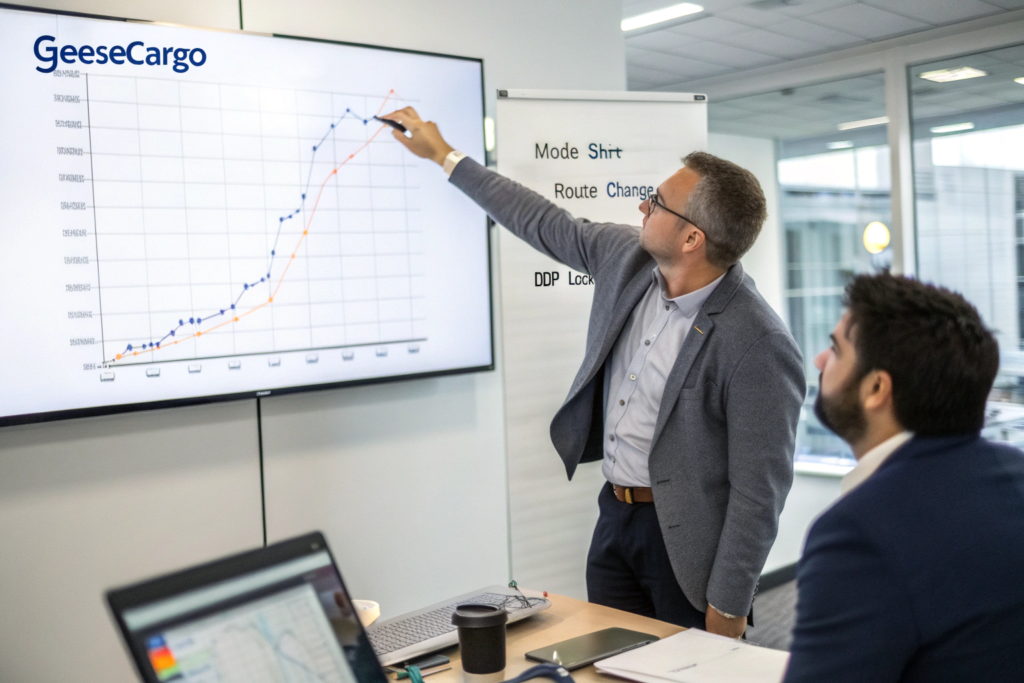
How Can Mode Shifts Between Ocean, Air, and Rail Reduce Total Landed Cost?
Your product mix changes over time. SKUs that were high-margin trend items become steady basics. SKUs that were slow become fast. The optimal transport mode shifts with the product lifecycle. A partner watches these shifts and adjusts accordingly.
We helped a giftware client transition a line of seasonal items from pure ocean to a rail-sea hybrid. The slightly higher freight cost was more than offset by reduced warehousing time and earlier market entry. We calculated the net profit impact, not just the freight cost. This total cost perspective is how we deliver ongoing value beyond the initial quote.
What Role Does Data Analysis Play in Long-Term Freight Spend Reduction?
You can’t improve what you don’t measure. We track your freight spend across carriers, routes, and modes. We identify concentration risk. We spot lanes where rates have crept up without justification. We benchmark your costs against our broader portfolio.
This data-driven approach turns logistics from a cost center into a managed expense. You see quarterly reports showing your spend trends, your savings from optimization initiatives, and your projected costs for the next quarter. This visibility allows you to budget accurately and hold us accountable. It’s a partnership based on shared information, not blind trust.
How Do Transparent Pricing and No-Surprise Invoices Build Multi-Year Trust?
Surprises destroy relationships. One unexpected surcharge erases months of goodwill. Importers who have been burned by hidden fees develop a permanent skepticism. They scrutinize every invoice. They question every line item. They never relax. A forwarder who wants a long-term partnership must eliminate surprises entirely. The invoice must match the quote. Every time. For years.
Our fixed all-in DDP pricing means your invoice matches your quote, shipment after shipment. We don’t hide behind "market fluctuations" or "unexpected carrier charges." If a cost increases during transit, we absorb it. Your budget is safe. Your trust is intact. Your relationship with us is not tested by invoice disputes.
A client once told me that our invoices were "boring." I asked what he meant. He said, "There’s never anything to question. I see the number, I recognize it from the quote, I pay it. It takes ten seconds." That’s the highest compliment a freight forwarder can receive. Boring invoices mean the pricing promise is being kept. Boring invoices build trust that lasts a decade.
How Does a Fixed DDP Model Eliminate the Monthly Invoice Audit Headache?
When you work with variable-cost forwarders, every invoice requires an audit. You compare the quote to the final bill. You question charges you don’t recognize. You email back and forth. This process consumes hours of your time every month.
Our fixed DDP model eliminates the audit. You pay the agreed price. There are no new line items to investigate. Your finance team processes our invoice in seconds. The time saved compounds over years. This DDP service operational simplicity is a hidden value of our partnership model.
Why Is Pricing Stability More Valuable Than Occasional Spot Discounts?
A spot discount feels good in the moment. You save $200 on one container. Then the market spikes, and your rate jumps $800 on the next one. The net result is negative. Pricing stability, even at a slightly higher average rate, allows you to budget, price your products, and forecast profit.
Our clients value stability because they run businesses, not trading desks. They sign retailer contracts based on known landed costs. They can’t reprice their products every time the freight market twitches. We provide the stable pricing foundation they need to build their brands confidently.
How Does GeeseCargo Evolve Its Services as Your Import Business Grows?
Your business today is not your business three years ago. You started with small LCL shipments. Now you’re importing full containers monthly. Soon you’ll need warehousing, retail-compliant labeling, and direct-to-store distribution. A forwarder who can’t grow with you becomes a bottleneck. You outgrow them. You face the painful process of switching providers mid-growth.
Our service portfolio is designed to scale with you. We handle LCL consolidation for startups, FCL for growing brands, air freight for urgent launches, DDP for financial predictability, and value-added services like warehousing and retail compliance. You don’t outgrow us. We grow with you.
One of my earliest clients started with two pallets of accessories per month. Today, he imports fifteen containers a year across three product lines. He uses our DDP service, our air freight for samples, and our consolidation for smaller test orders. He’s never had to find a new forwarder because we added capabilities as he added volume. That continuity means we know his entire supply chain history, and that knowledge makes us more valuable to him every year.
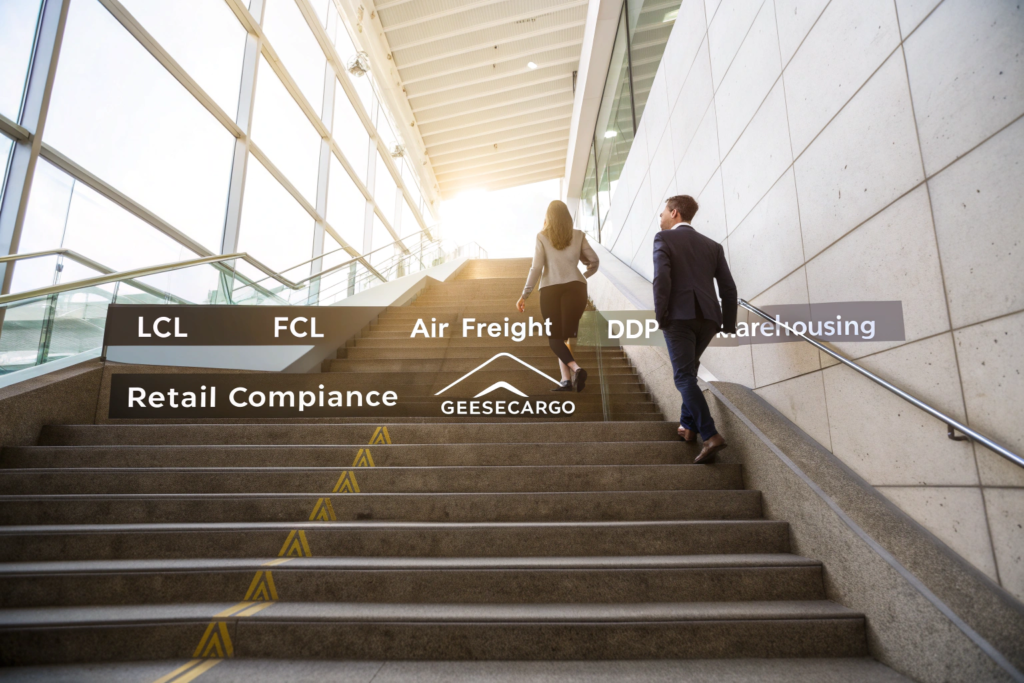
How Does the Transition from LCL to FCL Impact Your Supply Chain Economics?
Less-than-container-load works for small volumes. But as your volume grows, LCL becomes more expensive per unit than a full container. It also adds handling risk and transit time. The transition point is an important financial decision.
We proactively alert clients when their LCL volume justifies an FCL move. We run the cost comparison. We help them plan their ordering cycle to fill a container. This transition usually reduces their unit freight cost by 20-30%. A forwarder who doesn’t monitor this is leaving money on the table. A partner identifies the opportunity and acts on it.
Can GeeseCargo Support Omnichannel Retail Distribution from a Single Logistics Partnership?
As your brand grows, you sell through multiple channels. Your own website. Wholesale to independent retailers. Major retail chains. Each channel has different logistics requirements. Retailers require EDI, specific labeling, and strict delivery appointments.
We’ve developed capabilities to support omnichannel distribution. We can route inventory to your e-commerce fulfillment center, your wholesale distribution center, and directly to retail distribution centers, all from a single logistics partnership. This complexity management allows you to expand channels without multiplying your vendor relationships. Your supply chain becomes an enabler of growth, not a barrier.
How Do GeeseCargo’s Values and Culture Support Lasting Client Relationships?
Partnerships outlast transactions when they’re built on shared values. You want to work with people who care about your success, who take ownership of problems, and who operate with integrity when nobody is watching. A company’s culture determines how they treat you when things go wrong, and things always go wrong eventually in global logistics.
Our culture is built on three principles. Own the outcome, not just the task. Communicate the bad news before the client has to ask. And never profit from a client’s problem. These values guide how we hire, how we train, and how we serve. They are the reason clients trust us across decades, not just shipments.
I once spent a Saturday at the port resolving a container issue for a client whose launch was the following Monday. My team didn’t ask for overtime approval. They knew what needed to be done. They did it. The client never forgot that. Years later, he told me that weekend proved we were different. We weren’t just a vendor following a contract. We were partners who cared about his business as if it were our own.

How Does "Owning the Outcome" Differ from Traditional Forwarder Service?
A traditional forwarder books the vessel and considers their job done. If the vessel is late, it’s the carrier’s fault. If customs holds the container, it’s your documentation issue. They pass responsibility along the chain.
Owning the outcome means we take responsibility for the entire result. If the carrier is late, we rebook on a faster service. If customs has a question, we answer it. We don’t deflect. We don’t make excuses. We fix the problem. This ownership mindset transforms the client experience from adversarial to collaborative.
Why Is It Important That Your Forwarder Never Profits from Your Problems?
Some forwarders earn margin on storage fees, detention charges, and problem resolution services. Their business model actually benefits when your shipment faces delays. This is a fundamental conflict of interest.
We never earn margin on problem-generated fees. If a cost arises from a disruption, we pass it through at cost or absorb it. Our profit comes from the service we provide, not from the problems you encounter. This alignment of interests means we are as motivated as you are to keep your shipments moving smoothly. A freight management partnership built on aligned incentives lasts because both parties want the same outcome.
Conclusion
Long-term partnerships are not built on a single great quote or a single smooth shipment. They are built on years of consistent communication, continuous cost optimization, transparent pricing that never surprises, scalable services that grow with your business, and a company culture that treats your cargo with the care it deserves.
We’ve walked through how our dedicated account managers give you a single point of contact who knows your business intimately. We’ve explored how our quarterly supply chain reviews find savings that transactional forwarders never look for. We’ve seen how our fixed DDP pricing builds trust by making invoices boring and predictable. We’ve discussed how our service portfolio evolves alongside your import volume, from LCL to FCL to omnichannel distribution. And we’ve revealed the values that guide our decisions when problems arise and nobody is watching.
I built GeeseCargo to be a logistics partner for the long haul. Many of my clients have been with me since the beginning. They stay because we make their lives easier, their costs predictable, and their supply chains resilient. If you’re looking for a freight forwarder who will still be answering your calls a decade from now, let’s start a conversation. Contact us through our website. Let’s discuss where your business is going and how we can help you get there.