Choosing a Chinese freight forwarder feels like a leap of faith. You’re thousands of miles away. You can’t walk into their office. You can’t look them in the eye. You hand over tens of thousands of dollars in inventory to someone you met through a website or an Alibaba inquiry. If they’re incompetent, you lose a shipment. If they’re fraudulent, you lose your business. The fear is real because the stakes are real. You’ve heard the horror stories. Double-brokered cargo. Fake bills of lading. Hostage containers held for hidden fees.
Vetting a Chinese freight forwarder requires verifying their legal business license, their carrier relationships, their physical office presence, their financial stability, and their track record with clients similar to you. GeeseCargo passes every test because we operate with full transparency. Our licenses are public. Our office doors are open. Our client references are waiting. We don’t ask for trust. We provide proof.
I’ve been in Chinese logistics my entire career. I’ve seen the bad operators up close. I built GeeseCargo specifically to be the answer to the vetting problem. A forwarder that an American importer can verify independently, without relying on a sales pitch. Let me walk you through exactly how to investigate a Chinese logistics company and show you how we measure up against every checkpoint.
What Legal Licenses and Registrations Should a Legitimate Chinese Forwarder Hold?
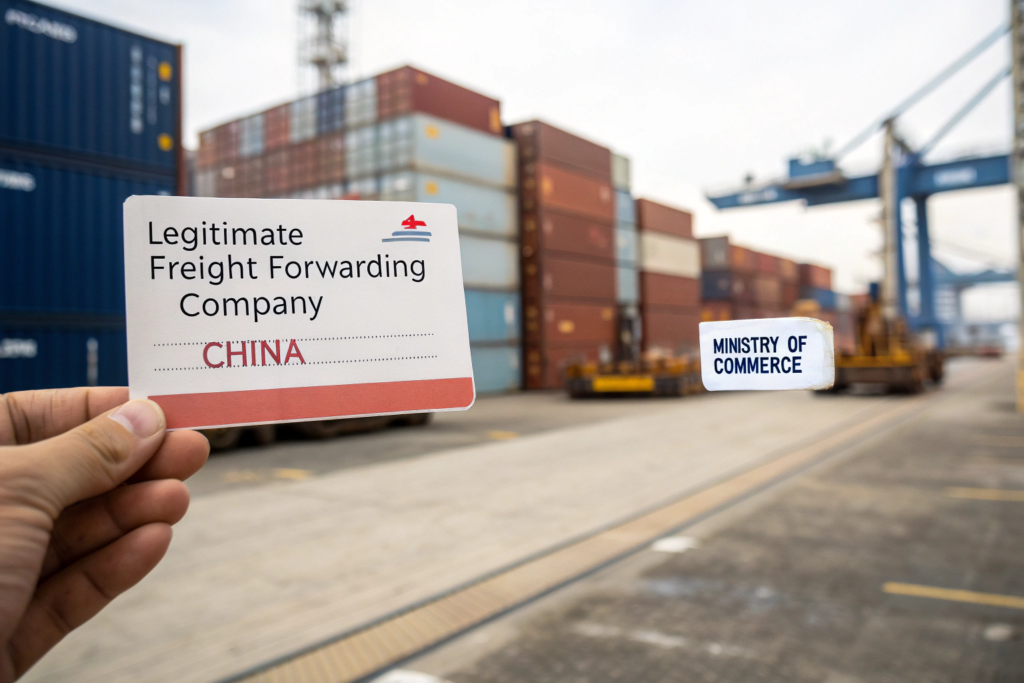
China regulates the freight forwarding industry. Legitimate forwarders hold specific government-issued licenses. They are registered with the Ministry of Commerce. They have a business license with a unified social credit code. They appear on public databases. Unlicensed operators, or "underground forwarders," operate without these registrations. They offer cheap rates and zero recourse when things go wrong. Verifying a license is the first, non-negotiable step in vetting.
GeeseCargo holds a fully registered business license with the PRC State Administration for Industry and Commerce. Our unified social credit code is public. We hold a valid NVOCC license for ocean freight consolidation and a Class A freight forwarding certificate. Every credential we claim can be independently verified on Chinese government databases.
Don’t accept a scanned license at face value. Scammers Photoshop documents. Ask for the unified social credit code. Go to the National Enterprise Credit Information Publicity System website. Enter the code. Verify the company name, registration status, and business scope match what the forwarder claims. If they hesitate to provide the code, or if the online record shows a different business scope or a "revoked" status, walk away immediately. I tell every prospective client to do this. Our information is public and clean.
What Is an NVOCC License and Why Does It Matter for Your Ocean Freight?
NVOCC stands for Non-Vessel Operating Common Carrier. It’s a license issued by the Chinese Ministry of Transport that allows a forwarder to issue their own bills of lading and consolidate cargo. Without it, a forwarder cannot legally operate as a carrier to you.
An unlicensed forwarder must use another company’s bill of lading. This creates legal ambiguity. Who is actually carrying your cargo? Who is liable if the container is lost? Our NVOCC license means we issue our own house bill of lading. The contractual chain is clear. You contract with GeeseCargo. We are legally responsible. No hidden intermediaries. This ocean freight legal clarity protects your cargo and your financial recourse.
How Can You Verify a Forwarder’s Business Registration Independently?
The Chinese government provides free, public databases for business verification. The National Enterprise Credit Information Publicity System is the primary one. It shows the company’s legal representative, registered capital, business scope, and operational status.
We encourage clients to use this system. We provide our unified social credit code proactively before any contract is signed. We also appear on the Ministry of Commerce’s freight forwarder registry. Independent verification is a right, not a privilege. Any forwarder who resists this step is hiding something.
How Can You Verify a Forwarder’s Physical Operations and Team in China?
A website and a WeChat account are not a company. Many "freight forwarders" are one person with a laptop, working from an apartment, outsourcing everything to unknown third parties. They have no office. They have no team. They have no operational control. When your shipment goes missing, their WeChat account goes silent. You have no physical location to pursue. You have no recourse.
GeeseCargo operates from a physical office in a major logistics hub in China. Our address is published on our website. Our team is real, employed directly by us, not outsourced. We welcome client visits. You can walk into our office, meet the people handling your cargo, and see our operations with your own eyes.
I’ve had clients visit our office during sourcing trips to China. They meet their account manager. They see our operations floor. They sit in our conference room and review shipping schedules. This transparency is rare in the industry, but it shouldn’t be. If a forwarder won’t let you visit or can’t show you a real office address that matches satellite imagery, you’re dealing with a ghost operation.

Why Should You Request a Live Video Walkthrough of the Office and Team?
Not everyone can fly to China for a visit. But everyone can request a live video call. A real forwarder can walk you through their office on a WeChat or WhatsApp video call. You see the desks. You see the team. You see the screens with live freight data.
If a forwarder makes excuses, the office doesn’t exist. We offer video walkthroughs to any prospective client. We show you our workspace because we’re proud of it and because hiding nothing is how trust is built. This logistics transparency is standard practice for us.
Does the Forwarder Employ In-House Operations Staff or Outsource Everything?
Some forwarders are pure sales operations. They sell you the service, then hand your cargo to a third-party operations company they’ve never met. Quality control vanishes. Accountability vanishes.
Our operations team is in-house. The people booking your vessel, preparing your documents, and coordinating your trucking work for GeeseCargo. They sit in our office. They report to our management. When a problem arises, the person fixing it is next to the person who booked it. No outsourcing chain to slow down resolution. No finger-pointing between companies.
What Do Their Carrier Contracts and Booking Authority Reveal About Their Capability?
A forwarder who buys space on the spot market or through a consolidator has no guaranteed capacity. They are a passenger on someone else’s ship. When space gets tight, they get bumped. Your cargo gets rolled. Your delivery date slips. A legitimate forwarder holds direct service contracts with the ocean carriers. They have allocated space. They have negotiated rates. They can prove it.
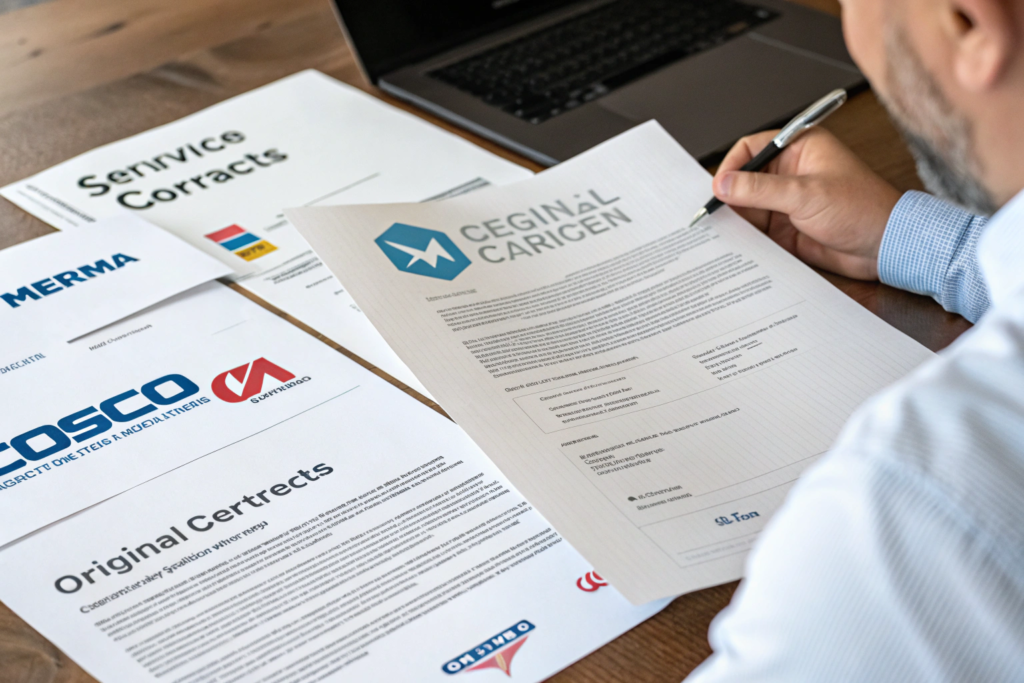
GeeseCargo holds direct service contracts with COSCO, Maersk, CMA CGM, ONE, and other major carriers. We can show you the contract frameworks, sanitized for commercial sensitivity. Our allocated space is real, not a hope. Our booking authority is direct, not brokered through three intermediaries.
Ask your prospective forwarder to name the carrier on your proposed sailing. Then ask if they have a direct contract with that carrier or if they buy through a consolidator. Listen to the answer carefully. A direct contract forwarder answers immediately with the carrier name and the contract framework. A reseller hedges with phrases like "we work with all carriers" or "our partners handle the booking." Those are red flags.
How Can You Confirm the Forwarder Books Space Directly, Not Through a Broker?
The bill of lading tells the truth. If the forwarder issues their own house bill of lading as an NVOCC, their name appears as the carrier. If they broker space, the master bill of lading shows a different forwarder as the shipper.
Ask to see a sample bill of lading from a recent similar shipment. Look at the shipper field. If it’s the forwarder’s name, they booked directly or consolidated legally. If it’s another forwarder’s name, you’re dealing with a middleman. We issue our own house bills of lading under our NVOCC license. The document chain is GeeseCargo to you. Clean. Direct. Verifiable.
Why Is It Important to Ask About Cargo Space Guarantees During Peak Season?
Peak season reveals who has real carrier relationships. Spot buyers get rolled. Contract holders get loaded. A forwarder who can’t explain their peak season strategy is a spot buyer.
We commit annual volume to carriers. In return, carriers commit space to us. During peak season, when spot rates double and space vanishes, our allocated containers still load. We can explain this commitment structure in detail. Ask your forwarder how many TEUs they contract annually and with which carriers. A specific answer signals a real operation. A vague answer signals a spot market gambler.
What Do Their Financial Practices and Payment Terms Indicate About Their Stability?
Financial instability kills freight forwarders. They collect your freight payment, then can’t pay the carrier. The carrier holds your cargo hostage. You’ve paid once, but you must pay again to release your goods. This is a common nightmare scenario in the industry. A financially stable forwarder has transparent payment terms, reasonable credit with carriers, and a track record of on-time payments to their supply chain partners.
GeeseCargo operates with transparent payment terms. We offer trade assurance-compatible transactions. We have established credit with our carrier partners, meaning we don’t rely on your prepayment to pay the shipping line. Your funds are secure, and your cargo moves regardless of any cash flow timing gaps.
Ask a forwarder about their payment terms with carriers. If they can’t answer or claim it’s confidential, they likely pay on a shipment-by-shipment basis with no credit. That’s a fragile financial position. We maintain credit lines with our major carriers. Your shipment sails before your invoice is even due. Our financial stability is your cargo security.

Should You Be Wary of Rates That Are Significantly Below Market Average?
Yes. If a rate is too good to be true, it is. A rate significantly below market means one of three things. The forwarder is losing money to buy your business and will make it up through hidden fees later. They are using substandard, slow, or unreliable services. Or they are a scam.
We offer competitive rates, but not magical ones. Our pricing reflects real carrier costs, real operational expenses, and a reasonable margin for service. We explain why our rate is what it is. We show you the cost components. A rate that seems impossibly cheap is an impossibility for a reason. This freight forwarder pricing transparency protects you from bait-and-switch tactics.
Do They Offer Secure Payment Methods with Buyer Protection?
Wire transfers to anonymous accounts are dangerous. Once the money leaves your account, you have zero recourse. Legitimate forwarders offer traceable, protected payment methods.
We accept payments through traceable bank transfers to our registered business account. We also support transactions through platforms with buyer protection where applicable. The payment goes to a verified corporate entity, not an individual’s personal account. This financial traceability is a basic legitimacy check. Never wire money to a personal account, no matter how convincing the story.
Do They Have a Proven Track Record with US Importers in Your Industry?
A forwarder who has never handled your product type is learning on your dime. Clothing has different requirements than electronics. Giftware has different customs sensitivities than industrial parts. You need a forwarder who knows your product’s tariff codes, packaging vulnerabilities, and retail delivery expectations. A proven track record in your vertical means fewer surprises and faster problem resolution.
GeeseCargo specializes in serving US importers of clothing, accessories, gifts, and consumer goods. Our client list includes brand owners, distributors, and retailers shipping from China to North America. We can provide sanitized case studies and references from importers in your exact product category.
I recently onboarded a giftware importer who was burned by a generalist forwarder. The forwarder didn’t know that certain decorative items require FDA clearance. The shipment was held for three weeks. We knew immediately. We pre-filed the correct documentation. His next shipment cleared in 24 hours. Industry-specific knowledge is not a nice-to-have. It’s a requirement.
Can They Provide References from Clients Shipping Similar Products?
A confident, competent forwarder has happy clients who will vouch for them. Ask for references. Specifically, ask for references shipping products like yours. If a forwarder can’t provide any, they either have no satisfied clients or no experience in your vertical.
We maintain a list of clients who have agreed to serve as references. They are importers of clothing, giftware, accessories, and consumer goods. They can tell you about our service quality, our responsiveness, and how we handled their specific challenges. Their endorsement is more credible than anything we say about ourselves.
How Do They Handle the Specific Customs Nuances of Your Product Category?
Every product category has customs nuances. Textiles have quota and fiber content rules. Gifts have intellectual property concerns. Electronics have FCC and safety certifications. A forwarder who doesn’t know these nuances will cause delays and penalties.
Our in-house customs team maintains updated knowledge of category-specific regulations. We review your product specifications against destination country requirements before shipment. We catch classification errors and missing certifications at origin, not at the border. This proactive customs clearance is why our clients experience fewer holds than the industry average.
Conclusion
Vetting a Chinese freight forwarder is not about trust. It’s about verification. We’ve walked through the six essential checkpoints: legal licenses that prove a company is registered and authorized, a physical office that proves they are real and reachable, direct carrier contracts that prove they control space and aren’t just reselling it, financial practices that prove stability and secure your money, and a proven track record with importers like you that proves industry competence.
GeeseCargo was built to pass every one of these tests. Our licenses are public. Our office doors are open. Our carrier contracts are direct. Our financial practices are transparent. Our client references are waiting. We don’t ask you to take a leap of faith. We give you the ladder of verification.
Your cargo is too valuable to trust to an unverified partner. Use this guide. Ask the hard questions. Demand the documents. And when you’re ready to work with a Chinese freight forwarder that welcomes your scrutiny, contact GeeseCargo. We’ll answer every question, open every door, and prove that we are the partner your business deserves.