
I have sat across the table from too many smart business owners who look embarrassed. They hold my quote in their hand. They nod their head. But their eyes glaze over. They do not understand what they are looking at. They are afraid to ask questions. They just scan for the final price. If the number is lower than the last guy’s, they sign. If it is higher, they walk away. They never check what is actually inside the price. That is dangerous.
A GeeseCargo freight quote is a transparent map of your shipment’s journey. It breaks down the origin charges, ocean freight, destination charges, customs duties, and trucking delivery. Each line has a purpose. You control the cost by understanding each one.
I believe you should know exactly where your money goes. I am going to take a real GeeseCargo quote format and walk you through every single line. I will explain what the charge is. I will tell you if it is negotiable. I will share a secret about where forwarders sometimes hide their profit. By the end of this article, you will read a freight quote better than most junior logistics coordinators.
How Do You Understand the “Origin Charges” Section on Your Quote?
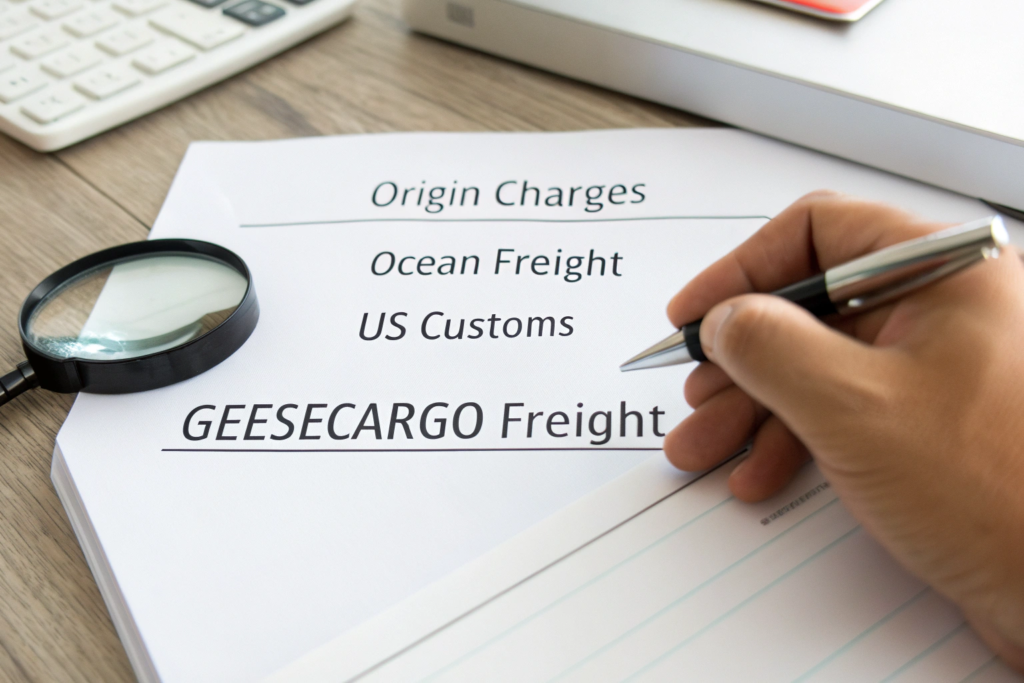
The origin section covers everything that happens in China before the vessel leaves. This is the most competitive part of the quote. Most factories and local forwarders make their profit here. You need to look for bundled fees. A line that says "Local Charges" without a breakdown is a red flag. It hides the real costs.
We list the charges separately. You will see the export declaration fee. You will see the Bill of Lading fee. You will see the trucking fee from the factory to the port of loading. You might wonder why we charge a fee for a piece of paper. Or why the trucking costs what it does. Each of these fees pays for a specific person’s work or a specific government requirement.
What Exactly Is the Export Customs Declaration Fee?
The Chinese government requires every export shipment to be declared. This is a legal filing. A licensed customs broker in China prepares a document. They send it through the China Customs electronic system. They classify your goods with an HS code. They declare the value. This takes time and expertise.
The declaration fee covers the broker’s work. It is usually between $50 and $80 USD. Some forwarders mark this up to $150. We charge exactly what it costs us plus a small service fee. The document must be perfect. If the broker makes a mistake on the value, the factory loses their tax rebate. If they make a mistake on the product description, the container can get stopped at the port. This small fee protects the entire shipment from a hold. It is not the place to save money.
Why Does the Bill of Lading Fee Exist on Every Invoice?
The Bill of Lading is the most important document in shipping. It is the title to your goods. The steamship line issues it. They charge an issuance fee. It is about $50 to $100. This fee goes directly to the vessel operator. The forwarder just passes it on to you.
You need the original Bill of Lading to claim your cargo. Or you need a telex release if you prefer electronic transfer. The telex release fee is cheaper. I always ask my clients if they trust their supplier. If you have fully paid for the goods, a telex release is faster and saves money. If you are still negotiating terms, you want the original document. We explain the difference in the quote. No hidden agenda. Just a choice that affects your risk and cost.
How Is the Ocean Freight Line Calculated and Why Does It Fluctuate?
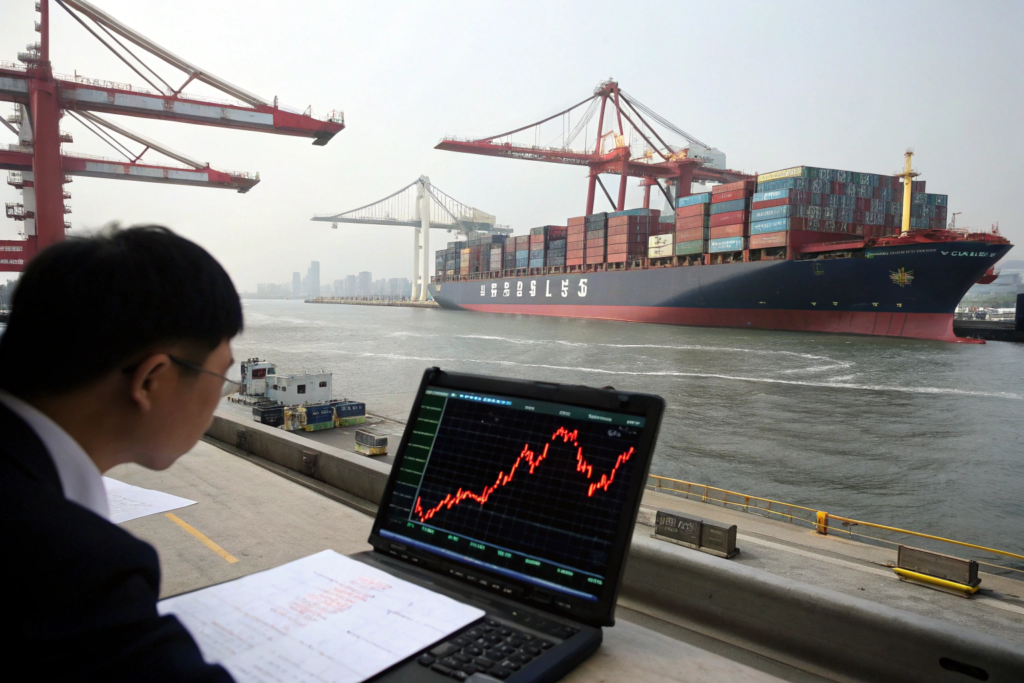
The ocean freight line is the biggest number. It is also the most misunderstood. Many people think it is a fixed government price. It is not. It is a market price. It changes every week. It depends on supply and demand. If there is a shortage of vessel space before Christmas, the price goes way up. If demand is low in March, the price drops.
When we give you a quote, we check the spot market. We also check our long-term contract rates with the shipping lines. We show you the spot rate first. But if you ship regularly, we offer you a contract rate. This is lower and stable. You need to know the difference. A spot quote is valid for maybe a week. A contract quote can be valid for six months. I will never quote you a spot rate that I know is about to expire without warning you.
What Is the Difference Between a Spot Rate and a Contract Rate?
A spot rate is like buying a plane ticket for tomorrow. It is expensive and unpredictable. You pay whatever the market demands that day. If a vessel is 90% full, the remaining 10% costs a premium. You have no protection. If you only ship twice a year, you might have to accept this.
A contract rate is like buying a season pass. You commit to a certain volume, maybe ten containers over six months. We negotiate a fixed price with the steamship line. They guarantee space on the vessel. You get a lower rate. You get priority loading. During the peak season chaos, your container still gets on the boat while spot cargo gets rolled to the next week. For a business importing regularly from China, a contract rate with GeeseCargo is the foundation of a reliable budget.
How Do Peak Season Surcharges Appear in the Quote?
The steamship lines impose a PSS when demand is high. It is an extra fee on top of the base ocean freight. It can be $200 to $2,000 per container. It hits hardest on the Trans-Pacific routes to America. You need to check if this surcharge is included in your quote.
Some forwarders show a low base rate and then list the PSS separately so the quote looks cheap at first glance. We include the PSS as a separate line item clearly marked. I tell my clients exactly when the surcharge season starts and ends. Right now, for the European and American routes, we track the peak season surcharge announcements daily. We even forward the carrier notices to you if you want to see them. Transparency means sharing the raw data.
How Do You Navigate US Customs Clearance and Duty Lines?
This section scares people the most. The government is involved. Penalties exist. The language is legal. But the structure of the charges is simple. You pay a broker to file the entry. You pay the government the duty and taxes. You pay a bond premium.
The key is the classification. The duty line depends entirely on the HTS code. If the code is wrong, the cost is wrong. I never guess the code. I ask you for the product details. My team researches the binding rulings. We present you with the code and the corresponding duty rate. We put it in the quote. You approve it before we ship.
What Exactly Does the Customs Bond Premium Cover?
A customs bond is an insurance policy for the government. It guarantees that US Customs will get their money even if you go bankrupt. Every formal entry over $2,500 requires a bond. You can buy a single-entry bond for about $50 to $100. Or you can buy an annual bond for $350 to $500.
I usually recommend an annual bond if you ship more than three times a year. It saves money immediately. Our quote always asks you to choose. I explain the math. "You are shipping five containers this year. Five single bonds cost $400 total. An annual bond costs $375. You save $25 and you never have to think about it again." This is how I consult. I do not just push the highest price. I push the smartest choice for your business.
What Is the Merchandise Processing Fee and Why Is It Non-Negotiable?
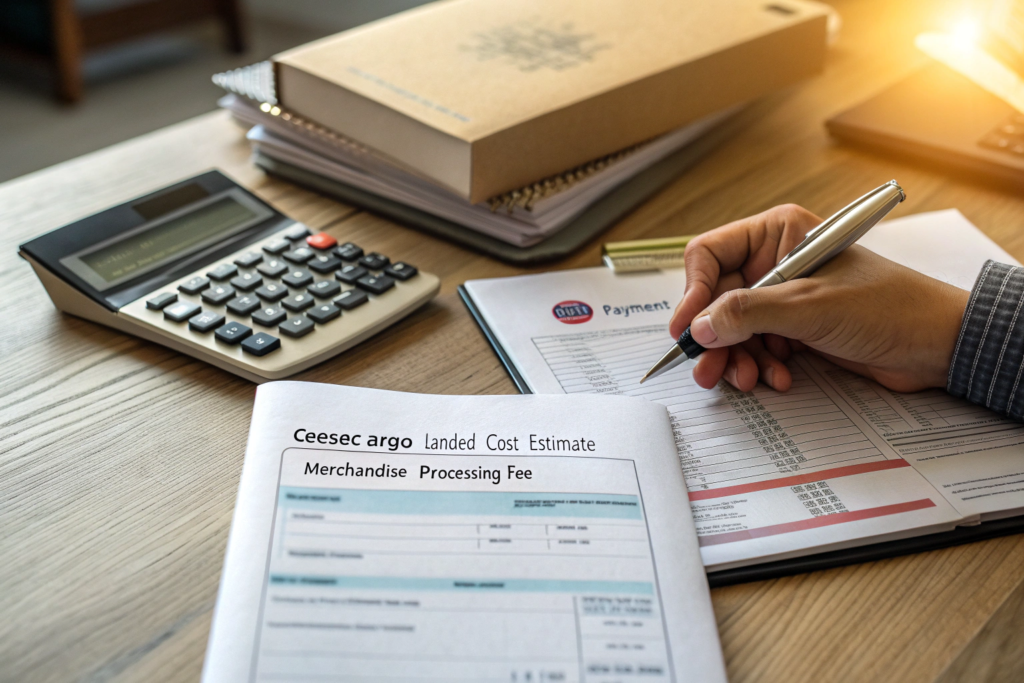
I mentioned this in other guides, but it bears repeating in the line-by-line context. The MPF is 0.3464% of the declared value. It is a tax on the import processing. It has a minimum of about $30 and a maximum of about $700. You cannot negotiate it. You cannot avoid it.
It is often buried in other forwarders’ "Destination Charges" line. We list it separately. We show the calculation: "Value $50,000 x 0.3464% = $173.20." You see the math. You know exactly where your money goes. When you compare our quote to a competitor who hides this inside a lump sum, our quote might look higher. But the competitor is either guessing or hoping you will not notice they excluded a mandatory government fee. Always check for the MPF.
What Destination Charges Lurk at the US Port and How Do You Spot Them?
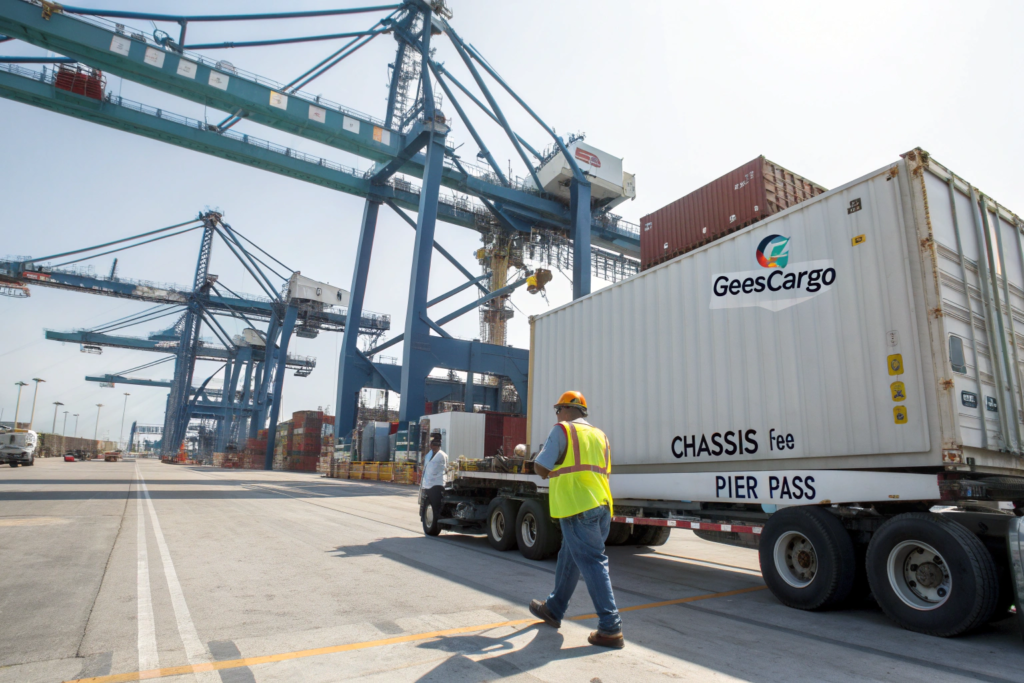
The vessel docks. The unloading begins. This is where FOB quotes die. The port terminal charges for using their space and their cranes. The chassis provider charges for the wheels. The rail charges if the container moves inland. This section of the quote must be detailed.
We list the Terminal Handling Charge. The Pier Pass fee for night moves. The chassis split fee if applicable. The fuel surcharge for the local trucker. Each one is a real service. Each one is a cost we have negotiated down. Our volume gets us discounts that a solo importer can never get. We pass those discounts on.
How Can You Spot a Duplicate “Terminal Handling” Fee?
This is a classic trick. The steamship line charges a terminal handling fee at the destination. The terminal itself might also charge a wharfage fee. Some brokers charge a "Terminal Fee" on top of the "Terminal Handling Fee." It is double-dipping.
You should ask: "Is this fee paid to the carrier or the terminal?" I make sure our quotes describe the payee. "Terminal Handling Charge (Carrier)" or "Wharfage (Port Authority)." If you see two lines with similar names, I want you to ask me. I am happy to explain it. A good forwarder will not be defensive. A bad one will tell you it is standard to charge twice. It is not. Protect your budget by questioning every line. The Port of Los Angeles publishes some of their rates, so you can verify.
What Is a Chassis Split Fee and Can You Legally Avoid It?
A chassis split happens when the container and the chassis are stored in two different lots. The trucker has to visit two places to assemble your load. It takes more time and fuel. The terminal charges for it because it complicates their operation. It is a real cost.
You can avoid it by using a trucking company with a pool chassis arrangement. We coordinate our truckers to do exactly this. We ensure they go to a terminal with an integrated chassis pool. I flag this on the quote. If I have to use a split location, I explain why. Maybe the arrival terminal is too congested. Maybe the container got diverted. The fee is listed transparently. My promise to you is that you will never pay a split fee unless it is absolutely necessary and I have told you about it in advance.
How Does the Final Trucking and Fuel Calculation Work?
The last mile. The truck picks up the container and brings it to your warehouse. The cost depends on the distance from the port. It depends on the fuel price. It depends on the access. If your warehouse has a narrow road and no dock, the trucker charges for a lift gate and extra time.
We quote trucking based on the zip code. We use a rate engine that updates weekly. The quote always shows two numbers for this leg. The base linehaul rate and the fuel surcharge. Fuel surcharge is a percentage of the linehaul. It follows a national diesel index. We do not control it. We just pass it through. But we show you the index so you can verify the percentage is fair.
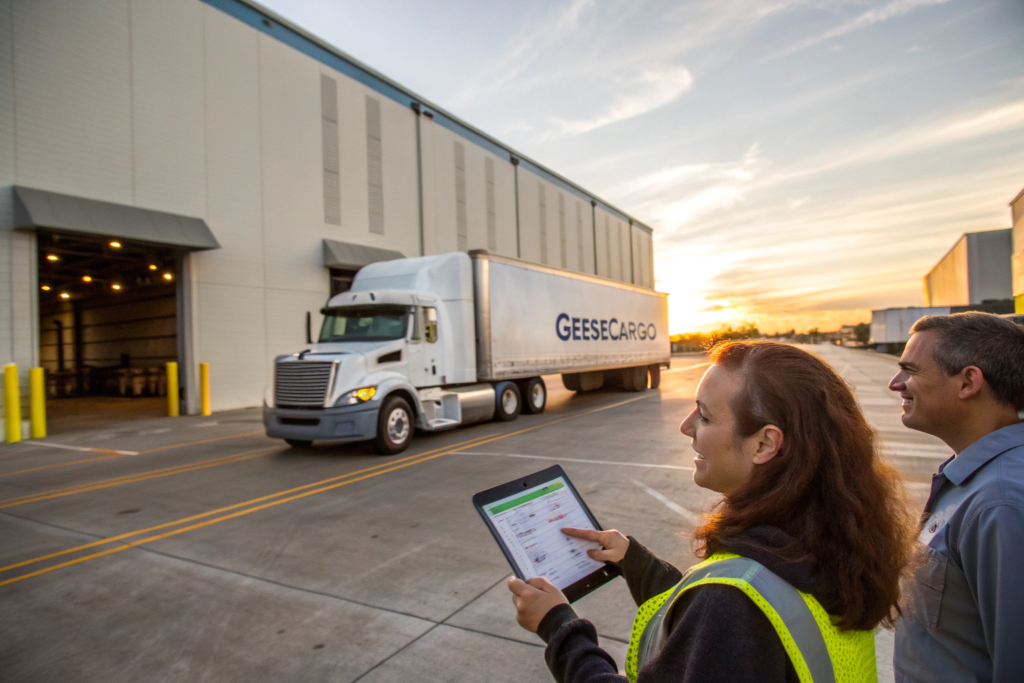
How Does a Fuel Surcharge Work and Who Sets the Rate?
The fuel surcharge is not a random number I make up. It is based on the U.S. Department of Energy’s diesel fuel index. If diesel goes up, the surcharge goes up. If diesel drops, you pay less. It resets every Monday. The trucking company calculates it as a percentage of the base freight.
My quote says "Fuel Surcharge: 28% (Subject to DOE index on day of delivery)." I am telling you it might change. I am not hiding the risk. I also cap it for you on big projects. If you ship a full truckload and the index spikes, I might eat a small part of the increase to keep your landed cost stable. This is the difference between a transactional broker and a logistics partner.
What Is a Detention Fee and How Can Good Communication Prevent It?
The trucker arrives at your warehouse. Your staff is at lunch. The truck waits. Two hours later, the staff returns and starts unloading. The trucker has now been there for three hours. The standard free time for unloading a container is two hours. After that, the clock starts.
The trucker charges detention at $75 to $150 per hour. This fee is not in the initial quote because we assume a normal unloading. I always put a note in the quote: "Assumes 2 hours free time. Detention billed at cost if exceeded." I call you the day before delivery. "Ron, the truck comes at 8 AM. Please have three people ready." If you tell me your forklift is broken, I hold the truck at our secure yard for a day. You pay a small storage fee but you avoid $400 in detention. Good communication eliminates these fees.
Conclusion
A freight quote is a story. It tells you exactly what will happen to your container from the factory floor to your warehouse door. If the story has chapters missing, you are going to get a surprise ending. A surprise ending in logistics always costs you money. The origin charges, the ocean freight, the customs clearance, the port fees, and the trucking are not mysterious. They are a sequence of services performed by real people using real equipment. Each one deserves a fair payment.
I want you to read a GeeseCargo quote and feel informed, not intimidated. When you see the export declaration fee, you know it protects the factory’s tax rebate. When you see the customs bond, you know it is the government’s insurance policy. When you see the fuel surcharge, you know it follows the diesel index. Nothing is hidden. Nothing is double-charged. You have the power to question every line, and I am here to answer those questions honestly.
My request to you is this. Next time a competitor sends you a quote, compare it to our format. Ask them where their Merchandise Processing Fee is. Ask them if the peak season surcharge is included. Ask them if the chassis is in the price. If they cannot answer clearly, they are not your partner. Visit GeeseCargo and request a sample quote for your specific route. I will walk you through it personally on a video call. You will see your supply chain clearly for the first time.