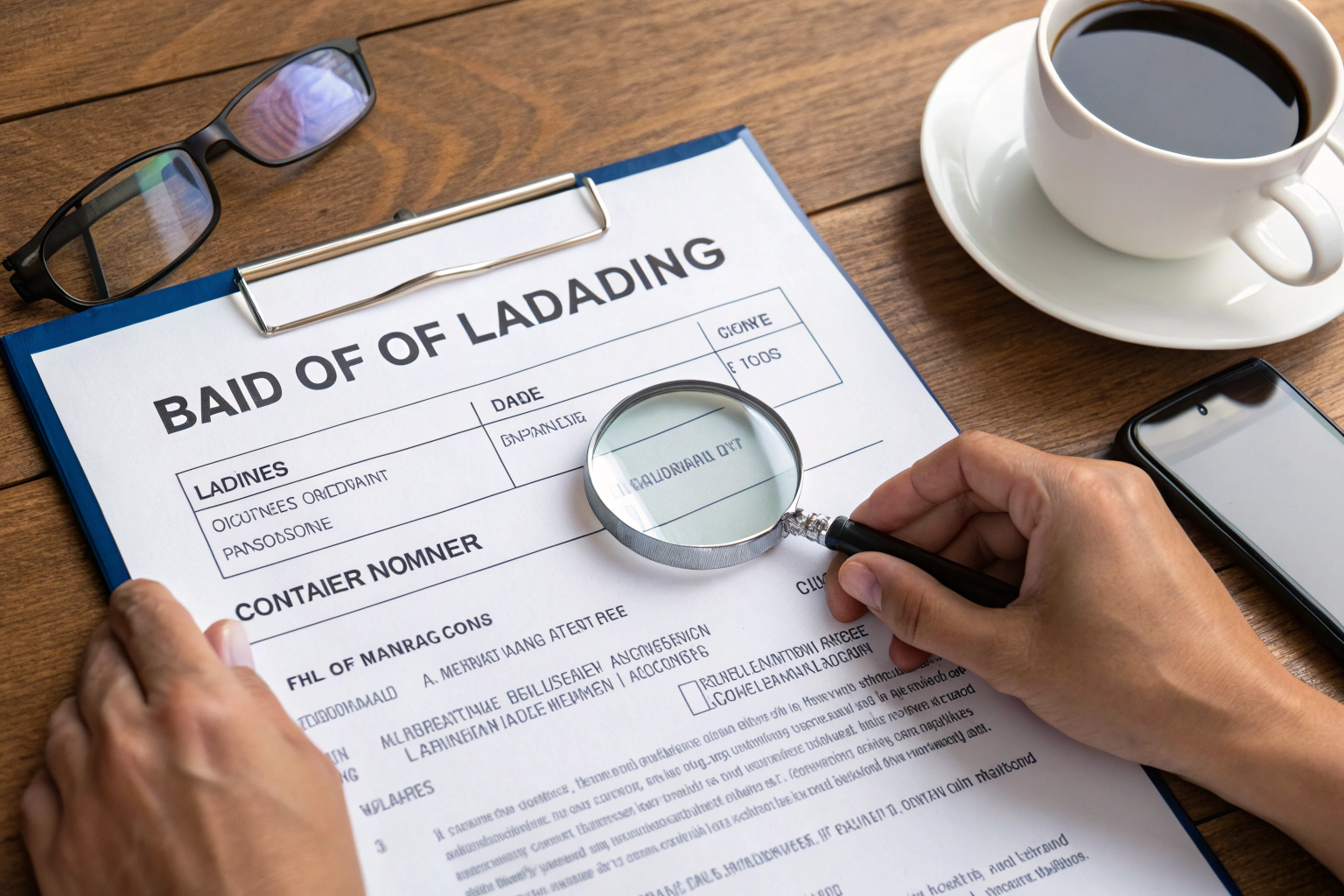
You just received an email from us with the subject line: "Your Bill of Lading is Ready." You open the PDF and see a dense, one-page document filled with tiny print, boxes, codes, and legal language. Your eyes glaze over. You see your name, a vessel name, and a lot of numbers you do not understand. You close the PDF and think, "I trust you guys. I do not need to read this." That is a mistake. The Bill of Lading is the single most important document in your shipment, and understanding it can save you from delivery delays, payment problems, and legal liability.
The Bill of Lading, or BOL, is three documents in one. It is a receipt proving the carrier received your goods in good condition. It is a contract of carriage that spells out the terms of the transportation. And, critically for some transactions, it is a document of title that controls who can take possession of the goods at the destination. At GeeseCargo, we provide a clean, clearly structured Bill of Lading for every shipment. I will walk you through each section, line by line, so you know exactly what you are looking at and what each field means for your shipment.
You do not need to go to law school or take a freight course. You need a practical, plain-English walkthrough of the document that is already sitting in your inbox. This guide will turn that intimidating PDF into a familiar tool. By the end, you will be able to pick up any Bill of Lading we send you and instantly verify the key information that protects your cargo and your payment.
What Is a Bill of Lading, and Why Is It the Most Important Shipping Document?
You have a folder of shipping documents. The commercial invoice, the packing list, the arrival notice, the bill of lading. You treat them all as "paperwork" with equal importance. Then your supplier asks for a copy of the original bill of lading before they release your payment. Your bank asks for the bill of lading to process your letter of credit. The port asks for the bill of lading to release your goods. Suddenly, this one document is the gatekeeper to your money and your cargo.
The Bill of Lading serves three legal functions simultaneously. It is a cargo receipt issued by the carrier, confirming the quantity and apparent condition of the goods at the time of loading. It is evidence of the contract of carriage between the shipper and the carrier. And, when issued as a negotiable "original," it is a document of title, meaning whoever holds the original can legally claim the goods. No other shipping document carries this combination of legal weight. The commercial invoice is a bill. The packing list is a tally. The Bill of Lading is the title deed to your cargo.
Let me explain why the document of title function is so critical. If we issue an "Original Bill of Lading," there are typically three signed originals. The physical possession of one of these originals is what gives you, or your bank, or your buyer, the right to collect the goods at the destination port. The carrier will not release the goods without an original bill of lading being surrendered. This is how international trade secures payment. A supplier in China ships goods but does not release the original BOL to you until you pay. You pay, they send you the original BOL, you present it to the carrier at the destination, and the goods are released to you. The BOL is the instrument that synchronizes the payment with the physical transfer of goods. A Telex Release or Express Release is a digital alternative where the originals are surrendered at the origin and the carrier authorizes release at the destination without a physical original. We will explain which type you have and why.
The BOL is also your evidence if something goes wrong. The "cargo description" and "apparent good order and condition" language on the face of the BOL is a legal statement. If the container arrives damaged and the BOL was issued "clean," meaning no damage was noted at loading, the carrier is presumptively liable. If the BOL was "claused" with a notation of damage, the carrier’s liability is limited. You need to understand what the BOL says about the condition of your goods at origin.
What Is the Difference Between a House Bill of Lading and a Master Bill of Lading?
You see two documents with similar names. One says "House Bill of Lading" and is issued by GeeseCargo. One says "Master Bill of Lading" and is issued by the ocean carrier, like COSCO or Maersk. You do not know which one matters.
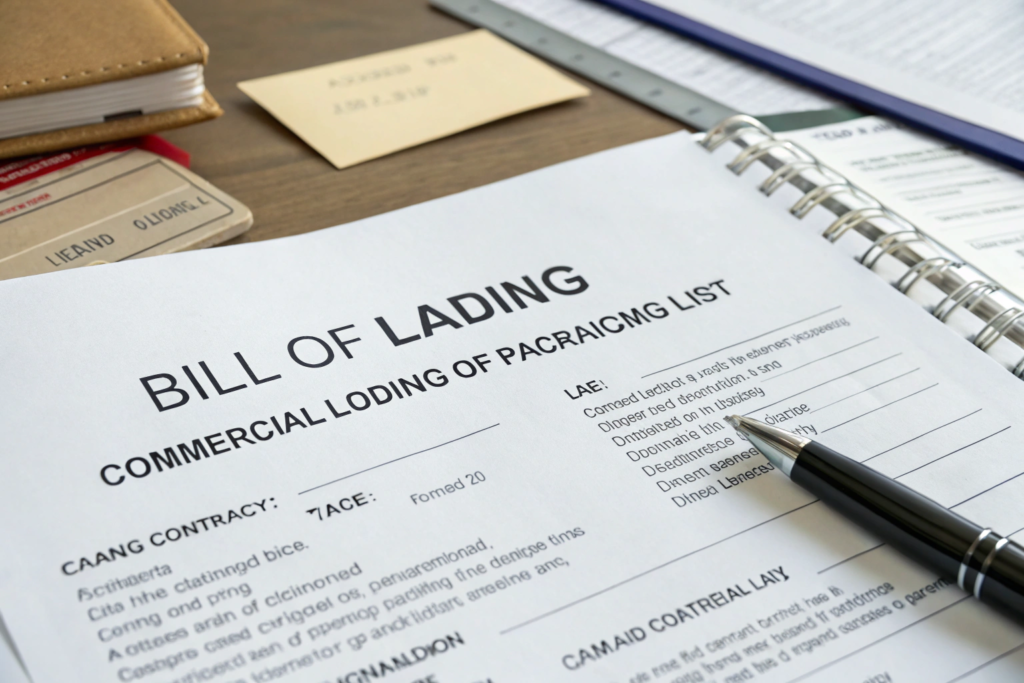
The Master Bill of Lading is the contract between the ocean carrier and the freight forwarder. It covers the entire container. The House Bill of Lading is the contract between the freight forwarder and you, the individual shipper. If you are shipping a full container, your House BOL will closely mirror the Master BOL. If you are shipping LCL, your House BOL covers only your specific cartons within the shared container. As the cargo owner, your legal relationship is primarily with the House Bill of Lading issued by us. It is your receipt, your contract, and your document of title. The Master BOL is between the shipping line and us. We manage the Master BOL. You focus on the House BOL we issue to you. Both numbers are listed on our document for your reference, but the House BOL number is your tracking reference.
When Do You Need an Original Bill of Lading Versus a Telex Release?
Your supplier is in China, and you are in the US. You paid them 30% deposit, and you will pay the 70% balance after shipment. The supplier wants security that you will pay before you get the goods. You want security that the goods exist and have shipped before you pay the balance.
An Original Bill of Lading is the traditional security instrument for this situation. The supplier receives the three original BOLs from us after the container sails. They hold the originals until you pay the balance. You pay. They courier the originals to you. You present one original to the carrier at the destination port to claim the goods. This process is called a "documentary collection." It protects both parties. A Telex Release skips the physical courier. The shipper surrenders the originals at the origin port, and we instruct the destination agent to release the goods to you electronically. This is faster but requires trust between the buyer and seller. We advise on which release method is appropriate for your transaction. If you are using a letter of credit, the bank will almost certainly require a full set of original bills of lading.
How Do You Read the Shipper and Consignee Fields on Your GeeseCargo Bill of Lading?
You look at the top of the BOL and see boxes labeled "Shipper," "Consignee," and "Notify Party." Your company name is in the Shipper box, but the goods are coming from a factory you do not own. The Consignee box says "To Order" or has a bank name you do not recognize. You worry the document is wrong or that your goods are being sent to the wrong entity.
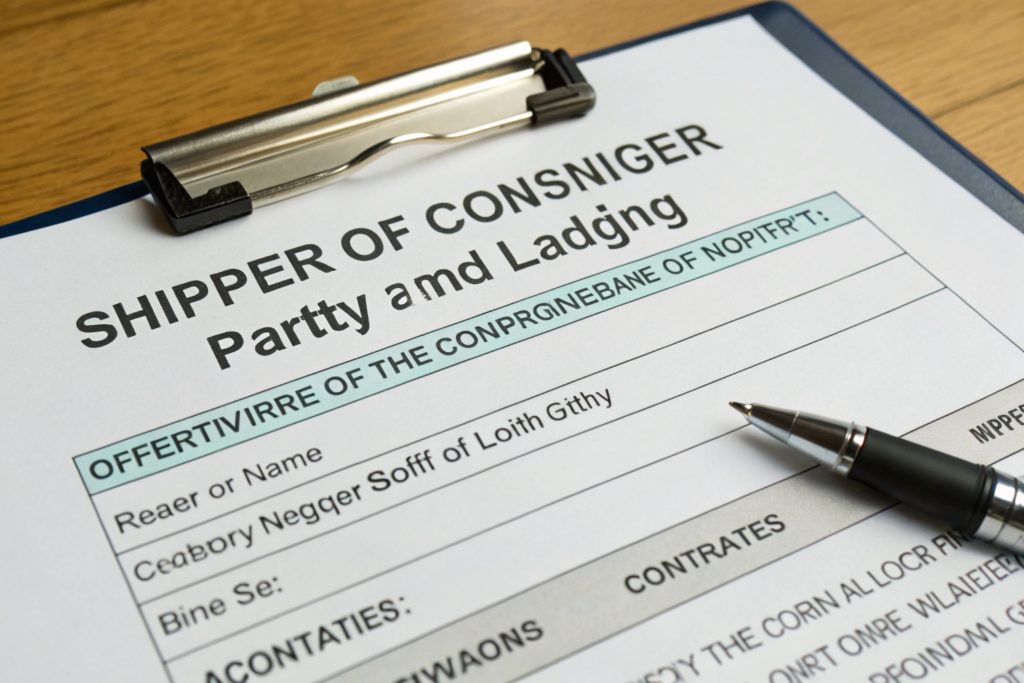
The Shipper is the legal entity that is contracting with the carrier. On our House BOL, the Shipper is usually the factory or the trading company in China that is exporting the goods. The Consignee is the entity that has the right to take delivery at the destination. On a straight BOL, this is your company name. On a negotiable "To Order" BOL, this is left open to be endorsed by the Shipper. The Notify Party is simply who we contact when the goods arrive. These three fields control who ships, who receives, and who gets the phone call. Get them wrong, and your goods can be stuck at the port.
The Shipper field is about export compliance and legal responsibility. The shipper is responsible for the accuracy of the cargo declaration and for the export clearance in China. If you are the buyer using FOB terms, the supplier is usually the shipper on the Master BOL. On our House BOL, we sometimes list the supplier or we list you, depending on the commercial arrangement. The critical rule is that the shipper on the House BOL must match the export declaration data. We verify this match to prevent customs discrepancies.
The Consignee field is about control. If the Consignee is your company name directly, the BOL is a "Straight Bill of Lading." The goods can only be delivered to that named entity. This is non-negotiable and simple. If the Consignee says "To Order" or "To Order of [Bank Name]," the BOL is a "Negotiable Bill of Lading." This means the goods will be released to whoever holds the original BOL endorsed by the shipper. This is used when a bank is financing the transaction or when the cargo might be sold in transit. The negotiable BOL is a powerful financial instrument. We explain the implications of each type before we issue the document.
What Does "To Order" Mean in the Consignee Box?
You see "To Order" in the Consignee field. You think it is a typo. You email us asking us to correct it to your company name. We explain that this wording was requested by the supplier or the bank, and changing it could break the payment terms of your deal.
"To Order" means the cargo is deliverable to whoever the shipper endorses on the back of the original bill of lading. The shipper signs the back of the BOL and writes "Deliver to [Your Company Name]." This endorsement transfers the title. A bank that has financed the goods will require the BOL to be consigned "To Order of [Bank Name]." The bank controls the release of the goods until the buyer pays. Once paid, the bank endorses the BOL over to the buyer. This is standard international trade practice. It protects the financial interests of the seller and the bank. If your shipment uses "To Order," do not panic. It means your transaction has a layer of financial security built into the documentation. We will guide you through the endorsement process at the destination.
Who Should Be Listed as the Notify Party?
The Notify Party field seems like a minor detail. But if it lists a name without a current phone number or email, the arrival notice will not reach anyone. The container will sit at the port unclaimed, accruing demurrage.
The Notify Party is the entity we contact when the vessel arrives at the destination port. This is almost always you, the buyer. It can also be your customs broker or your appointed receiving agent. The Notify Party must have a valid phone number and email address that is monitored daily. We also list ourselves as a secondary notify party on our shipments so that our destination team receives the arrival notice simultaneously. We receive the notice and proactively reach out to you if you have not responded. The Notify Party field must be accurate and current. An outdated contact in this field can result in a container sitting for a week, incurring storage fees that no one wants to pay.
How Do You Read the Vessel, Port, and Container Information?
The middle section of the BOL contains a lot of travel data. Vessel name, voyage number, port of loading, port of discharge, container number, and seal number. It looks like a travel itinerary mixed with a hardware serial number. You are not sure which numbers you need to track your shipment and which are just for internal records.
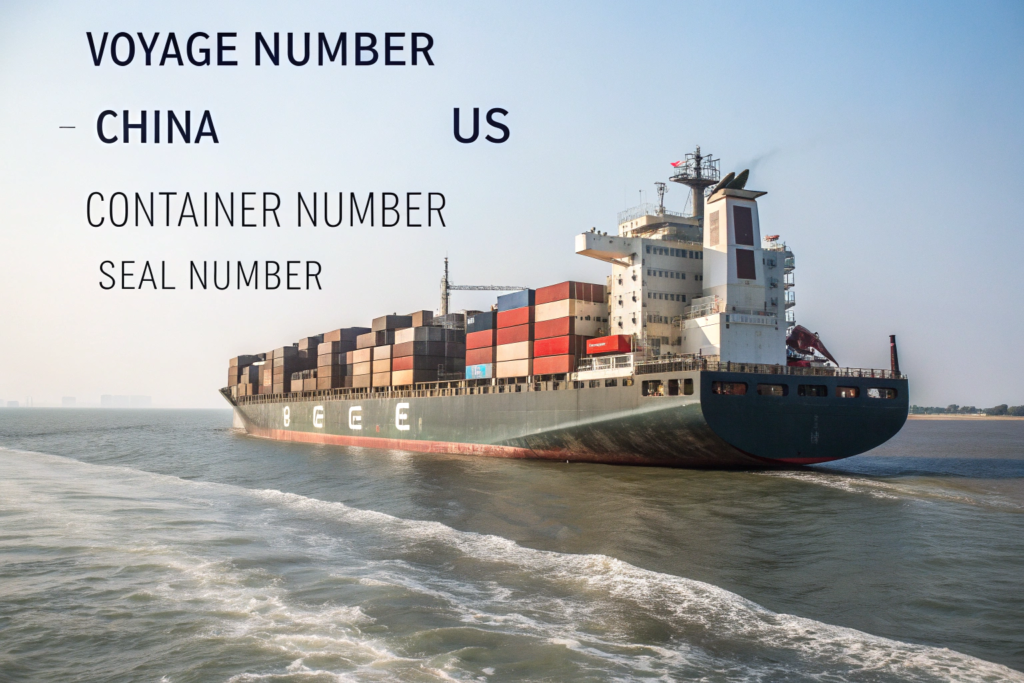
The vessel name and voyage number identify the exact ship your container is on. You can type the vessel name into any marine traffic tracking website and see the ship’s live position on a map. The port of loading is where the container was loaded onto the vessel in China. The port of discharge is where the container will be unloaded in the US. The container number is the unique identifier for the physical metal box holding your goods. The seal number is the unique number on the high-security bolt seal locking the container doors. These five pieces of data let you track, verify, and receive your shipment.
The vessel name is your live tracking link. A vessel called "CMA CGM Marco Polo" with voyage number "0SV1GE1MA" is traceable on MarineTraffic.com or VesselFinder.com. Type the vessel name, and you see its current position on a world map, its speed, and its estimated arrival time. We provide the vessel name on the BOL and in our booking confirmation email. Our clients love tracking the ship. It turns the abstract waiting period into a visible, daily progress.
The container number follows the ISO 6346 standard. It is four letters followed by seven digits, like "TCLU1234567." The four letters are the owner code, identifying the container leasing company or the carrier. The seven digits are the serial number. The final digit is a check digit that validates the container number. The container number is printed on the BOL and on the physical container itself. You should cross-check the container number on your delivery paperwork against the physical container at your warehouse to ensure you are receiving the correct box. The seal number is similarly important. When the container arrives at your door, check that the seal number on the door matches the seal number on the BOL. A mismatched or broken seal means the container has been opened in transit. Note this immediately on the delivery receipt and photograph it. This is your evidence for a theft or tampering claim.
What Is the Difference Between the Port of Loading and the Place of Receipt?
Your goods were picked up from a factory in Yiwu, but the BOL says "Port of Loading: Ningbo." You worry the document is incorrect. Yiwu is not a port. Ningbo is the nearest seaport. The BOL is correct.
The Place of Receipt is the inland location where the carrier takes possession of the goods. This could be the factory address or our consolidation warehouse. The Port of Loading is the seaport where the container is loaded onto the ocean vessel. For a factory in Yiwu, the Place of Receipt might be Yiwu, and the Port of Loading is Ningbo. For goods consolidated at our Shenzhen warehouse, the Place of Receipt is Shenzhen, and the Port of Loading is Yantian or Shekou. Both fields are correct on the BOL. The Port of Loading is the one that matters for the ocean freight contract and the customs declaration.
How Do You Verify the Container and Seal Number Upon Delivery?
The trucker arrives at your warehouse. You have the BOL in your hand. The driver hands you the delivery receipt. You are excited to see your goods. You sign the paper without looking at the container. That is a missed opportunity to protect yourself.
Take two minutes to verify the container number and the seal number. Walk to the back of the truck or the container. Look at the container number printed on the doors. It must match the container number on your BOL exactly. Look at the seal on the right door locking handle. The seal number must match the seal number on your BOL exactly. Check that the seal is intact, not cut, not tampered with, and not replaced. If the numbers match and the seal is intact, sign the delivery receipt. If the seal is broken, the container number does not match, or the seal number is different, do not sign a clean receipt. Write "Seal broken – container opened" or "Container number mismatch" on the delivery receipt before signing. Photograph the broken seal and the mismatched container number. Call us immediately. We will guide you through the claim process. This two-minute verification is the last line of defense against receiving a container that has been tampered with or accidentally swapped.
How Do You Read the Cargo Description and Weight Fields?
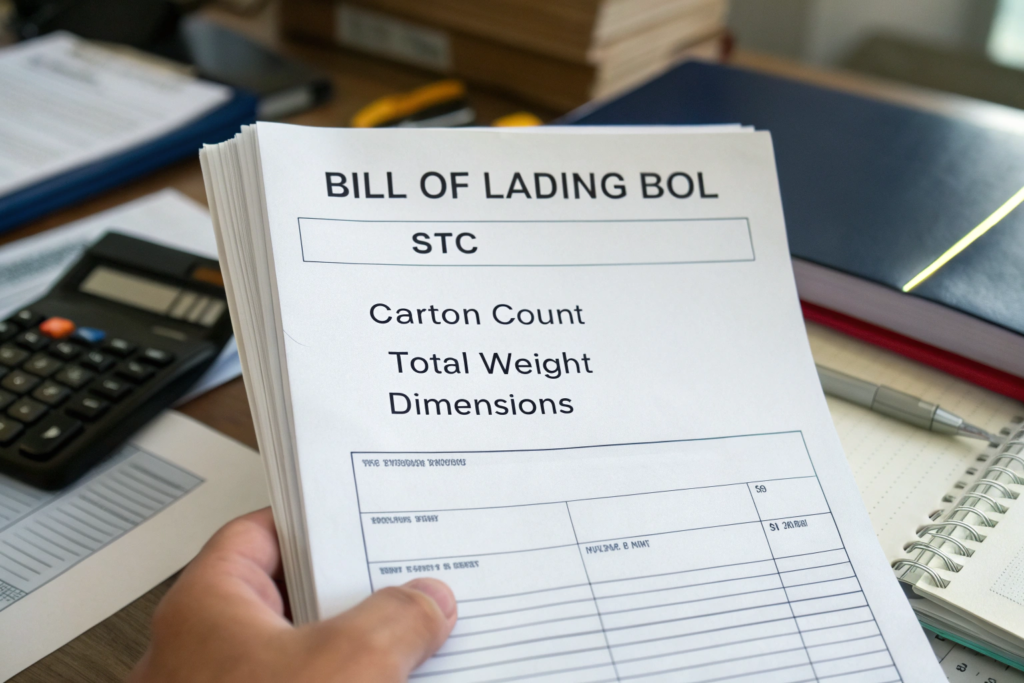
The cargo description field on your BOL says "1x40HC Container STC 500 Cartons of Ceramic Mugs." You know you ordered 500 cartons, but the description seems generic. You wonder if it should list every SKU, every color, and every unit. You worry that the vague description will cause a customs problem.
The cargo description on a Bill of Lading is intentionally concise. It describes the outer packaging and the general nature of the goods. The abbreviation "STC" means "Said to Contain," which is a legal phrase meaning the carrier is relying on the shipper’s count, not their own verification. The detailed breakdown of SKUs, values, and materials belongs on the commercial invoice and the packing list, not on the BOL. The BOL description must be consistent with the customs entry, but it does not need the granular detail of the invoice. The key fields to verify are your carton count, the total weight, and the measurement, as these affect your freight charges and the carrier’s liability.
The phrase "Said to Contain" is a critical legal shield for the carrier. The carrier did not open your cartons and count the mugs inside. They counted the cartons you handed them. They state on the BOL that the container is said to contain 500 cartons. If it turns out there are only 480 cartons inside, the carrier is not liable for the missing 20 cartons because they never verified the count. The BOL is a receipt for the number of packages, not for the contents. This is why a pre-shipment inspection and a trusted supplier are essential. The BOL protects the carrier against claims of shortage based on internal carton contents.
The Gross Weight in kilograms is a critical number. The carrier’s liability for a lost container is often limited by weight. The terminal charges and the trucking costs are calculated using weight. An incorrect weight declaration can result in fines, safety violations, and delivery delays. We verify the weight with a calibrated scale at our warehouse. The weight on our House BOL is the verified weight. You must also comply with the SOLAS Verified Gross Mass (VGM) regulations, which require the shipper to provide the exact packed weight of the container. We handle the VGM filing for you, using the weight data we collect at our facility. The BOL weight is the official record.
What Is the "Said to Contain" Clause and Why Is It There?
You see "Said to Contain" or "STC" and "Shipper’s Load and Count" or "SLAC" on your BOL. You think this means the carrier is denying responsibility for your goods before they have even left the port. This language feels like a legal trick.
It is not a trick. It is a practical reality of containerized shipping. The carrier provides the container. The shipper packs it and seals it. The carrier does not watch the packing or verify the contents. The BOL reflects this reality. The carrier is acknowledging receipt of a sealed container that the shipper says contains a certain number of cartons. If the container arrives with the seal intact but cartons are missing inside, the loss occurred during packing, not during transit. The carrier is not liable. If the seal is broken and cartons are missing, the loss occurred during transit, and the carrier is liable. The STC and SLAC clauses clarify this distinction. They do not weaken your claim for a genuine transit loss. They prevent fraudulent claims for packing shortages.
How Does the Declared Weight Affect Your Legal Liability?
You estimate the weight. You tell the factory to write "5,000 kg" on the packing list. The actual weight is 6,200 kg. The container is loaded onto a truck chassis rated for 6,000 kg. An axle breaks. The truck has an accident. Your under-declared weight contributed to an unsafe loading condition.
Weight misdeclaration is a serious safety issue with legal consequences. The International Maritime Organization’s SOLAS convention requires a verified gross mass for every container before it can be loaded onto a ship. We weigh every container at our facility using a certified scale. We do not rely on the factory’s estimate. We report the actual verified weight on the BOL. A weight that is off by more than a small tolerance can result in fines from the terminal, the carrier, and the coast guard. It can also void your cargo insurance. Never guess the weight. Never let the factory guess. We verify it, and the BOL reflects the truth.
How Do You Read the Freight and Charges Section?
The BOL has a section titled "Freight and Charges" with boxes for "Prepaid" or "Collect." You see "Prepaid" checked. You already paid us for the freight, but you do not see a dollar amount on the BOL. You want the cost breakdown printed on the document as a receipt for your payment.
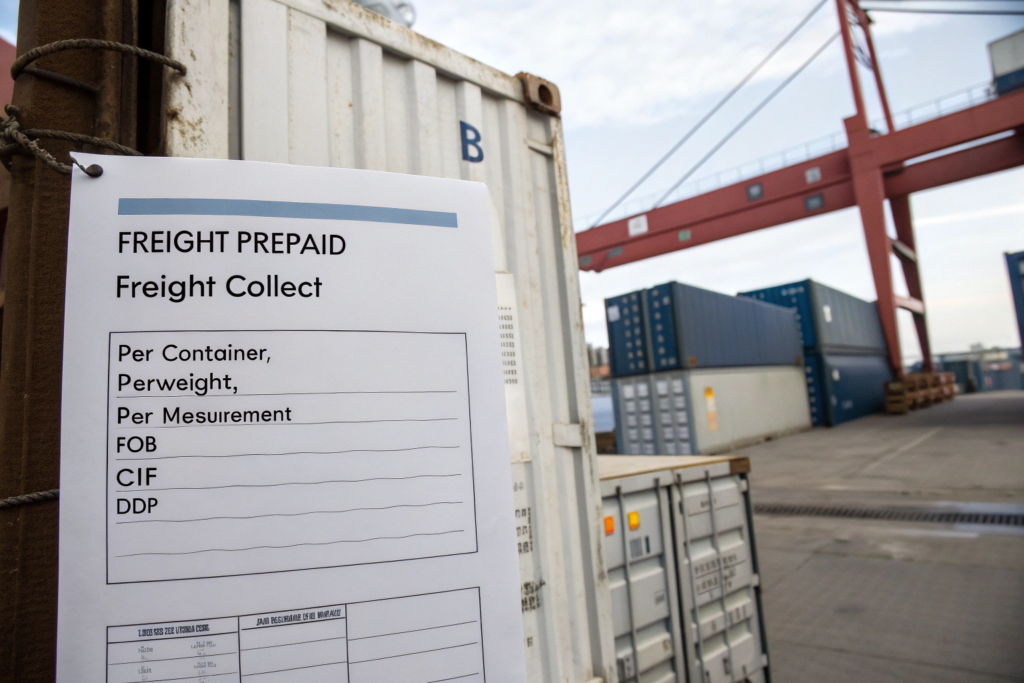
The Freight and Charges section indicates whether the ocean freight has been paid by the shipper or will be collected from the consignee at the destination. "Freight Prepaid" means the shipper has paid the ocean freight. "Freight Collect" means the consignee must pay before taking delivery. The actual dollar amount is usually not shown on the face of the BOL for commercial confidentiality. This section also indicates the basis of the freight charge: per container, per weight, or per measurement. The terms must match your Incoterm. For an FOB shipment, freight is typically Collect. For a CIF or DDP shipment, freight is Prepaid.
The freight payment status is linked to your Incoterm and your payment arrangement. If you bought FOB, the freight is supposed to be Collect, meaning you pay it. If the BOL is incorrectly marked Prepaid, the destination agent might think the supplier has paid the freight and release the goods without collecting your payment. This can create a billing mess. We verify that the freight terms on the BOL match your agreed Incoterm and your payment status. We do not release a BOL with incorrect freight terms.
The dollar amounts are kept off the BOL intentionally. The BOL is a document that passes through many hands. The supplier, the banks, the port authorities, and the customs brokers all see the BOL. Your negotiated freight rate is confidential business information. We issue a separate Freight Invoice that details the charges. That invoice is between you and us. The BOL only states whether the freight has been paid or is payable at destination. This is standard industry practice.
What Does "Freight Prepaid" Mean for Your Shipment?
Your BOL says "Freight Prepaid." You paid us before the vessel sailed. You assume everything is settled. Then you receive a separate bill from the destination terminal for "Terminal Handling Charges." You thought "Freight Prepaid" meant everything was paid.
"Freight Prepaid" applies specifically to the ocean freight charged by the shipping line. It does not necessarily include the origin terminal handling, the destination terminal handling, the documentation fees, or the trucking. These are separate line items. In our door-to-door DDP quotes, all of these charges are included in your single invoice. But on the BOL itself, "Freight Prepaid" only refers to the sea freight portion. We explain this distinction in our quote so you know exactly what is included. The BOL is not a full accounting of all logistics costs. It is a specific statement about the sea freight payment status.
What Should You Do If the Freight Terms Are Incorrect?
You receive the draft BOL for approval. You see "Freight Collect" but you have already paid us under a CIF arrangement. You panic, thinking your goods will be held for a payment you already made.
A draft BOL is exactly that: a draft. It is sent to you for review before the final version is issued. If the freight terms are wrong, reply to the draft email and tell us. We will correct the terms and re-issue the draft. Never approve a draft BOL with incorrect freight terms. Once the original BOL is issued and transmitted to the destination port, changing the freight terms is difficult and sometimes requires a letter of indemnity. Review the freight status box carefully on every draft. This is your last chance to fix a payment status error before it becomes a destination release problem.
How Do You Use the Bill of Lading Number to Track Your Shipment?
You have the BOL in your hand. The top right corner has a BOL number, like "GSE23070001." You type this number into a Google search bar. Nothing comes up. You think the number is broken or the tracking does not work. You are looking in the wrong place.
The Bill of Lading number is your primary tracking reference for the entire door-to-door journey. You enter this number into our client portal on the GeeseCargo website, and it returns the full status of your shipment. The BOL number is also the reference the destination port and the customs broker use to identify your cargo. Give this number to your customs broker, your receiving warehouse, and your bank. It is the single key that unlocks all information about your shipment.
The BOL number is not a universal parcel tracking number like a UPS or FedEx code. It will not work on a general tracking website unless that website has integration with the specific carrier’s system. The BOL number works in our GeeseCargo client portal. Log in, enter the BOL number, and you see the real-time status from pickup to delivery. The BOL number also works on the ocean carrier’s own tracking portal. If your container is on a COSCO vessel, the Master BOL number will return tracking information on the COSCO website. We provide both the House BOL number and the Master BOL number on our booking confirmation. Use the House BOL number with us. Use the Master BOL number with the ocean carrier directly if you need terminal-level detail.
Your customs broker needs the House BOL number to file the customs entry. Your delivery trucker needs the BOL number to make the delivery appointment at the terminal. Your receiving warehouse needs the BOL number to match the incoming delivery to the purchase order. This one number connects every party in the logistics chain. Keep it accessible. Do not lose it in an email thread. We also store every BOL you have ever received in your client portal, so you can retrieve the number anytime.
How Do You Track the Vessel Using the Information on the BOL?
You have the vessel name and voyage number from the BOL. You want to see the ship on a map, moving across the ocean. You do not know which website to use.
Open MarineTraffic.com or VesselFinder.com. Type the vessel name, not the voyage number, into the search bar. The site will show the vessel’s current position on a live map, its course, its speed, and its estimated arrival time at the destination port. The voyage number is used by the carrier for scheduling, but the vessel name is the searchable identifier for public tracking. The ETA shown on the public tracking sites is an estimate. The official ETA from the carrier is the one we send you in our status updates. The public tracking sites are for your visual pleasure and your peace of mind. They let you watch the little ship icon move. We know our clients do this. We do it too.
What Information Does the BOL Number Provide to Your Customs Broker?
Your customs broker asks for the BOL number. You give it to them. You do not know why they need it, or what happens next.
The customs broker uses the BOL number to pull the carrier’s manifest data from the CBP automated system. The manifest data tells the broker the vessel name, the arrival date, the container number, the seal number, the weight, and the cargo description exactly as it was filed by the carrier. The broker uses this information to file the customs entry before the vessel arrives. The BOL number is the link between the physical container on the ship and the digital customs entry in the CBP system. Without the correct BOL number, the broker cannot file the entry, and the cargo cannot be released. This is why we emphasize the accuracy of the BOL data and why we send the BOL to your broker directly if you authorize us.
Conclusion
The Bill of Lading is not just another piece of paper in your shipment folder. It is the receipt for your goods, the contract for their carriage, and, in many cases, the title deed that controls their release. Understanding how to read it transforms you from a passive recipient of logistics documents into an informed manager of your supply chain.
When you receive our draft BOL for approval, you now know exactly what to check. Verify your Shipper and Consignee names match your commercial agreement. Verify the "To Order" language if your transaction requires a negotiable document. Verify the Notify Party has current contact details. Verify the vessel name, the port of discharge, and the container number. Verify the carton count and the weight in the cargo description. Verify the freight terms match your Incoterm. A five-minute review of these fields on the draft prevents costly delays and disputes at the destination.
At GeeseCargo, we prepare your Bill of Lading with precision. We review every field before the draft reaches your inbox. But you are the final authority. You know your commercial agreement and your payment terms. Your review is the last safety check. We encourage you to read the BOL carefully and ask questions about anything that is not perfectly clear.
If you have a GeeseCargo Bill of Lading in your hand right now and you want me to walk you through it line by line, go to GeeseCargo.com and send me a copy. I will personally review it with you and answer every question. The BOL is your document. You should understand it completely.


