
As global sustainability expectations rise, verifying your suppliers' environmental certifications has become both a compliance necessity and a competitive advantage. As a freight forwarder working with clients committed to green supply chains, I've developed systematic approaches to validate environmental claims that too often prove exaggerated or misleading. Proper verification protects your brand reputation while ensuring genuine environmental progress.
You can verify suppliers' environmental certifications through certificate authentication, third-party auditor validation, on-site assessment, documentation chain analysis, and performance metric verification. Effective verification requires moving beyond accepting certificates at face value to investigating the substance behind the certification, including audit rigor, ongoing compliance, and measurable environmental impact.
Environmental claims verification has become increasingly complex as certification programs multiply. Let's examine the practical steps for ensuring your suppliers' green credentials are legitimate and meaningful.
What Are the Primary Environmental Certifications to Verify?
Understanding which certifications matter for your industry and products provides focus for your verification efforts.
Which Manufacturing Facility Certifications Matter Most?
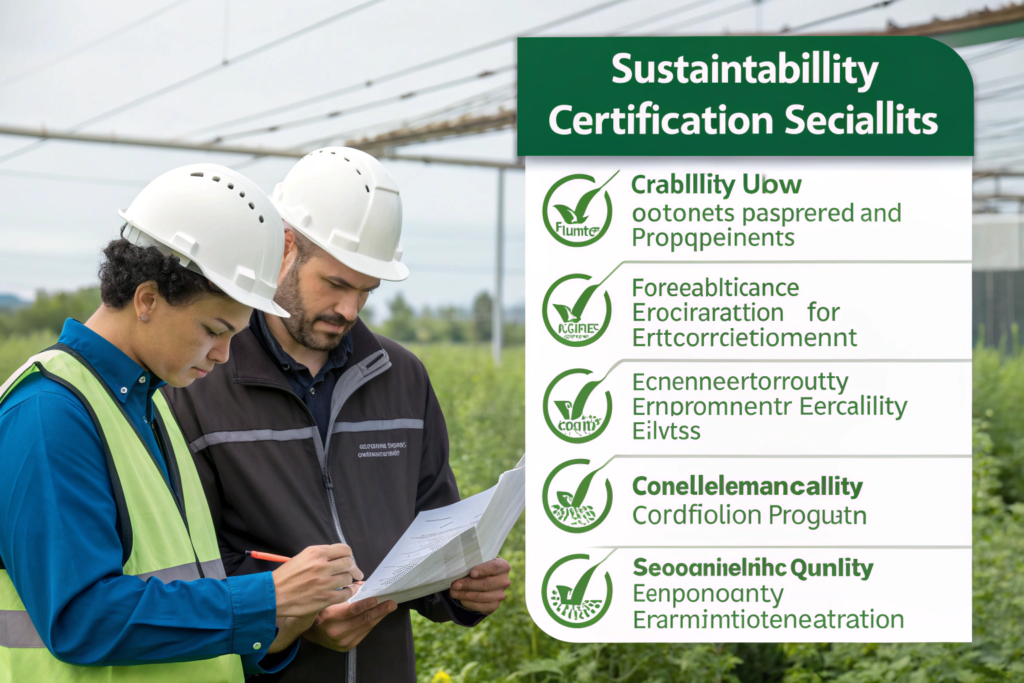
ISO 14001 environmental management systems certification represents the most widely recognized standard, but verification should extend beyond certificate possession to actual implementation. Check that the certification body is accredited by a recognized organization like ANSI-ASQ National Accreditation Board or UKAS. Validate that the scope specifically covers relevant manufacturing processes and that surveillance audits occur regularly.
Industry-specific certifications like LEED for buildings, Energy Star for energy efficiency, or Zero Waste certifications for facilities require specialized verification approaches. Each has distinct verification protocols—LEED certification, for instance, can be verified through the U.S. Green Building Council's online project database using the supplier's project ID number.
What Product-Level Certifications Should You Verify?
Ecolabel certifications including EU Ecolabel, Nordic Swan, or Green Seal require checking both the product's eligibility and the certification body's legitimacy. Many ecolabels maintain publicly accessible databases where you can verify certification status using product codes or company names.
Material-specific certifications like FSC for wood products, GOTS for textiles, or Cradle to Cradle for circular products require chain-of-custody verification. These certifications track materials through the entire supply chain, so you must verify not only the final product certification but also that all components meet the standard's requirements.
How Can You Authenticate Certification Documents?
Certificates can be falsified or misrepresented, making authentication a critical verification step.

What Security Features Indicate Genuine Certificates?
Official certification body markings should appear on legitimate certificates, including accreditation symbols, unique certificate numbers, and authorized signatures. Compare these elements against samples from the certification body's website or direct communications. Many reputable certifiers now provide QR codes that link directly to online verification portals.
Certificate details consistency across different documents reveals potential issues. The company name, address, scope, and dates should match exactly across the certificate, audit reports, and the certification body's records. Discrepancies often indicate problems ranging from administrative errors to outright fraud.
How Should You Contact Certification Bodies Directly?
Official verification requests to certification bodies provide definitive authentication. Most recognized certification organizations have verification procedures, though they may charge fees or require authorization from the certified company. Prepare specific questions about certificate validity, scope, current status, and any non-conformities or suspensions.
Database cross-referencing utilizes public certification registries when available. Organizations like the International Organization for Standardization maintain directories of certified companies, while industry-specific programs like Fair Trade or Forest Stewardship Council offer searchable online databases of certified entities.
What Role Do Third-Party Audits Play in Verification?
Independent audit reports provide crucial evidence supporting certification claims.

How Do You Evaluate Auditor Credibility?
Auditor accreditation verification ensures qualified professionals conducted the assessment. Check that auditing organizations are accredited by recognized bodies like ANSI, ANAB, or equivalent international organizations. Individual auditors should hold current credentials from professional organizations like the International Register of Certificated Auditors.
Audit scope and methodology review determines whether the assessment adequately covered relevant environmental aspects. The audit report should detail the facilities visited, processes reviewed, sampling methods used, and the specific standards against which the supplier was evaluated. Limited scope audits may not support broad environmental claims.
What Should You Look for in Audit Findings?
Non-conformity reporting transparency indicates audit rigor. Genuine audit reports should document both positive findings and areas needing improvement, including minor and major non-conformities. Reports showing only perfect compliance may indicate superficial audits or withheld information.
Corrective action evidence demonstrates commitment to continuous improvement. Review whether identified non-conformities have been addressed through documented corrective actions with evidence of implementation and effectiveness verification.
How Can On-Site Assessments Enhance Verification?
While more resource-intensive, on-site evaluations provide verification that documents alone cannot.

What Should You Observe During Facility Visits?
Certified system implementation should be visibly operational, not just documented. For environmental management systems, look for clear procedures, trained personnel, monitoring equipment in use, and records being maintained as required. The gap between documentation and actual practice often reveals the true certification value.
Environmental performance indicators should be measured and displayed. Legitimate certified facilities typically monitor and publicly report metrics like energy consumption, water usage, waste generation, and emissions. Verify that measurement equipment is properly calibrated and data collection follows documented procedures.
How Can Employee Interviews Support Verification?
Staff knowledge assessment indicates whether environmental practices are culturally embedded. Random interviews with operators, supervisors, and managers should reveal consistent understanding of environmental procedures, emergency responses, and improvement objectives. Contradictory information or unawareness of certified systems suggests superficial implementation.
Management commitment observation during visits provides insights into certification authenticity. Leadership involvement in environmental discussions, resource allocation decisions, and improvement initiatives demonstrates whether certification represents genuine commitment or merely marketing effort.
What Documentation Analysis Reveals Certification Substance?
Behind every certification lies a trail of documentation that reveals its substantive value.

What Management System Records Should You Review?
Internal audit reports demonstrate ongoing self-assessment and improvement. Regular internal audits with documented findings, corrective actions, and management reviews indicate active maintenance of certified systems rather than one-time certification achievement.
Training records and competency evidence show whether personnel possess necessary environmental knowledge. Review records of environmental awareness training, procedure-specific instruction, and competency assessments for relevant positions.
How Do Performance Data Support Certification Claims?
Environmental monitoring records provide objective evidence of impact reduction. Request access to energy, water, waste, and emission data covering the period since certification. Consistent measurement, transparent reporting, and demonstrated improvements support genuine environmental performance claims.
Compliance records with legal and regulatory requirements form the foundation of many certifications. Review permits, monitoring reports submitted to authorities, and correspondence with regulatory agencies to verify ongoing legal compliance.
Conclusion
Verifying suppliers' environmental certifications requires moving beyond certificate acceptance to investigating the substance behind the credentials. A comprehensive approach combining document authentication, third-party audit review, on-site assessment, and performance data analysis provides the multi-layered verification needed in today's environmentally conscious marketplace. The most effective verification strategies balance thoroughness with practicality, focusing resources on certifications that matter most for your products and sustainability commitments.
At GeeseCargo, we've helped clients develop supplier verification protocols that typically identify 20-35% of environmental certifications as requiring additional validation or corrective action. Our experience demonstrates that companies implementing systematic verification not only ensure genuine environmental progress but also strengthen supplier relationships through transparent expectations and collaborative improvement. Remember that certification verification should be an ongoing process, not a one-time event, as supplier performance and certification requirements evolve over time.