When one of our e-commerce clients saw 32% of their international customers abandon purchases due to returns complexity, we completely redesigned their returns process and recovered $280,000 in potential lost revenue. As founder of GeeseCargo with extensive reverse logistics experience, I've learned that international returns aren't just a cost center—they're a crucial customer experience touchpoint that can differentiate your brand in competitive global markets.
Setting up smooth international returns requires centralized return authorization, clear customer communication, strategic return locations, efficient customs handling, and data-driven disposition decisions. Companies implementing optimized international returns processes typically reduce returns costs by 25-40%, improve customer retention by 15-25%, and recover 30-50% more value from returned merchandise.
The most successful companies treat returns as an integral part of the customer journey rather than an operational burden. A well-designed returns process transforms a potentially negative experience into a loyalty-building opportunity while maximizing value recovery from returned goods.
What Are the Key Components of an Efficient International Returns System?
Building a smooth returns process requires integrating multiple components into a cohesive system that balances customer convenience with operational efficiency.
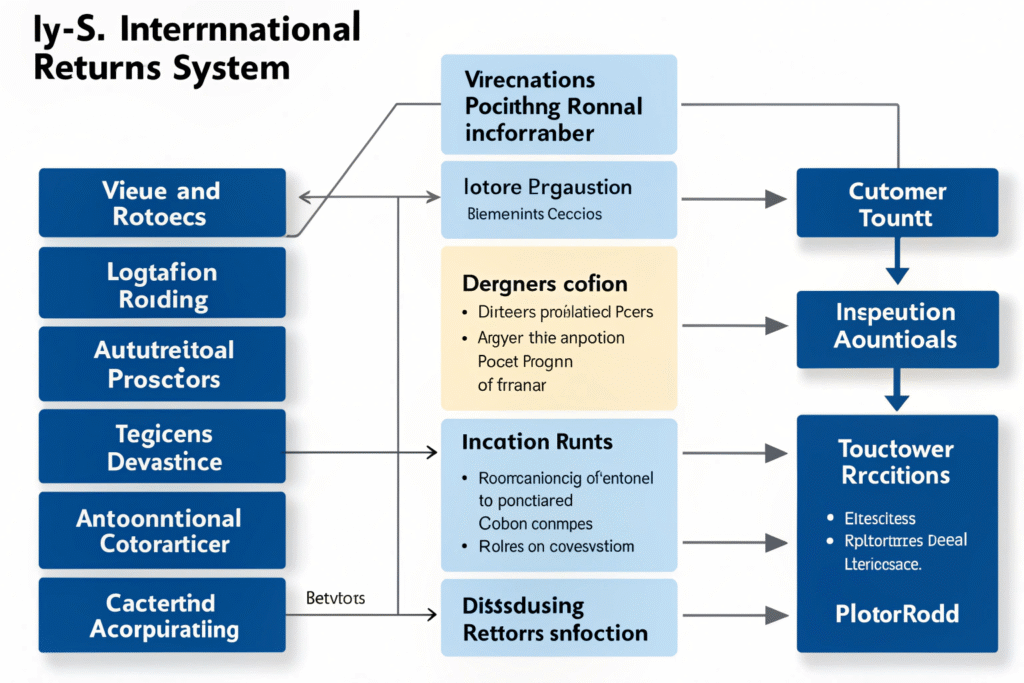
How Should You Structure the Return Authorization Process?
Centralized return authorization prevents confusion and fraud. Implementing a system where customers must obtain return authorization before shipping ensures you control the process and capture essential data about why items are being returned.
Automated return portals guide customers through proper procedures. Online portals that automatically generate return labels, capture reason codes, and provide instructions reduce customer service contacts and processing errors.
Pre-defined return reasons enable data analysis and prevention. Categorizing returns by specific reasons (size issues, product damage, wrong item, etc.) helps identify product or process improvements to reduce future returns.
What Communication Protocols Ensure Customer Satisfaction?
Clear timeline expectations prevent frustration and inquiries. Communicating exactly how long each returns step takes (authorization, shipping, processing, refund) manages customer expectations and reduces support contacts.
Progressive status updates maintain engagement and trust. Sending notifications when returns are received, inspected, and processed keeps customers informed and demonstrates operational transparency.
Multilingual support accommodates global customer bases. Providing returns information and support in customers' local languages significantly improves international returns experience and brand perception.
How Can You Optimize Return Logistics and Transportation?
The physical movement of returned goods represents one of the most complex and costly aspects of international returns.

What Return Location Strategies Work Best?
Regional consolidation centers reduce international shipping costs. Using centralized return facilities in key regions (Europe, Asia, North America) allows local returns before consolidation and bulk shipping to primary processing centers.
Local partnership networks provide customer convenience. Partnering with local stores, drop-off points, or third-party providers in key markets offers customers convenient return options without international shipping complexity.
Hybrid approaches balance cost and customer experience. Combining direct-to-origin returns for high-value items with regional consolidation for lower-value goods optimizes both cost and processing efficiency.
How Can You Minimize International Return Shipping Costs?
Consolidation programs dramatically reduce per-unit shipping costs. Working with logistics providers who consolidate returns from multiple customers enables ocean freight rates instead of expensive individual air shipments.
Return label optimization ensures proper service selection. Providing customers with appropriate shipping methods based on product value prevents expensive overnight returns for low-value items.
Free trade zone utilization avoids double duty payments. Processing returns in free trade zones or bonded warehouses can prevent paying duties twice on the same goods.
What Customs and Regulatory Considerations Are Critical?
International returns face complex customs regulations that differ significantly from outbound shipping requirements.
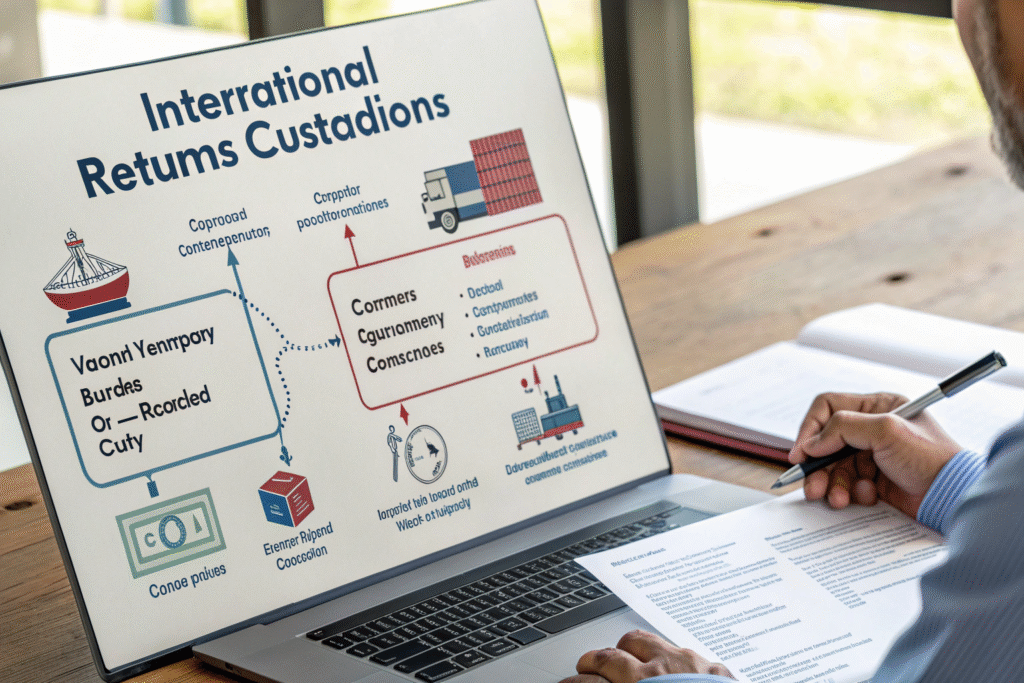
How Should You Handle Customs Documentation for Returns?
Returned goods provisions in customs regulations enable duty recovery. Many countries have specific procedures for returned goods that allow duty refunds or exemptions if properly documented.
Temporary import bonds facilitate inspection and processing. Using customs bonds allows returned goods to enter countries temporarily for inspection and sorting without immediate duty payment.
Proper product classification and valuation prevent customs issues. Ensuring returned goods are correctly classified and valued according to customs requirements prevents delays and penalties.
What Are the Most Common Customs Mistakes in Returns?
Incorrect customs declarations trigger inspections and delays. Describing returned goods as "repairs" or "warranty" without proper documentation often causes customs holds and additional requirements.
Missing original import documentation hampers duty recovery. Without proof of original import and duty payment, many countries won't refund duties on returned merchandise.
Valuation disputes create additional costs and delays. Customs authorities may challenge the declared value of returned goods, particularly if different from original export value.
How Should You Process and Dispose of Returned Goods?
Efficient inspection and disposition processes maximize value recovery while minimizing processing costs.

What Inspection and Grading Systems Optimize Value Recovery?
Standardized inspection criteria ensure consistent evaluation. Developing clear guidelines for assessing product condition (new, open box, damaged, etc.) enables accurate grading and appropriate disposition.
Automated grading systems increase processing speed and consistency. Using barcode scanning, automated testing, and standardized checklists speeds inspection while reducing human error.
Data-driven disposition decisions maximize recovery value. Analyzing which disposition channels (resale as new, refurbishment, liquidation, recycling) yield the best returns for different product types and conditions.
What Disposition Channels Provide the Best Returns?
Direct resale recovers the most value for like-new items. Products returned unopened or in original condition can often be resold through primary channels with minimal cost.
Secondary markets offer opportunities for open-box items. Online marketplaces, outlet stores, and discount channels provide revenue recovery for products that can't be sold as new.
Refurbishment and repair extend product lifecycles. Investing in repairing damaged or defective items can yield higher recovery than liquidation, particularly for high-value products.
How Can Technology Streamline International Returns?
Modern technology solutions transform returns from manual, error-prone processes to efficient, data-driven operations.

What Returns Management Systems Are Most Effective?
Dedicated returns management platforms centralize operations. Specialized systems that handle authorization, logistics, processing, and analytics in one platform prevent data silos and process gaps.
API integrations create seamless data flow. Connecting returns systems with e-commerce platforms, inventory management, and customer service systems ensures consistent information across all touchpoints.
Automated workflow engines reduce manual processing. Rules-based systems that automatically route returns to appropriate channels based on product type, value, and condition speed processing while reducing errors.
How Can Analytics Improve Returns Performance?
Returns reason analysis identifies prevention opportunities. Tracking why products are returned helps identify sizing issues, product defects, or inaccurate descriptions that can be addressed to reduce future returns.
Cost-to-return calculations inform policy decisions. Understanding the full cost of returns (shipping, processing, value loss) helps determine optimal return policies for different products and regions.
Customer behavior segmentation tailors return experiences. Analyzing which customer segments have higher returns rates or specific return patterns enables personalized return policies and experiences.
What Are Common International Returns Mistakes?
Understanding frequent errors helps businesses avoid costly mistakes in their returns processes.

What Strategic Errors Undermine Returns Efficiency?
Treating returns as isolated operations rather than integrated processes. When returns management operates separately from sales, marketing, and product development, valuable insights are lost and customer experience suffers.
Underinvesting in returns infrastructure and technology. Companies that view returns as pure cost centers typically underfund the systems and processes needed to manage them efficiently.
One-size-fits-all approaches to global returns. Applying identical return policies and processes across different markets ignores regional variations in customer expectations, logistics costs, and regulatory requirements.
What Operational Mistakes Increase Costs and Customer Dissatisfaction?
Poor communication about returns status and timelines. When customers don't know where their return is in the process or when to expect resolution, satisfaction plummets and support contacts increase.
Inefficient disposition decisions that destroy value. Automatically discarding or liquidating returned goods without proper assessment often destroys recoverable value.
Inadequate staff training on international returns complexity. Employees unfamiliar with customs requirements, international logistics, or cultural differences often mishandle returns and create additional problems.
Conclusion
Setting up a smooth international returns process requires viewing returns not as a problem to be minimized but as an opportunity to build customer loyalty and recover value. The most successful companies integrate returns management into their overall customer experience strategy, using returns data to improve products, processes, and customer satisfaction.
At GeeseCargo, we've helped clients reduce international returns costs by 35-50% while improving customer satisfaction scores by 20-30 percentage points through optimized returns processes. The most effective approaches combine strategic planning, appropriate technology, and continuous improvement rather than focusing on any single solution.
Begin your returns optimization by mapping your current returns journey from customer initiation through final disposition, then identify pain points and improvement opportunities. Remember that in international e-commerce, an excellent returns experience can be as important as the original purchase in building long-term customer relationships and competitive advantage.