When one of our clients faced a $38,000 customs duty bill for their trade show materials that were supposed to be temporarily imported, I realized how many businesses misunderstand temporary import procedures. As founder of GeeseCargo with extensive trade show logistics experience, I've learned that temporary imports require precise documentation, strict timelines, and careful planning to avoid converting temporary admissions into permanent import liabilities.
Temporary imports for trade shows typically use ATA Carnets, temporary import bonds, or exhibition goods procedures to avoid paying duties and taxes on goods that will be re-exported. Proper handling requires advance planning 4-6 weeks before the event, precise documentation, and strict adherence to re-export timelines to prevent costly duty assessments.
Temporary import procedures create significant cost savings but require meticulous attention to compliance details. The most successful exhibitors treat temporary imports as specialized logistics operations rather than standard shipments, recognizing that small errors can create major financial consequences.
What Are the Main Temporary Import Methods for Trade Shows?
Different temporary import mechanisms serve various needs based on the countries involved, goods type, and exhibition duration.
How Does the ATA Carnet System Work?
ATA Carnets serve as "passports for goods" across 87 countries. The carnet guarantees that duties and taxes will be paid if goods aren't re-exported, allowing temporary admission without financial security deposits in each country.
Carnet issuance requires advance application through local chambers of commerce. The process typically takes 2-3 weeks and requires detailed itemized lists with values for all exhibition materials.
Carnet validation occurs at each border crossing. Customs officials stamp the carnet upon entry and exit, creating a documented chain that proves compliance with temporary admission requirements.
When Are Temporary Import Bonds Used?
TTSB (Term Time Surety Bond) provides US temporary import capability. For countries not part of the ATA Carnet system or for specific goods ineligible for carnets, single-entry temporary bonds secure the duty amount.
Bond calculation typically covers potential duties plus taxes. The bond amount is usually 110-140% of the estimated duties and taxes, held as security until re-export is verified.
Bond cancellation requires proof of re-export. Providing evidence that goods left the country within the allowed timeframe releases the bond obligation back to the surety company.
What Documentation Is Critical for Temporary Imports?
Precise documentation prevents misunderstandings with customs authorities and ensures smooth processing at borders.
What Must Be Included in Temporary Import Documentation?
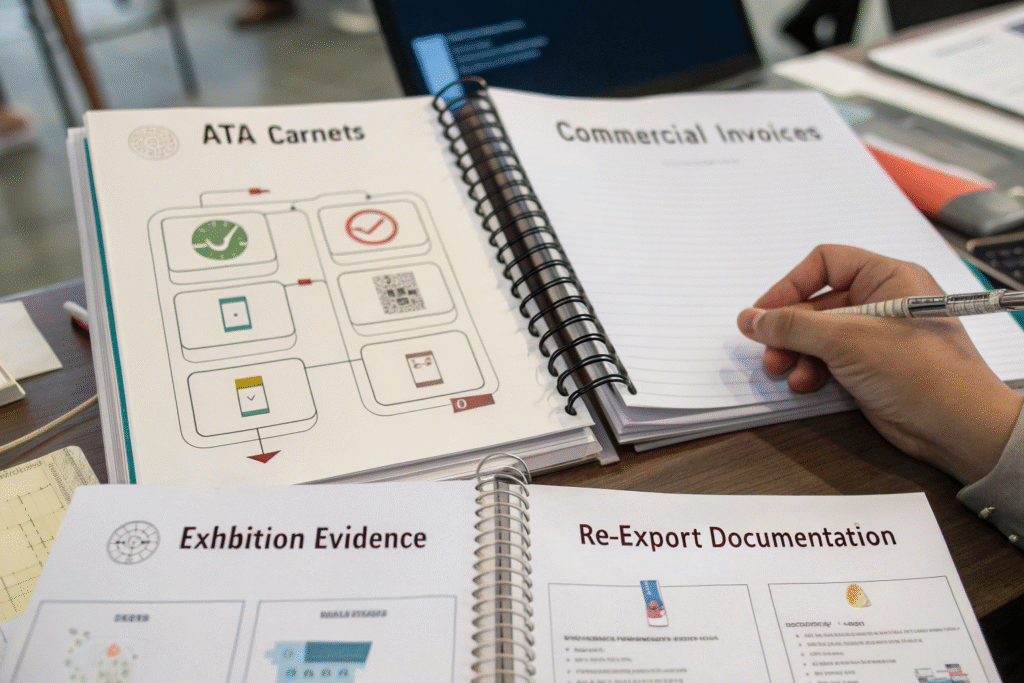
Detailed inventory lists prevent customs disputes. Each item should include description, quantity, weight, value, and country of origin, with specificity that matches the actual goods precisely.
Proof of exhibition participation justifies temporary admission. Official exhibition contracts, booth confirmation letters, or invitation documents demonstrate the legitimate temporary purpose.
Transportation documentation shows intended re-export. Booking confirmations for return shipping or carnets with validated export vouchers prove the temporary nature to customs officials.
How Should You Prepare Commercial Documentation?
Commercial invoices must clearly state "Temporary Import - No Commercial Value". Standard commercial invoices suggesting permanent import can trigger duty assessments despite other documentation.
Packing lists should mirror carnet or bond documentation. Consistency between all documents prevents customs questions about discrepancies in quantities or descriptions.
Value declarations should reflect actual value for bond purposes. While no duties are paid temporarily, accurate values are essential for bond calculations and potential claims situations.
What Are the Key Timing Considerations?
Temporary imports operate on strict timelines where missed deadlines convert temporary admissions into permanent import liabilities.
What Are the Critical Pre-Event Timing Requirements?
Carnet applications require 3-4 weeks for processing. Local chamber review, approval, and issuance takes significant time, particularly for first-time applicants or complex product listings.
Shipping schedules must accommodate customs processing. Allowing 3-5 extra days for temporary import processing prevents exhibition delays due to customs examinations or documentation reviews.
Advance customs notifications may be required. Some countries require pre-arrival filings for temporary imports, typically 2-5 days before goods arrive at the border.
What Post-Event Deadlines Are Non-Negotiable?
Re-export timelines vary by country but are typically strict. Most countries allow 90-180 days for temporary imports, with exhibition goods often limited to 30-90 days after the event concludes.
Carnet validation must occur upon departure. Failure to get the carnet stamped upon export creates presumption of non-export, triggering duty payment demands from the guaranteeing association.
Final documentation submission closes temporary import records. Providing evidence of re-export to customs authorities or bond companies within specified timeframes prevents automatic duty assessment.
What Are the Most Common Temporary Import Mistakes?
Understanding frequent errors helps exhibitors avoid costly duty assessments and compliance problems.
What Documentation Errors Trigger Problems?
Incomplete carnet listings cause customs rejections. Missing items, inaccurate descriptions, or incorrect values can invalidate carnets for unlisted goods, requiring separate import procedures.
Contradictory information between documents creates suspicion. Different quantities, values, or descriptions on carnets versus commercial invoices versus packing lists trigger customs examinations.
Missing proof of exhibition purpose undermines temporary basis. Without adequate evidence of trade show participation, customs may classify shipments as permanent imports subject to duties.
What Procedural Mistakes Create Liability?
Missing export validations presume non-export. The most common carnet error is failing to get all required stamps upon departure, automatically triggering duty payment demands.
Exceeding time limits converts temporary to permanent. Even with proper documentation, remaining beyond allowed timeframes automatically converts temporary admissions to permanent imports.
Inadequate destruction procedures for disposable items create issues. Items consumed, given away, or destroyed during exhibitions require specific customs procedures to avoid duty liability.
How Can You Plan for Different Exhibition Scenarios?
Different types of exhibitions and goods require tailored approaches to temporary imports.
How Do International Exhibitions Differ from Domestic Shows?
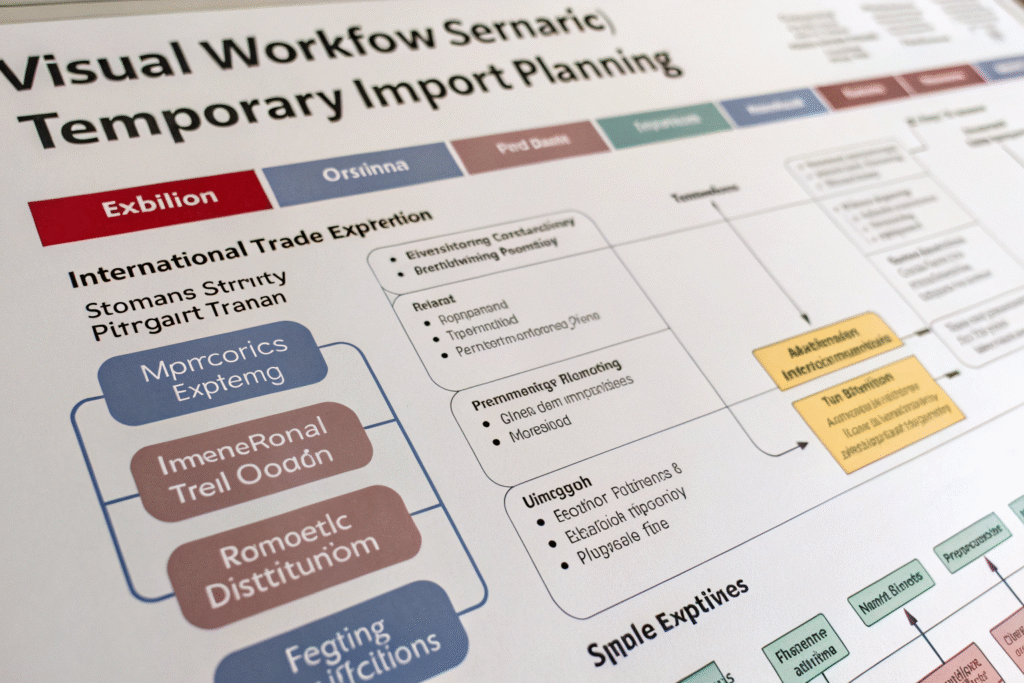
Cross-border movements require carnet or bond coverage. When exhibiting in foreign countries, temporary import procedures must comply with the destination country's regulations.
Return shipping logistics must be pre-arranged. International exhibitions require confirmed return transportation, while domestic shows may allow alternative disposal methods.
Multiple border crossings complicate documentation. International exhibitions may involve transit through third countries, each requiring proper carnet validation or temporary admission procedures.
What Special Considerations Apply to Samples and Giveaways?
Consumable samples require specific temporary import procedures. Food, beverage, or product samples meant for distribution during exhibitions need special documentation as temporary imports with planned destruction or consumption.
Giveaway items with minimal value may qualify for exemptions. Low-value promotional materials sometimes qualify for duty-free treatment without full temporary import procedures.
High-value demonstration equipment needs detailed documentation. Expensive equipment used for demonstrations but not sale requires precise temporary import documentation to secure high duty amounts.
What Are the Cost Implications of Different Approaches?
Understanding the financial aspects of temporary imports helps businesses budget appropriately and avoid unexpected expenses.
What Are the Direct Costs of Temporary Import Methods?
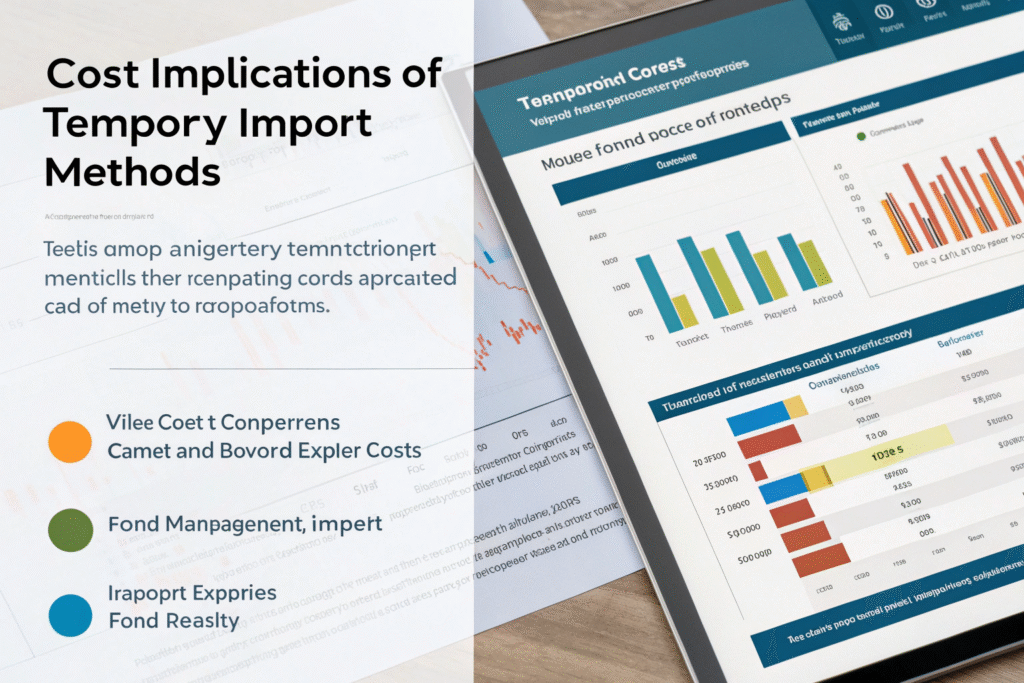
ATA Carnet costs include issuance fees and security deposits. Typical carnet costs range from $250-$750 depending on goods value, plus refundable security deposits of 40-100% of potential duties.
Temporary import bonds involve premium payments. Bond costs typically range from 0.5-2% of the secured amount, with minimum fees of $150-$500 per shipment.
Expedited processing may incur additional charges. Rush carnet processing, after-hours customs clearance, or special handling adds costs but may be necessary for tight timelines.
What Financial Risks Exist with Temporary Imports?
Duty assessment for non-compliance represents the largest risk. Failure to properly re-export goods can trigger duty bills of 5-25% of goods value plus taxes and penalties.
Storage and demurrage during customs delays add unexpected costs. While goods are held for documentation review, storage fees accumulate rapidly at ports and terminals.
Lost business opportunity from exhibition delays has indirect costs. Missing setup days or demonstration opportunities due to customs issues can outweigh all direct temporary import costs.
Conclusion
Temporary imports for trade shows require specialized knowledge and meticulous planning but offer significant cost savings when executed properly. The most successful exhibitors treat temporary imports as strategic logistics operations rather than administrative formalities, recognizing that proper handling protects against substantial duty liabilities while ensuring materials arrive when needed.
At GeeseCargo, we've managed temporary imports for hundreds of trade shows, with the most successful outcomes coming from companies that start planning 8-10 weeks before events and maintain detailed documentation throughout the process. The key is understanding that temporary imports operate under different rules than standard commercial shipments, requiring specific procedures, documentation, and timing.
Begin your temporary import planning by determining the appropriate method for your specific countries and goods, then build a detailed timeline that accommodates processing, shipping, and compliance requirements. Remember that in temporary imports, perfection in documentation and timing isn't just ideal—it's essential for avoiding significant unexpected costs and ensuring your exhibition materials are available when and where you need them.