
When one of our clients faced $28,000 in detention charges and multiple missed deliveries due to an unreliable trucker, I realized how crucial the right transportation partner is for supply chain success. As founder of GeeseCargo with extensive US ground transportation experience, I've learned that a reliable trucking partner does more than move freight—they become an integral part of your operation, impacting everything from customer satisfaction to cash flow.
Finding a reliable trucking partner requires evaluating safety records, operational capabilities, technology integration, and financial stability. The most reliable carriers typically have DOT safety ratings above average, 98%+ on-time performance, modern tracking technology, and strong financial health. Companies should thoroughly vet 3-5 carriers through reference checks, facility visits, and trial shipments before establishing partnerships.
The trucking partner selection process involves balancing cost, capability, and compatibility factors. The most successful partnerships align service requirements, communication styles, and business values to create collaborative relationships rather than transactional arrangements.
What Key Factors Determine Trucking Reliability?
Systematic evaluation of specific operational and business factors separates adequate carriers from exceptional partners.
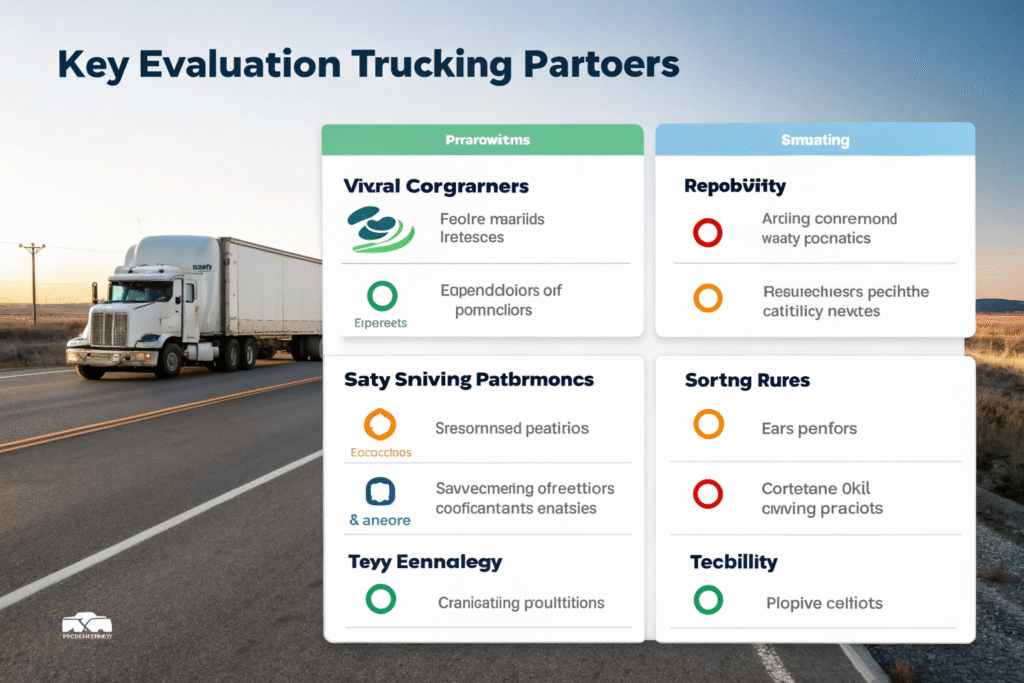
How Do Safety Records Predict Reliability?
DOT safety ratings provide objective performance measures. Carriers with "Satisfactory" ratings from the Federal Motor Carrier Safety Administration (FMCSA) typically have 60% fewer accidents and better operational discipline than those with conditional ratings.
CSA (Compliance, Safety, Accountability) scores identify potential risk areas. The FMCSA's BASIC scores (Behavior Analysis and Safety Improvement Category) help identify carriers with safety compliance issues in specific areas like driving, maintenance, or cargo claims.
Insurance claims history reveals actual performance. Carriers with low insurance claims ratios (below 5%) typically have better safety practices and fewer cargo incidents than those with higher claims frequency.
What Operational Capabilities Ensure Consistent Performance?
Equipment availability and maintenance affect service reliability. Carriers with modern, well-maintained equipment and adequate capacity reserves can handle volume fluctuations without service degradation.
Driver retention rates indicate operational stability. Carriers with driver turnover below 35% (compared to industry averages of 60-90%) typically provide more consistent service and better customer communication.
Geographic coverage and lane expertise impact efficiency. Carriers specializing in your specific lanes or regions typically provide better service and pricing than generalists spreading capacity thinly across many areas.
How Can You Verify Potential Partners' Claims?
Due diligence separates marketing promises from operational reality through systematic verification.

What Due Diligence Activities Reveal True Capabilities?
FMCSA record review provides official safety and compliance data. The FMCSA's SAFER system offers free access to carrier safety records, insurance verification, and enforcement history.
Customer reference checks with similar businesses offer relevant insights. Speaking with companies with similar shipping patterns, freight types, and volume provides applicable performance data rather than generic testimonials.
Facility visits reveal operational standards and maintenance practices. Unannounced visits to terminals or maintenance facilities show real conditions rather than prepared environments.
What Performance Metrics Should You Request and Verify?
On-time delivery rates measure reliability fundamentals. Quality carriers maintain 95%+ on-time performance for pickup and delivery appointments, with clear communication about exceptions.
Claims ratio and damage frequency reflect care and handling. Reliable carriers maintain cargo claims below 1% of revenue through proper loading, securement, and handling practices.
Communication responsiveness during issues indicates problem-solving capability. The ability to provide quick, accurate updates during disruptions often matters more than perfect performance.
What Technology Capabilities Differentiate Modern Carriers?
Technology integration has become a key differentiator for reliable trucking partners in an increasingly digital logistics environment.
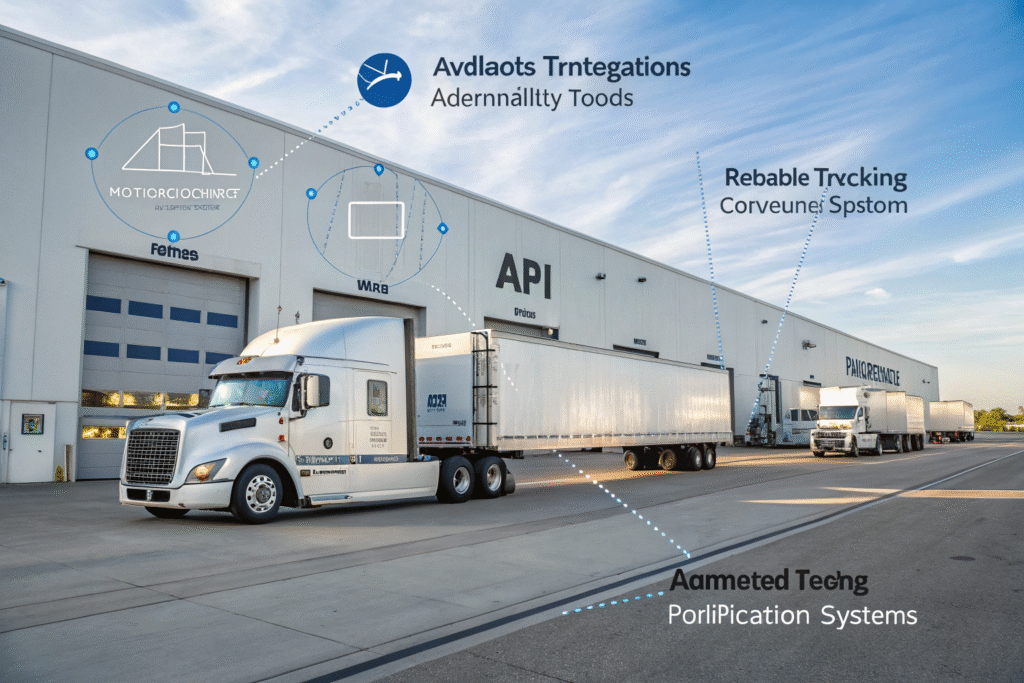
What Visibility Tools Are Essential for Reliability?
Real-time GPS tracking provides shipment visibility and ETAs. Modern carriers offer accurate, frequent location updates rather than limited check-in/call-in reporting.
Electronic POD (Proof of Delivery) accelerates billing and confirmation. Digital signature capture and immediate POD transmission prevent delays and disputes.
API integration enables seamless data exchange between systems. The ability to connect their transportation management system with your ERP or logistics platforms prevents manual data entry and errors.
How Does Communication Technology Impact Reliability?
Automated exception alerts enable proactive problem management. Systems that automatically notify customers of delays, route changes, or issues prevent surprises and enable contingency planning.
Mobile driver applications improve communication accuracy. Drivers with mobile tools can provide real-time updates, photos, and communication rather than relying on phone calls and manual reporting.
Online portal access provides 24/7 shipment visibility. Self-service access to shipment status, documents, and performance data reduces administrative burden and improves responsiveness.
What Operational Practices Indicate Reliability?
Beyond technology, specific operational approaches and business practices distinguish reliable carriers.
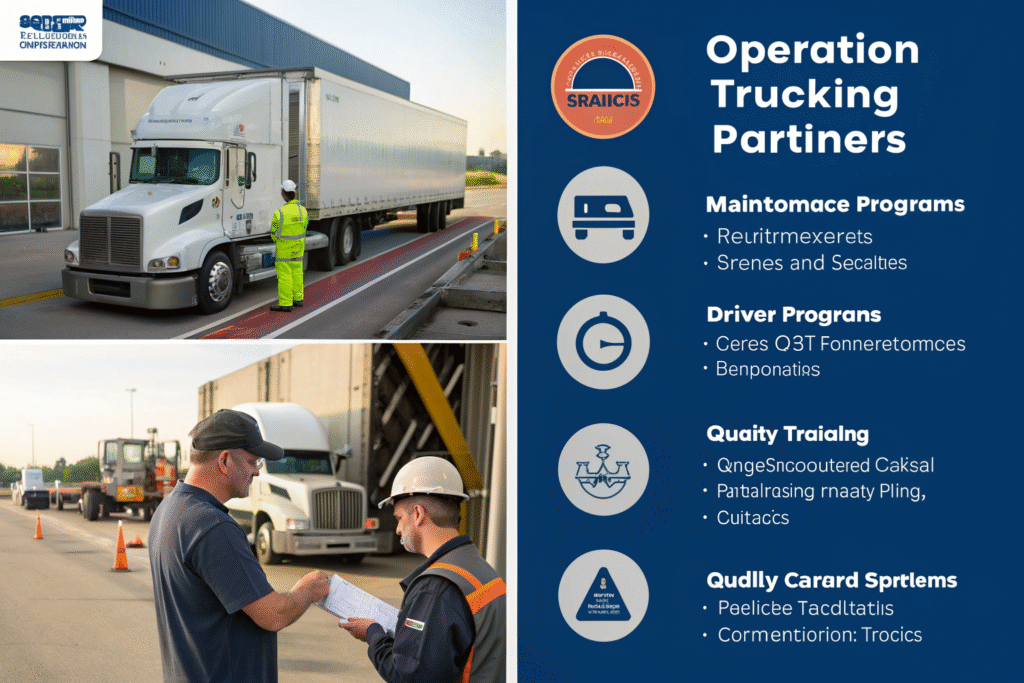
What Maintenance Practices Ensure Equipment Reliability?
Preventive maintenance programs prevent breakdowns and delays. Carriers with scheduled maintenance, regular inspections, and documented repair histories typically experience fewer equipment failures.
Equipment age and standardization impact service consistency. Fleets with average equipment age under 3 years and standardized configurations typically provide more reliable service than those with older, mixed equipment.
Spare equipment availability handles unexpected issues. Carriers with 5-10% spare capacity (tractors, trailers) can cover breakdowns without significant service disruptions.
How Do Driver Management Practices Affect Service?
Comprehensive driver training goes beyond legal minimums. Carriers investing in ongoing driver development, safety training, and customer service education typically provide better overall service.
Fair compensation and treatment improves driver retention. Carriers paying above-market rates with reasonable home time typically have more experienced, professional drivers.
Performance monitoring and feedback maintains standards. Regular driver performance reviews, safety metrics tracking, and constructive feedback loops maintain service quality.
What Contract and Commercial Considerations Matter Most?
The business terms and relationship structures significantly impact partnership success and service reliability.

How Should You Structure Pricing and Contracts?
Avoid spot market dependence for consistent lanes. Dedicated contracts or volume commitments typically secure better service and pricing than transactional spot market arrangements.
Understand all cost components beyond linehaul rates. Consider accessorial charges for detention, lumper services, tolls, and special equipment to accurately compare total costs.
Balance commitment levels with flexibility needs. Contracts should provide capacity assurance while allowing volume fluctuations and service adjustments as business needs change.
What Service Level Agreements Protect Your Interests?
Clear performance metrics with remedies for underperformance. SLAs should specify measurable standards for on-time performance, communication, and claims handling with consequences for missing targets.
Capacity commitment and tender acceptance requirements. Minimum acceptance rates for your freight tenders (typically 95%+ for dedicated partners) ensure reliable capacity access.
Communication and escalation procedures for issues. Defined response times, update frequency, and escalation paths during problems ensure timely resolution.
How Can You Ensure Cultural and Strategic Alignment?
Beyond operational capabilities, the human and strategic elements often determine partnership success and reliability.

What Cultural Factors Impact Partnership Reliability?
Communication style and transparency affect issue resolution. Partners who provide honest assessments, proactive updates, and collaborative problem-solving typically deliver better long-term reliability.
Accountability mentality versus excuse culture. Carriers that take ownership of issues and focus on solutions outperform those who frequently blame external factors for service failures.
Management accessibility ensures escalation paths work. Knowing you can reach decision-makers during critical situations provides confidence in the partnership's reliability.
How Important Is Strategic Growth Alignment?
Capacity planning discussions reveal future capabilities. Understanding how partners will support your growth—both in volume and geographic expansion—prevents future misalignments.
Technology investment alignment ensures future capabilities match. Partners actively investing in visibility, automation, and integration likely remain competitive and reliable longer.
Industry specialization can provide valuable expertise. Carriers focusing on your industry (retail, manufacturing, temperature-controlled) typically understand specific requirements and challenges better.
What Are Common Trucking Partner Selection Mistakes?
Understanding frequent errors helps businesses avoid costly partnership problems and service failures.
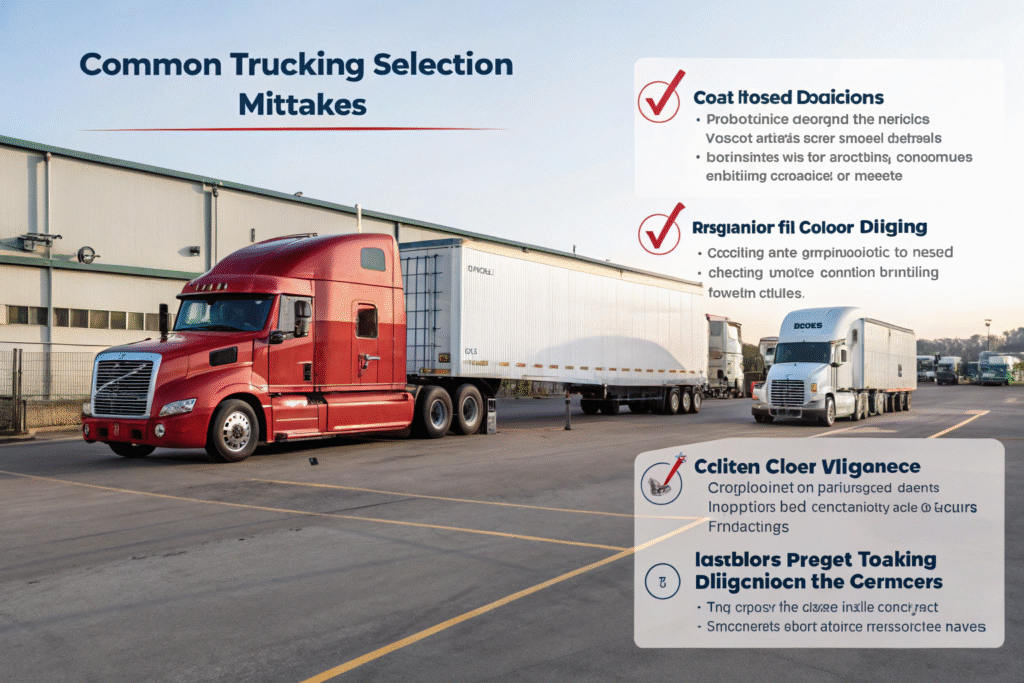
What Strategic Errors Undermine Trucking Partnerships?
Prioritizing lowest cost over reliability and total cost of ownership. The cheapest carriers often become the most expensive through service failures, claims, and operational disruptions that impact your business.
Overlooking safety records for apparent operational capability. Carriers with marginal safety compliance typically experience more crashes, insurance issues, and service disruptions.
Underestimating the importance of technology integration. Manual processes, poor visibility, and communication gaps create operational friction that impacts your supply chain reliability.
What Operational Oversights Cause Partnership Problems?
Inadequate trial period or gradual implementation. Transitioning all volume immediately to a new carrier without testing creates risk if operational issues emerge.
Poor understanding of the carrier's customer concentration. Carriers overly dependent on one or two large clients may deprioritize your business during their peak periods or if larger clients have emergencies.
Insufficient contingency planning for capacity fluctuations. Failing to maintain relationships with backup carriers creates vulnerability during peak seasons or if your primary partner faces issues.
Conclusion
Finding a reliable trucking partner requires systematic evaluation of safety records, operational capabilities, technological sophistication, and cultural alignment. The most successful companies treat carrier selection as a strategic decision rather than a tactical procurement activity, recognizing that the right partner significantly impacts customer satisfaction, operational efficiency, and supply chain resilience.
At GeeseCargo, we've helped clients establish trucking partnerships that reduced transportation costs by 12-25% while improving on-time performance by 30-45%. The most successful outcomes come from thorough due diligence, clear requirement definition, and gradual relationship building rather than rushed decisions based on limited criteria.
Begin your search by clearly documenting your service requirements, volume patterns, and performance expectations, then systematically evaluate potential partners against both operational capabilities and cultural alignment. Remember that the best trucking partnerships evolve into strategic alliances that support your growth while adapting to changing market conditions and business needs.