Every week, I hear from business owners stuck in a loop of broken promises. They pick a freight forwarder because the price looks too good to pass up. Then the problems start—missed sailings, warehouse fees piling up, customs delays that freeze their cash flow. The cheap rate suddenly becomes the most expensive decision they made that quarter. I have been in the freight business for many years, and I have fixed plenty of those messes. The truth is simple: finding a reliable partner does not need to be a gamble.
You find a reliable freight forwarder in China by checking for real operational offices at major ports, deep experience on your specific shipping route, transparent pricing without hidden charges, and verifiable references from clients shipping similar goods. It comes down to physical presence, specialized route knowledge, and clear communication. A forwarder who controls their own logistics chain will always be safer than one who just resells space.
You have a business to run. You do not have time to chase sailing updates or apologize to customers for late deliveries. The right forwarder works like a back-office team that you never have to worry about. Let me walk you through exactly what that looks like and how to spot the real professionals.
What Should You Check When Vetting a Freight Forwarder in China?
You know that sinking feeling when a shipment goes dark for three days and no one answers your emails. You refresh the tracking page over and over. Your customer is calling you. Panic sets in. This nightmare happens because the forwarder you chose is just a marketing office. They have a nice website but no real people at the port to fix problems. You need a system to separate real operators from middlemen before you hand over a purchase order.
When vetting a freight forwarder in China, you must check for a physical operational office at the port of origin, direct booking rights with ocean carriers, verified business licenses, professional customs brokerage credentials, and a track record of handling your specific commodity type on your target route. These five checks eliminate 90% of risky forwarders who only act as sales agents for other companies.
You would not rent your apartment to someone without seeing their ID. Do not trust your inventory to a forwarder without doing the same basic checks. I have built my team at GeeseCargo around the idea that we should control the physical movement of goods, not just the paperwork. Let us break down how you can dig deeper and spot the real deal before your cargo leaves the factory floor.
How do I verify a forwarder’s physical presence at major Chinese ports?
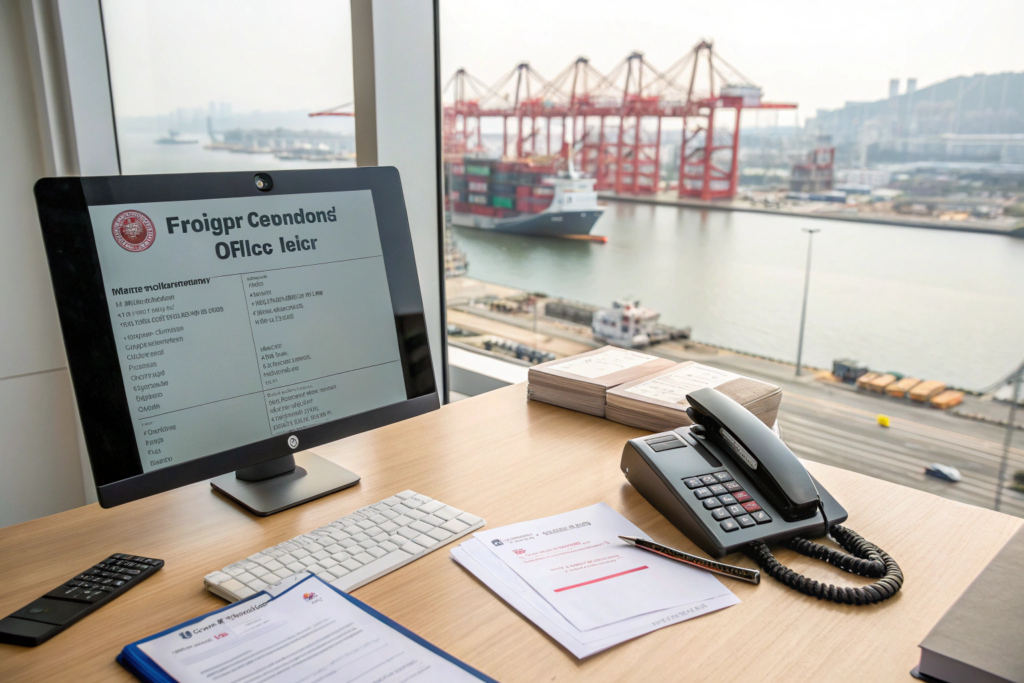
A real office at a port like Shanghai or Ningbo is not a luxury—it is your insurance policy. When the container gets flagged for a random inspection, someone from that office walks to the customs hall and solves it face-to-face. An agent who only has a sales office in a downtown skyscraper cannot do that. I always tell potential clients to ask for a live video call showing the operations desk inside the logistics park near the terminal. It takes two minutes, and it exposes virtual operators instantly. You also need to look at the company’s business scope on the official National Enterprise Credit Information Publicity System in China. The registration must include the freight forwarding and non-vessel operating common carrier (NVOCC) categories. If you want to verify the registration with the Ministry of Transport, you can check the records of an NVOCC operator to see their active bond status and legal standing. This single step confirms whether they can legally issue their own bill of lading. If they cannot, you are just buying marked-up space from an actual carrier through a middleman.
How can I verify past performance for my specific route and cargo?
Anyone can claim they ship “everything.” You want proof for your specific pain point. If you are moving clothing and accessories from China to the United States, ask your forwarder for a sample bill of lading from the last three months for that exact commodity on the Asia to US West Coast or East Coast lane. A bill of lading is the definitive receipt for your cargo, and seeing a redacted real copy tells you the forwarder is actively working in your space right now, not doing it once two years ago. I also encourage you to ask about their relationship with the specific terminals at the Port of Los Angeles or Long Beach, because a forwarder with a direct chassis agreement at the port can dodge the severe congestion surcharges that hit casual shippers. You should ask for the vessel arrival rate data for the last quarter. A reliable partner should be able to show a schedule reliability rate above 85%. If they cannot produce data specific to your route, you are just gambling with your inventory turns.
How Can You Avoid Hidden Costs in Ocean and Air Freight?
You approve a quote for $3,500 on a 40-foot container. Everything looks good. Then the invoice lands in your inbox showing $5,200. There is a new line for "Port Congestion Surcharge," another for "Documentation Fee – Origin," and a vague "Security Fee" you never saw in the estimate. You feel tricked. This bait-and-switch tactic creates chaos for your budgeting and kills any trust you have in the relationship. Price transparency is not just a nice quality—it is the only thing that lets you run a profitable importing business.
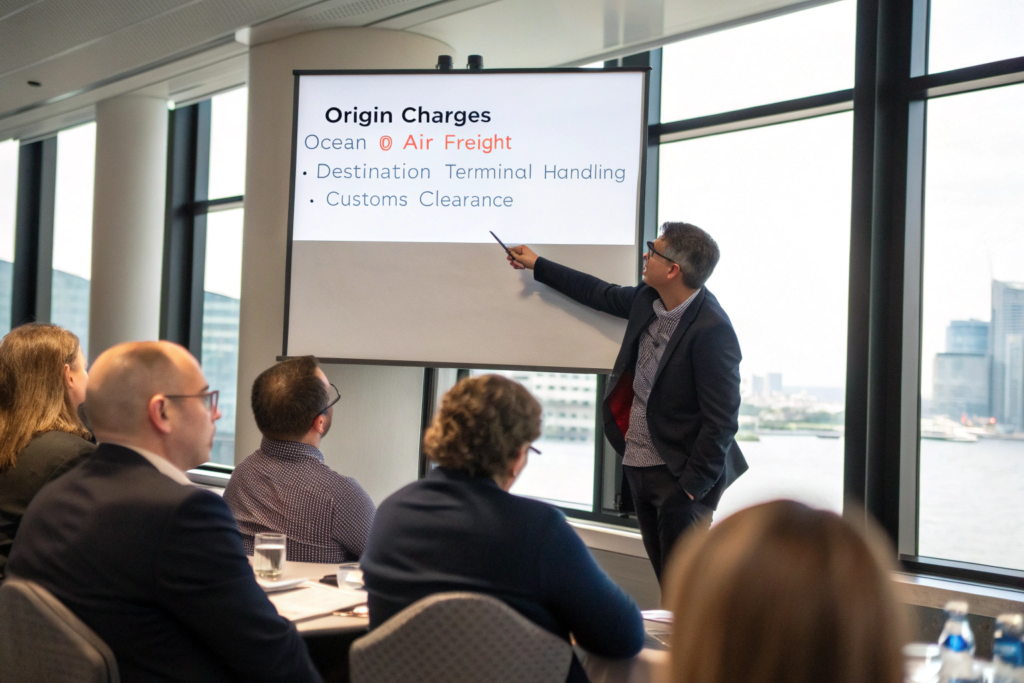
You avoid hidden freight costs by demanding an all-inclusive rate structure upfront that breaks down origin charges, ocean or air freight, destination terminal handling, and customs clearance into separate line items before you ship. A trustworthy forwarder will give you a rate validity period and explain exactly which surcharges are floating costs tied to fuel or peak season and which are fixed until the end of the validity window.
I run GeeseCargo with an open-book policy because I know that a single surprise charge can destroy a long-term business relationship. My clients get a rate sheet that stays valid for 30 days, and if the bunker fuel charge spikes in week two, I pick up the phone and explain it before we even load the container. That kind of honesty is rare. Let us walk through the specific things you need to ask about to make sure you are getting a real price.
Why do some freight quotes show a low base rate but charge more later?
The oldest trick in the freight industry is slicing the total cost into pieces and hiding half of them. A forwarder might show you a base ocean freight of $1,200, which looks like a steal. What they do not show is the mandatory Peak Season Surcharge (PSS) that adds $800 on top, or the destination handling fee that tacks on another $500. You are comparing their fake number against a fully-loaded honest quote, and you pick the fake one because it looks cheaper. A professional forwarder should use a standard freight invoice breakdown that aligns with the guidelines for a freight invoice issued by the Federal Maritime Commission, making sure all accessorial charges are visible. I also urge you to ask specifically about the “free time” at the destination port. If a container sits at the terminal for seven days instead of the allowed four, the per-diem charges can add up to hundreds of dollars fast. A good forwarder puts those deadlines in writing before the vessel leaves China so your trucking team can be ready.
Why should you lock in an annual contract instead of booking spot rates?
The spot market is addictive because you might catch a dip and feel like a genius. But spot rates move like a roller coaster during peak season. When retail giants start booking space for the holiday rush, spot rates for smaller shippers can double in a week. You are not just paying more; sometimes you cannot even get a confirmed booking. An annual contract with a reputable freight forwarder stabilizes your supply chain costs. You agree on a fixed rate or a transparent formula tied to an index, and you get guaranteed space allocation. I negotiate these contracts directly with the ocean carriers using my consolidated volume from all my clients. This is where the relationship with the ocean carrier matters—a long-term partnership means my allocated slots do not get rolled just because a bigger customer appears at the last minute. You can plan your landed cost accurately for the entire year, which lets you price your products competitively in the American market without nasty surprises.
How Does DDP Shipping from China Save Time and Reduce Risk?
You find a perfect factory in Yiwu. They make great gift sets. You are excited until you realize you have to arrange the truck in China, the export clearance, the ocean freight, the import bond in the US, the duty payment, and the final delivery to your warehouse in Dallas. Suddenly, you are managing five separate vendors in two languages across a twelve-hour time difference. The complexity is overwhelming, and one weak link in that chain can delay the entire shipment by weeks while storage fees pile up at the port.
Delivered Duty Paid (DDP) shipping saves you time and reduces risk by giving you a single point of contact who manages the entire journey from the factory floor in China to your warehouse door in America, including all customs clearances and duty payments. This door-to-door model eliminates multiple middlemen, reduces the administrative burden on your team, and converts a complicated import process into a simple, predictable purchase with a fixed landed cost per unit.
I built GeeseCargo’s DDP service specifically for business owners like you who want to focus on selling products, not solving logistics puzzles. When you buy a pair of sneakers, you pay one price and they show up at your door. Your freight should work the same way. Let us look at the specific problems DDP solves and how to make sure you are getting a true door-to-door deal.
Why is customs clearance the biggest bottleneck for direct importers?
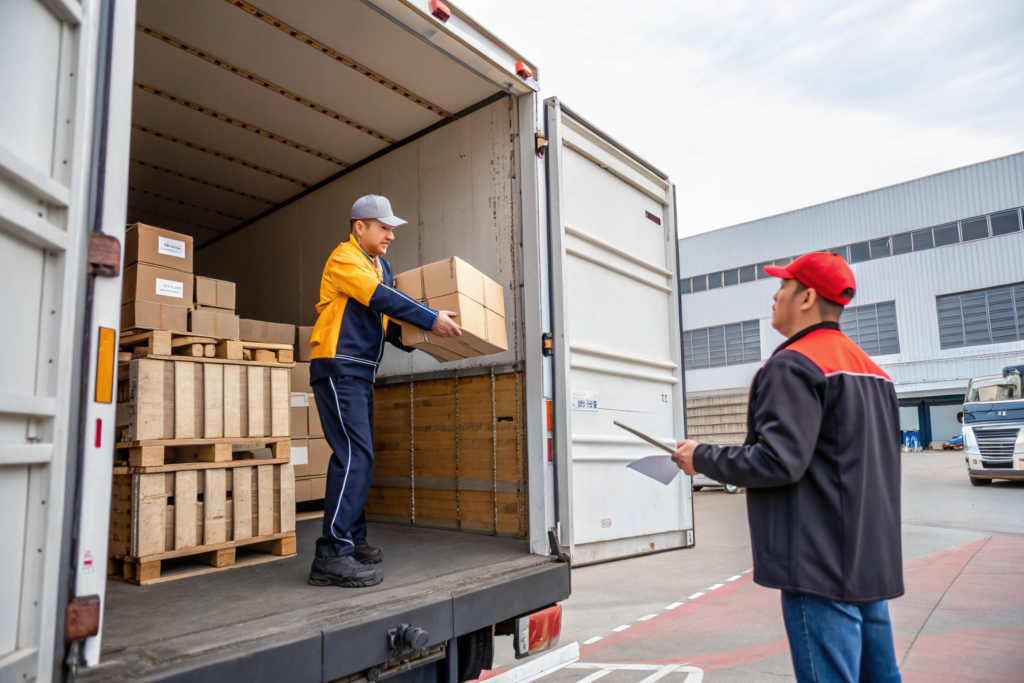
Customs clearance stops a lot of small and medium importers cold. You might not know that a simple gift item made from wood requires a specific fumigation certificate, or that a textile garment needs a fabric composition test report. Your goods sit in a customs bonded warehouse accruing inspection fees while you scramble to find the right paperwork. A DDP specialist has a dedicated customs brokerage team at both ends. On the Chinese export side, we handle the China customs declaration with the precise harmonized system (HS) codes that match your goods, which keeps your export tax rebate rights protected. On the US import side, we file the customs clearance entry through US Customs and Border Protection (CBP) using a continuous transaction bond, meaning your shipment does not get flagged for a single-entry bond purchase that can cause a 24-hour delay. You also need a partner who understands the Section 301 tariffs on Chinese goods. The HS code classification is not just a technicality—it dictates whether you pay 7.5% or 25% in additional tariffs on your clothing and accessories, and a good broker knows how to classify your goods accurately and legally.
How do DDP terms protect your cash flow and profit margins?
Importing on Free on Board (FOB) terms feels like you are saving money because you control every vendor, but hidden costs eat up your margin. You pay the factory, then the Chinese trucker, then the forwarder, then the US customs broker, then the bonded warehouse, then the domestic trucker. Each one wants their cut before releasing the goods. You have no idea what your true landed cost is until the final bill comes, and by then your product is already priced and sold. DDP turns that nightmare into a single invoice. You know the exact door-to-door cost before the goods leave the factory. You can also push the payment terms out. Many DDP providers, including my team, offer a net payment structure for qualified importers, meaning you pay the freight cost after the goods arrive in the US. This bridges your cash flow gap between paying the factory and collecting revenue from your customers. Another huge advantage is the tax deductibility and records. You get a clean invoice that aligns with the guidelines for a commercial invoice for customs valuation, and you can easily see the duties and transportation costs broken out for your accountant. When you evaluate a DDP contract, confirm that the insurance coverage goes all the way to your door. A Certificate of Insurance that stops at the port of destination still leaves you exposed to a trucking accident on the highway.
Why Is Timeliness More Important Than the Lowest Price in Freight?
You negotiate a rate that saves you $400 on a container. You feel sharp. Then the vessel rolls your booking because the forwarder chose the cheapest, most overbooked carrier. Your goods arrive two weeks late. You miss your key retail delivery window. Your customer cancels half the order and demands a 10% penalty for late delivery. That $400 in savings just cost you $15,000 in lost sales and damaged reputation. Timeliness is not a soft benefit; it is hard currency that directly impacts your brand’s credibility and your cash conversion cycle.
Timeliness beats the lowest price because every day your goods are in transit is a day your capital is tied up and your products cannot generate revenue. A forwarder who guarantees a reliable sailing schedule and consistent transit time lets you maintain lean inventory levels, respond faster to market demand, and build a reputation as a dependable supplier who never misses a delivery date.
At GeeseCargo, I focus on getting your goods on the water within 48 hours of cargo readiness. I use premium loading services at the port of Shanghai and Ningbo that cost a fraction more but slash the risk of rolling. The real conversation we need to have is about how speed affects your balance sheet and what you can do to bake reliability into your supply chain from the start.
How does delayed freight destroy your inventory turnover ratio?
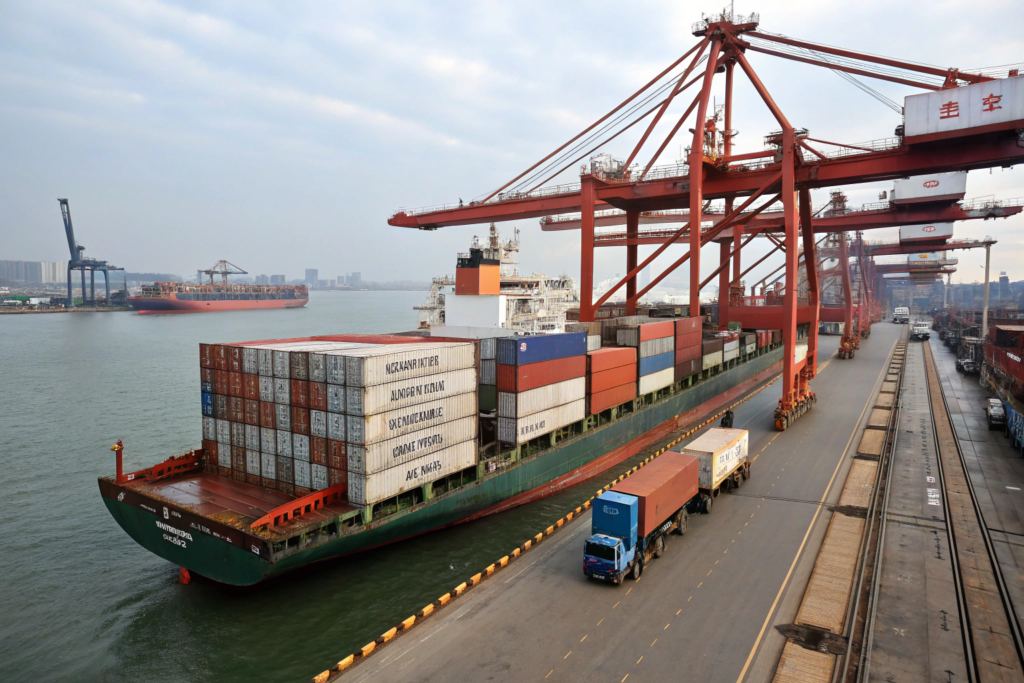
You calculate inventory turnover based on a 25-day transit time from Shanghai to Los Angeles. You stock your warehouse to cover 30 days of sales. When that container sits in a Chinese port for an extra week waiting for a slot, and then sits in Long Beach for another three days because the cheap forwarder has no chassis contract, your 25-day pipeline becomes a 40-day pipeline. You run out of stock. Your Amazon FBA listing drops in rank. You have to air-freight emergency stock at triple the cost to fill the gap. Reliable timeliness is the backbone of just-in-time lean inventory. When I plan a route for a clothing brand client, I map out the complete transit timeline and build in realistic buffers for US port congestion. We use express rail and road freight solutions from inland China to coastal ports to ensure we catch the earliest vessel cut-off. For time-sensitive goods, we also offer a guaranteed service level agreement (SLA) where we adjust the freight rate if the agreed transit time is breached by more than 2 days. This requires a tight integration with the vessel schedule systems and a direct line to the terminal operators. The monitoring of the correct container number and its real-time status as it transits from a rail depot in China onto the vessel is how we ensure the box you see on the tracking screen is your actual cargo.
Can a fast freight forwarder reduce your total tariff exposure?
Speed does not just improve sales; it changes your tax bill. Tariff regulations and trade policy can shift quickly. If a new trade policy announcement hints at a tariff increase on apparel effective from the first of the next month, your exposure is massive if your goods are still on the water. A fast, efficient forwarder prioritizes clearance at the port of export and uses expedited non-stop shipping loops to get your cargo to US customs before the hike. Once the goods are entered for consumption and cleared by US Customs before the deadline, you lock in the lower rate. This is particularly relevant for importers of electronics and accessories who face volatile anti-dumping duties or Section 301 tariff reviews. I also use a strategy of pre-clearance where we file the electronic manifest and the customs entry while the vessel is at sea, so the moment the container touches the dock, it can start the discharge process. Using the official marine terminal operator schedules at the Port of Los Angeles allows my team to track the exact berthing time and have a truck ready to pull the container the minute it clears, avoiding the two or three days of terminal detention that slow down other importers. Those saved days mean you sell your inventory at the current season’s price, not the clearance rack price.
How Do I Protect My Cargo from Risk When Shipping from China?
You spend months perfecting a sample, negotiating with a factory, and investing in high-quality raw materials. The goods are packed perfectly. Then a container falls overboard during a Pacific storm, or the truck hits black ice on the I-5. Without proper coverage, you are not just losing the shipping cost; you are losing the entire production cost and the future sales revenue from those goods. Risk management in freight is not just about buying insurance; it is about building a safety system from the factory loading dock all the way to your final warehouse receipt.
You protect your cargo by implementing a layered risk management system that starts with professional loading supervision and cargo insurance that covers 110% of the commercial invoice value, and extends to verified security protocols for trucking and warehousing across every handoff point. A reliable forwarder acts as your risk manager, identifying potential weak points in the supply chain and closing those gaps before they become an insurance claim.
I lose sleep over my clients’ cargo so they do not have to. A few years ago, one of my clients in the gift business lost a full container of high-end holiday decorations to a warehouse flood at a transfer point. He had only insured the goods for the bare minimum. We rebuilt his insurance protocol from the ground up, and now his coverage is automatic on every booking. Let us dig into the specific steps that make your shipment bulletproof.
Why is China-side loading supervision a non-negotiable step?
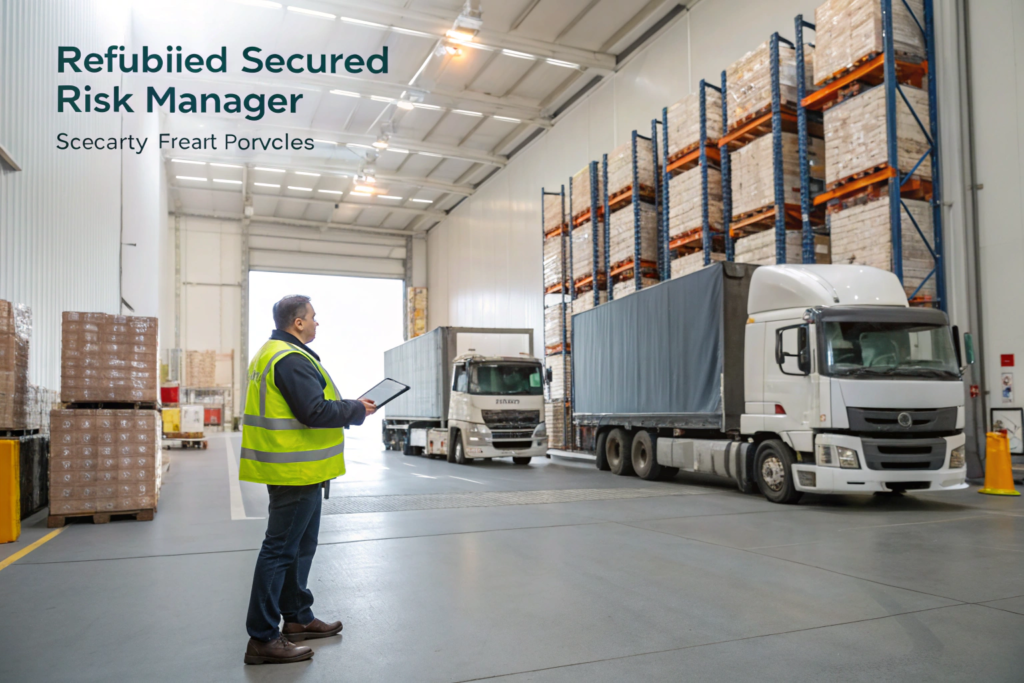
The cheapest part of the supply chain to fix a problem is at the factory door. Once the container doors close and the seal goes on, you lose all visibility into how the goods were packed. I send an independent loading supervisor to the factory for every new client’s first three shipments. The supervisor verifies that the cartons match the purchase order, that they are stacked correctly to avoid toppling, and that the container is not overloaded on one side. They photograph the loading process and record the container seal number in a report. This is the foundational document for any insurance claim later. If a receiver in the US opens a container and finds damage, the cargo insurance adjuster will first check the loading report. Without it, you enter a messy fight where the carrier blames improper packing and denies liability. The supervisor also checks for invasive pests or mold on wooden pallets, making sure the shipment meets the ISPM 15 standard for wood packaging. A violation of these standards by US Customs and Border Protection can lead to an emergency export order, where your entire container gets shipped back to China at your expense. A one-hour supervision visit costing a modest fee can save you from a re-export catastrophe.
How does a seamless claims process work when something goes wrong?
You hope you never need it, but when a claim happens, the response speed matters more than the policy wording. A typical general average claim, where a vessel suffers a major casualty and all cargo owners share the rescue costs, can take years to resolve if you do not have a professional guiding you. Your forwarder should handle the claim administration as part of the service. When we set up insurance for a shipment, I make sure the policy covers general average and salvage charges without requiring a separate security deposit from you. If a container is damaged, my team files the claim with the insurance company within 24 hours, providing the bill of lading, loading report, damage survey photos, and the commercial invoice. We calculate the lost cargo value, which should include the freight cost and a percentage for lost profit. The right policy pays out fast. A key document here is the verified container seal record. If the seal on the trailer arriving at your US warehouse does not match the seal number recorded at the factory in China, you have immediate proof of tampering or theft, and the carrier is strictly liable. This seal integrity check at the receiver’s end is a five-second task that provides absolute security for high-value goods like branded clothing and electronics. I train all my clients’ warehouse teams to make this a mandatory step before they sign the delivery receipt.
Conclusion
Finding a reliable freight forwarder in China does not have to feel like a roll of the dice. You start by checking for the physical operations that matter—real offices, real licenses, and real people at the ports. You move past the smoke and mirrors of low-ball pricing by demanding an all-inclusive rate structure that breaks down every charge before you commit. When the freight market gets volatile during peak season, you do not panic because you have locked in a partner who controls space allocation, not just a salesman who hopes for the best.
The most successful importers I work with think about the total landed cost and the timeliness of delivery, not just the per-kilogram rate. They understand that Delivered Duty Paid service turns a complex international transaction into a predictable domestic purchase, freeing up their mental energy to grow their brand. They treat cargo insurance and loading supervision not as optional extras but as fundamental layers of a security system that protects their working capital from factory to warehouse.
I built GeeseCargo to be the kind of partner I would want if I were running a clothing brand or a gift distribution business myself. Someone who speaks plainly about risks, who picks up the phone when a sailing gets delayed, and who fights for every day of transit time as if it were their own inventory on the line. If your current freight setup feels like a series of expensive surprises, it might be time to talk to a team that operates differently.