
When one of our longest-standing clients faced a critical shipping deadline during the COVID port closures, our team worked through the night to reroute their $2M shipment through three alternative ports—not because their contract required it, but because our 8-year relationship had built mutual commitment that transcended transactional obligations. As founder of GeeseCargo with hundreds of client relationships, I've learned that great forwarder relationships create competitive advantages that go far beyond cost savings.
Building a great long-term relationship with your forwarder requires transparent communication, fair business practices, strategic partnership mindset, and shared growth objectives. Companies that invest in these relationships typically achieve 15-30% better rates, 40-60% faster problem resolution, and priority treatment during capacity crunches compared to transactional clients.
The most successful shippers treat their forwarders as strategic partners rather than vendors, creating symbiotic relationships where both parties benefit from mutual success. This approach transforms logistics from a cost center to a competitive advantage.
What Foundation Elements Create Strong Partnerships?
Building lasting forwarder relationships starts with establishing the right foundation based on mutual respect and clear expectations.

How Does Transparency Build Trust and Efficiency?
Volume forecasting sharing enables capacity planning and better pricing. When forwarders understand your expected shipping volumes 3-6 months in advance, they can reserve space, plan equipment, and offer more competitive rates.
Business objective communication aligns logistics with company goals. Sharing your growth targets, customer service standards, and strategic direction helps forwarders propose solutions that support broader business objectives rather than just executing transactions.
Challenge disclosure allows proactive problem-solving. Being open about potential issues like payment timing, product complexities, or supply chain vulnerabilities enables forwarders to build appropriate solutions rather than reacting to surprises.
What Communication Practices Strengthen Relationships?
Structured business reviews create accountability and improvement cycles. Quarterly performance reviews discussing metrics, challenges, and improvement opportunities demonstrate commitment to mutual success.
Single points of contact streamline communication while building personal relationships. Designating primary contacts on both sides creates relationship depth and prevents communication breakdowns.
Proactive issue reporting builds credibility and trust. Informing your forwarder about potential problems before they impact shipments demonstrates respect for their operations and planning.
How Can You Demonstrate Partnership Value to Your Forwarder?
Great relationships require mutual investment, with shippers actively demonstrating their value as preferred clients.
What Operational Behaviors Make You a Preferred Client?
Prompt payment history creates financial stability and trust. Forwarders prioritize clients who pay reliably, as this reduces their financial risk and administrative costs.
Reasonable complaint resolution focuses on solutions rather than blame. Addressing issues collaboratively rather than adversarially preserves relationships while still achieving resolution.
Volume commitment consistency enables resource planning. Providing stable, predictable volume allows forwarders to allocate dedicated resources and capacity to your business.
How Does Strategic Alignment Benefit Both Parties?
Growth participation rewards forwarder investment. Increasing your business with forwarders who provide excellent service demonstrates appreciation and encourages continued investment in your success.
Innovation partnership creates competitive advantages. Collaborating on process improvements, technology integration, or new service development benefits both organizations.
Reference and referral provision helps forwarders grow. Recommending strong forwarders to business associates (when appropriate) strengthens your relationship through demonstrated support.
What Relationship Management Practices Yield the Best Results?
Active relationship management transforms adequate partnerships into exceptional ones through systematic engagement and continuous improvement.

How Should You Structure Regular Business Reviews?
Performance metrics discussion focuses on improvement rather than punishment. Reviewing KPIs like on-time performance, documentation accuracy, and communication responsiveness should drive collaborative improvement plans.
Strategic planning sessions align future capabilities with business needs. Discussing your 12-24 month growth plans enables forwarders to develop capabilities that support your evolving requirements.
Relationship health assessment addresses issues proactively. Periodically evaluating communication effectiveness, problem-resolution satisfaction, and strategic alignment prevents small issues from becoming relationship-threatening problems.
What Feedback Mechanisms Improve Partnership Quality?
Structured feedback processes ensure continuous improvement. Regular surveys, performance scorecards, and improvement initiatives demonstrate commitment to mutual excellence.
Two-way feedback encourages reciprocal improvement. Being open to feedback about your organization's processes, communication, or requirements helps forwarders serve you more effectively.
Recognition of exceptional service reinforces desired behaviors. Acknowledging and rewarding outstanding performance encourages continued excellence from your forwarder team.
How Can You Navigate Challenges Without Damaging Relationships?
Even the strongest relationships face challenges, but how you handle difficulties often determines long-term partnership success.

What Problem-Solving Approaches Preserve Relationships?
Solution-focused discussions prioritize resolution over blame. When issues occur, focusing on "how do we fix this" rather than "who caused this" maintains partnership dynamics.
Proportional responses match solutions to problem severity. Applying appropriate remedies based on issue impact and frequency preserves relationships while still addressing problems.
Process improvement focus prevents recurrence. Using problems as opportunities to improve systems and processes benefits both parties long-term rather than just addressing immediate symptoms.
How Should You Handle Serious Service Failures?
Direct but respectful communication addresses issues effectively. Clearly explaining problems, impacts, and expectations without personal attacks or emotional language enables constructive resolution.
Reasonable remedy requests consider practical realities. Seeking appropriate compensation or service recovery that acknowledges operational realities maintains relationship fairness.
Rebuilding trust through demonstrated improvement. After significant issues, working collaboratively on prevention measures and monitoring improvement rebuilds confidence in the partnership.
What Are the Tangible Benefits of Strong Forwarder Relationships?
Investing in forwarder relationships delivers measurable business advantages beyond simple cost considerations.
How Do Strong Relationships Impact Costs and Service?
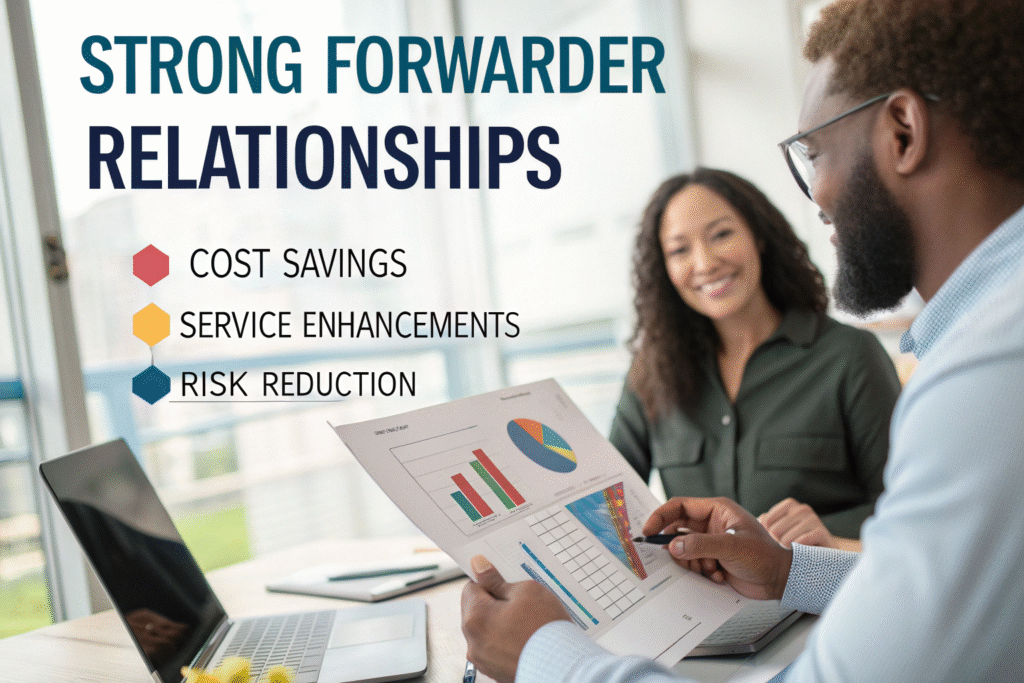
Preferred pricing reflects relationship value and volume commitment. Long-term partners typically receive rates 10-25% below market through combination of volume discounts and relationship considerations.
Priority treatment during capacity constraints ensures business continuity. When space is tight, forwarders prioritize loyal clients over transactional customers, preventing shipment delays.
Enhanced service levels come from deeper understanding and investment. Forwarders invest more resources, training, and system customization for partners they value highly.
What Strategic Advantages Do Strong Relationships Create?
Innovation access provides competitive differentiation. Forwarders share new services, technologies, and processes with preferred clients first, creating early-mover advantages.
Risk mitigation through proactive problem identification. Forwarders who understand your business deeply can anticipate and prevent problems before they impact your operations.
Market intelligence sharing supports better decision-making. Forwarders provide valuable insights about carrier changes, regulatory developments, and market trends to valued partners.
What Common Relationship Mistakes Should You Avoid?
Understanding frequent errors helps businesses build stronger forwarder relationships by avoiding preventable problems.

What Strategic Errors Damage Forwarder Relationships?
Constant price shopping undermines partnership value. While periodic market checks are reasonable, constantly threatening to move business for minor price differences destroys relationship equity.
Unrealistic expectations strain operational capabilities. Demanding services beyond agreed scope or emergency treatment for routine shipments creates resentment and operational stress.
Information asymmetry prevents optimal solutions. Withholding important business information from forwarders prevents them from providing the best possible service and advice.
What Communication Failures Weaken Partnerships?
Inadequate feedback prevents improvement. Failing to provide constructive feedback about service issues denies forwarders the opportunity to improve and address concerns.
Poor communication during problems exacerbates situations. Withholding information about developing issues or complaints prevents forwarders from addressing problems proactively.
Inaccessible decision-making delays resolutions. Making key contacts unavailable for urgent decisions or escalations creates frustration and operational delays.
Conclusion
Building a great long-term relationship with your forwarder requires viewing logistics as a strategic partnership rather than a transactional procurement activity. The most successful companies invest in relationship building through transparent communication, fair business practices, and shared growth objectives, creating symbiotic partnerships that deliver significant competitive advantages.
At GeeseCargo, our strongest client relationships have lasted over a decade and weathered multiple industry disruptions, demonstrating that invested partnerships create resilience and advantage that transcend market fluctuations. The key is recognizing that forwarder relationships, like any important business partnership, require ongoing investment, communication, and mutual commitment to deliver maximum value.
Begin strengthening your forwarder relationships by scheduling strategic business reviews, sharing your growth plans, and demonstrating your value as a preferred client. Remember that in logistics partnerships, what you get out typically correlates strongly with what you put in—invested relationships yield dividends that far exceed the effort required to build them.