When one of our clients nearly lost a $500,000 order due to a misinterpreted "urgent" production request that factory managers interpreted as "when convenient," I realized language barriers extend far beyond simple translation errors. As founder of GeeseCargo with over a decade of China manufacturing experience, I've learned that overcoming language barriers requires addressing cultural context, communication channels, and relationship building—not just finding better translators.
Overcoming language barriers with Chinese factories requires a multi-layered approach combining professional translation for technical documents, bilingual project management, visual communication standards, relationship building through in-person visits, and technology tools that facilitate clear communication. Companies implementing comprehensive communication strategies typically experience 40-60% fewer production errors and resolve issues 3-5 times faster.
The most successful importers treat communication as a strategic capability rather than an operational challenge, investing in systems and relationships that ensure clarity despite language differences. This approach transforms communication from a business risk into a competitive advantage.
What Are the Most Effective Communication Tools and Technologies?
Modern technology provides powerful tools that bridge language gaps when used strategically alongside traditional communication methods.
How Can Translation Technology Be Used Effectively?
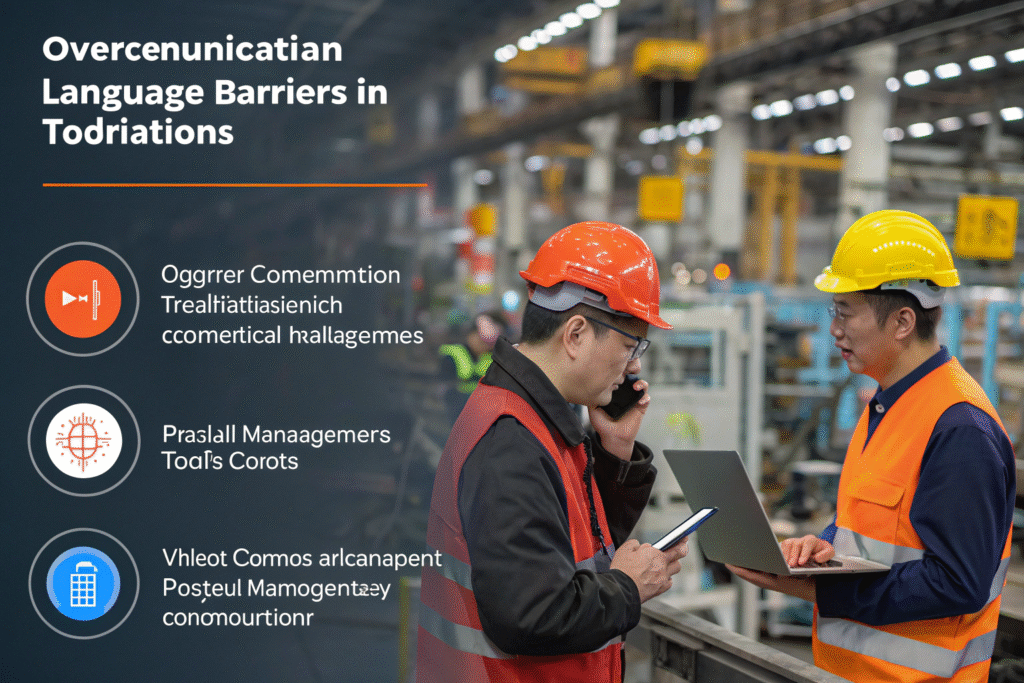
Professional translation software like Trados handles technical documents. For specifications, quality standards, and technical drawings, professional-grade translation tools provide accuracy that generic apps cannot match.
Real-time translation devices facilitate spoken communication. Tools like Pocketalk and Timekettle enable relatively smooth conversations during factory visits and video calls, though they still require verification for critical information.
Bilingual project management platforms create shared understanding. Systems like Jira, Asana, or custom platforms with bilingual interfaces ensure all stakeholders reference the same information despite language differences.
What Communication Platforms Work Best for Daily Operations?
WeChat remains essential for relationship building and quick communication. While not perfect for complex technical discussions, WeChat's voice messages, translation features, and file sharing make it indispensable for daily factory communication.
Dedicated email protocols prevent misinterpretation. Using simplified English, visual attachments, and confirmation requests in emails reduces misunderstandings that occur with complex language.
Video conference platforms with recording capabilities create reference materials. Recording Zoom or Teams calls allows review by bilingual staff to catch nuances that real-time participants might miss.
How Can You Develop Effective Bilingual Documentation?
Clear, unambiguous documentation forms the foundation of successful communication across language barriers, requiring specific strategies beyond simple translation.
What Makes Technical Documentation Effective Across Languages?
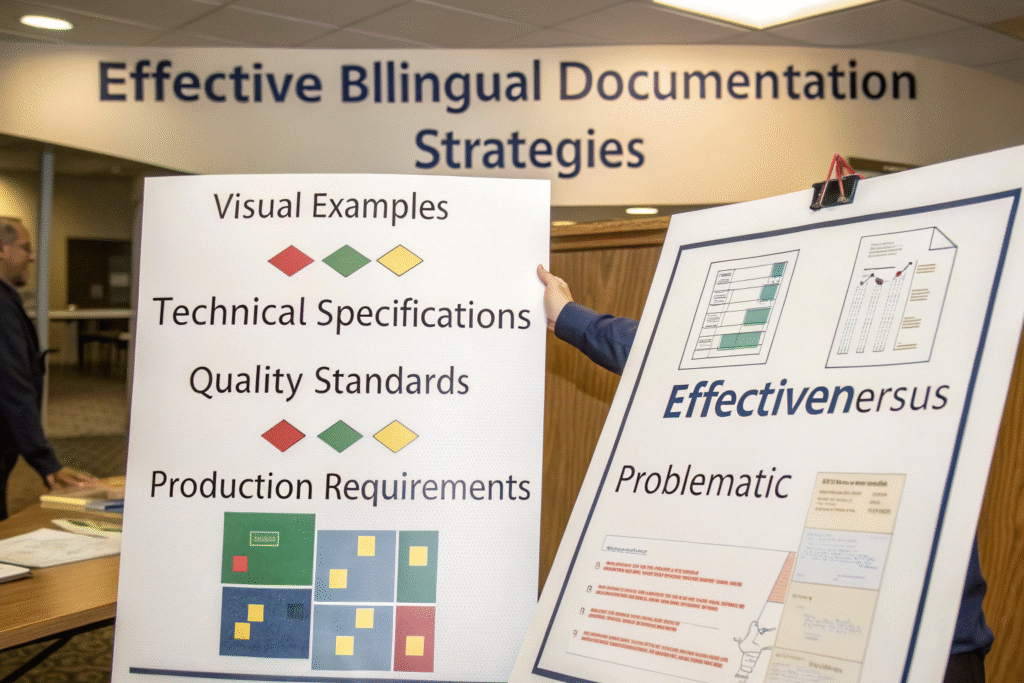
Visual specifications eliminate interpretation ambiguity. Instead of describing requirements textually, use annotated diagrams, photographs with callouts, and color-coded drawings that transcend language barriers.
Simplified technical English with controlled vocabulary improves comprehension. Using limited vocabulary, short sentences, and active voice makes translated content more accurate and understandable.
Bilingual format with side-by-side translation enables verification. Presenting source and translated text together allows bilingual team members to spot translation errors before they cause production mistakes.
How Should Quality Standards Be Communicated Clearly?
Reference samples with sealed approval sets create tangible standards. Physical samples approved and sealed by both parties provide unambiguous quality benchmarks that don't require language interpretation.
Numerical specifications with tolerances prevent subjective assessment. Instead of "high quality finish," specify "surface roughness Ra ≤ 0.8μm" with photographic examples of acceptable and unacceptable results.
Standardized inspection protocols with photographic examples ensure consistent evaluation. Develop inspection sheets with photos of defects at various severity levels to align quality assessment despite language differences.
What Role Do Bilingual Staff and Interpreters Play?
While technology provides valuable tools, human expertise remains essential for nuanced communication, relationship building, and complex problem-solving.
When Should You Use Professional Interpreters Versus Bilingual Staff?
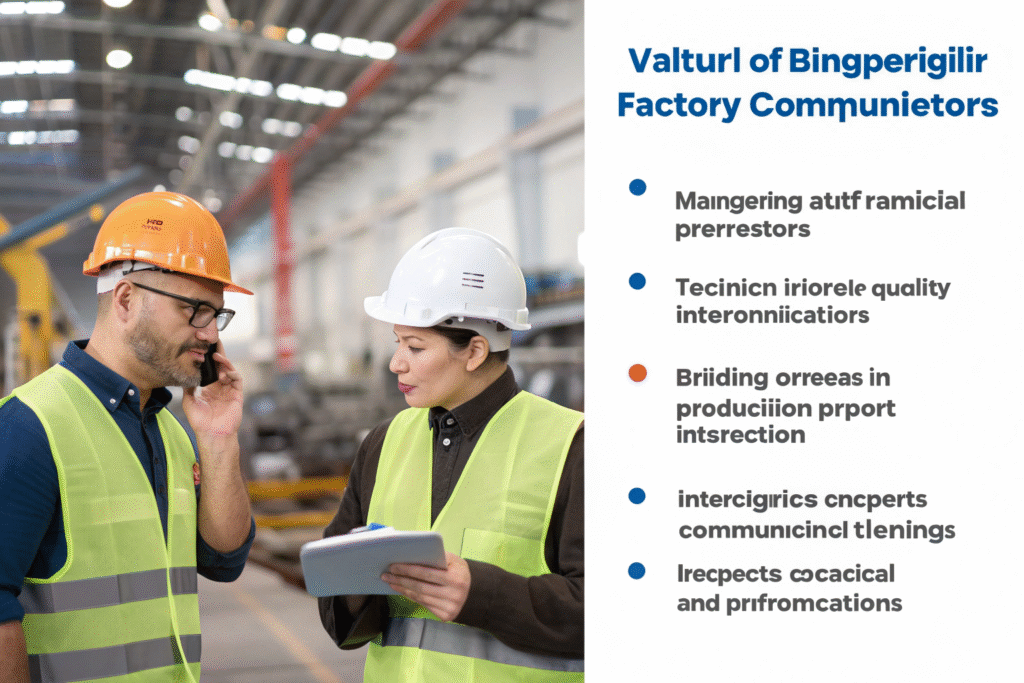
Complex technical discussions require specialized interpreters. For discussions involving engineering tolerances, material specifications, or manufacturing processes, professional technical interpreters prevent costly misunderstandings.
Relationship building benefits from consistent bilingual liaisons. Having designated bilingual account managers who understand both business cultures fosters trust and prevents communication breakdowns.
Quality control inspections need bilingual quality staff. During pre-shipment inspections, having bilingual quality staff prevents miscommunication about defect classification and severity assessment.
How Can You Maximize Effectiveness of Bilingual Team Members?
Cultural training enhances communication beyond literal translation. Bilingual staff who understand both Western and Chinese business cultures can navigate unspoken expectations and contextual nuances.
Technical knowledge enables accurate terminology translation. Bilingual team members with engineering or manufacturing backgrounds translate technical concepts more accurately than general translators.
Structured communication protocols prevent information loss. Using standardized reporting formats, confirmation processes, and escalation procedures ensures critical information isn't lost in translation.
How Does Relationship Building Overcome Language Barriers?
Strong relationships create communication safety nets where trust and understanding compensate for language limitations.

What In-Person Interactions Build Communication Effectiveness?
Factory visits demonstrate commitment and build personal connections. Regular visits, even with language limitations, show suppliers you're invested in the relationship, encouraging their extra effort to ensure clear communication.
Social interactions outside business settings build trust. Shared meals, cultural activities, and informal conversations create personal bonds that improve communication during business discussions.
Meeting multiple team members creates communication redundancy. Building relationships with different departments (production, quality, engineering) prevents communication bottlenecks through single contacts.
How Can You Build Relationships Remotely?
Regular video calls maintain personal connections. Seeing faces and body language during video conferences provides communication context that pure audio or written communication lacks.
Cultural sensitivity demonstrates respect and builds goodwill. Understanding Chinese holidays, business customs, and communication styles shows respect that suppliers reciprocate with clearer communication.
Consistent communication patterns create familiarity. Regular updates, predictable response times, and structured meetings help suppliers understand your communication style despite language differences.
What Production Communication Protocols Prevent Errors?
Structured communication processes at critical production stages prevent the misunderstandings that cause costly errors and delays.
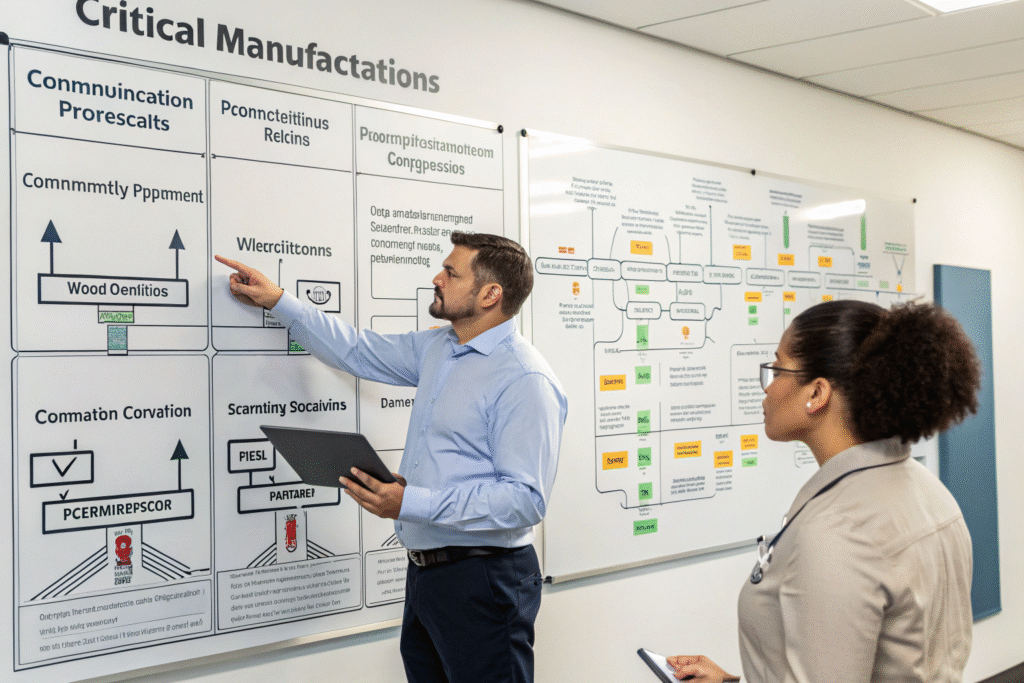
What Communication Standards Prevent Misunderstandings?
Confirmation protocols ensure mutual understanding. After important discussions, require written confirmation of key points in both languages to verify accurate understanding before action.
Milestone communication checkpoints prevent project drift. Establish specific production stages where formal communication and approval are required before proceeding to the next phase.
Visual project management creates shared progress awareness. Using Gantt charts, Kanban boards, or other visual tools helps both sides track progress without language-dependent status reports.
How Should Quality Issues Be Communicated Effectively?
Standardized defect classification with visual examples. Create defect catalogs with photos, severity ratings, and bilingual descriptions to ensure consistent understanding of quality issues.
Structured problem-solving protocols guide issue resolution. Use standardized formats like 8D reports or A3 problem-solving that structure communication about defects and corrective actions.
Escalation procedures for communication breakdowns. Define clear steps when communication fails, including who to contact and how to escalate to ensure critical issues get proper attention.
What Cultural Understanding Improves Communication?
Cultural differences impact communication beyond literal language translation, affecting expectations, interpretations, and relationship dynamics.

How Do Communication Styles Differ Across Cultures?
Indirect communication styles require reading between lines. Chinese communication often implies rather than states problems directly, requiring attention to subtle cues and unspoken concerns.
"Face" preservation influences problem communication. Chinese partners may avoid directly stating problems to prevent causing embarrassment, requiring careful questioning to uncover issues.
Relationship hierarchy affects information flow. Junior staff may not contradict senior managers even when they spot errors, requiring communication with appropriate authority levels.
What Cultural Adaptation Improves Communication Effectiveness?
Adapting meeting styles to cultural preferences. Understanding preferred communication approaches (formal versus informal, direct versus indirect) improves information exchange.
Learning basic Chinese business etiquette. Understanding proper greetings, business card exchange, and meeting protocols demonstrates respect that improves communication receptiveness.
Understanding decision-making processes. Recognizing how decisions are made in Chinese organizations helps direct communication to appropriate stakeholders.
Conclusion
Overcoming language barriers with Chinese factories requires a comprehensive approach that combines technology, human resources, structured processes, and cultural understanding. The most successful companies treat cross-cultural communication as a strategic capability rather than an operational challenge, investing in systems and relationships that ensure clarity despite language differences.
At GeeseCargo, we've helped clients reduce communication-related production errors by an average of 65% through implemented communication frameworks. The most effective approaches begin with acknowledging that perfect communication is impossible, then building multiple layers of verification and redundancy to catch misunderstandings before they cause significant problems.
Begin your communication improvement by auditing your current communication pain points, then systematically addressing the highest-impact areas with appropriate tools, processes, and resources. Remember that overcoming language barriers isn't about achieving perfect translation—it's about creating systems that ensure understanding despite inevitable communication imperfections.