Your Shopify store just had its best month ever. Sales tripled overnight after a TikTok influencer posted about your product. You celebrated for about five minutes. Then you looked at your inventory spreadsheet and realized you have 14 days of stock left, your factory needs 30 days to produce more, and your current freight forwarder takes 35 days door-to-door. You are about to stock out, and the algorithm will punish your listing with a rankings cliff.
GeeseCargo scales your e-commerce logistics by building a flexible, multi-tier shipping pipeline that grows with your sales volume. We replace your single-speed ocean freight with a three-lane system: economy ocean for baseline replenishment, express ocean for rapid restocking, and integrated air freight for emergency stock-outs. We also connect your sales platform directly to our shipment data, so inventory forecasting and freight status live in one dashboard. You scale from 500 orders a month to 5,000 without your supply chain breaking.
Scaling is not just about moving more boxes. It is about moving them at the right speed, at the right cost, with the right data. When you are small, you can manage with emails and spreadsheets. When you grow, those manual tools fail, and the cost of a stock-out grows exponentially with your traffic. I want to show you the specific logistics architecture we build for e-commerce brands that are ready to break through the next revenue ceiling.
How Do You Build a Scalable Freight Model for a Growing E-Commerce Brand?
You started with one product and one shipment a month. Now you have 15 SKUs, seasonal variations, bundle deals, and a wholesale channel alongside your DTC site. Your old shipping rhythm of "order when inventory is low" no longer works. You have cash tied up in inventory that is stuck on a slow boat, while your best-selling SKU just sold out.
We build a scalable freight model by segmenting your inventory by velocity. Fast-moving SKUs that generate 80% of your revenue go on the express ocean lane with a 15-to-18-day transit. Slow-moving SKUs and baseline stock go on the economy ocean lane at the lowest cost per unit. Emergency stock of top sellers is held at our Shenzhen warehouse, ready for air freight dispatch within 24 hours. This tiered model keeps your inventory turning at the speed of your sales, not the speed of a single container.
I worked with a direct-to-consumer kitchenware brand that was scaling from $50,000 a month in revenue to $200,000. Their single-product success had spawned a full product line. They were shipping everything via standard ocean freight: 30 days from factory to their 3PL in Dallas. The problem was that their best-selling SKU, a specific knife set, would sell out in two weeks, while the slower-selling cutting boards would last three months. They had to reorder the entire collection just to get more knife sets. They were drowning in slow-moving inventory while constantly stocking out of their hero product.
We split their pipeline. The knife sets moved to our express ocean lane. We shipped a dedicated 20-foot container of knife sets every two weeks. Transit was 15 days. The cutting boards and other slow movers stayed on a monthly economy consolidation. The result was immediate. Their knife set stock-out rate dropped to near zero. They stopped over-ordering on slow movers. Their inventory carrying cost as a percentage of revenue dropped by 30%. Their cash flow improved because they were not pre-buying three months of slow-moving stock just to fill a container. The tiered model matches your freight spend to your sales velocity. You pay a premium for speed only on the products that actually need it. Everything else rides on the cost-optimized lane. This is the scalable freight architecture that flat-lines your logistics cost per unit even as your sales volume doubles.
How Do You Forecast Inventory Velocity for Your SKUs?
You look at your sales dashboard and see that SKU A sold 500 units last month. You order 500 more. But that 500 was a spike driven by a promotion. Next month, without the promotion, you sell 150. You now have 350 units of excess inventory. Your forecasting was based on a single data point, not a trend.
We integrate your sales data into our inventory planning tool. We connect to your Shopify, Amazon Seller Central, or WooCommerce backend via API. Our system pulls 90 days of order history by SKU. It calculates the average daily sales velocity and the sales trend direction. It then projects your weeks of cover remaining based on your current stock at the 3PL and the goods in transit. When the cover drops below your defined safety stock threshold, typically 4 weeks, the system triggers a replenishment alert. We do not just send an email. We present a recommended order quantity: enough units to fill the pipeline and bring your cover back to the target level. This inventory velocity forecasting removes the guesswork and the emotional ordering that leads to cash-sucking overstock. You make data-driven replenishment decisions.
What Is the Difference Between Economy and Express Ocean Lanes?
You see two ocean freight options. One is $2,500 and takes 30 days. The other is $3,500 and takes 16 days. You always pick the cheaper one because you see the $1,000 saving. But you do not see the cost of the extra 14 days of inventory sitting on the water. During those 14 days, you could have sold the goods and turned the cash into more inventory.
The economy lane uses a consolidation model. Your goods wait for a full container to build, then move on a standard vessel, then wait for deconsolidation at the destination. Each waiting period adds days. The express lane uses our priority FCL model. Your goods go into a dedicated container immediately. The container goes on the next direct vessel departure. At the destination, the container is discharged and picked up within 24 hours. The express lane costs more in freight, but it reduces your cash-to-cash cycle time. If your inventory turns four times a year on the economy lane, it might turn six times a year on the express lane. The extra inventory turns often generate more gross profit than the freight premium costs. We model this for our clients. We do not just quote the freight rate; we calculate the total landed cost including the cost of the inventory sitting idle. The express lane is often the more profitable choice for fast-selling products.
How Does a China-Based Fulfillment Center Speed Up Your Supply Chain?
Your factory is in China. Your customers are in the US and Europe. You ship bulk inventory to a US 3PL and fulfill from there. That works, but it means you must predict demand 45 days in advance. You must commit capital to bulk inventory before you know which SKU will sell. If a new product goes viral, you cannot fulfill it for six weeks.
We offer a China-based direct fulfillment option through our Shenzhen warehouse. You hold a small buffer stock of your full product line in our bonded warehouse. When an order comes in on your website, we pick, pack, and ship it directly to your international customer via express courier. You do not need a US 3PL. You do not need to ship bulk inventory across the ocean before you know it will sell. This model lets you launch new products, test markets, and fulfill orders with zero upfront inventory investment at the destination country.
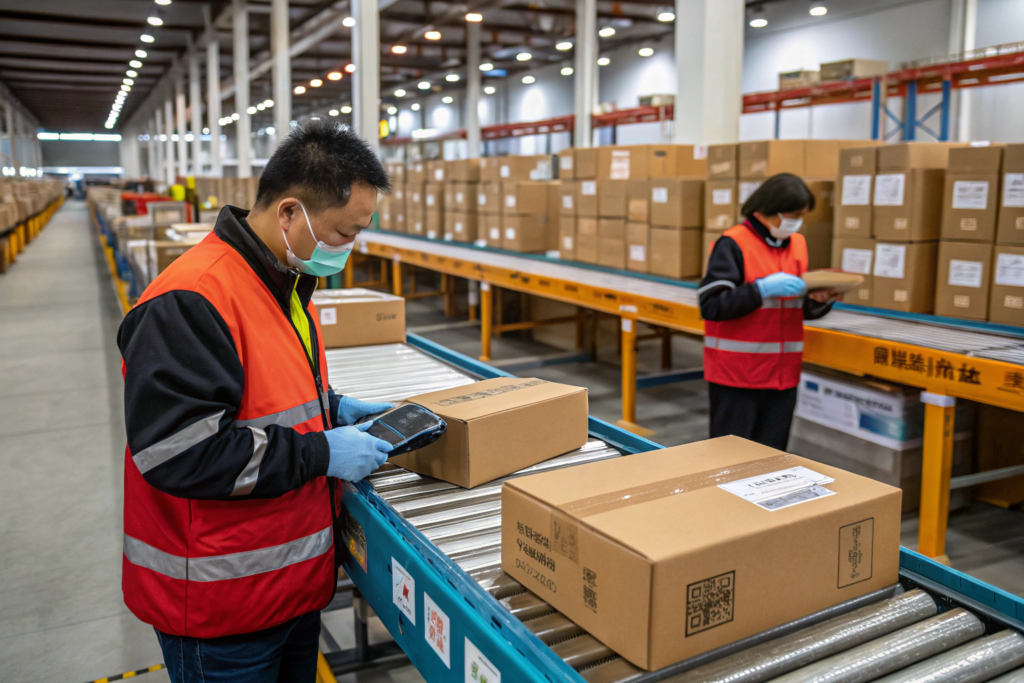
This model is called direct fulfillment or dropshipping from origin, but we add a layer of professionalism that a factory cannot provide. A factory can ship a box. We provide branded packaging, gift wrapping, quality control, and integration with your e-commerce platform. When a customer orders on your Shopify store, the order data flows via API into our warehouse management system. Our picker receives the order on a handheld scanner. He walks to the shelf location, picks the product, scans the barcode to verify the SKU, and brings it to the packing station. The packer wraps the product in your branded tissue paper, places it in your custom mailer box, inserts your thank-you card, applies the shipping label, and places it in the outbound courier cage. DHL, FedEx, or a local postal service picks up the packages at the end of the day. The tracking number is pushed back to your Shopify store, and your customer receives an automated shipping confirmation email. The entire process from online order to courier pickup takes under 4 hours. The transit time from our Shenzhen warehouse to a customer in the US is typically 5 to 10 days via express courier, or 10 to 20 days via a cheaper postal service. This direct model completely decouples your fulfillment from destination-country warehousing. It is the ultimate flexible supply chain for a scaling brand.
How Can You Test New Markets Without Overseas Warehousing?
You want to try selling in the UK and Australia. You do not want to set up a UK limited company, register for VAT, and lease warehouse space just to test the market. The barrier to entry is too high for a test. So you never expand beyond the US.
With our direct fulfillment model, you can ship to any country in the world from our Shenzhen warehouse. We know the customs requirements for the major e-commerce markets. We pre-clear packages to the UK with the correct HS6 codes and the VAT pre-paid under the IOSS scheme. We ship to Australia with the correct biosecurity declarations. We handle the cross-border complexity so you just see an international sale on your Shopify dashboard. You can test the UK market with 100 units of stock. If the market responds, you can scale. If it does not, you have not signed a warehouse lease or registered for foreign tax. This global market testing capability is a strategic advantage that direct-to-consumer brands use to find new revenue streams without risk.
What Is the Integration Process Between Our Warehouse and Your Shopify Store?
You worry that connecting your store to a warehouse in China is a technical nightmare. You imagine CSV files, manual data entry, and orders getting lost in translation. Your developer is busy, and you cannot handle a broken integration during peak sales.
The integration takes about 30 minutes and requires no coding. We use a pre-built connector app for Shopify, WooCommerce, and Amazon. You install the app, log in with the credentials we provide, and authorize the connection. The app syncs your product catalog with our warehouse system. You map your SKUs to our inventory SKUs once. After that, orders flow automatically. Unfulfilled orders appear in our system with the customer’s name, address, and ordered items. Our team processes them. The tracking number, courier name, and fulfillment status update back to your store automatically. Your customer sees the tracking update in their account. The entire data flow is real-time and automated. You can log into the app dashboard and see your inventory levels in our warehouse, the order processing queue, and the historical fulfillment performance. This transparency gives you control over the fulfillment operation even though it is happening thousands of miles away.
How Do You Manage Inventory Across Multiple Sales Channels?
You sell on your Shopify store, on Amazon FBA, on Walmart Marketplace, and wholesale to a boutique chain. Each channel has different inventory requirements, different labeling standards, and different delivery addresses. You manage inventory in a spreadsheet. The spreadsheet is wrong. You oversell on one channel and under-stock on another. Your operations are a duct-taped mess.
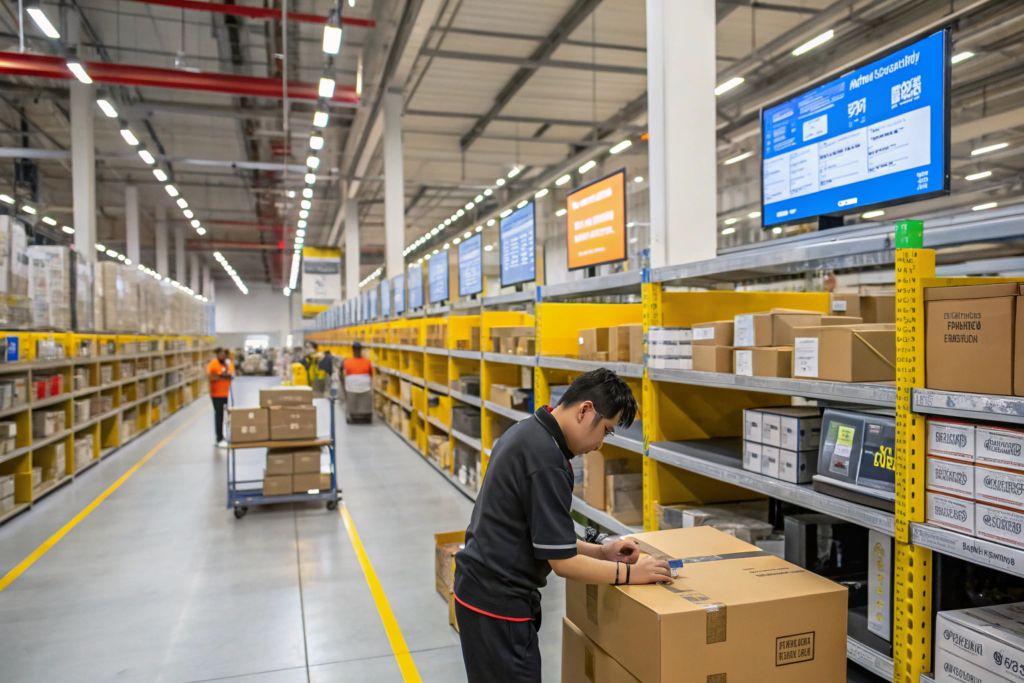
We provide a unified inventory pool in our Shenzhen warehouse that feeds all your sales channels. You hold one stock of finished goods. We allocate the inventory to channels based on your defined rules. For FBA, we label and palletize to Amazon’s standards and ship in bulk. For Shopify, we hold the stock for direct fulfillment. For wholesale, we pick and pack bulk orders to your retailer’s distribution center. One inventory pool, visible in one dashboard, deployed across all channels.
The multi-channel inventory problem is the silent killer of scaling brands. I have seen a brand oversell on Amazon because the inventory was physically in their Shopify warehouse, but the spreadsheet said it was in the Amazon pool. They had to cancel Amazon orders, their account health metric tanked, and they nearly lost the Buy Box. The solution is to un-pool the physical inventory and virtualize the allocation.
In our warehouse, your goods are stored in a single, physical location. The barcode on the shelf says your brand name and the SKU number. It does not say "Amazon" or "Shopify." Our system holds a digital allocation layer. You log into your portal and set channel priorities and minimum stock levels. For example, you might say "Amazon FBA always gets a minimum of 200 units. Shopify direct fulfillment gets a minimum of 50 units. Wholesale orders are fulfilled from any remaining stock." The system enforces these rules automatically. When a wholesale order comes in, the system checks if fulfilling it would drop the Amazon buffer below 200. If it would, the system alerts our team and we contact you for a decision. This prevents one channel from accidentally consuming the stock needed for another. The inventory is shared, not fragmented. You hold less total safety stock because the stock you hold protects all channels simultaneously. This multi-channel inventory synchronization reduces your total working capital tied up in safety stock.
How Do You Prepare Inventory for FBA While Also Fulfilling Shopify Orders?
You have 1,000 units in stock. You need to send 300 to FBA and hold 100 for direct fulfillment. The factory will only ship a sealed master carton of 400 units. You cannot split it. You end up shipping all 400 to FBA, and your direct channel stocks out.
Our warehouse does the splitting for you. The factory ships a single master carton or a full container to our warehouse. We receive it, count it, and put the units into our inventory system. We then fulfill the different channel requirements from that single inbound receipt. We pick 300 units, label them with FBA carton and unit labels, palletize them to Amazon’s specifications, and ship them to the assigned fulfillment center. We pick 100 units and move them to the direct fulfillment shelf. We pick 50 units for a wholesale order and pack them on a pallet for the retailer’s DC. The remaining 50 units stay in bulk storage for the next cycle. The factory only has to deal with one shipment. You only have to manage one inbound delivery. We do the channel segmentation and the different packaging and labeling requirements for each channel. This is the kind of operational friction we remove so you can focus on marketing and product development.
How Do We Handle Kitting and Bundling for E-Commerce Promotions?
You want to run a holiday promotion: "Buy the main product, get the accessory free." You package them together in a special gift bundle. Your factory cannot do this because the products come from two different factories. You need a place where the two products meet and become one bundle before shipping.
Our Shenzhen warehouse performs kitting and bundling services. Factory A ships the main product. Factory B ships the accessory. We receive both into our warehouse. Our team then assembles the bundle: the main product and the accessory are placed together into a single new polybag or gift box. A new FNSKU barcode label for the bundle is applied. We update the inventory system: the two individual SKUs are decremented, and the new bundle SKU is incremented. This kitted bundle can then be shipped to FBA as a single unit, fulfilled directly to a customer, or sent to a wholesale account. We can also do simple value-add services like inserting a promotional flyer, applying a discount code sticker, or affixing a "limited edition" hang tag. These kitting services let you create marketing-driven product offerings without investing in factory tooling or minimum order quantities. You can test a bundle idea with 100 units before you commit to a full production run.
How Do We Provide Real-Time Visibility Into Your Expanding Supply Chain?
Your brand is now doing 2,000 orders a month. You have inventory in a US 3PL, a container on the water, production in progress at two factories, and a direct fulfillment hub in Shenzhen. You have no single source of truth. You check tracking numbers manually. You email the factory for production updates. You log into the 3PL portal and count units in your head. Your supply chain visibility is a collection of separate logins and prayer.
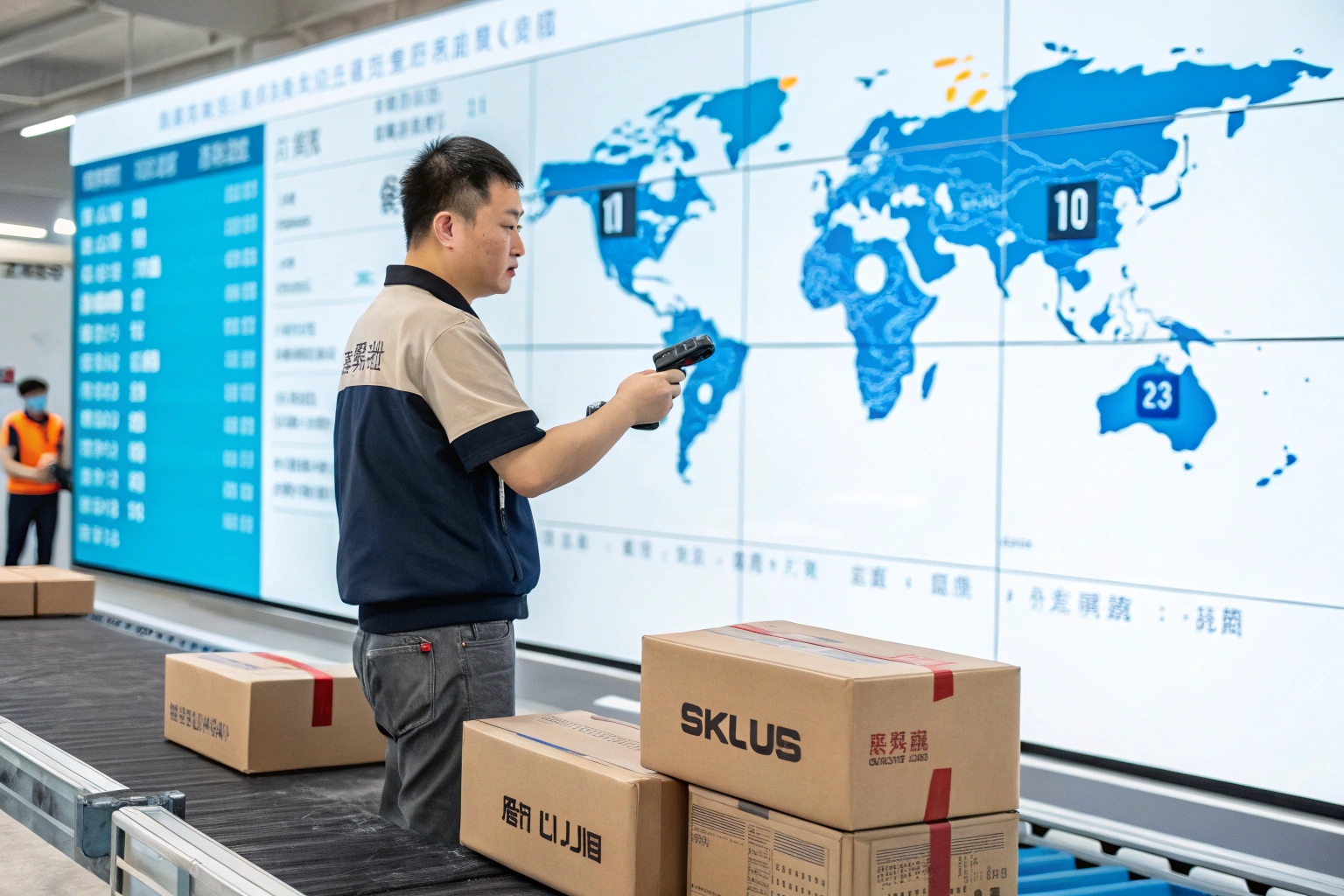
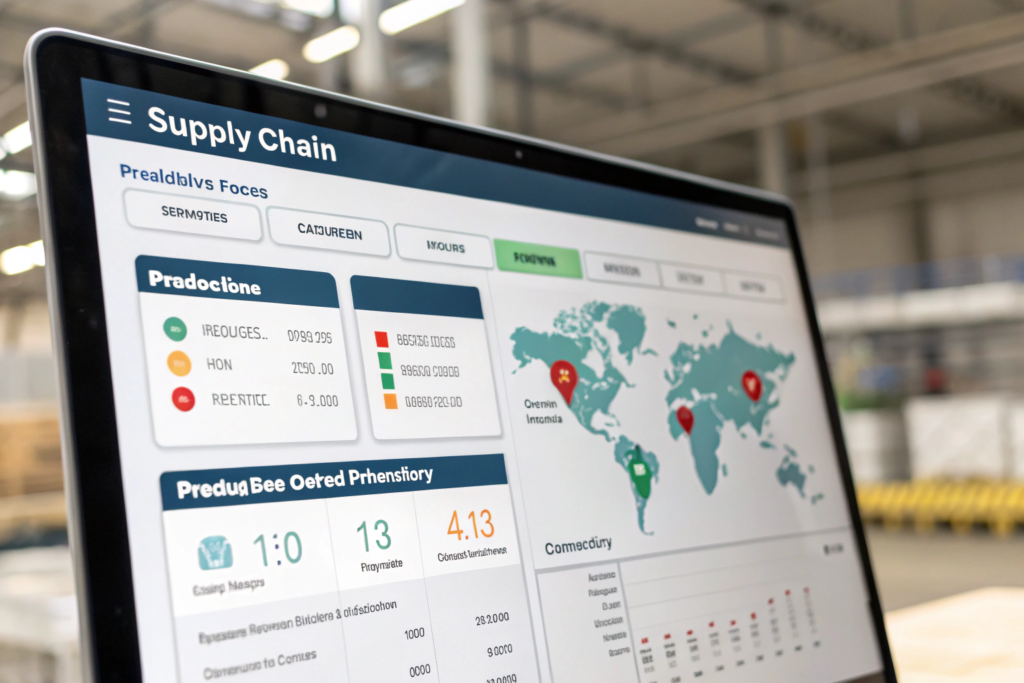
We provide a single, real-time supply chain dashboard that connects every node of your operation. The dashboard shows your production status at the factory, your inventory levels at our Shenzhen warehouse, the live location of your ocean containers via satellite GPS, the customs clearance status, the delivery ETA to your 3PL, and the direct fulfillment orders processed. You do not piece together information from five different emails. You open one browser tab and see your entire supply chain.
This visibility is not a "nice to have." It is the difference between catching a stock-out risk with two weeks to react, and discovering it when the stock is already zero. One of our clients, a fast-growing pet accessory brand, used to discover stock-outs when their 3PL sent a "low inventory" email. By the time the email arrived, the stock was often already gone, and the next container was three weeks away. They would lose a full week of sales on their best-selling leash every quarter.
We connected their supply chain to our dashboard. Now, the system tracks the inventory at the 3PL, subtracts the daily sales velocity, and projects the stock-out date. It also tracks the container ETA and subtracts the 3PL receiving and check-in time. If the projected stock-out date is before the projected in-stock date, the dashboard shows a red warning. The client sees this warning two to three weeks before the stock-out actually happens. They can then make a decision: air freight a small batch to cover the gap, slow down ad spend to stretch the remaining stock, or notify their customers about a coming back-in-stock date. They are no longer reacting to a crisis. They are managing the supply chain proactively. This supply chain visibility platform is the command center for a scaling e-commerce operation. We give it to you as part of our service, not as an expensive add-on.
How Does Container GPS Tracking Prevent Planning Surprises?
Your forwarder tells you the container will arrive in 25 days. You plan your promotions around that date. The container is actually delayed by a port congestion in Busan that your forwarder did not tell you about. Your promotion launches, you sell out in three days, and the new stock is still a week away. Customers are angry, and you have to issue refunds.
We use satellite GPS trackers on every ocean container. The tracker is a small device that attaches magnetically to the inside of the container door. It reports the container’s exact GPS location, temperature, humidity, and shock events every few hours via satellite. You see the container’s position on a map in your dashboard. You see if the vessel is anchored outside the port of Los Angeles waiting for a berth. You see if the container is moving on a truck from the port to your 3PL. This live data eliminates the information black hole that exists between the port of departure and the delivery dock. If a delay occurs, you know about it the same day it happens, not three days later when the forwarder gets around to emailing you. You can adjust your promotional calendar in real-time based on the actual, not the estimated, location of your inventory.
How Do We Connect Order Data to Freight Data for Better Decisions?
Your marketing team plans to launch a Facebook ad campaign for a specific SKU. They ask the operations team if there is enough inventory. Operations checks the 3PL stock and says "yes." But the 3PL stock is already allocated to a wholesale order that was booked but not yet shipped. The campaign launches, the wholesale order ships, and suddenly the e-commerce stock is zero. The ads are wasted spending.
Our dashboard connects your order data to your freight data. It shows not just physical inventory, but "available inventory." Available inventory is the physical stock minus allocated orders that have not yet shipped. It also shows "pipeline inventory," which is the goods in transit that will become available by a specific date. When your marketing team asks "can we run a campaign on this SKU?" the operations team can look at the dashboard and see: available now is 200 units, pipeline arriving in 7 days is 500 units. Yes, you can run the campaign because the pipeline covers the projected demand spike. This connected view of sales orders, physical stock, and freight in transit lets you make confident, data-driven decisions about promotions, pricing, and inventory allocation. It turns your supply chain from a reactive cost center into a strategic planning tool.
Conclusion
Scaling an e-commerce brand from a side hustle to a real business is a logistics challenge as much as a marketing challenge. You can drive all the traffic in the world, but if the inventory is not on the shelf when the customer clicks "buy," you have wasted your ad spend and damaged your brand reputation. The supply chain is the backbone of your growth, not an afterthought.
At GeeseCargo, we built our services specifically for e-commerce brands that are scaling. Our tiered ocean freight model lets you balance cost and speed. Our Shenzhen-based direct fulfillment center lets you launch new products and test new markets without destination-country warehousing. Our unified inventory pool feeds all your sales channels from one stock of goods. Our real-time supply chain dashboard connects your factory, our warehouse, the ocean container, and your 3PL into a single pane of glass. We remove the operational friction that slows down growing brands.
You should not have to become a logistics expert to scale your e-commerce business. You need a logistics partner who understands your unit economics, your inventory turnover, and your customer experience standards. If you are ready to build a supply chain that can handle 5,000 orders a month as smoothly as 500, go to GeeseCargo.com and let’s map out your growth logistics plan. Send me your current sales data, and I will show you exactly how a tiered freight model can reduce your stock-out risk and improve your cash flow while you scale.