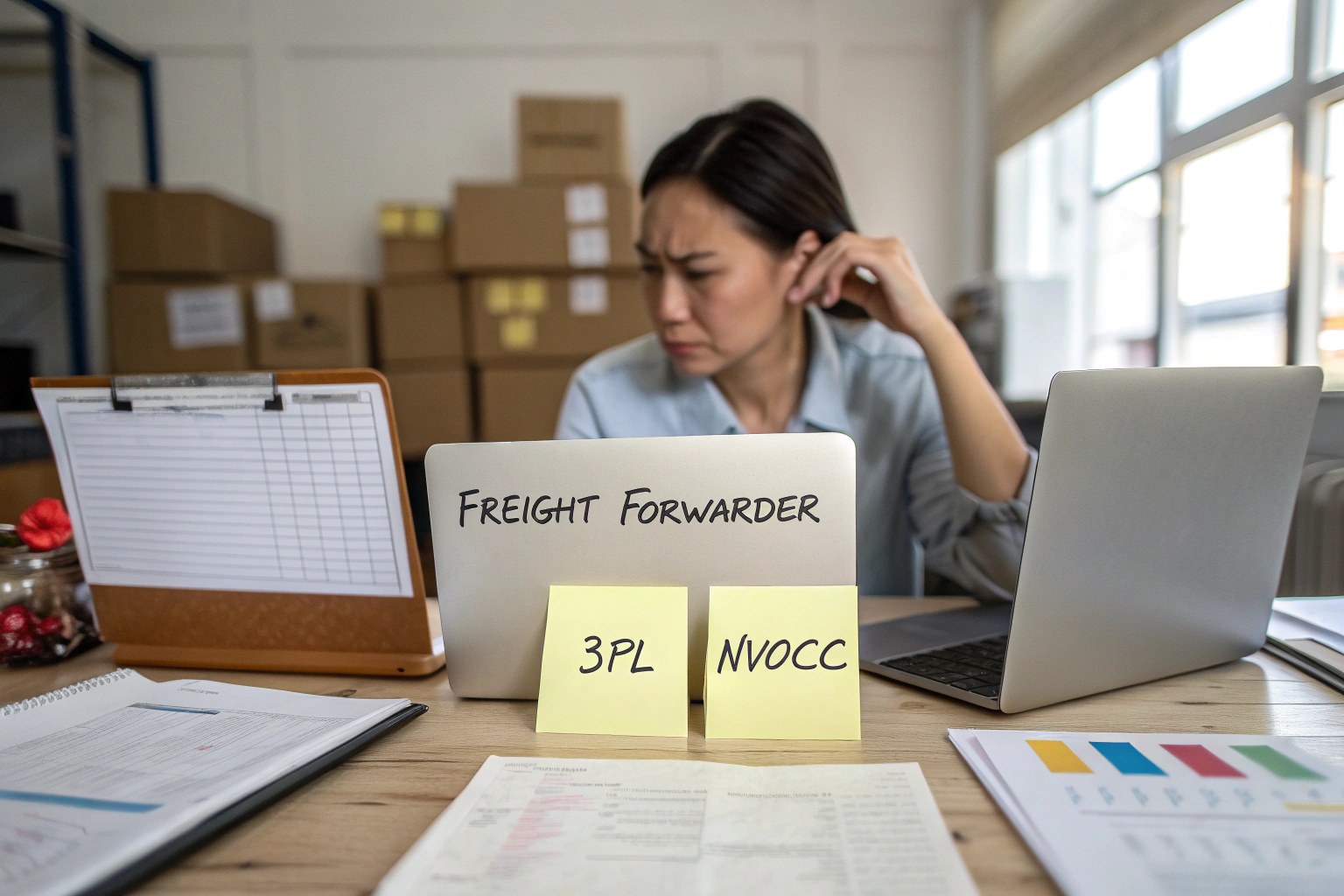
You search for logistics help. The internet throws three terms at you. Freight Forwarder. 3PL. NVOCC. They sound interchangeable. The salespeople from each type all claim they can handle your China-to-US shipments. But choose the wrong one, and you’re paying for services you don’t need or missing capabilities you desperately require. Your clothing brand needs something different from a giant retailer. Your giftware company has different needs than an electronics distributor. The wrong partner choice creates gaps that don’t appear until your cargo is stuck and nobody is solving the problem.
GeeseCargo recommends that US importers sourcing from China work with a licensed freight forwarder that also holds NVOCC authority and offers integrated DDP services. We fill exactly this role. A pure 3PL is often too broad and lacks China-specific origin expertise. A standalone NVOCC is too narrow and only handles the ocean leg. A full-service freight forwarder with NVOCC credentials bridges the entire journey from Chinese factory to US warehouse.
I’ve spent years explaining these distinctions to confused importers. They come to me after a 3PL failed to manage their Chinese suppliers. Or after an NVOCC quoted a great ocean rate but couldn’t help when customs flagged their shipment. The logistics industry loves jargon. I love clarity. Let me break down exactly what each partner type does, where they fail, and why the GeeseCargo model exists to fill the gaps.
What Exactly Does a Freight Forwarder Do That a 3PL and NVOCC Don’t?
The term "freight forwarder" gets thrown around loosely. In the strict sense, a freight forwarder is your logistics architect for international shipments. We design the routing. We book the carrier. We handle the export documentation. We manage the origin and destination logistics. We are the single point of accountability for a shipment moving across borders. A forwarder doesn’t just arrange transport. They take legal responsibility for the cargo under their bill of lading.
We operate as your international logistics command center. Unlike a 3PL, which typically focuses on domestic warehousing and fulfillment, we specialize in cross-border movements. Unlike a pure NVOCC, which is essentially a container consolidator for the ocean leg, we manage the entire door-to-door process including customs clearance at both ends.
I once had a client who hired a domestic 3PL to manage his China imports. The 3PL was excellent at US warehousing and last-mile delivery. But they had no presence in China. They couldn’t book a truck in Shenzhen. They couldn’t negotiate with a Chinese customs broker. They subcontracted the entire origin process to an unknown agent. The client paid a premium for a 3PL brand name but received fragmented, disconnected service. A freight forwarder with origin expertise does the entire job without subcontracting the hard part.
Why Does Origin Expertise in China Matter More Than Destination Capabilities?
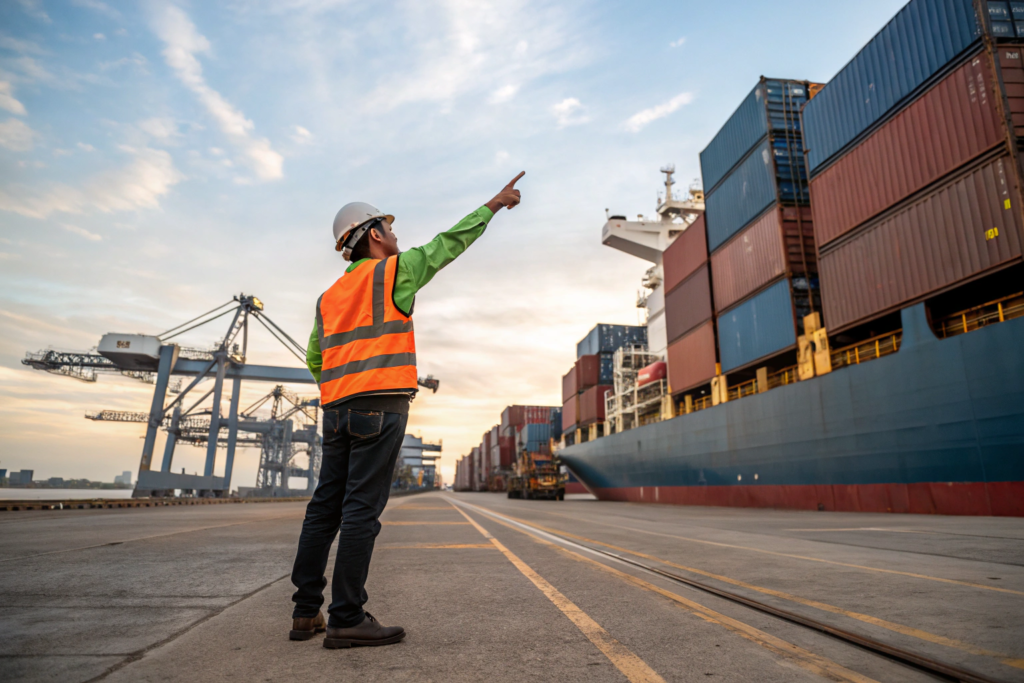
Anyone can find a truck in Los Angeles. The US logistics market is transparent and competitive. China is different. Relationships with port officials matter. Knowledge of which factory regions produce which commodities matters. The ability to resolve a last-minute documentation issue at the port of loading requires someone physically present who speaks the language and knows the system.
A 3PL based in Chicago doesn’t have this. An NVOCC might have a booking desk in Shanghai but lacks the broader origin services. We live this daily. Our team is on the ground in China’s major port cities. We know the terminal managers. We know the customs officials. This logistics origin presence is the hardest capability to replicate and the most valuable when problems arise at loading.
How Does a Forwarder’s Legal Responsibility Differ from a 3PL’s?
A 3PL typically acts as an agent. They arrange services but don’t take carrier responsibility. If the truck crashes, the 3PL points to the trucking company. If the warehouse loses inventory, they point to the warehouse operator.
A freight forwarder issuing their own bill of lading acts as the carrier. We take legal responsibility for the cargo from receipt to delivery. This distinction matters when something goes wrong. You have one party to hold accountable. One party with a direct legal obligation to deliver your goods in the condition they were received. This freight forwarder liability framework gives you stronger recourse than a web of subcontracted agent relationships.
What Is an NVOCC and When Is It Sufficient for Your Import Needs?
NVOCC stands for Non-Vessel Operating Common Carrier. It’s a license that allows a company to issue their own ocean bills of lading and consolidate cargo from multiple shippers into full containers. An NVOCC buys space from the actual vessel operators and resells it to importers like you. They are ocean specialists. They are not door-to-door logistics providers.
An NVOCC is sufficient if you only need an ocean rate and a container booking, and you already have factory trucking, origin customs, destination customs, and final delivery handled by other providers. Most importers don’t have this infrastructure. Most importers need more than what a pure NVOCC offers.
I respect NVOCCs. We hold an NVOCC license ourselves. It’s a critical part of our capability set. But an NVOCC alone is not a supply chain partner. I’ve seen importers book directly with an NVOCC for a cheap ocean rate, then scramble to coordinate the factory truck, the export declaration, the destination clearance, and the inland delivery separately. They saved $200 on ocean freight and spent $2,000 worth of their own time and stress managing the pieces. The NVOCC delivered exactly what they promised. The importer just didn’t realize how much they weren’t promising.
What Are the Limitations of a Pure NVOCC When Customs Problems Arise?
An NVOCC handles the ocean bill of lading. They generally do not handle customs brokerage. When your container arrives and customs flags it for exam, the NVOCC’s responsibility is technically complete. The container is at the terminal. The rest is your problem.
You need a customs broker at that point. If you don’t have one, you’re scrambling. A full-service forwarder includes brokerage in the service package. The same company that booked the ocean freight manages the clearance. No gap. No finger-pointing between the NVOCC and a separate broker you hired.
How Does Container Consolidation Work Under an NVOCC Model?
NVOCCs consolidate smaller shipments from multiple importers into a single container. This is how less-than-container-load service works. The NVOCC is the consolidator.
This is a valuable service for smaller importers. We provide it. But a pure NVOCC relationship often means you’re one of many anonymous shippers in a consolidated box. The NVOCC doesn’t know your product. They don’t care about your delivery timeline. They fill the container and ship it. A forwarder offering consolidation as part of a broader service manages your specific cargo with your specific priorities in mind. Same consolidation function, completely different service level.
What Is a 3PL and Where Does It Fall Short for International Importers?
3PL stands for Third-Party Logistics Provider. The term covers a huge range of services, but typically a 3PL manages warehousing, inventory, pick-and-pack fulfillment, and domestic transportation. They are the backbone of e-commerce and retail distribution within the United States. Large 3PLs have sophisticated technology platforms for order management and last-mile delivery.
A 3PL is an essential partner for your US operations, but most 3PLs are not designed to manage the international origin leg. They lack a physical presence in China. They lack direct carrier relationships for ocean freight. They often subcontract the international segment to a freight forwarder, adding a layer of cost and communication without adding operational value.
A client of mine uses a major 3PL for his US fulfillment. That’s working well. But when he tried to route his China imports through the same 3PL’s "international division," the service collapsed. The international division was a rebranded brokerage desk in New Jersey. They had no ability to manage a factory pickup in Ningbo. They outsourced it to a forwarder they’d never met. The client paid a markup for the 3PL’s brand name but received worse service than if he’d come directly to us. Use a 3PL for domestic fulfillment. Use a forwarder for international origin and freight. The two roles complement each other. They don’t replace each other.
Can a 3PL Manage Your Entire Supply Chain from Factory to Customer?
Some very large 3PLs claim to offer end-to-end global supply chain management. For Fortune 500 companies spending millions on logistics, this might work. For a mid-market importer of clothing or gifts, it rarely does.
The 3PL’s global service is usually a patchwork of subcontractors. You pay a premium for a single contract, but underneath, you’re still dealing with a fragmented network. The 3PL account manager is in the US. The actual freight forwarder handling your cargo is a subcontracted company the account manager has never visited. When a problem arises, the account manager sends an email. The subcontractor responds slowly. You’re paying for single-point accountability but receiving multi-layer communication delays.
Why Do 3PLs Often Struggle with Chinese Supplier Communication?
3PLs are built for domestic retail logistics. Their systems expect EDI feeds and barcoded inventory. Chinese factories communicate via WeChat voice messages and handwritten packing lists. The cultural and technological gap is real.
We bridge this gap daily. We speak the language. We use the communication tools. We understand the factory mindset. We translate the chaos of a Chinese loading dock into the structured data a US 3PL needs. A pure 3PL without this China capability is trying to manage a supply chain with one hand tied behind its back.
Why Does GeeseCargo Recommend an Integrated Forwarder with NVOCC and DDP Capabilities?
The logistics industry segments itself. Freight forwarders do international. NVOCCs do ocean consolidation. 3PLs do domestic warehousing. Customs brokers do clearance. The importer is left to stitch these pieces together. This fragmentation is the root cause of most logistics failures. Information gets lost between providers. Accountability gets diffused. You become the project manager of a team you never hired.
We recommend working with an integrated partner that combines freight forwarding expertise, NVOCC consolidation authority, and DDP financial services under one roof. This model eliminates the gaps between providers. One company handles the factory pickup, the export clearance, the ocean freight, the import customs, the duty payment, and the final delivery. One point of contact. One point of accountability. One invoice.
I built GeeseCargo to be this integrated partner. We hold our NVOCC license, so we control the ocean consolidation. We have our freight forwarding operations, so we manage the door-to-door process. We offer DDP terms, so we handle the financial and customs liability. A client doesn’t need to hire three companies and pray they communicate well. They hire us. We handle everything. This integration is not just convenient. It’s safer. There are no handoff gaps where problems can hide.
How Does Combining NVOCC and Forwarder Functions Reduce Your Costs?
When you buy ocean freight from an NVOCC and separately buy origin and destination services from a forwarder, each provider adds their own margin. The NVOCC marks up the ocean leg. The forwarder marks up the trucking and brokerage. You pay two margins.
An integrated provider combines these functions. The margin is taken once on the total package, not layered on each component. This structural efficiency translates into lower total costs for you. You’re not paying for overlapping overhead and profit structures.
Why Is DDP the Ultimate Expression of Integrated Logistics Partnership?
DDP is the logical endpoint of integration. Under DDP, the forwarder doesn’t just arrange transport. They take full financial responsibility for the entire landed cost. They become the importer of record. They pay the duties. They absorb the surcharges.
This level of integration requires the forwarder to control every link in the chain. You can’t offer true DDP if you’re subcontracting critical pieces to unknown parties. Our DDP service exists because we control the process end-to-end. The integration isn’t a marketing claim. It’s an operational requirement for the financial risk we assume on your behalf.
How Should You Evaluate Which Type of Logistics Partner Fits Your Business Now?
The right partner depends on your current stage and your supply chain complexity. A startup doing small LCL shipments needs something different from a mature brand doing full containers monthly. An e-commerce-only seller has different needs from a wholesale distributor. There’s no universal answer, but there is a framework for deciding.
Evaluate your logistics partner based on three criteria. First, do they have physical operations in both China and your destination country? Second, do they offer the specific services you need under one roof without subcontracting? Third, do their pricing and liability models align with your risk tolerance? If a partner passes all three, you’ve found a fit.
I tell every prospective client to map their actual pain points before choosing a partner type. If your pain is domestic fulfillment speed, you need a good 3PL. If your pain is ocean freight cost on full containers, an NVOCC might work. If your pain is the entire China-to-US process, the communication gaps, the customs anxiety, the pricing surprises, then you need an integrated freight forwarder with DDP capability. Don’t choose a partner type based on industry jargon. Choose based on what’s actually hurting your business.

What Questions Should You Ask to Determine a Provider’s True Capabilities?
Ask where their staff physically sit. If they claim China expertise but have no office in China, they’re subcontracting. Ask if they issue their own bill of lading under their own NVOCC license. If they don’t, they’re a reseller. Ask if they offer DDP terms with a fixed all-in price. If they hesitate, they don’t control the destination costs.
These three questions cut through the marketing. Real capabilities have specific, verifiable answers. Vague answers mean vague capabilities. This supply chain partner evaluation rigor protects you from choosing a logo instead of a logistics partner.
When Might You Need Multiple Partners Instead of a Single Integrated Provider?
Larger companies with complex, multi-region supply chains might benefit from specialist partners. A dedicated 3PL for US fulfillment. A dedicated forwarder for Asia imports. A dedicated customs attorney for trade compliance. The specialists each bring deep expertise.
But for the mid-market importer shipping from China to the US, the integration benefit of a single provider usually outweighs the specialization benefit of multiple providers. The cost of coordination across multiple vendors, the risk of dropped handoffs, the time spent managing relationships, these hidden costs are substantial. One capable integrated partner is the right answer for most importers.
Conclusion
The logistics industry makes simple things sound complicated. Freight Forwarder, 3PL, NVOCC. Three terms that describe different slices of the same process. We’ve clarified that a freight forwarder manages the entire international journey, while a pure NVOCC focuses on the ocean leg, and a 3PL focuses on domestic warehousing and fulfillment. Each has a role. Each has limits.
The recommendation from GeeseCargo is not theoretical. It’s born from watching importers struggle with fragmented providers. An integrated freight forwarder that holds NVOCC authority and offers DDP service covers the full chain from Chinese factory to US warehouse. No gaps. No handoffs. No finger-pointing. One partner. One price. One point of accountability.
Evaluate your current logistics setup against this framework. Are you managing multiple vendors when one integrated partner could do the job? Are you paying overlapping margins? Are you losing sleep over handoff gaps? If so, contact GeeseCargo. Let’s review your current provider structure and see if an integrated approach would serve you better. Clarity in logistics is rare. We deliver it.