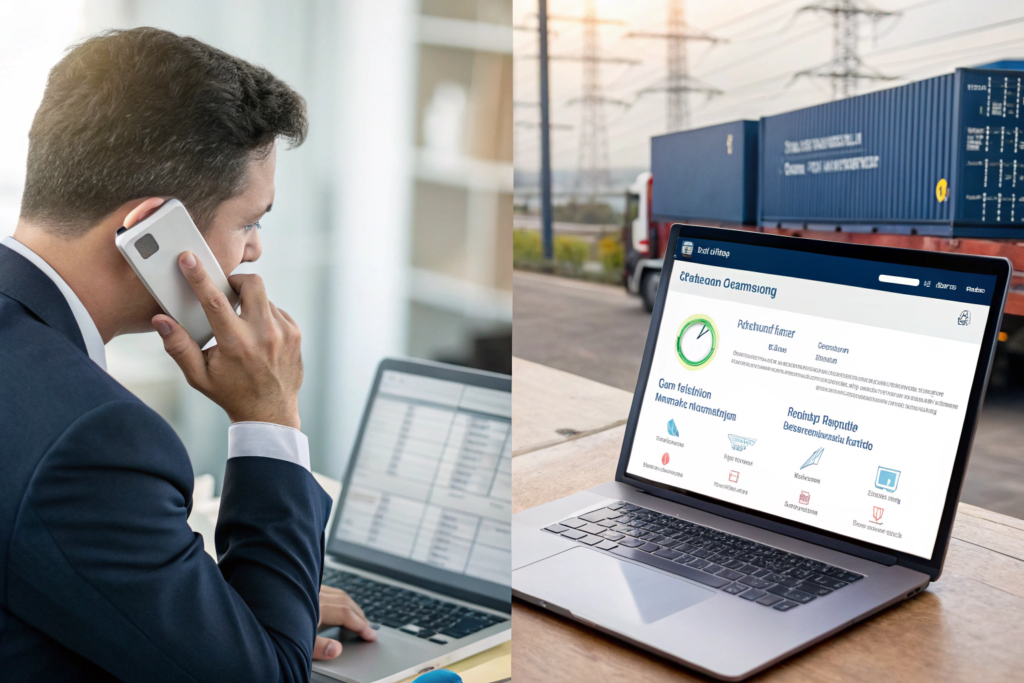
You have two choices when you search for a freight forwarder today. On one side, there is the traditional forwarder. You call them, they know your name, they answer your questions, but you communicate by email, your quotes come back in two days, and you never really know where your container is between the departure and arrival notifications. On the other side, there is the digital forwarder. You get an instant online quote, a sleek dashboard, and automated updates, but when something goes wrong, you are stuck chatting with a bot that does not understand your problem.
At GeeseCargo, we reject the idea that you must choose between a personal relationship and modern technology. We combine a dedicated, named account manager who knows your business with a digital platform that gives you instant quotes, real-time tracking, and AI-powered insights. You get the speed and transparency of a digital forwarder with the trust, accountability, and problem-solving of a traditional forwarder. This hybrid model is not a compromise. It is the best of both worlds, built for importers who demand both efficiency and reliability.
The freight industry is polarized right now. Digital startups promise to disrupt the old guard with technology. Traditional forwarders dismiss the startups as apps with no operational depth. Both arguments have truth. The digital platforms are great at user experience but often lack the boots-on-the-ground expertise when a container is stuck at customs. The traditional forwarders have the expertise but bury it behind slow, manual processes. We saw this gap and built our company to bridge it. Let me show you exactly how our hybrid model works and why it is the right choice for importers who want to move fast without losing the human safety net.
What Is the Difference Between Digital and Traditional Freight Forwarding?
You see ads for digital freight platforms promising "instant quotes" and "full visibility." You talk to a traditional forwarder at a trade show who gives you a business card and says, "Call me anytime." You are not sure which model is better, or if the difference even matters for your shipments. The difference matters a lot when a shipment goes wrong.
Traditional freight forwarding is built on personal relationships and manual processes. You have a dedicated contact who knows your business. Communication happens by email, phone, and sometimes messaging apps. Quotes are built manually. Tracking updates are sent when the forwarder checks the carrier’s website. The service quality depends entirely on the individual person handling your account. Digital freight forwarding is built on a self-service software platform. You get an instant online quote, book online, and track your shipment on a dashboard. Communication is largely automated. The service quality depends on the software’s reliability and the depth of the operational backend. The two models have opposite strengths and opposite weaknesses.
The traditional model excels at handling exceptions. When your container is flagged for a customs exam, a traditional forwarder’s experienced operator knows exactly who to call at the CES station. When a vessel cancels a port call, they rebook your container on an alternative carrier using their personal relationship with the carrier’s sales representative. The weakness of the traditional model is speed and visibility. A manual quote takes a day or two. A status update requires a human to proactively check and send an email. The process is slow, and the visibility is dependent on someone remembering to update you.
The digital model excels at speed and data. An online quote is instant. A dashboard updates automatically when the carrier’s system updates. The weakness is exception handling. When something goes off-script, the software does not know what to do. You are routed to a general support queue, and the person responding has no context on your shipment history. The digital interface is a beautiful facade that can crack when real-world logistics chaos hits.
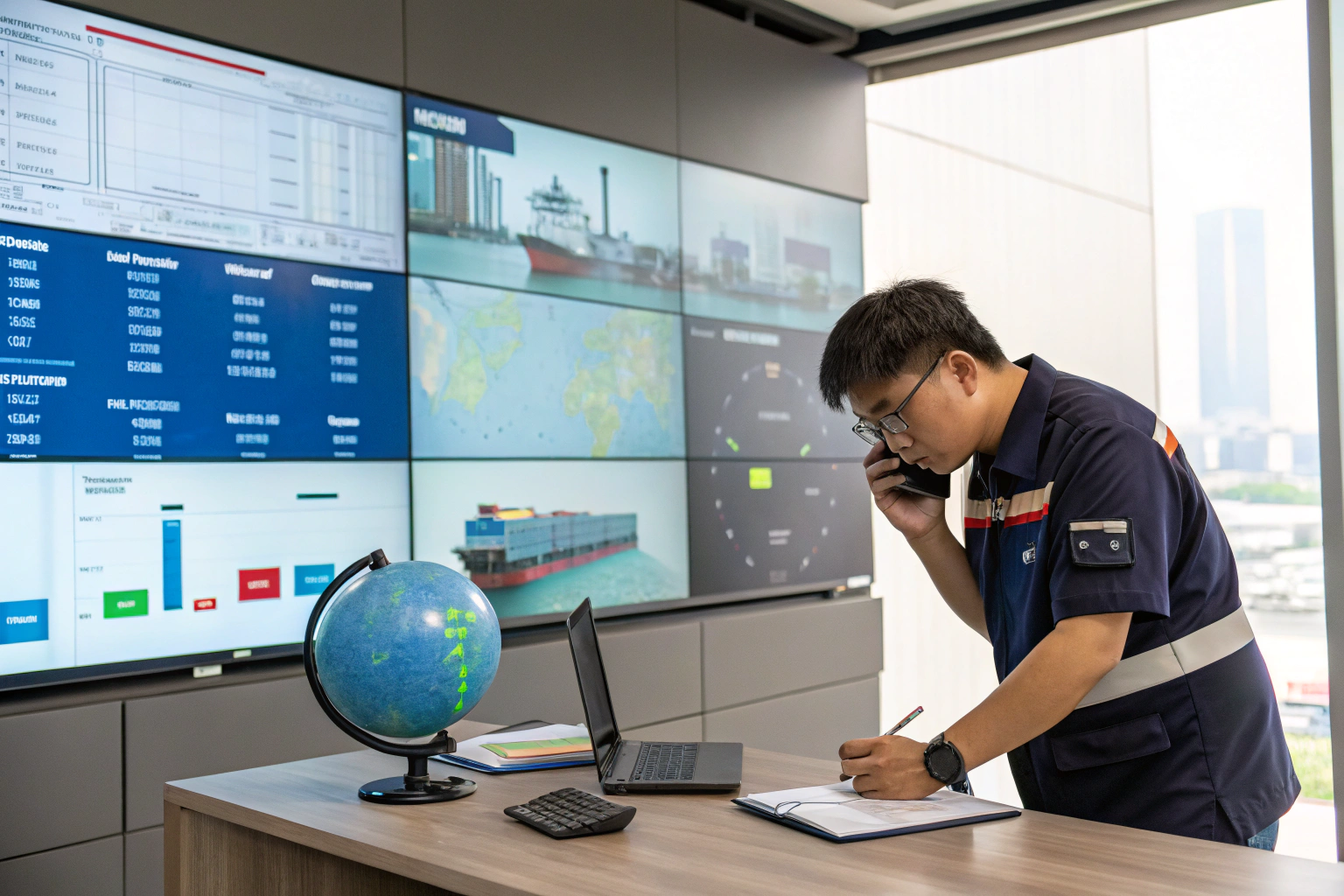
We built GeeseCargo to capture the strengths of both models. We invested in a modern digital platform that gives you instant quoting, a client portal, and automated tracking. But we did not automate away the human relationship. Every client has a named account manager. That person is accessible by phone, email, and messaging apps. They know your product, your suppliers, your delivery preferences, and your history. When you need a fast answer, the digital platform provides it. When you need a human to solve a complex problem, your account manager is already informed and ready to act.
Why Did the Digital Freight Forwarding Model Emerge?
You remember when booking a flight meant calling a travel agent. Now you book online in two minutes. You expect freight to work the same way. The digital freight forwarders emerged to meet that expectation.
The traditional freight industry was notoriously slow to adopt technology. Quotes were PDFs attached to emails. Tracking meant calling the forwarder. The customer experience lagged behind every other B2B service. Venture-backed startups saw this gap and built platforms with modern user interfaces. Their value proposition was speed and transparency. They succeeded in changing customer expectations. Today, even traditional forwarders are building online portals because the market demands it. But the pure digital model often under-invested in the physical operations and the human expertise required to handle the messy reality of global container shipping. The result is a market where customers are disappointed by both extremes.
What Do Importers Actually Want from Their Forwarder?
You do not care about the forwarder’s business model. You care about three things: a fair, transparent price quoted quickly, reliable delivery on the promised date, and someone who answers your call when something goes wrong.
Importers want the speed of digital and the reliability of traditional. They want an online quote but also the option to discuss the quote with a person who can adjust it for their specific needs. They want automated tracking but also a proactive message from a human when a delay is detected. They want a dashboard to download documents but also a person to explain what the documents mean. The hybrid model delivers this combination. We built GeeseCargo around this customer insight. Technology handles the routine. Humans handle the relationships and the exceptions.
How Does Our Digital Platform Make Your Freight Experience Faster?
You need a freight quote for a new product. You email three forwarders. One replies in four hours with a partial quote. One replies the next day. One does not reply at all. You just want a price so you can finalize your landed cost and place your purchase order. The waiting is a bottleneck in your business.
Our digital platform gives you an instant, binding freight quote through our website. You enter the origin, destination, carton dimensions, weight, and product type. The system calculates the optimal mode, retrieves live rates from our carrier contracts, and generates an all-inclusive door-to-door price in under two minutes. You can book the shipment immediately, or save the quote and discuss it with your account manager. The quoting bottleneck is eliminated.
The instant quote tool is not a lead generation form that captures your email and makes you wait. It is a fully functional booking engine connected to our rate management system. The rates it returns are the same rates your account manager would quote you. The quote includes every line item: the origin pickup, the export clearance, the ocean or air freight, the surcharges, the destination handling, the customs clearance, and the delivery. You see the total door-to-door cost and the transit time. You also see the cost per unit, which is the number you actually need for your margin calculation.
Once you book, the shipment moves into your client portal. The portal is the digital home for all your shipments. You see every active shipment with its current status. You see past shipments with their full document sets. You can download the bill of lading, the commercial invoice, the packing list, the customs entry summary, and the delivery receipt. You can message your account manager directly through the portal. You can ask the AI assistant a question and get an instant answer. The portal is available on desktop and mobile. You can check your shipment status from your phone at 10 PM. You are not limited to business hours and email threads.
How Does the Online Booking Process Work Step by Step?
You have the carton details and the factory address. You log into the client portal. You click "New Shipment." You see a form. You worry it will be complicated and you will make a mistake.
We designed the booking form to ask only for the information you have. Origin address, destination address, carton count, carton dimensions, gross weight, product type, and desired Incoterm. The form takes about five minutes to complete. If you are not sure about a field, you can leave it and your account manager will follow up. The system saves your entries so you do not have to re-type the same factory address for every shipment. Once you submit the booking, you receive an automatic confirmation email. Your account manager reviews the booking within hours, confirms the details, and initiates the pickup scheduling. The online booking does not replace the human review. It streamlines the data capture so the human’s time is spent on verification and optimization, not on manual data entry.
How Does the Digital Dashboard Keep You Informed?
You are used to emailing your forwarder and asking, "Any update on my shipment?" You send the email. You wait. You refresh your inbox. The process is passive and anxiety-inducing.
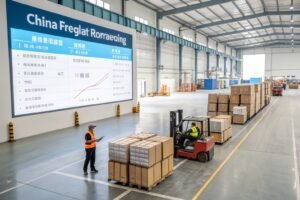
Our dashboard pushes updates to you. When the status changes, you receive a notification. "Goods Collected from Factory." "Container Gated at Port." "Vessel Departed." "Customs Entry Filed." "Vessel Arrived at Destination Port." "Customs Cleared." "Out for Delivery." Each notification is an email and an in-portal alert. You do not need to ask for updates. You are proactively informed. The dashboard also shows the timeline of your shipment. You see the planned milestones and the actual completion dates. If a milestone is delayed, the delay is highlighted. The dashboard is your single source of truth for every shipment you have with us.
How Does Our Human Expertise Protect Your Shipment When Things Go Wrong?
Your container is held for a CBP exam. You check the digital dashboard of your pure-digital forwarder. The status just says "Held." There is no explanation, no timeline, and no contact person. You open a support chat. The agent says, "We have escalated your case and will respond within 24 hours." You need answers now, not tomorrow.
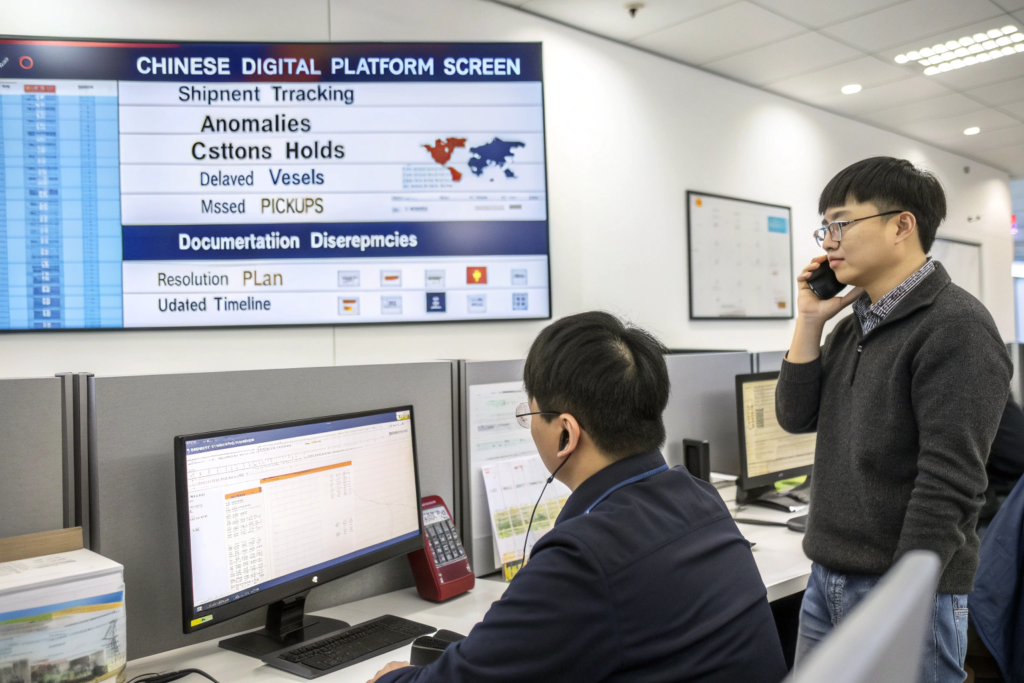
When an exception hits your shipment, your GeeseCargo account manager is already on it. Our digital platform monitors your shipment and alerts your account manager to any anomaly: a customs hold, a delayed vessel, a missed pickup, a documentation discrepancy. Your account manager calls or messages you directly to explain the situation, the resolution plan, and the updated timeline. The human handles the exception. The platform ensures the human knows about the exception instantly. This is the hybrid model in action.
The most dangerous lie in the freight industry is that software can handle everything. Software cannot negotiate with a customs officer who has questions about your product classification. Software cannot physically go to a CFS warehouse and oversee the repacking of your cartons after an exam. Software cannot call a trucking company and demand to know why a driver missed a delivery appointment. These are human tasks that require human judgment, relationships, and accountability.
Our account managers are experienced logistics professionals. Many have been with us for years. They know the carrier representatives, the terminal operators, and the customs brokers in our network. When they call, the person on the other end knows them and responds. This operational depth cannot be replicated by an app. It is built through years of working relationships and thousands of shipments. Our digital platform gives our account managers the data and the alerts they need to act fast. The human provides the action and the accountability. You are not just a user on a platform. You are a client with a person who is responsible for the success of your shipment.
What Happens When a Vessel Cancels a Port Call at the Last Minute?
Your vessel was supposed to call at Ningbo, load your container, and sail to Los Angeles. The carrier announces that Ningbo is being omitted from the rotation due to port congestion. Your container will be rolled to the next vessel, a week later.
Our platform detects the vessel schedule change and alerts your account manager. Your account manager immediately checks alternative vessels departing Ningbo in the same time window. They contact our carrier representatives and secure a booking on an alternative vessel. They arrange for the container to be transferred to the new vessel’s terminal. They update your dashboard with the new vessel name and ETA. They call you to explain what happened and what we did about it. You are informed and rebooked within hours, not days. This is the human solving a problem that software identified.
How Do You Escalate an Issue When You Need Immediate Help?
You call the main number of a large forwarder. You get an automated phone tree. You press buttons and end up in a general voicemail. You do not know if anyone will hear your message.
You have your account manager’s direct phone number, email, and messaging app contact. You can reach them through the channel you prefer. If it is an emergency, call. They answer during business hours and have an escalation line for after-hours emergencies. If it is a non-urgent question, message them through the portal or your preferred app. They respond within hours, not days. You also have the AI assistant for instant answers to routine questions. The escalation path is clear and personal. You are never lost in a support queue wondering if anyone knows your name.
How Do We Use Technology to Enhance the Human Relationship?
You think technology and human service are opposites. More technology means less human interaction. In a poorly designed system, that is true. A chatbot that blocks you from reaching a person is a technology failure, not a technology success.
We use technology to remove the repetitive, low-value tasks from our account managers’ workload so they can focus their time on the high-value, relationship-driven work. Our AI handles the data entry, the rate retrieval, the status monitoring, and the routine customer inquiries. Our account managers handle the strategic planning, the exception resolution, the supplier negotiations, and the personal relationship with you. Technology amplifies the human’s effectiveness. It does not replace the human.
This philosophy is visible in how our client portal works. The portal provides the data and the documents. Your account manager provides the context and the advice. When you log in and see that a shipment is delayed, you also see a note from your account manager explaining the delay and the action taken. The data is from the machine. The explanation is from the human. You get both.
Another example is our quarterly business reviews. For our regular clients, your account manager schedules a call to review your shipping patterns, your costs, and your performance metrics. The data for this review is generated by our platform: cost per unit, average transit time, on-time delivery percentage, demurrage incidents. Your account manager presents the data, discusses the trends, and recommends optimizations. The technology provides the analytics. The human provides the strategic guidance. This is how we help you improve your supply chain over time, not just move boxes.
How Does the Combination of Digital and Human Reduce Your Workload?
You currently spend hours each week on freight administration. You email forwarders for quotes. You chase tracking updates. You file documents in folders. You reconcile freight invoices. This is time you could spend on product development, marketing, and sales.
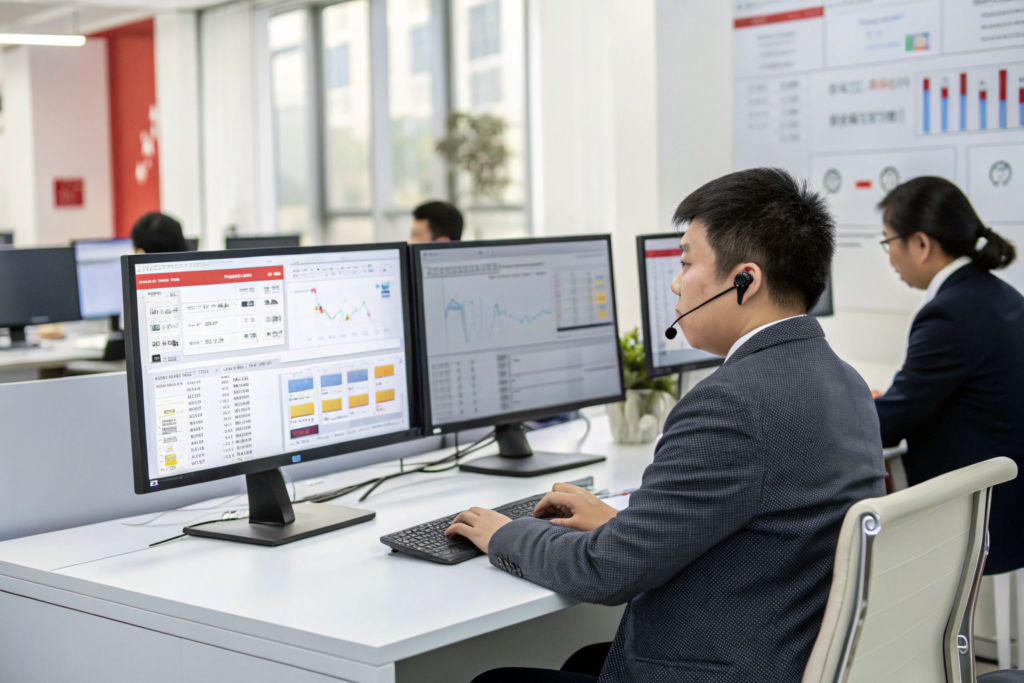
Our hybrid model reduces your administrative workload. The instant quote tool eliminates the quote-requesting emails. The dashboard eliminates the status-chasing emails. The document archive in the portal eliminates the document-filing emails. The single invoice for door-to-door service eliminates the multi-vendor reconciliation. Your account manager handles the coordination that you used to do yourself. The technology makes the information accessible without you needing to ask. The human makes the decisions and solves the problems without you needing to manage the process. Your time spent on freight administration drops significantly. Our clients tell us they reclaim 3 to 5 hours per week after switching to us.
Can You Still Get a Human Touch If You Prefer Self-Service?
You like the online booking and the dashboard. You do not want to be forced to call someone for routine tasks. But you also want to know a person is available if you need them. You want the option, not the obligation.
Our platform is designed for self-service. You can get a quote, book a shipment, track its progress, and download documents without ever speaking to a person. Many of our clients operate this way for their routine shipments. But your account manager is still assigned to your account. They still review your bookings and monitor your shipments. They are there in the background, ready to step in if an exception occurs or if you have a question. The relationship is available, not forced. You choose the level of interaction that suits your style. Some clients talk to their account manager weekly. Some talk once a quarter. Both are valid. Both receive the same quality of service.
Conclusion
The debate between digital and traditional freight forwarding is a false choice. You do not have to accept the slow, opaque processes of a traditional forwarder to get a human who cares about your shipment. You do not have to accept the impersonal, exception-blind platform of a digital forwarder to get a fast quote and a modern dashboard. You can have both.
At GeeseCargo, we built our company on the belief that technology and human expertise are complementary, not opposing forces. Our digital platform provides the speed, the visibility, and the data that modern importers expect. Our account managers provide the judgment, the relationships, and the accountability that complex global logistics require. The platform empowers the people. The people bring the platform to life.
When you ship with us, you get an instant quote and a dedicated person. You get a real-time dashboard and a direct phone number. You get automated updates and a human who calls you when something changes. You are not choosing between a robot and a relationship. You are choosing a forwarder that invested in both.
If you are tired of slow email chains with your current traditional forwarder, or tired of support chatbots that cannot solve your problems with your current digital forwarder, go to GeeseCargo.com and experience the hybrid difference. Request an instant quote. Look around the platform. Then call me or message me directly. I will be your first human contact, and I will show you how the combination of great technology and real human service can transform the way you import.