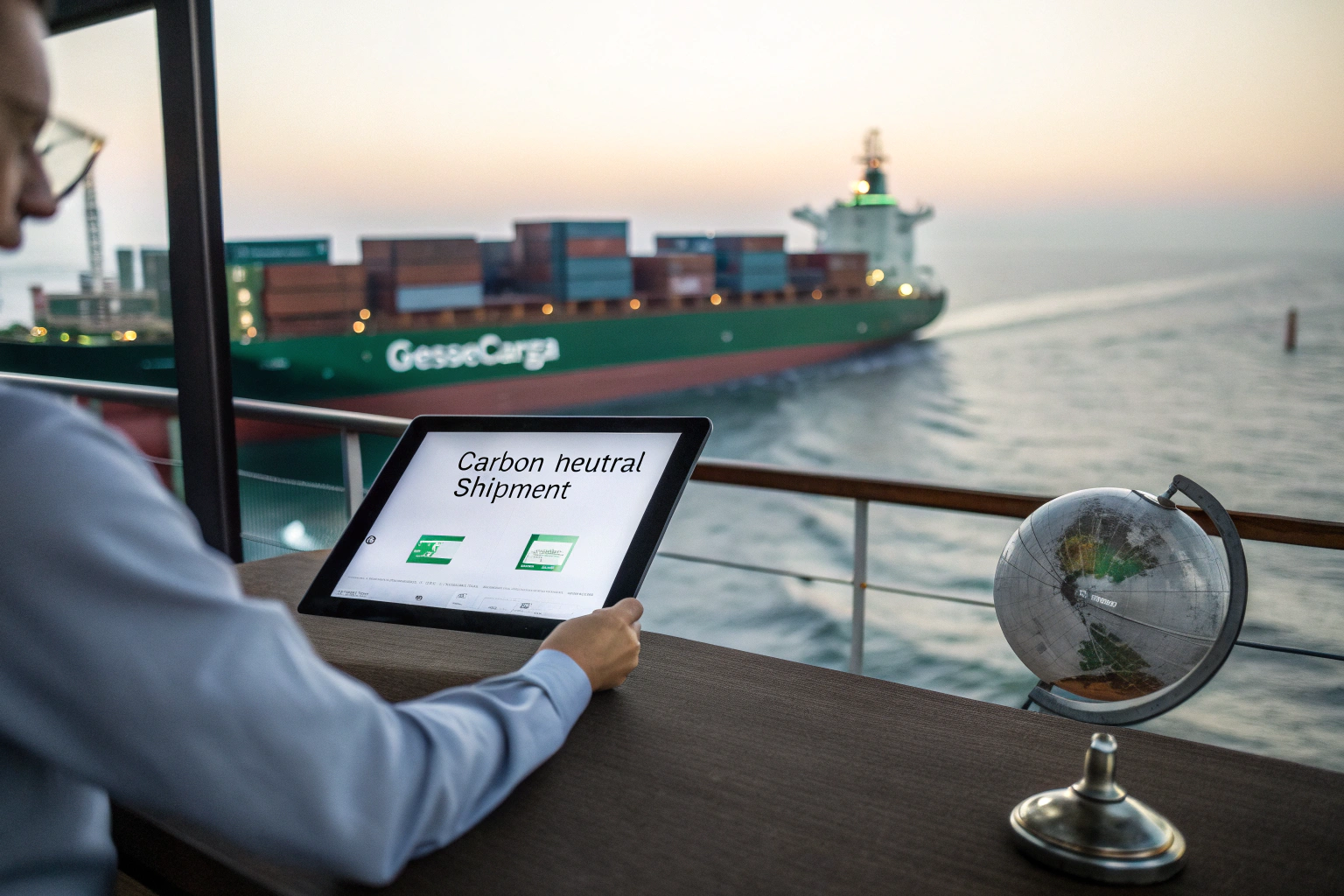
You receive a marketing email from a freight forwarder. The subject line reads: "Ship Carbon Neutral for Just $15 More!" You click. The offer is simple. Pay an extra fee per container, and they will purchase carbon offsets on your behalf. Your shipment is declared "carbon neutral." You want to believe it. But a nagging question lingers. Did the ship actually burn less fuel? Did anything physically change about the journey your goods took across the ocean? Or did you just pay a small surcharge for a digital certificate while the same amount of CO2 entered the atmosphere? You suspect the answer, and it leaves you unsatisfied.
At GeeseCargo, we believe carbon-neutral ocean freight is a real and achievable goal, but only if you follow the correct sequence: reduce first, then offset the remainder. We cannot make a container ship zero-emission. That technology does not exist at commercial scale in 2026. What we can do is physically minimize the fuel burned per unit of cargo through load optimization, efficient carrier selection, and route optimization. Then, for the residual emissions that cannot yet be eliminated, we source verified, high-quality carbon offsets that meet the strictest international standards. The result is a carbon-neutral shipment where the "neutral" claim is backed by both operational reductions and credible offsets, not just offsets alone.
The term "carbon neutral" has been misused in logistics. It has been applied to shipments where no physical reduction occurred, only an offset purchase. This is not fraudulent, but it is shallow. It does not drive the systemic change that the shipping industry needs. Our approach is deeper. We treat offsets as the final step after reduction, not the only step. Let me explain how we operationalize carbon-neutral ocean freight and what you should look for to ensure your claim is credible.
What Does "Carbon Neutral" Ocean Freight Actually Mean in 2026?
You type "carbon neutral shipping" into a search engine. You get a dozen different definitions. Some forwarders say it means the vessel uses biofuel. Some say it means they bought offsets. Some say it means the shipment’s emissions were calculated and compensated. The inconsistency makes you skeptical of the entire concept.
Carbon-neutral ocean freight means that the net CO2 equivalent emissions associated with your shipment are zero. This is achieved through a combination of emission reductions within the logistics chain and the purchase of verified carbon offsets to compensate for the remaining emissions. The key requirement is that the calculation covers the full door-to-door journey, not just the ocean leg. A credible carbon-neutral claim requires a transparent emissions calculation using an established methodology, evidence of operational reductions where feasible, and offsets that meet the criteria of additionality, permanence, and verifiability.
The definition is important because it separates credible claims from marketing hype. A forwarder that calculates only the ocean leg emissions and buys cheap, unverified offsets is not providing a credible carbon-neutral service. They are selling a feel-good label. A forwarder that calculates the full door-to-door emissions, implements physical reductions, and sources Gold Standard or Verra VCS certified offsets is providing a genuine service.
The shipping industry is under regulatory pressure to decarbonize. The IMO’s 2023 GHG Strategy targets net-zero emissions by or around 2050. Intermediate targets require a 20-30% reduction in carbon intensity by 2030 and a 70-80% reduction by 2040. These targets will be met through a combination of operational efficiency, alternative fuels, and market-based measures. Carbon-neutral shipping in 2026 operates within this context. It is a voluntary market mechanism that allows individual shippers to take responsibility for their emissions today, ahead of the regulatory requirements.
What Is the Difference Between Carbon Neutral and Net Zero?
You hear "carbon neutral" and "net zero" used interchangeably. Your company has a net-zero commitment. You need to understand which one applies to your freight.
Carbon neutral is a state where the emissions from a specific activity, in this case your shipment, are balanced by an equivalent amount of emission reductions or removals elsewhere. It is typically applied at the product or service level. Net zero is a corporate-level target that requires reducing all emissions across the value chain in line with a 1.5°C pathway and neutralizing any residual emissions with permanent carbon removals. A shipment can be carbon neutral through offsets. A company achieves net zero through deep decarbonization of its entire operations. The two concepts are related but distinct. Our carbon-neutral shipment service helps you neutralize the impact of specific shipments. Our broader sustainability consulting helps you develop a pathway to net zero for your logistics function.
Why Must the Calculation Cover the Full Door-to-Door Journey?
Your forwarder offers "carbon neutral ocean freight" that only covers the vessel’s fuel burn from the port of loading to the port of discharge. The trucking to the port, the terminal handling, and the inland delivery are excluded. You are neutralizing less than 80% of the actual emissions.
A container’s journey includes the origin trucking from the factory to the port, the terminal operations at both ends, the ocean transit, the destination drayage, and the inland delivery to the warehouse. The ocean leg is the largest component, but the other legs are not negligible. A complete carbon-neutral claim must cover all legs. Our carbon-neutral service calculates and neutralizes the full door-to-door emissions, from factory pickup to final warehouse delivery. This is the only method that produces a truly carbon-neutral shipment.
How Do We Physically Reduce Emissions Before Offsetting?
You are presented with a carbon-neutral shipping option. The forwarder’s proposal is entirely about the offset purchase. There is no mention of load optimization, carrier selection, or routing efficiency. You suspect the offset purchase is being used as a substitute for operational improvement.
We apply our full suite of emission reduction measures to every shipment before any offset is calculated. Our AI load optimization maximizes container utilization above 92%. Our carrier selection algorithm prioritizes vessels with A or B IMO CII ratings when cost and transit time are comparable. Our route optimization engine defaults to rail intermodal over long-haul trucking. These operational measures reduce the physical emissions of your shipment by an estimated 10% to 25% compared to an unoptimized baseline. The offsets you purchase only cover the reduced, residual emissions, not the original, unoptimized total.
This sequence is the foundation of a credible carbon-neutral claim. If a forwarder takes no operational action to reduce emissions and simply buys offsets for the full amount, they are treating offsets as a license to pollute at the baseline level. This is the criticism most often leveled at voluntary carbon markets. Our approach answers that criticism directly. We optimize first. We reduce the physical emissions. Then, and only then, do we offset what remains.
The optimization measures are the same ones we use for cost efficiency. This is the beauty of the approach. The load optimization that reduces your per-unit emissions also reduces your per-unit freight cost. The carrier selection that reduces emissions also selects carriers with competitive rates. The route optimization that reduces emissions often identifies routes that are also cost-competitive. The commercial and environmental incentives are aligned. You are not paying more to be greener. You are shipping smarter, and the lower emissions are a co-benefit of that intelligence.
What Is the Average Emissions Reduction Achieved Through Optimization?
You are considering the carbon-neutral add-on. You want to know how much of the offset cost you are avoiding because of the operational reductions we have already achieved.
For a typical China-to-US West Coast FCL shipment of consumer goods, our optimization measures reduce the door-to-door emissions by an estimated 12% to 18% compared to an unoptimized shipment with a traditional forwarder. For an East Coast shipment where rail intermodal routing is applied, the reduction can reach 20% to 25%. These percentages translate directly into a lower offset purchase requirement. If the unoptimized emissions are 3,000 kg CO2e, the offset cost at $15 per ton is $45. If the optimized emissions are 2,500 kg CO2e, the offset cost is $37.50. The reduction saves you money on the offset.
How Do You Know the Reductions Are Real and Not Just Estimated?
You receive a report saying emissions were reduced by 15%. You want to know if this is a generic estimate based on industry averages or a calculation based on your actual shipment data.
The reductions are calculated using your actual shipment data. The container utilization percentage comes from our warehouse loading records. The vessel’s CII rating comes from the IMO database. The routing mode comes from our booking system. The distance traveled comes from our GPS tracker data. The emissions calculation uses these primary data points, not industry averages. The baseline for comparison is the same shipment calculated with default assumptions: 82% utilization, industry-average vessel efficiency, and standard routing. You can see the specific factors that produced the reduction for your specific shipment.
What Carbon Offsets Do We Source, and How Do We Ensure Quality?
You have read news articles about carbon offsets that turned out to be worthless. Forestry projects that burned down. Renewable energy projects that would have been built anyway. You are willing to buy offsets, but only if they represent real, additional, permanent emission reductions.
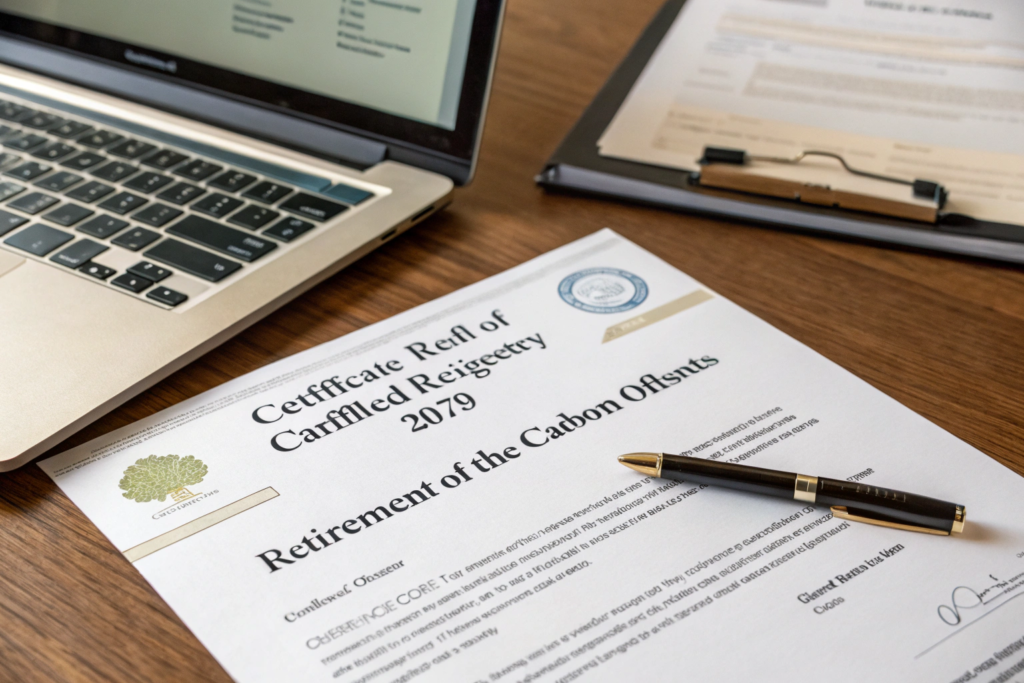
We source carbon offsets exclusively from projects certified under the Gold Standard, the Verified Carbon Standard (VCS) administered by Verra, or the Climate Action Reserve. These are the three most rigorous voluntary carbon market standards. Every offset we purchase is tracked on a public registry, has a unique serial number, and is retired in your name upon completion of the shipment. We provide you with the registry link and the retirement certificate. You can verify the offset independently. We do not source cheap, unverified offsets from opaque markets.
The quality of carbon offsets varies enormously. The voluntary carbon market has been criticized for a lack of transparency, inconsistent methodologies, and projects that do not deliver the claimed emission reductions. The response to these criticisms has been a flight to quality. Buyers are increasingly demanding offsets from registries with rigorous standards and transparent tracking.
The Gold Standard and VCS are the leading standards in the voluntary market. Both require projects to demonstrate additionality, meaning the emission reductions would not have occurred without the carbon finance. Both require projects to demonstrate permanence, meaning the reductions are not reversible. Both require third-party verification of the emission reductions. Both operate public registries where each credit is serialized and tracked from issuance to retirement. When we retire credits on your behalf, you receive the retirement certificate with the serial numbers. You can look up those serial numbers on the Verra or Gold Standard registry and see that the credits were retired in your name for your shipment.
We primarily source offsets from nature-based projects and community-based projects that align with our clients’ values. Reforestation, afforestation, and mangrove restoration projects absorb CO2 from the atmosphere while providing biodiversity and community co-benefits. Clean cookstove projects reduce emissions from burning firewood or charcoal while improving indoor air quality for families in developing countries. We provide a selection of projects for you to choose from, or we can match you with a project based on your preferences.
What Is the Cost of Credible Carbon Offsets?
You see "carbon offsets" advertised for $3 per ton. The offsets we source cost $12 to $18 per ton. You wonder if we are marking them up, or if the cheap ones are low quality.
The price difference reflects quality. Offsets at $3 per ton are typically from older projects with questionable additionality, often from the Clean Development Mechanism, or from large-scale renewable energy projects that may not pass current additionality tests. High-quality offsets from the Gold Standard or VCS with strong co-benefits trade in the $10 to $25 per ton range. We charge you the exact cost we pay to acquire and retire the credits. We do not mark up the offset cost. We make our margin on the freight service, not on the carbon credits.
Can You Choose Which Type of Offset Project to Support?
Your brand is focused on ocean conservation. You want your shipping offsets to support a mangrove restoration project. Another client’s brand is focused on social impact and wants clean cookstove projects. You want alignment between the offset project and your brand values.
We offer a portfolio of vetted offset projects for you to choose from. The portfolio includes nature-based projects, community-based projects, and technology-based carbon removal projects. You can select a specific project, and all your shipment offsets will be sourced from that project. You can also let us select the most cost-effective high-quality credits on your behalf. The choice is yours.
How Does the Carbon-Neutral Process Work for a Typical Shipment?
You are interested in the carbon-neutral option for your next shipment. You do not know the process. Do you pay a flat fee? Is it calculated per shipment? How do you prove to your customers that the shipment was carbon neutral?
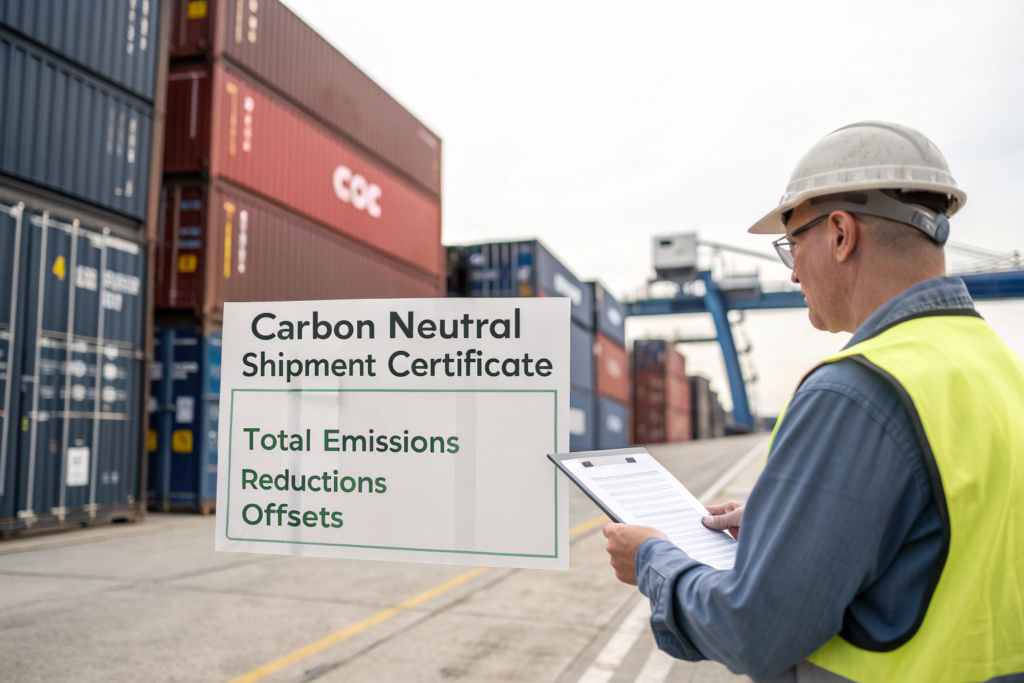
The process is integrated into your standard shipment workflow. When you book a shipment, you select the "Carbon Neutral" option in the booking form. We apply our standard optimization measures to reduce the physical emissions. After delivery, we calculate the residual emissions and source the required offsets. The offset cost is added to your final invoice. You receive a Carbon Neutral Shipment Certificate that documents the total emissions, the reductions achieved, and the offsets retired. The entire process is handled by us. You do not manage a separate offset transaction.
Let me walk through a real example. A client ships 15 cubic meters of apparel from Ningbo to Los Angeles, door-to-door. The shipment is optimized for load, carrier, and route. The residual door-to-door emissions are calculated at 2,100 kg CO2e. The client has selected a mangrove restoration project in Southeast Asia as their preferred offset. We purchase and retire 2.1 tons of verified carbon credits from that project, at a cost of $15 per ton. The total offset cost is $31.50. The client’s invoice includes a line item: "Carbon Offset – 2.1 tCO2e – Mangrove Restoration Project – $31.50." The client receives the Carbon Neutral Shipment Certificate, which includes the GLEC-aligned emissions calculation, the optimization measures applied, and the offset retirement details with registry serial numbers.
The certificate is a one-page document suitable for sharing with customers, investors, or auditors. It includes the GeeseCargo logo, the shipment reference number, the carbon neutral claim, and the supporting data. It is not a vague statement. It is a specific, verifiable document backed by a public registry record.
Is Carbon Neutral Shipping a Per-Shipment or an Account-Level Option?
You want to make all your shipments carbon neutral. You do not want to select the option manually for every booking. You want it to be the default for your account.
You can set your account preference to "Carbon Neutral – All Shipments." Every shipment you book will automatically include the carbon-neutral process. The offset cost will appear on each shipment’s invoice. You will receive a certificate for each shipment and a quarterly summary of your total offsetting activity. You can change or cancel this preference at any time.
What If You Need the Carbon-Neutral Certificate Before Delivery?
Your marketing team is launching a pre-order campaign. They want to advertise the product as "shipped carbon neutral." But the shipment has not arrived yet, and the final emissions are not calculated.
We can provide a provisional certificate based on the estimated emissions. When the shipment is delivered and the final emissions are calculated, we issue the final certificate. The provisional certificate states that the shipment will be carbon neutral, based on estimated emissions, and that the final certificate will follow. This allows your marketing team to make the claim during the pre-order window.
How Can You Communicate Your Carbon-Neutral Shipping to Customers?
You have the certificate. You want to tell your customers. You are terrified of saying the wrong thing and being accused of greenwashing. The legal and reputational risks of a poorly worded sustainability claim are real.
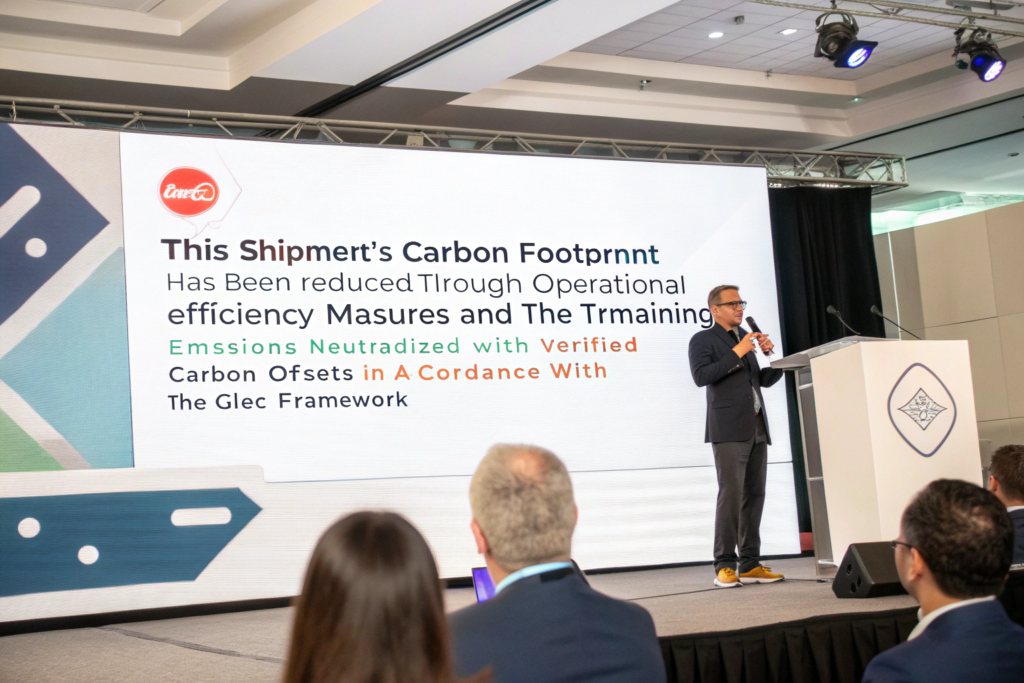
We provide a Brand Communication Guide with pre-approved claim language that is accurate, specific, and defensible. The recommended claim format is: "This shipment’s carbon footprint has been reduced through operational efficiency measures and the remaining emissions neutralized with verified carbon offsets, in accordance with the GLEC Framework." We also provide a badge that links to a verification page where customers can view the certificate. The key is specificity and verifiability. Vague claims are risky. Specific, data-backed claims are credible.
The regulatory environment for green claims is tightening. The US Federal Trade Commission is updating its Green Guides. The European Union’s Green Claims Directive requires companies to substantiate environmental claims with scientific evidence. Vague terms like "eco-friendly" or "green shipping" are increasingly risky. Specific, quantified claims backed by third-party verification are the safe harbor.
Our recommended claim language has been reviewed for alignment with current and anticipated regulatory guidance. It is specific about what was done. It names the standard used. It avoids overstatement. We also provide a verification page URL that you can link to. The page displays the certificate for the shipment, allowing any customer or regulator to verify the claim with one click. This transparency builds trust and reduces risk.
Can You Put a Carbon-Neutral Badge on Your Product Pages?
Your e-commerce product pages are your primary customer touchpoint. You want a badge next to the "Add to Cart" button that communicates your carbon-neutral shipping commitment.
We provide a digital badge asset and the verification link. You place the badge on your product page. The badge links to the verification page. When a customer clicks the badge, they see the actual certificate with the shipment data. They can see it is real, not just a marketing graphic. This level of transparency is unusual in e-commerce and differentiates your brand.
How Do You Handle Customer Questions About Carbon Neutrality?
A customer emails you: "How can you claim carbon-neutral shipping when ships burn fossil fuels?" You need a credible, concise answer that does not sound defensive.
We provide a FAQ document that addresses common questions. The core answer is: "We work with our logistics partner GeeseCargo to first reduce our shipping emissions through efficiency measures like maximizing container utilization and selecting fuel-efficient vessels. For the emissions that remain, we purchase independently verified carbon offsets that fund projects like reforestation and clean energy. The offsets are tracked on a public registry. You can view the certificate for any shipment on our verification page." This answer is honest, specific, and verifiable.
Conclusion
Carbon-neutral ocean freight from China is a reality in 2026, but not all carbon-neutral claims are created equal. A credible claim requires a transparent, full-journey emissions calculation using a recognized methodology. It requires operational measures that physically reduce emissions before offsets are applied. It requires high-quality offsets from a reputable registry, retired transparently. It requires clear, specific communication that avoids greenwashing.
At GeeseCargo, we deliver carbon-neutral ocean freight that meets all these criteria. Our optimization technology reduces your physical emissions. Our offset sourcing provides verified, additional, permanent carbon credits. Our documentation and certificates give you the evidence you need to make the claim with confidence. And our Brand Communication Guide helps you talk about it honestly and effectively.
The shipping industry will take decades to decarbonize fully. Alternative fuels, new vessel designs, and infrastructure changes are coming, but they are not here at scale today. Carbon-neutral shipping through reductions and offsets is the bridge mechanism that allows responsible businesses to take action now. It is not a perfect solution, but it is a real one.
If you want to make your next shipment carbon neutral, go to GeeseCargo.com and select the Carbon Neutral option when you book. Or contact me directly to discuss making carbon-neutral shipping the default for all your imports. Let’s make your supply chain part of the solution, not just part of the problem.