Importing goods involves multiple steps—documentation, customs clearance, tariffs, and transportation. For importers like Ron, who source goods from China to the U.S., inefficiencies in these procedures often create delays and add unnecessary costs.
Freight forwarders optimize import procedures by handling documentation, simplifying customs clearance, reducing costs, and improving supply chain visibility.
At GeeseCargo, we streamline every stage so businesses can import smoothly and grow with confidence.
How Do Freight Forwarders Manage Documentation?
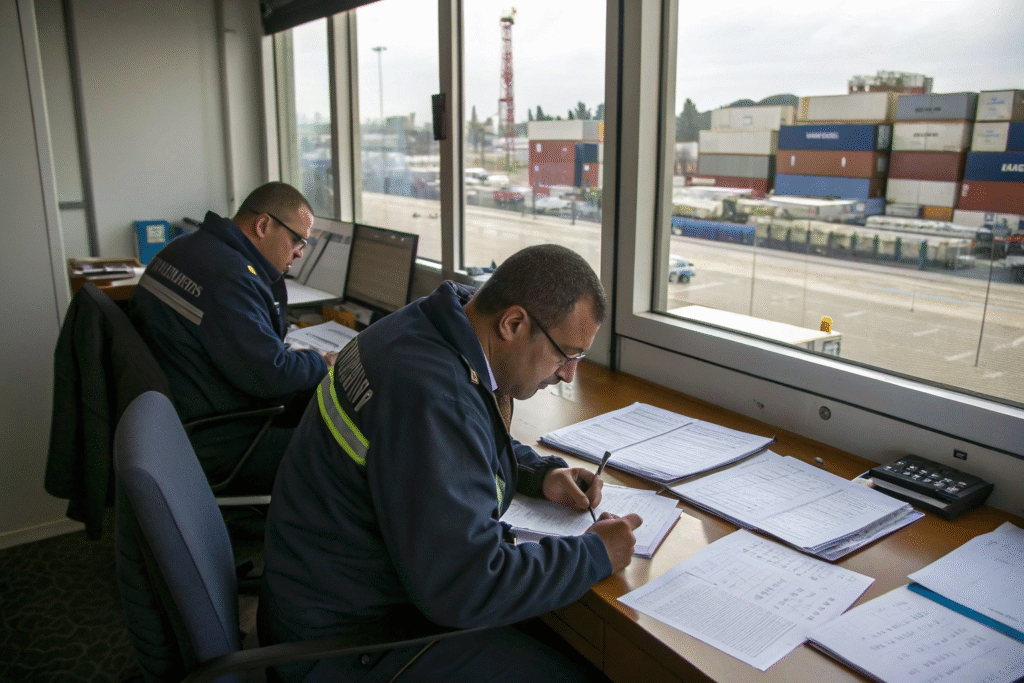
Accurate documentation is the basis of efficient imports.
Forwarders prepare, verify, and submit essential documents to prevent costly mistakes and clearance delays.
Which documents are essential?
The bill of lading, commercial invoice, and packing list must align. U.S. Customs and Border Protection highlights their importance for smooth clearance.
How do forwarders ensure accuracy?
They apply correct HS codes, cross-check details, and file electronically. The World Customs Organization sets international standards for product classification.
How Do Forwarders Simplify Customs Clearance?
Customs clearance is often the most complex part of importing.
Forwarders simplify the process by pre-filing entries, ensuring compliance, and coordinating directly with customs brokers.

Why is pre-filing effective?
Submitting entries before cargo arrives reduces waiting times. The Automated Commercial Environment (ACE) speeds up processing for U.S. imports.
How do forwarders reduce inspection risks?
By ensuring correct labeling and classification, they lower the likelihood of holds. Trade.gov provides guidelines for import compliance.
How Do Forwarders Help Reduce Costs?
Import inefficiencies often translate into higher expenses.
Forwarders lower costs through shipment consolidation, rate negotiations, and duty optimization strategies.

How does consolidation save money?
Combining cargo into full container loads (FCL) lowers per-unit costs compared to partial loads. The World Shipping Council emphasizes FCL’s efficiency benefits.
Can duty optimization reduce expenses?
Yes. Forwarders identify free trade agreements, exemptions, and deferral programs that cut duties. The International Trade Administration provides resources for duty savings.
How Do Forwarders Improve Supply Chain Visibility?
Visibility gives importers better control over operations.
Forwarders use tracking platforms to deliver real-time updates, forecasts, and proactive alerts throughout the shipping process.

Why is visibility important?
It helps businesses plan inventory and warehouse schedules more effectively. MarineTraffic provides vessel tracking widely used by forwarders.
Can forwarders respond to disruptions?
Yes. They reroute cargo or adjust schedules when delays occur. FourKites demonstrates how predictive visibility supports supply chain resilience.
Conclusion
Freight forwarders optimize imports by ensuring accurate documentation, simplifying customs clearance, cutting unnecessary costs, and delivering full visibility. For businesses importing from China to the U.S., GeeseCargo provides efficient and reliable solutions that keep supply chains compliant, predictable, and cost-effective.