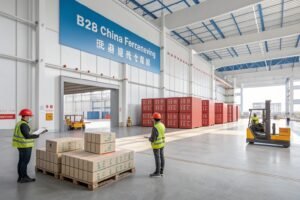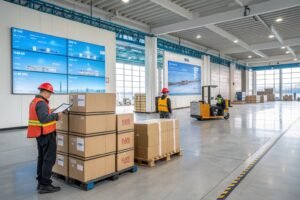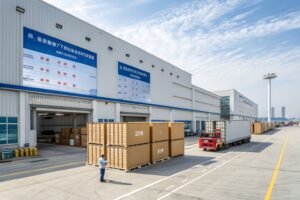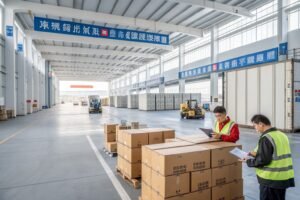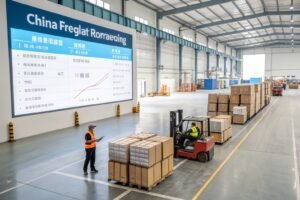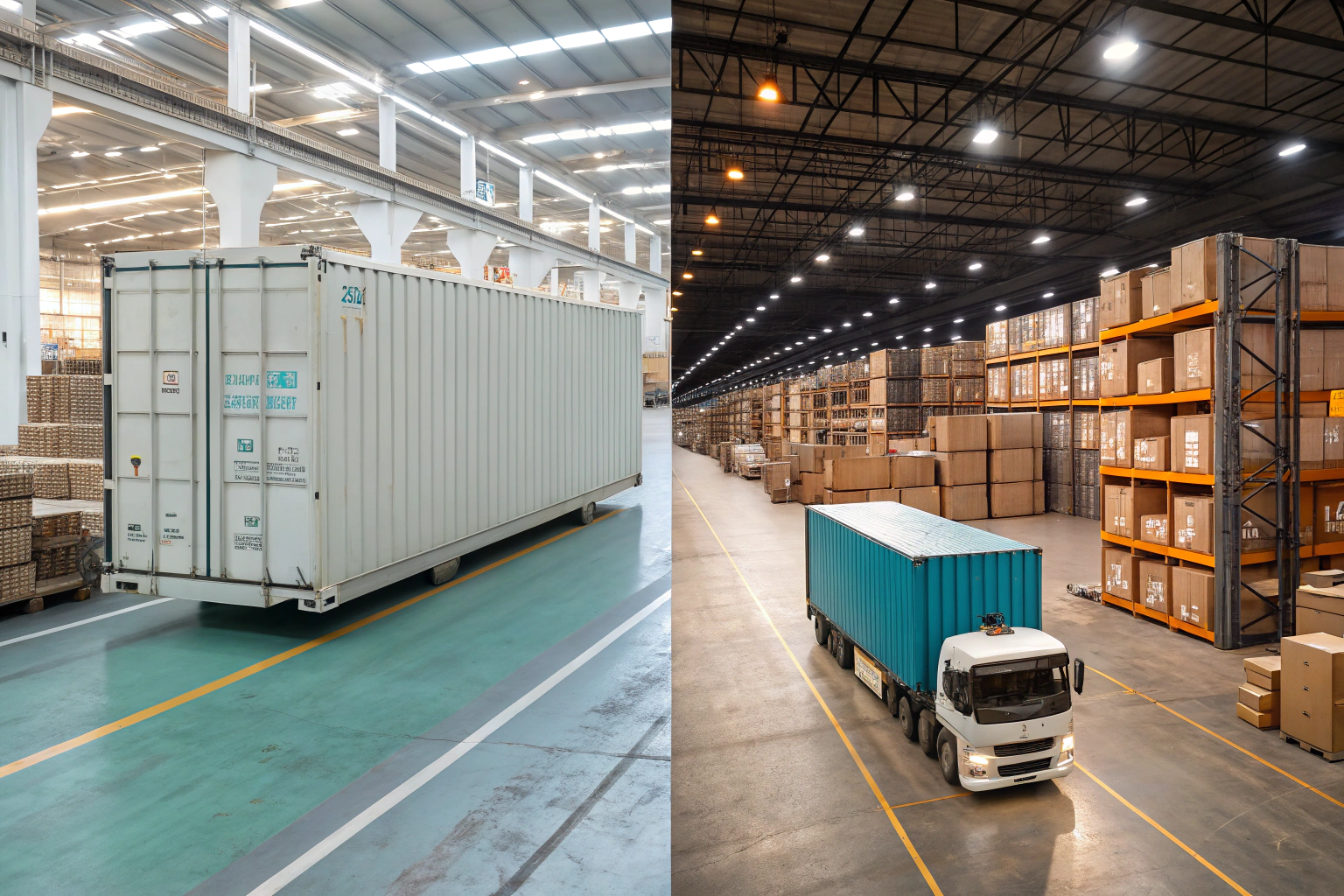
You have a production run of gift boxes ready in a factory in Ningbo. They fill about half of a 40-foot container. Your forwarder gives you two options: FCL and LCL. You pick LCL because the per-unit rate looks lower on paper. Then the shipment arrives, and you see the invoice for the destination deconsolidation warehouse, the document handling fee, and the pallet breakdown charge. Your landed cost per unit is now higher than if you had just booked the entire container and left half of it empty. I have seen this math trap catch so many importers that I now walk every new client through a physical simulation of how their cargo moves in both scenarios before they decide.
FCL means you pay a flat rate for exclusive use of the entire container, regardless of how full it is, and the sealed box moves directly from your factory to your warehouse without being opened. LCL means you pay only for the cubic meter volume you actually use inside a shared container, but your goods are physically handled multiple times at a consolidation warehouse and a deconsolidation warehouse, adding time, risk, and destination fees that often make the total landed cost per unit higher than FCL for shipments over 10 cubic meters.
The choice between FCL and LCL is not just a shipping preference. It is a strategic business decision that impacts your cash flow, your inventory arrival predictability, and the physical safety of your goods. You need to understand not just what the acronyms mean, but exactly what happens to your cartons when they are picked up by the truck and what charges appear on your doorstep. Let me walk you through the real operational process of both methods, so you can make the right call with your eyes wide open.
What Exactly Happens During an FCL Shipment Process?
You approve the FCL booking. The forwarder says "the empty container will be dropped at the factory on Tuesday." Tuesday arrives, and the trucker shows up with a 40-foot steel box on a chassis. Your factory workers begin loading the cartons directly inside that container. No middleman touches the goods. No consolidation center re-stacks the boxes. When the last carton is in, the factory foreman closes the heavy steel doors, and a bolt seal is locked through the door latch. That seal number is recorded on the bill of lading. From that moment until the container reaches your warehouse in America, that seal should not be broken by anyone except a customs inspector who must legally replace it with their own recorded seal.
The FCL shipment process is a direct, sealed chain of custody. An empty container is trucked to your supplier’s loading dock, stuffed by your own factory team, sealed with a unique high-security bolt, trucked to the port of origin, loaded onto the vessel, transshipped across the ocean, discharged at the destination port, and trucked to your final warehouse, where you break the seal yourself. The container is never opened for cargo handling at any intermediate transfer point.
I love FCL shipments because they are simple and secure. The fewer hands that touch your product, the lower the risk of theft, damage, or a carton simply vanishing into the void of a busy port warehouse. Let’s dig into the specific timing and cost mechanics that make FCL the backbone of professional importing.
How does the FCL container loading and seal process protect your cargo?
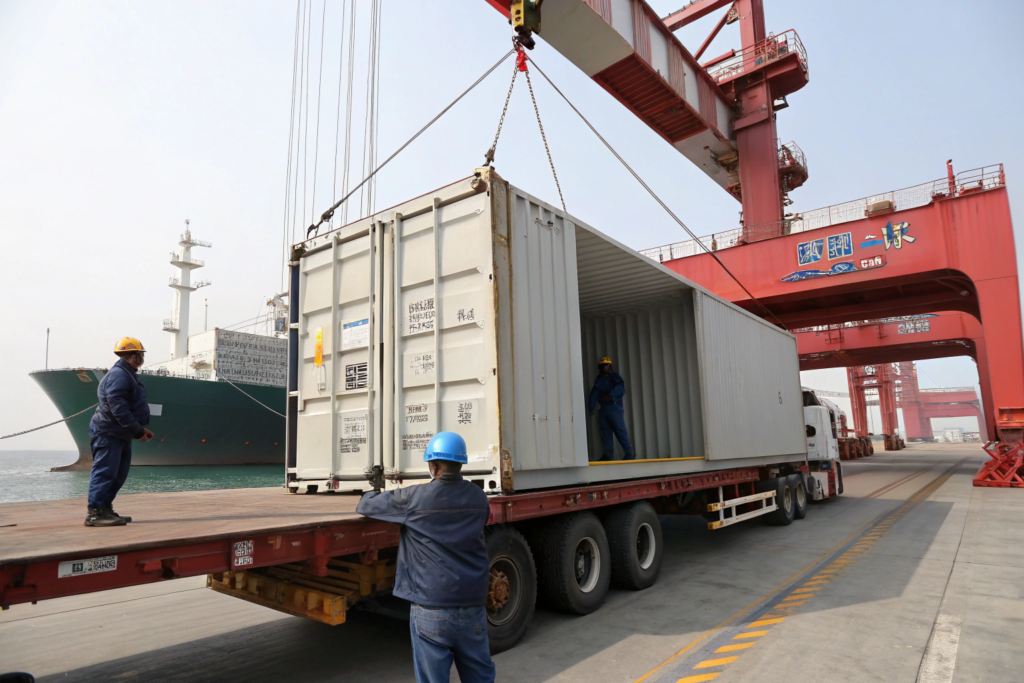
The physical security of an FCL shipment comes from the container seal. This is a small metal bolt with a unique serial number that cannot be removed without cutting it. Once the container doors close at your factory in Shenzhen or Yiwu, the loader snaps the seal shut and writes the number on the packing list. I insist that my clients photograph the closed container doors with the seal clearly visible. That photo is your evidence that the cargo was loaded in good condition. When the container arrives at the destination port, the receiving warehouse manager must verify that the seal number matches the bill of lading before they cut it. If the seal number is different or shows signs of tampering, you have an immediate claim against the carrier. This security protocol is governed by the container seal management standards under the World Shipping Council safety guidelines. I also train my clients’ warehouse teams to check the seal before signing the delivery receipt. A signature on a delivery order with a broken seal waives your right to claim theft. The loading process itself is also critical. Since the factory controls the stuffing, they can maximize the cube utilization. They can stack cartons to the roof, fill every gap, and brace the load with air bags so nothing shifts during ocean transit. A well-stuffed FCL container can fit 10-15% more cargo volume than the same goods loaded in a shared LCL environment where the consolidator must build a safe mixed load wall.
When does the FCL destination delivery timeline make it cheaper per unit?
FCL wins on speed at the destination. When an FCL vessel arrives at the Port of Los Angeles, the container is discharged from the ship and placed in a stack in the terminal yard. A trucker with a chassis appointment picks it up and drives it directly to your warehouse. The entire destination process can happen within 48 hours of vessel discharge if you have a good drayage provider. There is no waiting for a deconsolidation warehouse to unpack a shared box. This speed matters for two reasons. First, you avoid the port storage fees that kick in after the free time expires. Second, your inventory gets into your sales channel faster. The per-unit cost calculation for FCL is simple. You take the all-inclusive FCL rate and divide it by the number of units you can fit in the container. The more you stuff, the lower the unit cost. For dense, heavy goods like ceramic mugs or cast-iron gifts, weight might max out the container before it is physically full. For lightweight, bulky goods like plush toys or pillows, you can fill the entire 65-68 cubic meters of a 40-foot high-cube container without hitting the weight limit. You can check the exact weight limits and container specifications on a standard Container Specification Sheet to verify how much cargo weight your specific box can legally carry on the road in the United States. A professional forwarder calculates the truck weight limits for the destination state, because a fully loaded container might be legal to move out of the port but illegal to haul on a specific interstate bridge due to axle weight restrictions.
What Happens to Your Cargo During an LCL Shipment?
You label your cartons and send them on a truck to a warehouse in Shanghai. That warehouse is a Container Freight Station, or CFS. Your six pallets of gift boxes enter a huge sorting floor filled with other people’s cargo. A forklift moves your pallets to a staging area. Hours or days later, a consolidator begins building a "mixed load" inside a single container. They stack boxes from a furniture importer, your gift boxes, some car parts, and a crate of machinery together, building a wall of cargo sealed by straps and plywood sheets. At this point, your goods have already been handled by a forklift at least twice, and the container has not even left China yet.
During an LCL shipment, your cargo is trucked to a shared export consolidation warehouse, unloaded from the truck, sorted, stacked with other shippers’ goods inside a container, shipped across the ocean, unloaded again at an import deconsolidation warehouse, sorted onto individual pallets, and finally trucked to your final warehouse. Each of these five to six physical handlings adds a risk of damage, loss, or mis-delivery that does not exist in the direct FCL model.
I am not against LCL. It is an essential tool for small and growing businesses. But I believe you need to know exactly what you are paying for and what risks you are accepting. The ocean freight portion of an LCL quote is a small part of the total story. The real action happens inside those warehouses on both sides of the ocean. Let’s walk through the physical journey of your cartons and the destination cost structure that surprises first-time importers.
How does the origin CFS consolidation add time before the vessel departure?
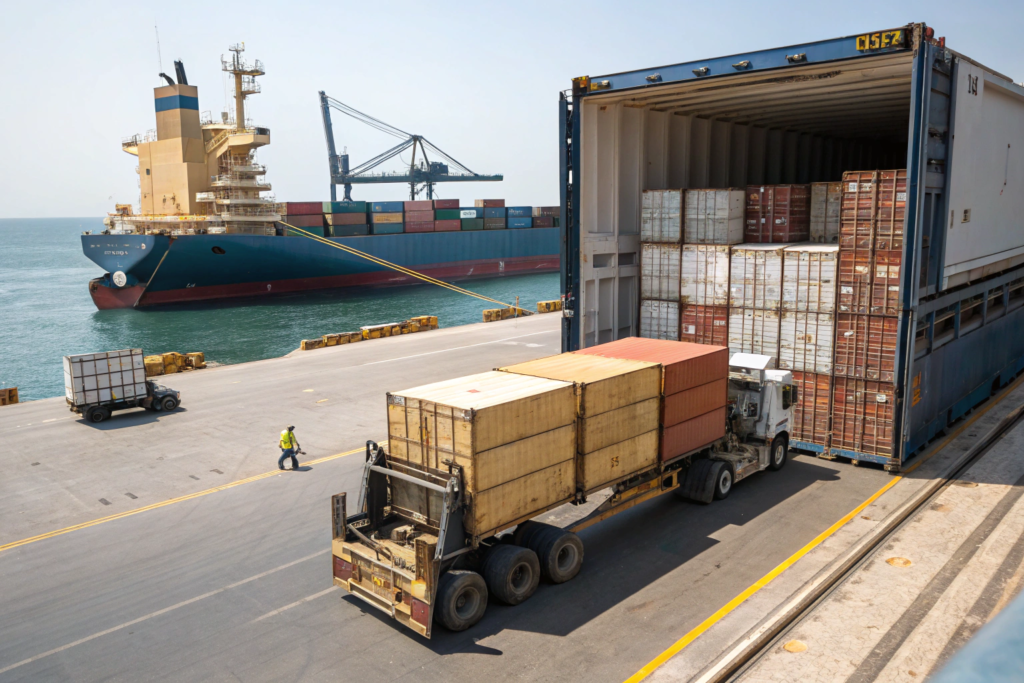
The consolidation process at the origin port takes time because the forwarder is waiting to fill a container. A consolidator will not ship a half-empty box across the ocean unless they are losing money. They wait until they have enough cargo from multiple shippers to build a full container load. Your six pallets might arrive at the CFS on a Monday, but the container does not "close" and move to the port until Friday. During those four days, your goods sit in a warehouse. They are not in transit; they are just parked. If the consolidator is disorganized, your cartons might get buried behind a rush shipment and miss the vessel entirely. This is called "short-shipping," and you find out when your freight forwarder sends you an email saying "your cargo will go on the next vessel, one week later." For an Amazon seller facing a stockout deadline, that one-week delay is catastrophic. The handling process also introduces a risk of physical damage. A forklift operator moving a heavy crate of engine parts might accidentally puncture your box of delicate porcelain gifts while turning in a tight aisle. Since the CFS handles thousands of pallets a day, they will not even notice. Your consignee discovers the damage three weeks later when they open the box in California. The claim process for LCL damage is a nightmare because you must prove exactly which link in the chain caused the damage. I always recommend that my LCL clients use an additional layer of protective packaging, such as double-walled cartons and edge-board protectors on every pallet, to survive the rough handling of the Freight Consolidation Process at a busy hub.
Why do LCL destination charges often cost more than the ocean freight itself?
This is the part that makes importers angry. The ocean freight quote for an LCL shipment might say $85 per cubic meter. Your 8 CBM shipment costs $680 to cross the Pacific. You think, "Great, that is cheap." Then the goods arrive at the deconsolidation warehouse in Long Beach, and a new invoice lands in your inbox. It lists a Destination Terminal Handling Charge, a Deconsolidation Fee, a Document Turnover Fee, a Warehouse Security Fee, a Forklift Charge per Pallet, and a Courier Fee for the delivery order. These fixed fees apply regardless of whether you ship 1 CBM or 8 CBM. The total destination bill can easily be $650 or more. Now your total freight cost is $1,330, which is $166 per CBM. For a 15 CBM shipment, that same destination cost structure pushes the total landed cost per unit significantly higher. The math tips dramatically in favor of FCL once you cross a certain volume threshold. You also need to check the "free time" at the destination CFS. Usually, you get 48 hours of free storage after the container is unpacked. If your trucker is late picking up the pallets, you accrue daily storage fees that are far higher than container yard storage. The official breakdown of these accessorial charges can be found in a standard Destination Terminal Tariff for major US port complexes. A smart importer asks their forwarder for an all-inclusive LCL quote that bundles the ocean freight and the destination handling into a single door-to-door figure before the shipment leaves China. Never accept an ocean freight-only LCL quote and assume the destination will be "just a small fee."
How Do You Calculate the Break-Even Point Between FCL and LCL?
You are looking at a purchase order for 12 cubic meters of accessories from a factory in Yiwu. The FCL rate for a 20-foot container is $2,200 all-in to your door. The LCL all-in rate is $155 per cubic meter. Quick math says 12 x $155 equals $1,860. LCL is cheaper. So you book LCL. But wait. The FCL container can hold 28 cubic meters, and you are shipping only 12, but the per-unit security, speed, and sealing integrity of FCL might be worth the extra $340 when you are shipping $40,000 worth of leather handbags. The true break-even calculation is not just about freight cost. It is about cargo value, inventory time, and risk tolerance.
You calculate the FCL-LCL break-even point by first dividing the total FCL door-to-door cost by the total LCL door-to-door cost per cubic meter to find the volume crossover point where they cost exactly the same. For a typical China to US West Coast route, this crossover currently sits at approximately 10-13 cubic meters for a 20-foot container and 18-22 cubic meters for a 40-foot container. You then adjust this raw number upward if your goods are high-value and need sealed security, or downward if they are low-value, durable goods that can survive multiple warehouse handlings.
I perform this break-even analysis for every new client at GeeseCargo. It is not a one-time thing, either. As your volumes grow across seasons, the right answer shifts from LCL to FCL and sometimes back to LCL during a slow quarter. Let me give you the exact formulas and the non-financial factors that tip the scale.
What is the exact volume formula to compare FCL and LCL total costs?
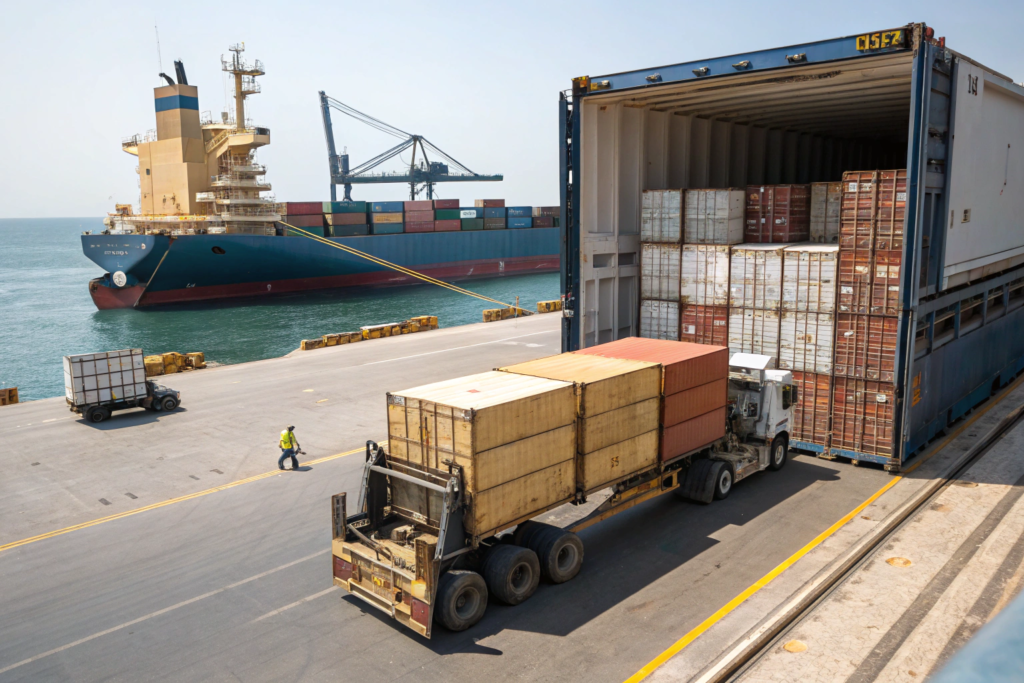
Let us build the formula with real numbers. Assume a 20-foot FCL from Shanghai to Los Angeles costs you a flat $2,800 including all origin and destination charges, trucking, and customs clearance. Your LCL all-in rate, including those same door-to-door services, is $160 per cubic meter. The raw mathematical crossover is $2,800 divided by $160, which equals 17.5 cubic meters. If your shipment is exactly 17.5 CBM, the two modes cost the same. If your shipment is 15 CBM, the LCL costs $2,400 and the FCL costs $2,800. You pay a $400 premium for the FCL. You then ask yourself: is the sealed chain of custody, the 5-day faster transit time, and the zero risk of deconsolidation damage worth the $400? For a shipment of electronics or branded fashion, the answer is almost always yes. For a shipment of cheap, bulky plastic plant pots, the answer is probably no. You must also factor in the weight. A 20-foot container has a maximum payload of roughly 28 metric tons. If your goods are dense, like bags of hardware or stone tiles, you will hit the weight limit long before you fill the physical cubic space. In that case, the effective cubic capacity is irrelevant, and you must compare the FCL flat rate against the LCL weight-based rate. You can verify the payload restrictions using the Ocean Carrier Container Specifications to ensure you do not book an FCL that you cannot legally fill. A good forwarder will flag this weight issue during the quote phase and potentially recommend a 40-foot container with a higher weight limit for dense cargo.
How do non-freight factors like security and speed change the equation?
The break-even math changes completely when you assign a dollar value to risk and time. Your Amazon FBA shipment of high-end kitchen gadgets worth $50,000 is not just cargo; it is your business’s cash flow frozen in a box. If an LCL consolidator loses two cartons during the deconsolidation shuffle, Amazon receives a short shipment and rejects the entire delivery because the box count does not match the shipment plan. Your $400 savings on LCL freight just cost you $5,000 in lost sales and a stranded inventory headache. I use a "risk premium multiplier" for high-value goods. If the cargo value per cubic meter exceeds $5,000, I automatically recommend FCL unless the shipment is tiny (under 3 CBM). The time factor is another hidden cost. FCL saves 4-7 days of transit time over LCL on the same route because you skip the consolidation waiting period and the deconsolidation unpacking queue. For a fashion importer receiving seasonal clothing, a week of delay can mean the difference between selling at full retail price and dumping the stock at a clearance sale. The Inventory Carrying Cost formula helps you quantify this. If your company’s annual cost of capital and warehousing is 25%, a one-week delay on a $30,000 shipment costs you about $144 in pure financial carrying cost. That does not include the lost margin from missed sales. When you add the carrying cost to the risk premium, the decision often swings hard toward FCL even when the raw freight numbers suggest a tie.
When Should You Choose LCL Over FCL for Your Business?
FCL sounds like the hero of the story, but LCL is not the villain. For a small business importing their first sample batch or testing a new product line, FCL is financial suicide. You cannot pay to ship a 40-foot container of air. LCL exists for a reason. It gives you access to the global shipping network without needing to purchase a massive inventory batch upfront. The key is knowing when LCL is the smart, strategic choice and when it is just a cheap shortcut that leads to a costly destination bill.
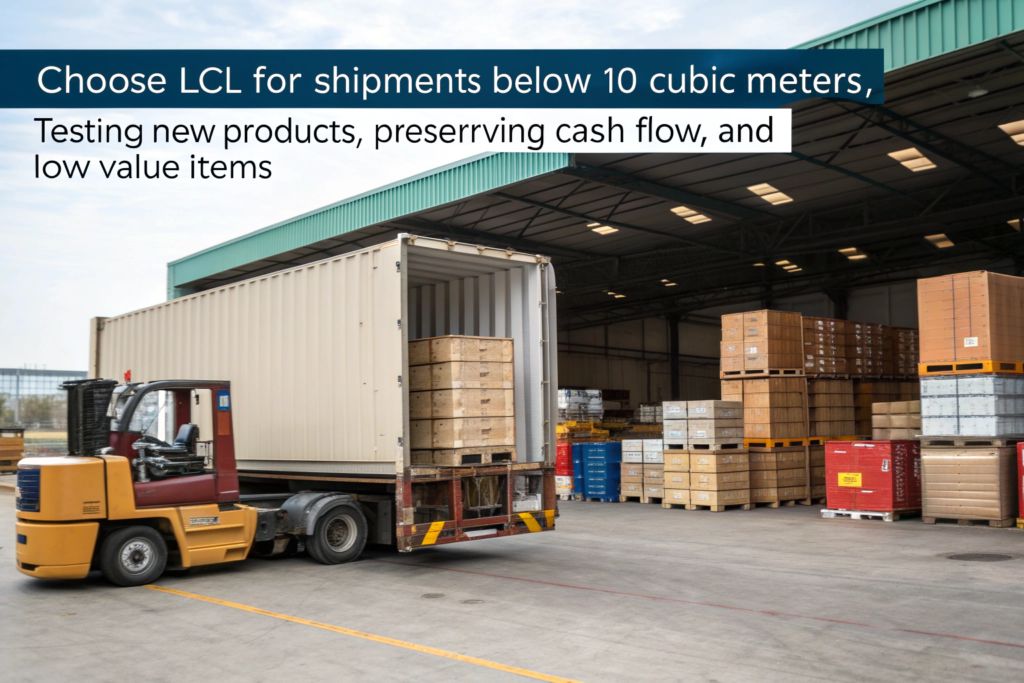
You should choose LCL over FCL when your shipment is consistently below 10 cubic meters, when you are testing a new product with uncertain demand, when your cash flow cannot support the large inventory purchase that filling a container requires, or when your goods are low-value, non-fragile items that can withstand multiple handlings without damage. LCL is the correct tool for small-volume, high-frequency restocking strategies that prioritize cash preservation over per-unit freight efficiency.
I have clients who built their entire brand on an LCL-based supply chain for the first two years. They shipped 6-8 cubic meters every month, kept their inventory lean, and never paid for empty container space. Only after they hit a consistent 15 cubic meters per month did we transition them to a bi-weekly FCL program. LCL is a stepping stone, and a good forwarder designs an LCL program that minimizes the pain points.
How does an LCL program support a lean inventory business model?
The modern e-commerce model hates big inventory. Holding 1,000 units of a single SKU in an Amazon warehouse triggers long-term storage fees and ties up cash that could fund advertising. A lean inventory model uses small, frequent restocks based on actual sales velocity. LCL shipping aligns perfectly with this. You order 300 units from the factory, the factory packs them onto 3 pallets, and those pallets move via LCL on a weekly or bi-weekly schedule. Your inventory turnover stays high, and your storage fees stay low. This strategy also protects you from a quality disaster. If your new batch of accessories arrives with a manufacturing defect, you have only 300 defective units in the pipeline, not 3,000 sitting in an FCL container on the ocean. The LCL logistics chain for lean inventory relies on a trusted forwarder who has a regular consolidation schedule. I run a weekly LCL service from Shanghai and Shenzhen to Los Angeles. My clients know that if their factory finishes production by Wednesday, the cargo loads into the Friday consolidation box and sails on the Tuesday vessel. This regularity is more valuable than a slightly cheaper spot rate. You can find the current LCL Sea Freight Rate Trends to benchmark your forwarder’s pricing against the market average. A reliable consolidator should charge a stable rate that does not swing wildly week to week, because the ocean freight component of an LCL shipment is a fraction of the total cost structure.
What type of products should never move via LCL shipping?
Some products simply do not belong in a shared container, regardless of the volume math. Fragile items like glassware, porcelain figurines, or high-end electronics are LCL disasters waiting to happen. The multiple forklift touches and the vibration of a mixed cargo stack inside a container will crack, dent, and destroy these items. I have handled a claim for a shattered shipment of ceramic holiday ornaments that an importer tried to squeeze into an LCL box to save $200. The claim paid out the material cost, but the lost holiday sales season was irrecoverable. Perishable goods with a short shelf life, like certain health supplements or specialty foods, also cannot afford the LCL consolidation delays. If your goods need to hit a retail shelf by a specific date, the variable timeline of LCL is too risky. High-theft-risk items, such as branded footwear or small consumer electronics, should always move FCL with a sealed container. An LCL warehouse is an uncontrolled access point. A small box of iPhones or designer sneakers can easily disappear into a warehouse worker’s bag during the deconsolidation shift. The cargo theft risks documented in the CargoNet Annual Report show that unattended freight at transfer warehouses is a prime target. The FCL seal chain is your only real defense against this type of organized cargo crime. For these high-risk commodities, I flatly refuse to book LCL and present my client with an air freight option for small volumes or a 20-foot FCL for the batch, explaining that the security cost is an insurance policy, not a discretionary freight expense.
Conclusion
The difference between FCL and LCL shipping comes down to three things: control, cost structure, and cargo handoffs. FCL gives you a direct, sealed pipeline from your factory to your warehouse. You pay for the entire box, but you eliminate the consolidation and deconsolidation risks that cause damage, delay, and surprise destination fees. LCL lets you buy only the space you need inside a shared box, which is essential for small and growing businesses, but it introduces multiple physical handlings and a destination cost structure that can make the total landed cost much higher than the ocean freight quote suggests.
The break-even point is not a fixed number carved in stone. It is a flexible threshold that moves based on your cargo value, your inventory timeline, and your tolerance for risk. For a standard China to US route, the financial crossover sits around 10-13 cubic meters for a 20-foot container, but a smart importer adjusts that number upward for fragile or high-value goods and downward for durable, low-cost commodities. The best freight strategy uses both modes as tools. You use LCL to test new products and maintain lean inventory during slow seasons. You switch to FCL when your volumes justify the scale and your product value demands the security of an unbroken seal chain.
At GeeseCargo, I help my clients build a shipping calendar that maps out when to flip the switch from LCL to FCL. It is a conversation we have every quarter, looking at your sales forecast, your inventory levels, and the current freight rates. The right decision is never the cheapest option on a single invoice; it is the option that protects your brand, your cash flow, and your peace of mind across the entire year.