You walked the aisles of a trade show in Guangzhou and found the perfect ceramic planter. You can already picture it on your store shelf with your brand’s logo on the bottom. But then the factory manager hands you a quote with terms you don’t recognize. FOB. EXW. MOQ of 5,000 units. You need to find your own forwarder, navigate US customs, figure out the labeling requirements, and somehow get the goods into your distribution center without losing a month of margin. Suddenly, that beautiful planter feels like a ticking time bomb of hidden costs.
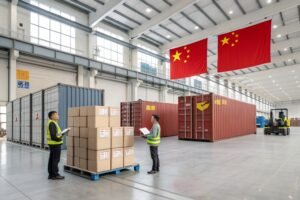
GeeseCargo’s private label import service gives you a single point of accountability from the factory’s loading dock to your distribution center’s receiving bay. You do not need to hire three different vendors. We act as the bridge between you and the supplier. We handle the FOB collection, the quality control inspection, the consolidation, the ocean or air freight, the US customs clearance under our bond, the tariff classification, and the final truck delivery to your warehouse. You focus on product design, branding, and selling. We turn a complex international transaction into a simple domestic-style purchase order.
Retail buyers who source private label goods from China are playing a different game than branded goods importers. Your margin depends entirely on controlling the landed cost. A $0.50 per unit surprise in freight or duty can wipe out a season’s profit on a 10,000-unit order. You need a logistics partner who speaks the language of retail math: margin percentages, floor-ready dates, and chargeback avoidance. Let me walk you through exactly how we make your private label imports predictable, profitable, and pain-free.
How Do You Take Control of the FOB Process for Private Label Orders?
Your supplier sent you a proforma invoice with the term FOB Shanghai. You signed it, thinking FOB means the factory handles everything up to the port. Then you got a separate invoice from the factory’s designated forwarder for "local charges" that were double what you budgeted. The factory’s cousin’s trucking company held your goods at the port until you paid a "priority loading fee" that was never mentioned. You lost control the moment the goods left the factory floor.
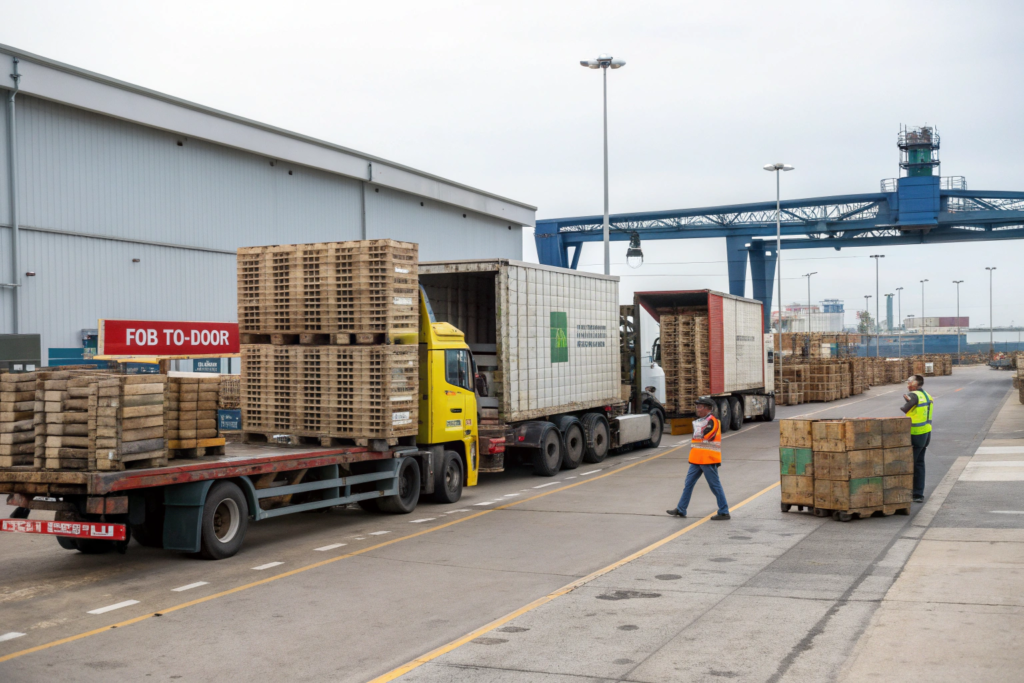
We take control of the FOB process by becoming the named forwarder on the supplier’s booking. The moment your goods pass the factory gate, they enter our custody chain. We use our own contracted truckers, our own warehouse, and our own carrier bookings. The factory has no relationship with the trucker or the port terminal. There are no hidden local charges because we quote you a fixed FOB-to-door price with every line item disclosed upfront. You regain control of your cargo at the factory gate.
The most common mistake I see retail buyers make is allowing the supplier to control the shipping. The supplier’s priority is their own margin, not your landed cost. They often mark up the freight and pocket the difference as additional profit. They use cheap, slow carriers to maximize their own cut. They have no incentive to consolidate your goods efficiently or clear customs quickly. When the supplier controls the logistics, the logistics serve the supplier’s interests, not yours.
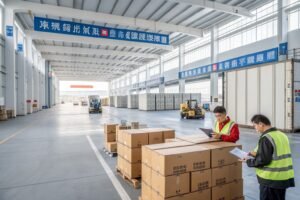
We flip this dynamic. You instruct your supplier that GeeseCargo is the nominated forwarder. The supplier books the space with us, not with their own forwarder. Our local operations team contacts the factory directly and arranges the pickup date and time. Our trucker arrives, loads the goods, and issues a GeeseCargo bill of lading. The goods are transported to our consolidation warehouse, not a third-party warehouse controlled by the factory. At our warehouse, we perform the quality inspection, the labeling, the palletization, and the container loading. The factory’s involvement ends at the factory loading dock. This FOB control strategy is not about mistrusting the supplier. It is about creating a clean, transparent chain of custody where every cost and every process is visible to you. You pay one invoice that covers the trucking, the inspection, the ocean freight, the customs clearance, and the delivery. No surprises.
Why Should You Nominate Your Own Forwarder Instead of Using the Supplier’s?
Your supplier offers you a "DDP to your door" price. It seems convenient. One price, one point of contact. But you have no visibility into the freight cost, the duty paid, or the carrier used. You are paying a markup on a markup. And if something goes wrong, the supplier controls the information flow. You hear only what they want you to hear.
Nominating your own forwarder separates the product transaction from the logistics transaction. You negotiate the product price directly with the supplier. You negotiate the logistics price directly with us. There is no hidden margin stacking. If the freight market drops and ocean rates fall, you get the savings immediately because your contract is with us, not with the supplier. If there is a delay, we tell you directly and tell you why. You are not waiting for the supplier to filter the information. You also build your own import history and your own customs compliance record, which is an asset for your business. Using the supplier’s forwarder means the supplier is the importer of record. You are just buying goods domestically. This might seem easier, but it means you never learn the real import costs, and you cannot use duty drawback or other customs programs that benefit the actual importer. Nominating your own forwarder gives you ownership of your supply chain data and your import compliance.
How Does Consolidation Reduce Your Private Label Freight Costs?
You have orders with three different suppliers. Supplier A has 5 pallets in Ningbo. Supplier B has 3 pallets in Yiwu. Supplier C has 8 pallets in Guangzhou. If you ship each as a separate LCL shipment, you pay three origin CFS fees, three destination CFS fees, and three LCL ocean rates. Your landed cost per unit is unnecessarily high.
We pick up all three partial loads and bring them to our Shenzhen consolidation warehouse. We combine the 16 pallets into one full container load. You pay one FCL ocean rate instead of three LCL rates. The cost per cubic meter drops by 40% to 60%. You also avoid the destination CFS deconsolidation fees entirely because the container is delivered intact to your warehouse. The consolidation adds about 2 to 3 days to the origin timeline, but for retail private label, the timing is almost always built around a seasonal delivery window, not a 2-day urgency. The consolidation savings go straight to your bottom-line margin. For a retail buyer purchasing 10,000 units across multiple suppliers, the consolidation savings can be the difference between a profitable season and a breakeven one.
How Do You Ensure Your Private Label Products Meet US Compliance Standards?
You designed a beautiful private label candle. The glass jar, the wax blend, the cotton wick, the gift box. You found a supplier who replicated it perfectly. You shipped the order. US Customs held the container because the candle wick contained a metal core that tested positive for lead. The entire shipment was seized and destroyed. You had no idea that lead-core wicks were banned in the US since 2003.
We audit your private label product specifications against US federal and state compliance requirements before you place the final order. We check for CPSC regulations, FDA requirements, FTC labeling rules, and state-specific bans like California’s Proposition 65. We flag compliance risks during the sampling stage, not when the container is already at the port. If a product needs third-party lab testing, we connect you with an accredited lab in China that can test before production is complete.
The compliance landscape for private label consumer goods is a minefield. The supplier in China is not responsible for knowing US regulations. Their job is to manufacture to your specifications. If your specifications do not include the regulatory requirements, the product will be non-compliant, and the liability falls entirely on you as the importer of record. I have seen a children’s pajama set seized because the fabric was not treated with a flame retardant or tight-fitting pattern exemption was not documented. I have seen a stainless steel water bottle recalled because the external coating contained lead above the 90 ppm limit. I have seen a shipment of holiday decorations impounded because the product did not have the required tracking label with the manufacturer’s identification.
We stop these disasters at the sampling stage. When you send us the product specifications for your private label item, we run it through our compliance checklist. The checklist is based on the product category. Toys and children’s products trigger CPSC testing requirements. Food-contact products trigger FDA regulations. Electronics trigger FCC declarations. Textiles trigger flammability standards and fiber content labeling. Cosmetics trigger MoCRA facility registration and product listing. We do not claim to be compliance lawyers, but we know the common failure points. We tell you what lab tests you need, what certificates you must hold, and what labels must be on the product. We then verify that those documents exist before we load the container. If a supplier claims a product is compliant but cannot produce the test report, we stop the shipment and wait for the documentation. This gatekeeping function protects your brand from a recall that could bankrupt your retail business.

What Are the Mandatory Labeling Requirements for Private Label Goods?
You designed a beautiful minimal label. It has your brand logo and the product name. It looks clean and premium. But it is missing the country of origin marking, the fiber content, the care instructions, and the importer identification. US Customs flags the shipment for a labeling violation. The goods cannot be sold until they are re-labeled, a costly and time-consuming process.
The mandatory labeling requirements for consumer goods sold in the US are specific and non-negotiable. Every product must have a permanently affixed "Made in China" origin label. The label cannot be on a removable hang tag. It must be sewn into the seam for textiles, printed on the bottom for ceramics, or etched into the surface for metal goods. Textiles must have a fiber content label and a care instruction label. Children’s products must have a tracking label with the manufacturer name, location, date of production, and batch number. Food products must have a Nutrition Facts panel and an ingredient list. Cosmetics must have a list of ingredients in descending order of concentration. We provide your supplier with an FTC labeling guide specific to your product category. We then check a sample of the finished goods to ensure the labels are present and correct before the goods ship.
How Do You Navigate Anti-Dumping Duties for Private Label Products?
You found a supplier for wooden bedroom furniture that offers a price 30% lower than anyone else. You design a beautiful private label collection and ship a container. Customs assesses a 216% anti-dumping duty on the entire shipment. The duty is more than the product value. You abandon the shipment because paying the duty would cost three times what the goods are worth.
Anti-dumping duties are a trap for unsuspecting private label buyers. They apply to specific products from China, including wooden bedroom furniture, certain steel products, aluminum extrusions, and mattresses, among others. The duty rates are punitive and are charged in addition to the standard tariff. We check your product description against the current anti-dumping and countervailing duty orders published by the International Trade Administration. If your product falls under an AD/CVD order, we tell you before you place the purchase order. We can advise on alternative materials, alternative countries of origin, or specific exclusion scopes that might apply. If you proceed, we ensure the entry is filed correctly with the case number and the cash deposit rate. A missed AD/CVD filing is customs fraud, and the penalty is severe. This is not a risk you can afford to take blindly.
How Do We Protect Your Brand’s Quality and Packaging Integrity?
Your private label organic skincare line looks stunning on the mockup. The frosted glass bottle, the bamboo cap, the soft-touch label. The supplier ships 5,000 units. When you open the pallet at your distribution center, the bamboo caps are cracked on 15% of the units, the labels are peeling at the corners, and the frosted finish has an uneven splotchy texture. Your brand launch is in two weeks, and you have 750 unsellable units.
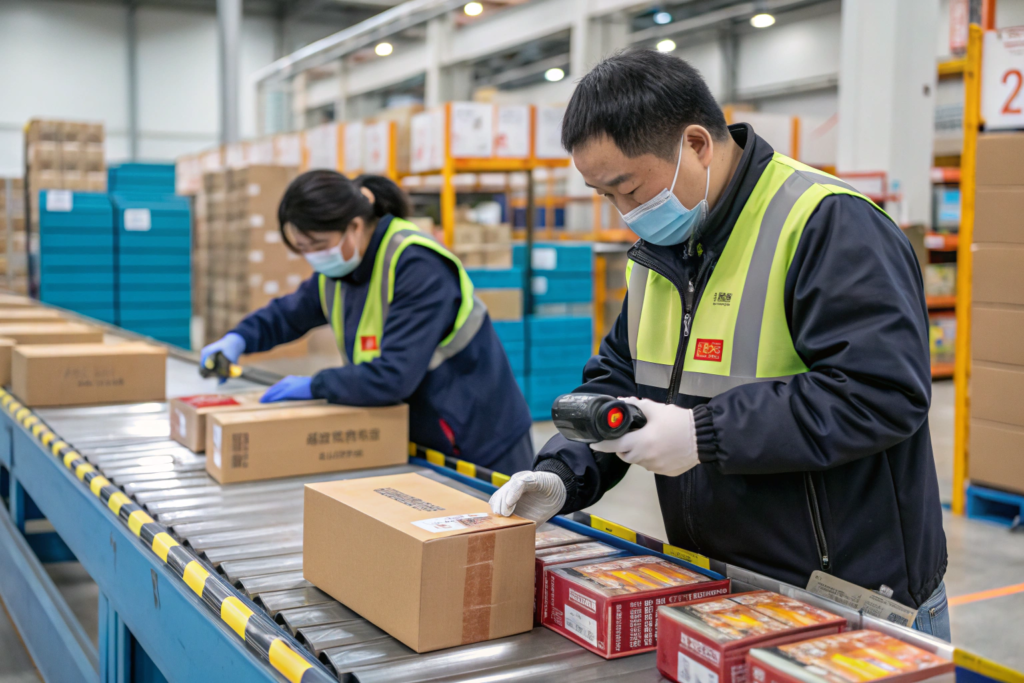
We protect your brand integrity by performing a detailed packaging and quality inspection at our warehouse before the goods are loaded into the container. We do not rely on the supplier’s word or your single approved sample. We open a statistically significant random sample of units, inspect the product finish, test the packaging durability, verify the barcode scannability, and compare every detail against your approved reference standard. If the goods fail, we stop the shipment and require rework.
Private label branding is your intellectual property. The product itself is a commodity that any competitor can source. Your brand is what makes it unique and sellable. A damaged label, a cracked cap, or a scuffed gift box is not just a cosmetic flaw. It is a direct attack on your brand’s value proposition. A customer who receives a sub-standard private label product does not blame the factory in China. They blame your brand, and they do not buy again.
Our packaging integrity inspection specifically focuses on the failure points that private label goods suffer during transit. We check the label adhesion by doing a tape test. We apply a piece of standard adhesive tape to the label, press it down, and pull it off quickly. If the label lifts or the print transfers to the tape, the adhesion is insufficient for retail handling. We check the cap or closure fit by doing a torque test. We measure the force required to open and close the cap. If it is too loose, it will leak. If it is too tight, the customer will struggle and leave a negative review. We check the color consistency across the batch by comparing units from different cartons against the sealed reference sample under a controlled light source. We check the fill level for liquid products. A bottle that is visibly under-filled looks like a rip-off, even if the net weight is correct. We check the barcode scannability with a verifier. A barcode that does not scan at the retail point of sale causes a chargeback from the retailer. These checks are specific, physical, and documented with photographs. The report is your evidence that the goods met your quality standard when they left China.
How Can a Pre-Shipment Inspection Catch Defects Before They Ship?
You think inspecting the goods when they arrive in the US is good enough. But when you find a 20% defect rate in your warehouse, you are in a terrible negotiating position. The supplier has their money. You have a warehouse full of defective goods. Return shipping costs more than the goods are worth. You are forced to accept a small discount and sell the rest at a loss.
Pre-shipment inspection in China catches defects when the supplier still has skin in the game. They have not been paid the balance. The goods are still in their possession. The leverage is yours. We inspect when production is 100% complete and at least 80% packed. We use the AQL sampling standard to pull a random sample. If the defect count exceeds the acceptable limit, we issue a failed inspection report. You then have options: require the supplier to rework the defective units, negotiate a price reduction for accepting the goods as-is, or cancel the order and only pay for the raw materials. The supplier almost always chooses to rework because they want the balance payment. This is the power of an origin-side inspection. It protects your cash and your brand before the goods are irretrievably shipped. We have saved clients from receiving entire containers of misprinted gift boxes, wrong-color textiles, and poorly assembled furniture. The inspection cost is a fraction of the cost of receiving a bad batch.
What Happens When Your Private Label Packaging Is Damaged in Transit?
The goods pass the pre-shipment inspection. They are loaded into the container perfectly. But during the ocean voyage, a pallet shifts, and the cartons on the bottom are crushed. The retail gift boxes inside are scuffed and dented. The products are fine, but the packaging is unsellable in a premium retail environment.
We design the packaging and palletization to survive the transit stress. But if damage occurs despite our best efforts, our cargo insurance covers the full commercial invoice value of the goods, including the product cost and the freight cost. We do not use a minimal liability carrier policy that pays $500 per container. We use an all-risk marine cargo insurance policy that covers physical loss or damage from any external cause, including container collapse, rough handling, water damage, and theft. If damage occurs, you file a claim with photographs, and we process the claim with the underwriter. The settlement pays the replacement cost of the damaged goods, not a depreciated value. This marine cargo insurance is a standard part of our private label service. We do not make it an optional add-on that you regret skipping when something goes wrong.
How Do We Manage the Purchase Order Lifecycle for Retail Buyers?
You have 15 private label SKUs in development across five suppliers. Each is at a different stage: sampling, production, finishing, and ready to ship. You manage this in your head and with email threads. A supplier misses their ship date by two weeks, and you do not find out until you email them asking for the tracking number. Your entire retail floor set is delayed because one supplier slipped.
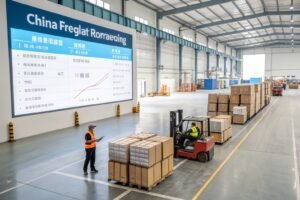
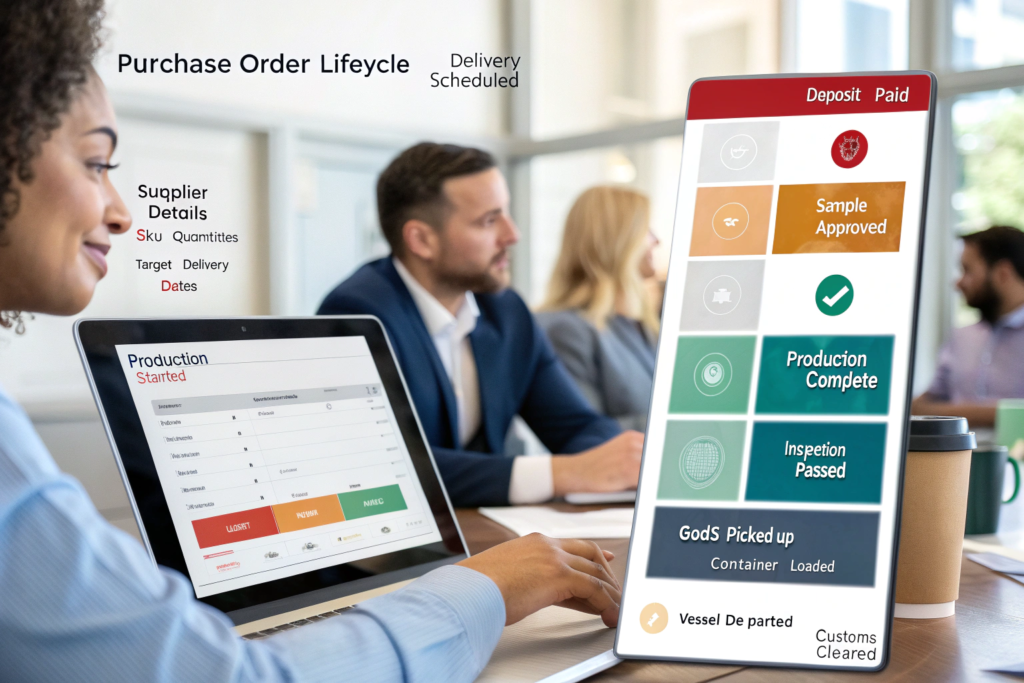
We manage the purchase order lifecycle on a shared digital dashboard. You enter your POs with the supplier details, the SKU quantities, and the target delivery date. Our team tracks the production milestones: deposit paid, sample approved, production started, production complete, inspection passed, goods picked up, container loaded, vessel departed, customs cleared, and delivery scheduled. You see the status of every PO in real time. We chase the suppliers on your behalf so you are not managing five different factory relationships in a language you do not speak.
The purchase order lifecycle is the heartbeat of a private label import program. If you miss a milestone, the entire delivery timeline shifts. A two-week production delay at the factory does not just push the delivery by two weeks. It might miss the booked vessel, push the container to the next sailing five days later, and then the container hits the destination port during peak season when the trucker is booked solid. A two-week factory delay can easily become a four-week delivery delay.
Our team speaks Mandarin, Cantonese, and the local dialects of the manufacturing regions. We call the factory weekly and get a real status update, not a polite email promising "soon." We verify the production status by asking for specific proof: a photo of the production line running, a photo of the finished goods stacked with the PO number visible, or a live video call walk-through. If a supplier is slipping, we escalate early. We work with you to adjust the shipping method or negotiate a partial shipment of the completed SKUs while the delayed SKU finishes. This proactive PO management is the difference between a retail buyer who always seems to have supply chain problems and one who consistently hits their floor-set dates. The purchase order tracking system is free as part of our import service. You get a professional supply chain management function without hiring a supply chain manager.
How Do We Coordinate Multi-Supplier Orders into One Consolidated Shipment?
You have orders with suppliers in Ningbo, Yiwu, and Dongguan. They all promise to be ready "end of April." But one finishes early and demands you pick up immediately to free their warehouse space. Another is two weeks late. You cannot consolidate if the timing is not coordinated.
We coordinate the pickup timing by communicating with all suppliers simultaneously. We tell Supplier A that the pickup window is April 22-24, not "whenever you finish." We hold Supplier B’s early shipment in our warehouse at no charge until the consolidation window opens. We pressure Supplier C by calling daily in the final week before pickup. If Supplier C is going to miss the window, we make a decision with you: ship the other suppliers’ goods on schedule and send Supplier C’s goods later, or hold the entire consolidation and delay the container by a few days. We present the cost impact of each decision. Holding the container for three days might cost $150 in warehouse storage. Shipping separately might cost $800 in additional LCL fees. You make the decision with full information. The consolidation window is a discipline we enforce across your supplier base. Suppliers learn that we are serious about the pickup dates, and their performance improves over time.
What Is the Financial Flow of a Private Label Import Transaction?
You are worried about paying a supplier 100% before the goods ship. You have heard horror stories of suppliers disappearing after receiving the full payment. But the supplier is worried about producing custom-branded goods without a deposit. You need a payment structure that protects both sides.
We recommend a standard payment structure: 30% deposit to start production, 70% balance after the goods pass inspection and before release to our trucker. The deposit covers the supplier’s raw material costs. The balance is only paid when we confirm the goods exist, are correctly produced, and have passed our inspection. We do not handle the payment itself; you pay the supplier directly. But we act as the verification agent. The supplier knows that the balance payment is contingent on a passed inspection by GeeseCargo. This gives the inspection report real teeth. If the goods fail inspection, you do not release the balance payment until the rework is complete. This payment structure, combined with our physical inspection and custody control, creates a closed loop of trust. The supplier trusts they will be paid if they produce correctly. You trust that you will not pay for defective goods. This is the standard trade finance practice for private label importing, and we help you implement it with your suppliers.
Conclusion
Private label importing from China is the highest-margin strategy available to a retail buyer, but it is also the one with the most hidden tripwires. The product cost is only half the equation. The freight, the duty, the compliance, the quality control, and the supplier coordination form the other half. You cannot master one without the other and expect a profitable outcome.
Our service at GeeseCargo wraps all the post-supplier complexity into a single, managed process. We pick up the FOB goods and take custody. We inspect the quality against your sealed sample. We audit the packaging and labeling for retail compliance. We consolidate multi-supplier orders into efficient full containers. We clear US customs under our bond as the importer of record. We truck the goods to your distribution center on a scheduled appointment. And we provide a digital dashboard that tracks every milestone in real time.
You are a retail buyer because you have taste, you understand your customer, and you can sell. You did not sign up to become an international logistics coordinator. Let us be that coordinator for you. If you are planning a private label program, go to GeeseCargo.com and send me your product details and your supplier contacts. I will put together a complete import timeline and a transparent cost breakdown from FOB to your warehouse door. Let’s get your brand on the shelf, on time and on budget.