You are sitting at your desk, staring at two numbers. One is a cheap FOB quote from your supplier. It looks beautiful on the surface. The other is our DDP quote. It looks higher. Your gut tells you to take the cheap one. You want to protect your margin. But your gut has been wrong before. You remember the last FOB shipment. The freight invoice had line items you never budgeted for. The customs broker sent a separate bill. The trucker asked for a fuel surcharge. The cheap quote turned into an expensive lesson. The true cost of shipping is not the first number you see. It is the final number you pay. At GeeseCargo, we do not play the low-ball-and-hide game. I want to show you exactly how we calculate the true all-in cost of our DDP shipping. I want you to understand every dollar so you can compare our quote honestly against the alternatives.
You calculate the true all-in cost of GeeseCargo’s DDP shipping by adding the factory pickup, the Chinese export clearance, the ocean or air freight, the US import duty, the customs bond, the brokerage fee, the destination port charges, the deconsolidation, and the final delivery with liftgate. Our DDP quote already bundles all these costs into one single, guaranteed number. There are no post-delivery surcharges. There are no separate broker invoices. To calculate the true cost, you simply read our quote. Compare that single number to the sum of a fragmented FOB quote plus actual freight plus actual duty plus actual trucking plus a 10% buffer for surprises. Our all-in price is transparent, fixed, and auditable down to the line item.
I have been in freight forwarding for many years. I know the tricks that make a cheap quote look cheaper than it is. I know the hidden fees that ambush importers after the container lands. I built GeeseCargo to be the opposite of that. I want to break down our DDP pricing brick by brick. I will show you what goes into our number, how we keep it honest, and how you can run the math yourself to see that true DDP is often the most cost-effective choice you can make for your clothing, gifts, and accessories.
What Are the 10 Cost Components Inside a True DDP Quote?
A DDP quote is not a single cost. It is a bundle of 10 distinct cost components. Each one represents a physical or regulatory step in the journey from the factory in China to your door. Cheap providers hide these components by quoting only 3 of them. They leave the other 7 as "variable" or "pass-through" expenses. When the bills arrive, you pay them separately. You thought the DDP quote was $5,000. You ended up paying $7,200. A true DDP provider like GeeseCargo exposes all 10 components. We know them. We measure them. We price them into the fixed quote. You see the full cost upfront. No leaks. No surprises.
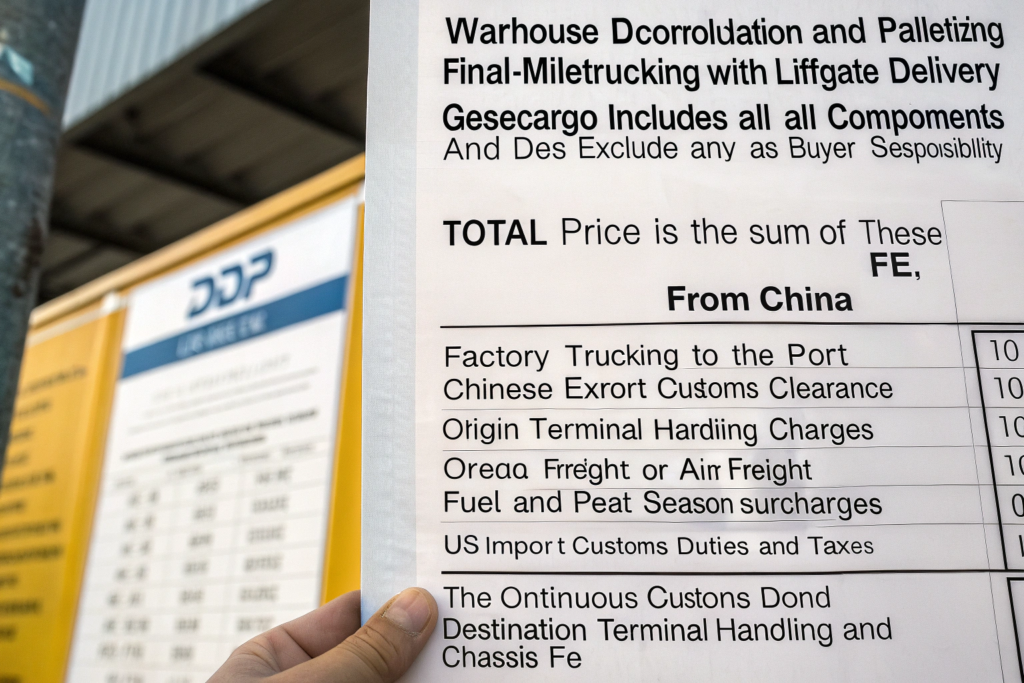
The 10 cost components of a true DDP quote from China are: factory trucking to the port, Chinese export customs clearance, origin terminal handling charges, ocean freight or air freight, fuel and peak season surcharges, US import customs duties and taxes, the continuous customs bond, the destination terminal handling and chassis fee, warehouse deconsolidation and palletizing, and final-mile trucking with liftgate delivery. GeeseCargo includes all 10. We do not exclude any and call them "buyer’s responsibility." Our single all-in price is the sum of these 10 components plus our service fee, locked in before the shipment moves.
I once sat down with an importer who was comparing our DDP quote against a broker’s "DDP" quote. Our price was $6,200. The broker’s price was $5,500. He was ready to go with the broker. I asked him to send me the broker’s quote breakdown. The broker had excluded the destination terminal handling. Excluded the chassis fee. Excluded the customs bond. Excluded the liftgate delivery. The broker’s true final cost would have been around $6,800. Our $6,200 was actually $600 cheaper. The importer was shocked. He realized he had been comparing a complete number to a fictional number. That conversation changed his entire approach to freight. He now asks every forwarder, "Does this include all 10 components?" We love that question because we can answer "Yes" immediately.
How Do Origin Charges Work in a DDP Contract?
Origin charges cover everything from the factory door to the vessel’s departure. First, the factory trucking. Our driver picks up the goods. The cost depends on the distance from the factory to the port and the truck type. Second, the Chinese export customs clearance. Our in-house team files the export declaration. This fee includes the documentation and the electronic filing. Third, the origin terminal handling charge. The port charges a fee to receive the container and load it onto the ship. This fee is set by the terminal operator. We do not mark it up secretly. We pass it through at cost. Fourth, if the goods are LCL, there is a consolidation fee at our warehouse. We combine your cartons with other shipments to fill a container. This covers the labor and the container sealing. All these origin charges are hard costs. We disclose them. You can verify them against the port tariff of the specific Chinese port. Our DDP quote bundles them so you do not receive 4 separate invoices.
What Makes Up the Main Carriage Freight Cost?
Main carriage is the big move. The ocean or air crossing from China to the US. The base ocean freight rate is a per-container price. It fluctuates with the market. We lock in a rate through our carrier contracts. We do not quote you a spot rate that can vanish. We add the bunker fuel surcharge and the peak season surcharge if applicable. These are standard pass-throughs that the steamship lines impose. We absorb them into our fixed DDP price. If you choose air freight for urgent clothing samples or gifts, the cost is per kilogram. It includes the fuel surcharge and the security fee. We give you both options. Ocean for cost efficiency. Air for speed. The freight cost is the largest single component. It is transparent in our quote breakdown. You know exactly what you are paying for the ocean freight portion. We do not inflate it to hide other fees.
How Do US Customs Duties Actually Get Calculated in Our DDP Price?
Duty is the scary word. Many importers do not know their exact duty rate. They estimate. They guess. They hope. A wrong guess leads to a surprise bill or a customs hold. At GeeseCargo, we remove the guesswork. We calculate the duty precisely before we quote. We use the official Harmonized Tariff Schedule of the United States. We classify your product based on the material, function, and construction. We apply the correct HS code. We multiply the duty rate by the customs value of the goods. The customs value is the price you paid the factory, plus the freight cost to the port of entry. This is the legal formula. We do not inflate the duty to make a hidden profit. We show you the exact duty line in our quote.
US customs duties are calculated by multiplying the duty rate from the US Harmonized Tariff Schedule by the customs value, which is the product cost plus the freight and insurance to the US port. GeeseCargo’s in-house customs team classifies your clothing, gifts, and accessories with the precise 10-digit HTS code. We check for Section 301 tariff additions. We verify if any duty exemption or exclusion applies. We then add the Merchandise Processing Fee and the Harbor Maintenance Fee. We bundle this exact duty amount into your all-in DDP price. You pay the duty through us. We pay US Customs directly under our continuous bond. You never write a separate check to the government.
I remember a client who imported a mixed shipment of cotton and polyester scarves. His previous forwarder used a generic textile HS code with a high duty rate. He was overpaying duty by 8% for two years. When we took over, our customs team reviewed the fiber content of each SKU. We reclassified the polyester scarves under a different, lower-duty heading. We filed the correct entry. The duty bill dropped. The client’s DDP price dropped. He was thrilled, but also angry that he had been overpaying for so long. Duty classification is a skill. We invest in that skill. We do not just punch in the first code that looks right. We optimize the classification legally. This duty accuracy is part of our all-in cost calculation. It keeps your import duty precise and your conscience clean.
How Do We Account for the Merchandise Processing Fee and Harbor Maintenance Fee?
The Merchandise Processing Fee is a US Customs charge on formal entries. It is 0.3464% of the shipment value, with a minimum and maximum cap. The Harbor Maintenance Fee is 0.125% of the cargo value for ocean shipments. These are small percentages. But on a $50,000 shipment, the MPF is $173.20 and the HMF is $62.50. A cheap DDP quote often omits these. They call them "government fees" and bill you later. We include them. Our quote engine automatically calculates the MPF and HMF based on the customs value and adds them to the duty line. You see them as separate sub-items if you want a full breakdown. You pay them once, within our DDP total. You never receive a separate CBP bill for these fees. We pay them on your behalf and absorb them into the customs clearance cost.
What If the Duty Rate Changes After We Quote?
This goes back to our DDP guarantee. If the US government changes the tariff rate on your HS code after we lock in your DDP price, we absorb the difference. Our quote is a fixed contract. We build a small risk buffer into our pricing to cover minor tariff fluctuations. If a major Section 301 tariff round hits mid-transit, we still hold the price. I described earlier how we ate a $7,000 duty spike on a container of electronics. It hurt our margin. But it protected our client’s trust. That is the GeeseCargo difference. We do not renegotiate the price after the goods are on the water. The duty calculation you see in our initial quote is the duty cost we commit to, regardless of political changes during the transit time. This fixed-duty guarantee is worth its weight in gold for your landed cost forecasting.
What Destination Charges Are Often Hidden by Other Forwarders?
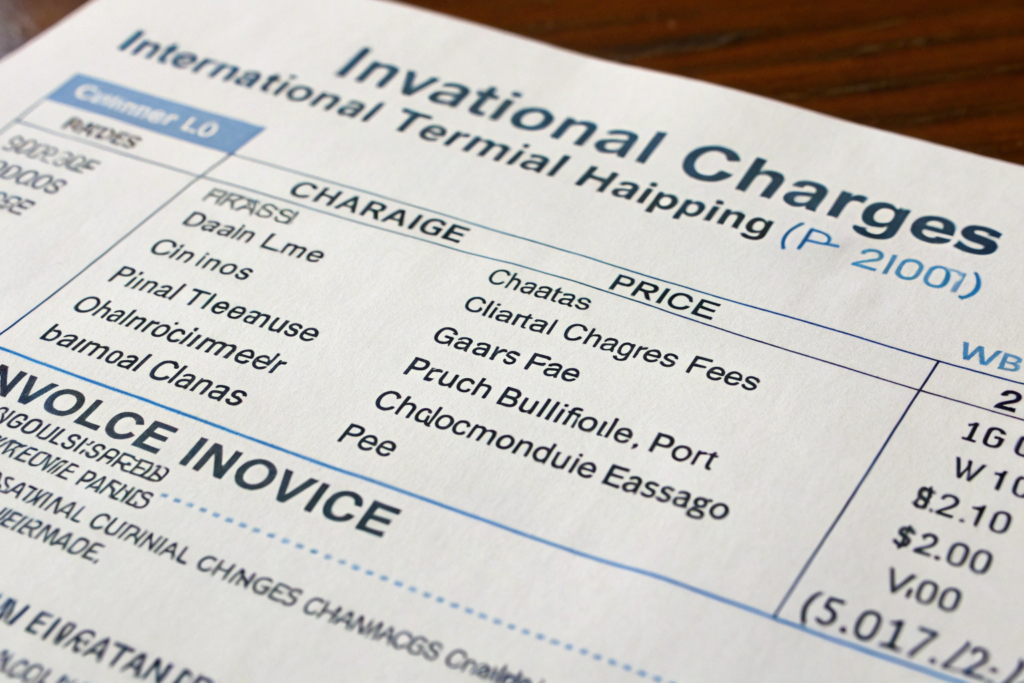
The container has crossed the ocean. It arrives at the Port of Los Angeles or New York. This is where the hidden fees ambush you. The cheap forwarder’s quote covered only the ocean leg. Now the destination charges kick in. They are real. They are unavoidable. But they were never disclosed. The Destination Terminal Handling Charge is a fee the terminal charges to unload the vessel and make the container available for pickup. The chassis fee is a daily rental for the trailer that carries the container on the road. The Pier Pass fee is a charge for moving containers during peak hours in LA. The warehouse deconsolidation fee applies if your goods are LCL and need to be unloaded from a shared container. The palletizing fee covers the labor to stack your cartons neatly on pallets for final delivery. All these are legitimate costs. Hiding them is not legitimate.
The destination charges that are frequently hidden include the Destination Terminal Handling Charge, chassis rental fee, Pier Pass or Clean Truck fee, deconsolidation warehouse fee, and final palletizing labor. GeeseCargo includes all of these in the all-in DDP quote. We pull the current terminal tariff directly from the port’s published schedule. We use contracted drayage carriers with fixed chassis rates. We do not mark up these pass-through charges. We show them as a bundled destination line item. You never receive an urgent call asking for an additional wire transfer to release your container from the port.
A client once called me in a panic. His previous forwarder had his container sitting at the LA terminal for 5 days. The forwarder sent him an invoice for $900 in storage and chassis fees. The client had no idea these charges existed. The forwarder’s quote had a tiny asterisk next to "destination charges not included." The client paid the ransom. He was furious. When he moved to GeeseCargo, I walked him through our destination cost breakdown. I showed him the terminal tariff document. I showed him our chassis agreement. I told him, "This is the cost. It is in the quote. You will never get a surprise bill from us." He visibly relaxed. Transparency is not just ethical. It is calming. We want our clients calm.
How Is the Final Mile Trucking Cost Calculated Accurately?
Final mile trucking is the delivery from the port or the deconsolidation warehouse to your door. The cost depends on the distance, the truck type, and the accessorials. We calculate it using the destination ZIP code. A delivery to a commercial warehouse with a loading dock is cheaper. A residential delivery that requires a box truck with a liftgate is more expensive. We pre-qualify your address. We use satellite maps to check the access. We confirm the equipment needed. We then plug the details into our drayage rate engine. It returns a fixed cost from our contracted carriers. We add a fuel surcharge if applicable. We present this as your final mile cost. If you need an inside delivery, where the driver carries the pallet into your facility, we add that labor cost. We do not spring it on you after the truck arrives. The trucker does not demand cash at the door. The price is set before the container leaves China. This is how we calculate final mile trucking with precision.
What Is a Chassis Fee and Why Do Some Quotes Exclude It?
A chassis is the wheeled frame that carries the container on the road. The shipping line does not provide it for free anymore. You pay a daily rental. Some ports have a "pool" chassis system. You pay a flat fee per use. A standard drayage move uses the chassis for one day. If the driver keeps it overnight, you pay an extra day. Cheap DDP quotes exclude the chassis fee. They call it a "trucker’s cost" and let the trucker bill you. We include the chassis fee in our drayage rate. Our carrier contract specifies an all-inclusive rate that covers the chassis, the driver, the fuel, and the port gate fee. You do not receive a separate chassis invoice. This bundling is part of our fixed-price philosophy. We eliminate the micro-bills that clutter your accounting. One destination delivery line. One port drayage cost. No loose ends.
How Do We Compare All-In DDP Cost Against FOB and DDU?
The only way to compare shipping terms fairly is to put them on a single spreadsheet. You take the FOB price. You add the freight quote. You add the estimated duty. You add the customs bond. You add the broker fee. You add the terminal handling. You add the trucking. You add a 5% to 10% buffer for the unknowns. That total is the true FOB landed cost. Then you take the DDU quote. You add the duty and the broker fee because DDU does not include them. That is the true DDU landed cost. Then you look at our DDP quote. It already contains everything. You compare the three final numbers. The DDP number is often competitive. Sometimes it is even lower. But even if it is slightly higher, it comes with zero operational burden and zero financial risk. You must factor in the value of your time and the cost of your stress.
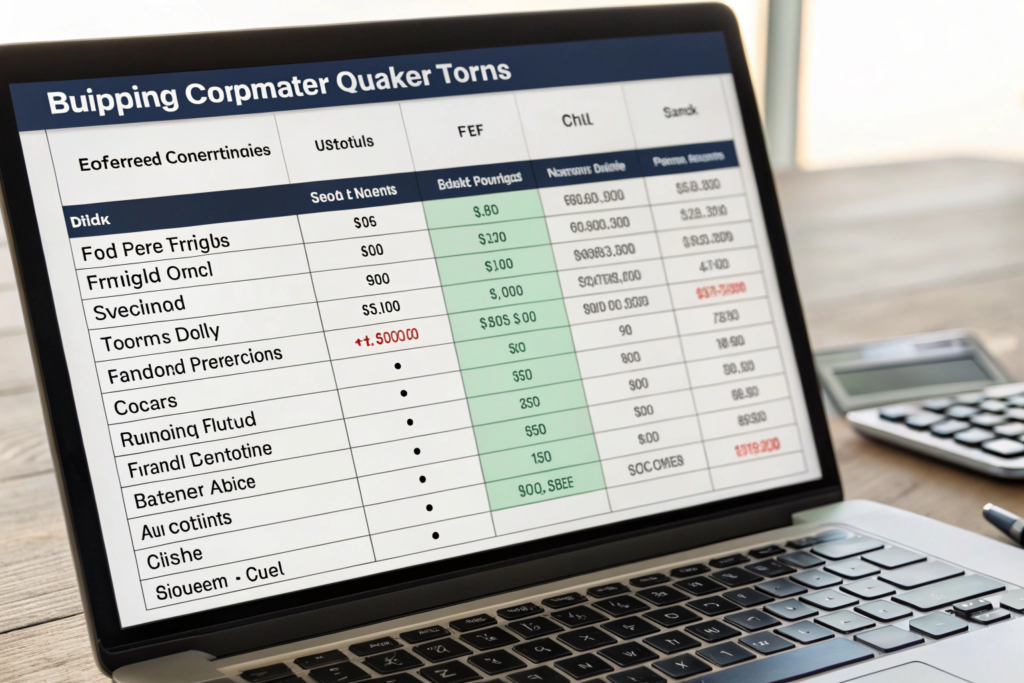
We compare all-in DDP cost against FOB and DDU by building a landed cost model. The FOB column starts with the supplier’s FOB price. We add the ocean freight, the insurance, the customs bond, the duty, the MPF, the HMF, the broker fee, the destination terminal handling, the chassis fee, and the trucking. The DDU column adds the duty and broker fee to the DDU quote. The DDP column is our single all-in number. We present this comparison to clients in a clear table. The DDP column has no asterisks. It is the complete cost. The FOB column often surprises importers because the sum of the parts is 20% to 30% higher than the initial FOB unit price suggested. This exercise reveals that true DDP is not more expensive. It is more honest.
I do this comparison exercise with new clients regularly. A recent client imported accessories. His FOB price was $15,000. He had a freight quote of $2,800. He thought his total cost was $17,800. We built the full model. The duty was $1,200. The bond was $350. The broker was $150. The terminal was $450. The chassis was $85. The trucking was $650. The unknown buffer was $500. The true FOB landed cost was $21,185. Our DDP all-in quote was $20,500. He was saving $685 by choosing DDP, and he was avoiding the administrative hassle. He stared at the numbers. He said, "I have been overpaying for years and I did not even know it." That spreadsheet changed his business. He now only ships DDP. The math does not lie. You just have to do the full math.
| Cost Component | FOB (Your Estimate) | FOB (True Cost) | GeeseCargo DDP |
|---|---|---|---|
| Product Cost | $15,000 | $15,000 | Included |
| Ocean Freight | $2,800 | $2,800 | Included |
| Customs Bond | Not included | $350 | Included |
| US Import Duty | Not included | $1,200 | Included |
| Broker Fee | Not included | $150 | Included |
| Terminal Handling | Not included | $450 | Included |
| Chassis Fee | Not included | $85 | Included |
| Final Mile Trucking | Not included | $650 | Included |
| Surprise Buffer | Not included | $500 | Not needed |
| Total Landed Cost | $17,800 | $21,185 | $20,500 |
Why Does FOB Often Cost More Than DDP in the Final Reckoning?
FOB forces you to buy logistics retail. You are a single shipper. You buy one container spot. You buy one customs entry. You buy one trucking job. The rates are high because there is no volume discount. DDP providers like GeeseCargo buy logistics wholesale. We ship hundreds of containers. We get contracted ocean rates that are far below spot. We get bulk trucking rates. We spread the cost of our continuous bond across many shipments. We can offer a bundled DDP price that is lower than the sum of the individual FOB parts because we capture the economies of scale. The FOB buyer pays the retail price for logistics. The DDP buyer pays the wholesale price through us. That is the shipping cost irony. The "cheaper" term often ends up more expensive because you lose the purchasing power of a consolidator.
How Much Should You Budget for Unseen FOB Variables?
Budget at least 10% over the sum of the known FOB costs. The variables are many. A port congestion surcharge pops up. The shipping line bills you. A customs exam happens. You pay the exam fee. The trucker hits traffic and needs an extra day. You pay the chassis fee and the driver’s waiting time. The warehouse charges a weekend gate fee. The factory made an error on the commercial invoice. You pay a broker amendment fee. These are not rare events. They are the normal friction of international logistics. A 10% buffer is conservative. Some shipments hit 15% or 20% in overruns. In a DDP contract with us, that buffer is not your problem. It is ours. We build it into our pricing model. We carry the risk. Your budget is a single number. You do not need a separate logistics cost contingency fund. You pay the quote. You are done.
How Do We Provide Full Transparency in Our DDP Pricing?
Transparency is not a marketing word for us. It is an operational promise. We give you a line-item breakdown of our DDP quote. We do not hide behind a single vague number. We separate the origin charges, the freight, the duty, the destination charges, and the final mile. We show you the cost and the margin. We are comfortable with this because our margin is fair and our costs are real. We want you to see that we are not inflating a hidden line to pad our profit. We earn our fee through volume efficiency and smart management, not through deception.
We provide full transparency by issuing a detailed quote with separate line items for each of the 10 cost components. We show the factory pickup cost, the export clearance fee, the origin terminal fee, the ocean freight rate, the fuel surcharge, the US duty amount broken down by HS code, the customs bond fee, the destination terminal fee, the deconsolidation cost, and the final mile trucking charge. We add our service fee as a visible line. You can audit every number. You can compare our ocean rate to the market index. You can verify the duty against the HTS. This openness builds trust and allows you to see exactly where your money goes.
A client once asked me, "Why are you showing me your margin?" I told him, "Because you should know what you are paying for." He said no forwarder had ever done that. They always gave him a single number and told him to take it or leave it. I explained that our value is not a secret markup. Our value is the operational execution, the Importer of Record service, the compliance guarantee, and the fixed-price promise. The margin is our fee for that value. It is a fair percentage. It is visible. The client signed with us that day. He later told me the transparency was the deciding factor. In an industry full of smoke, being clear is a superpower. We practice radical transparency with every freight quote we send.
Can You See a Sample DDP Cost Breakdown Before You Commit?
Absolutely. We provide a sample proforma invoice and cost breakdown during the quoting process. You see a mock-up of exactly how your final invoice will look. It lists the shipment details, the HS codes, the carton count, the weight, the cubic volume, and the per-line cost. You review it. You ask questions. We explain each line. Only when you are satisfied do you approve the quote and we begin the shipment. We do not ask for a deposit on blind faith. We want you to understand the cost structure before you spend a dollar. This sample breakdown is your financial planning tool. You can plug it into your product cost model. You can set your retail price with confidence. The sample is a preview of the final invoice. We want you to be happy with the numbers before the container moves.
How Do We Guarantee No Post-Delivery Adjustments?
We guarantee it by contract. Our DDP agreement includes a clause that states the quoted price is the final price, excluding only events of force majeure as defined by law and changes you request, like a delivery address change after the goods are in transit. We take the risk of market fluctuations. We take the risk of minor tariff changes. We take the risk of port fee increases. We factor these risks into our pricing model. If we miscalculate, we pay. You do not receive a "revised final invoice" two weeks after delivery. The invoice you approve before shipment is the invoice you pay. Period. This contractual guarantee is the foundation of our DDP service. It is why we call it true DDP. It is why businesses that have been burned by other forwarders stay with us for years. They trust our freight contract because it has never broken.
Conclusion
The true all-in cost of DDP shipping from China is not a mystery. It is a simple sum of 10 known components. What makes it seem mysterious is the way some forwarders hide those components behind vague quotes and post-delivery surcharges. At GeeseCargo, we calculate the cost with precision. We build it from the factory pickup to the final mile delivery. We classify your goods accurately to get the exact duty. We include every terminal fee, every chassis charge, and every liftgate accessorial. We present you with a single, fixed, all-in number. You compare that number to the true landed cost of FOB or DDU, and you see the real picture. Often, our DDP is the most cost-effective option because we buy logistics wholesale and pass the savings to you.
I want you to calculate your next shipment honestly. Take the FOB quote you received. Add all the costs we discussed. Add a 10% buffer for the unknown. Then look at our DDP quote. Look at the transparency. Look at the fixed guarantee. Look at the Importer of Record protection. The numbers will speak for themselves. Beyond the numbers, factor in the value of your time. Factor in the cost of a missed sale due to a delayed shipment. Factor in the stress of chasing three different companies for answers. True DDP with GeeseCargo is not just a shipping cost. It is an investment in simplicity, safety, and sanity. Ready to see your true all-in cost before you ship? Visit us at geesecargo.com and request a transparent DDP quote today. I will show you the math personally.