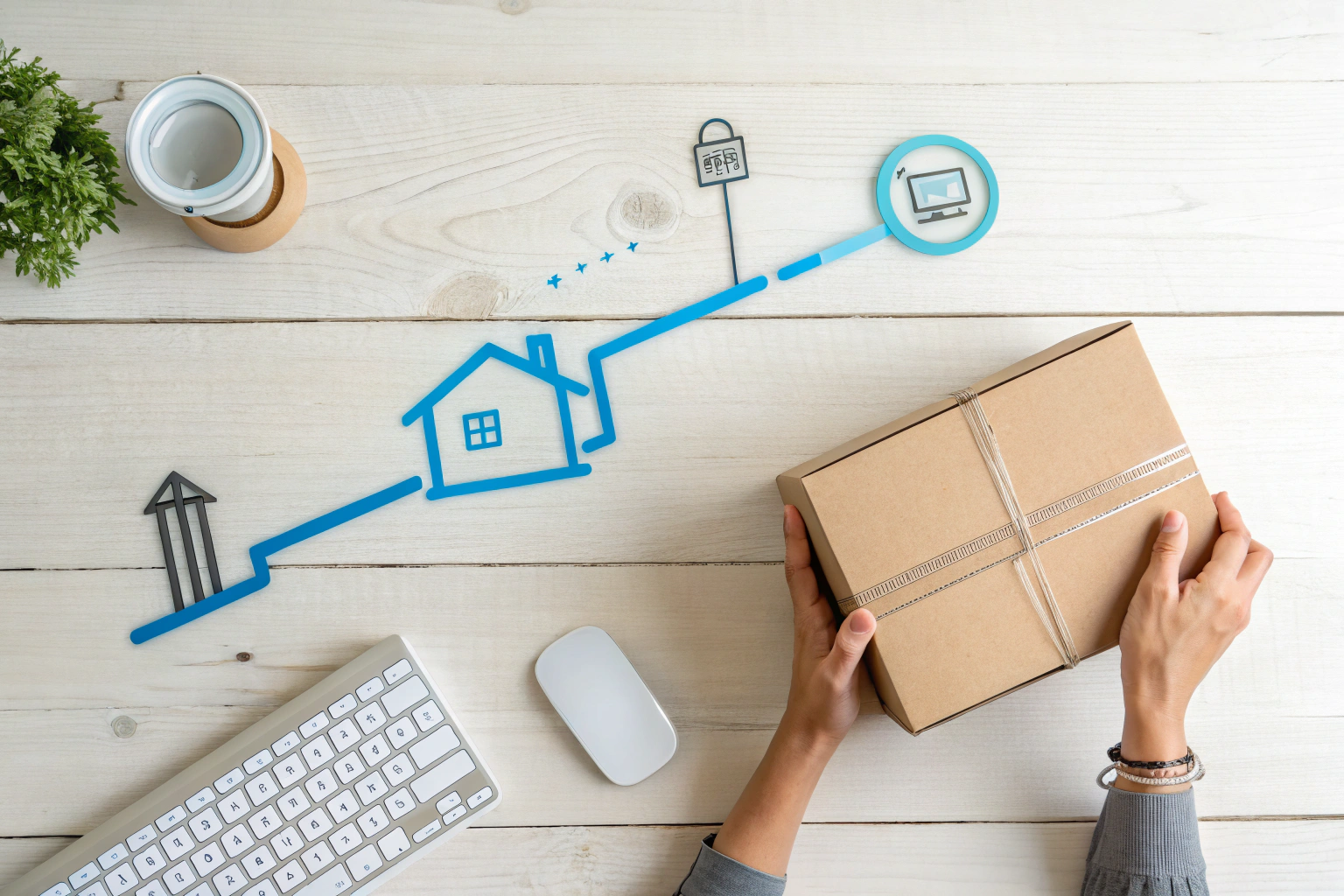
You just closed a deal with a supplier in Yiwu. The products look fantastic. The price per unit works. You are ready to scale your business. Then you open your laptop and stare at the logistics puzzle. You need a trucker in China you have never met. You need to book a container on a vessel. You need a customs broker who understands the tariff codes for your specific gifts and accessories. You need to pay duties to the government. You need a last-mile delivery truck that actually shows up on time. Each one of these tasks is a separate company, a separate phone call, and a separate chance for an expensive mistake. That fragmented process is exhausting. It kills your productivity. At GeeseCargo, we built our DDP door-to-door service to make that entire headache disappear. You replace 5 vendors and 20 emails with one fixed price and one handshake.
GeeseCargo’s DDP door-to-door service simplifies your import process by consolidating every step into a single contract. We pick up the cargo from your supplier in China. We clear Chinese export customs. We book the ocean or air freight. We clear US import customs under our own continuous bond, paying all duties upfront. We deconsolidate the container at our partner warehouse. We deliver the pallets to your final address with a liftgate truck if needed. You receive one invoice for the entire journey. You never speak to a trucking dispatcher, a customs officer, or a terminal operator. We strip away the operational chaos and leave you with a clean, predictable supply chain.
I have run logistics for American importers for many years. I know the specific points where the traditional import process breaks down. It is usually at the handoffs. The factory hands off to the trucker. The trucker hands off to the port. The port hands off to the ship. Each handoff is a moment of silence where your cargo falls into a black hole of no updates. Our door-to-door DDP eliminates the handoffs. We own the chain. I want to show you exactly how we take this complicated machine and make it feel like a simple delivery for you.
What Does "Door-to-Door" Actually Mean in a DDP Contract?
The phrase "door-to-door" gets thrown around casually in freight. Many salespeople use it to mean "port-to-door" or "airport-to-door." They skip the origin pickup. They skip the Chinese customs clearance. They tell you the door is the origin, but really it is the port. That gap forces you, the buyer, to coordinate the factory trucking yourself. You are back to square one. A true door-to-door DDP contract begins at the supplier’s loading dock. It ends at your receiving dock. Nothing is excluded. At GeeseCargo, we are strict about this definition because the first mile is often where the most damage occurs.
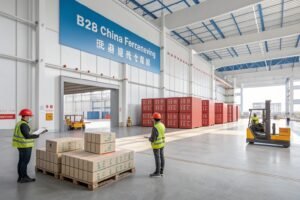
Door-to-door in a true DDP contract means the forwarder takes custody at the factory door in China and releases custody at your warehouse door in the US. It covers the factory loading, the export customs, the main carriage, the import customs, the duty payment, the port unloading, and the final delivery. GeeseCargo physically collects the cargo from your supplier. We do not ask the supplier to deliver it to a container freight station unless that is part of the consolidation plan. We manage the entire physical chain. You provide the pickup address and the delivery address. We handle the rest of the world in between.
I had a client who signed a "door-to-door" contract with a different forwarder. The forwarder told the factory to drop the goods at their warehouse in Shenzhen. The factory charged the buyer a local delivery fee. The forwarder then charged a warehouse receiving fee. The "door" started at the forwarder’s warehouse, not the factory. The buyer paid double on the first mile. That is not door-to-door. That is a clever word game. Our trucks go to the factory gate. Our driver checks the loading. The door is the factory door. Period.
How Do We Handle the Critical First Mile from Factory to Port?
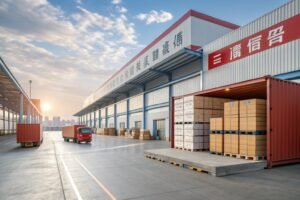
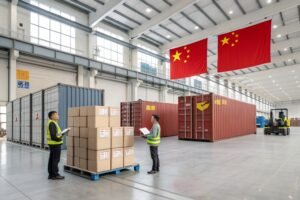
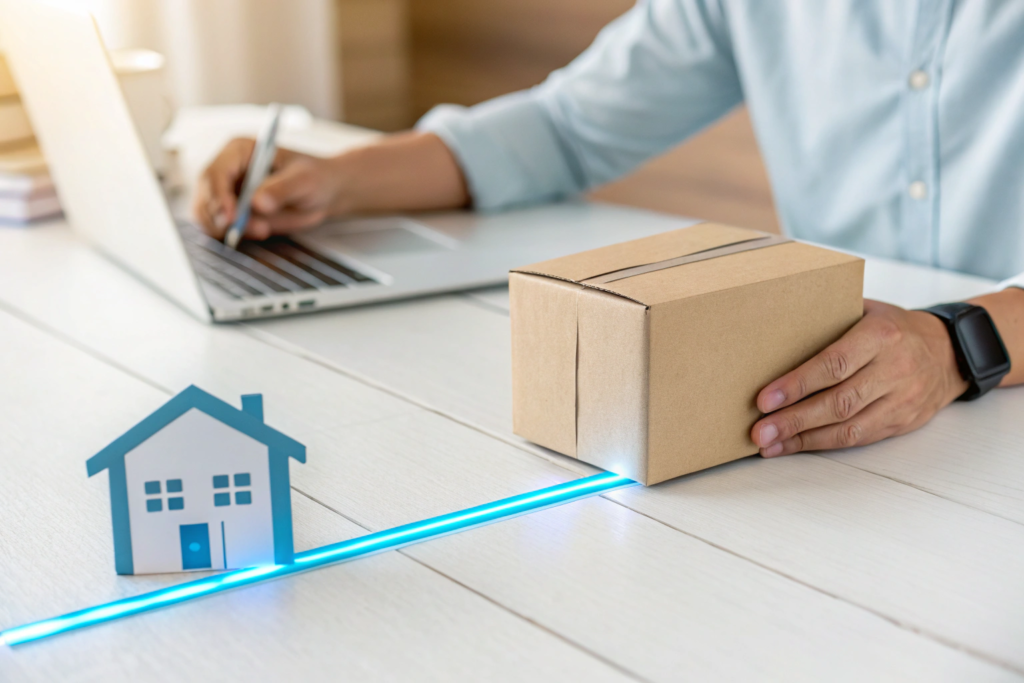
The journey from a factory in rural Guangdong to the port of Yantian can be a nightmare if unmanaged. The roads can be congested. The factory might not have a loading dock. The cartons might be loose. We solve this by sending a trusted, vetted trucking partner to the factory with a specific loading window. Our team provides the driver with a standard operating procedure. They check the container’s interior before loading. They take timestamped photos of the empty container, the half-loaded container, and the full container. They bolt on our high-security seal. They drive directly to the port and gate-in the container. We track the truck via GPS. You get a notification that your goods have left the factory and are en route to the vessel. This visibility in the first mile is rare. Most forwarders wait for the factory to tell them the goods arrived at the port. We go and get the goods ourselves. This is how we simplify the origin. We remove the supplier’s logistics incompetence from the equation. We control the first mile logistics completely.
Why Does a Single Bill of Lading Simplify Your Documentation?
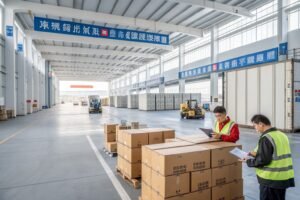
Paperwork is a silent stressor. Under a fragmented shipping model, you get a pickup receipt from the trucker, a warehouse receipt from the consolidation point, a separate Ocean Bill of Lading from the carrier, and a customs entry from the broker. You have to match them all up for your accountant. If one document has a typo in the piece count, your books are off. In our DDP door-to-door model, we issue a single House Bill of Lading that covers the entire movement from origin door to destination door. The piece count, weight, and cargo description flow from our initial factory receipt straight through to the final delivery note. There is no version mismatch. Your accounting team receives one package of documents from us. It makes your month-end reconciliation fast and painless. You are not chasing a random trucking company for a proof of delivery. We hold the master file. This document simplicity is a huge time-saver for a business owner who just wants to import from China without drowning in paper.
How Does Combining Customs Clearance Under One Roof Reduce Errors?
Customs clearance is usually a game of telephone. The factory tells their Chinese broker something. The Chinese broker tells the carrier. The carrier tells the US broker. The US broker files the entry with CBP. By the time the information reaches the government, it has been translated twice and copied four times. A single number transposed in the tariff code triggers a hold. A vague product description triggers an intensive exam. The traditional model creates errors by default because too many hands touch the data. We stop this. We house the Chinese export clearance and the US import clearance under one roof. Our team in China and our team in the US share the same digital file. They speak the same operational language.
GeeseCargo combines Chinese export clearance and US import clearance into a single, integrated workflow. We do not outsource the brokerage to independent third parties. Our in-house team classifies the goods once using the correct HS code. That classification is used for the Chinese export declaration and mirrored exactly on the US import entry. There is no data mismatch. We file the Importer Security Filing ourselves. We transmit the customs entry ourselves. This end-to-end control eliminates the data gaps that cause customs holds, exams, and fines. Your goods clear faster because the left hand knows exactly what the right hand is doing.
I remember an importer of electronic accessories who was constantly getting his containers pulled for exam. The reason was always the same. His US broker was interpreting the product description differently from the Chinese shipper. One wrote "plastic connectors." The other wrote "electronic parts." Customs saw a red flag. We took over the account. We created a single, approved product description template. Our China office ensured the factory used it on the packing list. Our US office used the exact same text on the 7501 entry. The exams stopped. The goods moved from port to door in 3 days instead of 10. That is the power of integrated customs clearance.
Why Is a Continuous Customs Bond Faster Than Single-Entry Bonds?
Speed in customs is often about trust and financial guarantees. A single-entry bond is a one-time insurance policy purchased for a specific shipment. The surety company often underwrites it manually. That takes time. Customs also treats single-entry bond filers with more scrutiny because there is no ongoing relationship. A continuous bond, like the one GeeseCargo holds, is pre-approved. It covers an unlimited number of entries for a year. When we file your entry, the bond is already in place. Customs knows the bond is good. There is no last-minute scramble to get a bond rider. We simply transmit the entry and the goods are cleared for delivery. This is a behind-the-scenes detail that you never see, but you feel it in the transit time. Our customs bond infrastructure allows us to clear a container in under 24 hours on the West Coast, assuming no examination. That speed flows directly into a faster door-to-door delivery for you.
Can a Single Point of Contact Really Fix a Customs Exam Fast?
A customs exam is a stressful event. Your container is selected. It moves to a Centralized Examination Station. The clock starts ticking. Storage fees accrue daily. In a fragmented model, the US broker tells the importer. The importer tells the forwarder. The forwarder tells the origin agent. The origin agent asks the factory for documents. The factory is asleep because it is night in China. The delay spirals. In our door-to-door model, you have one point of contact: your GeeseCargo account manager. When the exam hits, we activate our internal exam response protocol. Our US customs team immediately pulls the entry package. Our China team simultaneously contacts the factory, regardless of time zone. We provide the officer with the requested documents within hours, not days. We do not need to wait for a chain of emails to resolve. We resolve it internally. This single point of command turns a potential multi-day storage nightmare into a brief delay. You stay informed. You don’t have to manage the crisis. We manage it for you.
How Does GeeseCargo’s DDP Service Eliminate Surprise Costs?
The surprise cost is the number one enemy of a business owner. You budget $5,000 for shipping. The goods arrive. The final invoice is $7,500. The extra $2,500 comes from fees you never heard of. A chassis split fee. A congestion surcharge. A customs exam administrative fee. A liftgate fee. Each fee is small enough to argue over, but together they kill your margin. These surprises happen because traditional freight quotes are full of exclusions. They quote the ocean leg only. Everything else is a "pass-through" cost billed later. Our DDP door-to-door service is built on the principle that a quote should be a promise. We unpack all the fees before you pay.
GeeseCargo’s DDP service eliminates surprise costs by providing an all-inclusive, fixed-price quote. We audit the entire physical journey before we send you a price. We calculate the Chinese terminal handling, the export documentation fee, the peak season surcharge, the fuel factor, the US port charges, the customs broker fee, the duty payment, the warehouse strip fee, and the final trucking with liftgate. We bundle all of these into one landed cost number. If we miss a fee in our calculation, we pay it. We do not send you a post-delivery adjustment invoice. The price we agree on is the price you pay. This allows you to calculate your true product cost with 100% accuracy before you even place the purchase order.
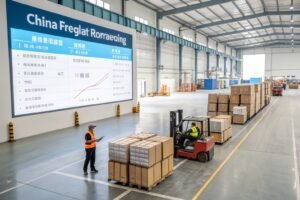
I want to be honest about how we do this. We don’t just guess. We have a proprietary landed cost calculator that we have refined over years. We plug in the HS code, the carton dimensions, the weight, the origin ZIP code, and the destination ZIP code. The tool pulls the current duty rate from the USITC database. It pulls the current terminal tariff. It pulls our contracted trucking rates. It spits out an exact number. We then review that number manually. If the route has a known congestion issue, we add a buffer. We build the buffer into the quote. You see the final number upfront. There is no asterisk. There is no fine print. We hate surprise costs as much as you do.
What Are the Common Hidden Fees in Traditional Freight Quotes?
Let me expose the dirty laundry of the freight industry. A traditional freight quote often shows a low ocean rate to win your business. It excludes the Destination Terminal Handling Charge. It excludes the Pier Pass fee for night and weekend gates in LA. It excludes the chassis rental fee. It excludes the fuel surcharge on the trucking. It excludes the customs broker’s entry fee. It excludes the bond fee. It excludes the warehouse dock fee for cross-docking. Each of these is a legitimate cost, but hiding them is illegitimate. When you compare our DDP quote to a traditional FOB or CIF quote, you must add all these items to the traditional quote to see the real comparison. We lay them out for you in a transparent spreadsheet during the sales process. We want you to see that our "higher" upfront number is actually a lower final number once you add up all the hidden extras in a cheap quote. This is how we simplify your budgeting. You see the entire shipping costs picture in one glance.
How Do We Lock In the Landed Cost for Your Apparel and Gifts?
Locking in a cost requires contractual muscle and market knowledge. We sign quarterly or project-based rate agreements with our core steamship lines. We guarantee them a volume commitment. In return, they give us a fixed FAK rate that does not change with the weekly spot market fluctuations. We pass that stability to you. For the trucking, we have fixed tariff agreements with our drayage partners. For duties, we use the legally binding tariff rate for your specific HS code. We do not inflate the duty estimate to create a hidden profit center. We pay the exact duty and send you the CBP receipt as backup if you request it. The only variable we cannot control is a sudden, mid-ocean change in Section 301 tariffs. And as I have said before, we absorb that risk under our DDP terms. We lock in your price. We carry the market volatility on our own balance sheet. That is what a reliable freight forwarder does.
What Happens at the Final Mile to Ensure a Smooth Delivery?
The final mile is where the physical promise meets the customer. You can have a perfect ocean transit. You can have a flawless customs clearance. But if the trucker shows up late, damages the pallet on the liftgate, or cannot find the warehouse, the entire experience is ruined. You are the one who faces the frustration. You are the one with a warehouse team standing idle. Many freight forwarders treat the final mile as an afterthought. They hand the container to a random drayage carrier and wash their hands. We treat the final mile as the most important leg because it is the only leg you physically see. We manage it tightly.
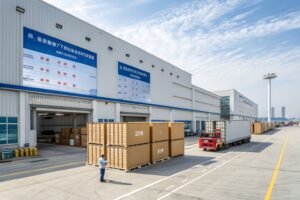
GeeseCargo ensures a smooth final mile by using a pre-vetted network of last-mile carriers and by pre-clearing delivery appointments. We do not just dispatch a truck and hope. We contact your receiving warehouse one day before delivery. We confirm the dock door hours. We confirm the equipment needed, such as a liftgate or a pallet jack. We provide the driver with a specific delivery window. We track the truck’s GPS and send you a live link. If the truck breaks down, we deploy a replacement immediately. We treat the final delivery as a precision operation, not a commodity haul. Your freight arrives on time, intact, and with a professional driver who knows how to handle palletized cargo.
I recall a delivery of gift boxes to a retail distribution center in New Jersey. The center had a strict 15-minute appointment window. The previous forwarder had missed the window three times, causing the client to receive non-compliance fines. We took over. Our dispatcher called the receiving manager the day before. We confirmed the time. Our driver arrived 10 minutes early and waited. He hit the dock at the exact minute. The delivery was flawless. The client called me to say it was the first time he had not received an angry email from his warehouse. That is the standard we aim for. The final mile is our stage. We perform on it.
Why Does a Liftgate Delivery Matter for Your Business?
Many small businesses and home-based fulfillment centers do not have a loading dock. The truck arrives, and the pallet is 4 feet off the ground. Without a liftgate, the driver says, "That’s not my job." You are stuck. You have to find a forklift or manually unload a heavy pallet box by box. It is a dangerous, time-consuming nightmare. We always qualify the delivery location before quoting. We check satellite images of your address. If we do not see a dock, we automatically include a liftgate truck in the DDP price. We do not charge it as an extra later. The driver lowers the pallet to the ground safely. You pull it into your facility with a manual pallet jack. This attention to the physical reality of your receiving setup is part of our simplification. You don’t need to know the jargon. You just need to receive your goods. We translate your physical location into the correct delivery requirements.
How Do We Handle a Refused or Damaged Shipment at the Door?
Sometimes a carton gets crushed. It happens in freight. The measure of a good forwarder is not that damage never occurs. It is how they handle it when it does. In a traditional model, the trucker tells you to note it on the delivery receipt and file a claim with the steamship line. Good luck. You will spend months chasing a claim. Under our DDP door-to-door service, we simplify the claim process entirely. If there is visible damage at the time of delivery, you note it. You take photos. You send them to your single GeeseCargo contact. We issue you a credit for the damaged goods value immediately, based on our pre-agreed insurance coverage. We then pursue the claim against the responsible party internally. You do not fight the trucker. You do not fight the ship line. You deal with us. We make you whole. The damaged box does not become a part-time job for you. It becomes an internal task for our claims department. You move on. You sell the good inventory. We handle the broken stuff.
Conclusion
Importing from China should not feel like a second job. You started your business to sell clothing, accessories, and gifts. You did not start it to become an expert in ocean freight tariffs, customs bonds, and chassis splits. The traditional, fragmented import process steals your time and your margin. It forces you to become the project manager for a team of strangers who do not communicate with each other. Our DDP door-to-door service simplifies all of this by consolidating the entire physical and regulatory chain into a single, transparent contract. We control the first mile from the factory. We run the Chinese export clearance. We book the vessel. We clear US customs under our own bond, paying duties on your behalf. We manage the final mile delivery down to the liftgate. We lock in the price so there are no surprises.
This simplicity is what we sell at GeeseCargo. We sell peace of mind through operational control. I have spent years building the team, the port relationships, and the financial infrastructure to make this possible. You get a single point of contact. You get a single invoice. You get a predictable delivery. You get your life back. I invite you to experience the difference. Visit us at geesecargo.com and let us give you a fixed DDP door-to-door quote for your next shipment. See how simple importing can be when one team carries the weight from start to finish.