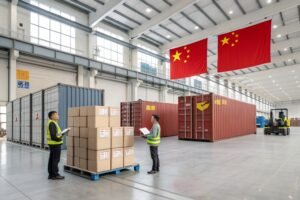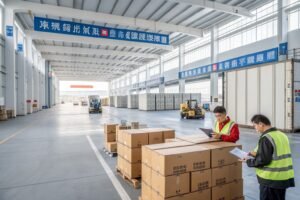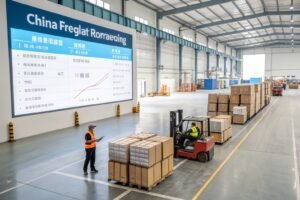
We know the feeling. You open an invoice from your current forwarder and the numbers just don’t add up. The base rate looked fine on the quote, but the final cost is bloated with accessorial charges you never saw coming. You ask for a breakdown, and the response is slow and vague. You have a container of clothing and accessories sitting at a warehouse in Shanghai, and every hour of delay eats into your profit margin. The frustration isn’t just about money. It is about the lack of control. You need a clear, competitive price. You need someone who treats your cargo like their own. But right now, you just feel like a line item on someone else’s spreadsheet. That is exactly what we fix with our RFP process at GeeseCargo.
We run a freight RFP by turning your shipping needs into a sharp, data-backed competitive bid. We don’t just blast a generic rate request to 20 carriers. We use our years of experience on European and American routes, our relationships with officials at major ports, and a deep understanding of tariff costs to negotiate a price that is both low and honest. The result is a tailored pricing package that matches your specific supply chain, removing hidden fees before they appear.
You are a 44-year-old business owner. You have built something real. You ship large volumes from China to the US. You value confidence and clarity. You are not here for smoke and mirrors. We built our RFP approach for you. It is a transparent, three-stage filter that weaponizes market data to drive the price down while locking in service quality. I want to walk you through how we do it. I will show you how we cut through the noise so you get a freight rate that makes sense for your bottom line.
What Data Must You Prepare Before a Freight RFP With China?
Before you even look at a price, you need to look at the facts. A bad RFP starts with bad data. If you ask us to bid on “clothing shipments,” we will have to guess. Guessing leads to safety buffers in the pricing. You don’t want that. You want a lean, exact number. At GeeseCargo, we refuse to start the negotiation until we have a crystal-clear picture of your physical flow. This stops suppliers from padding their rates to cover unknown risks.
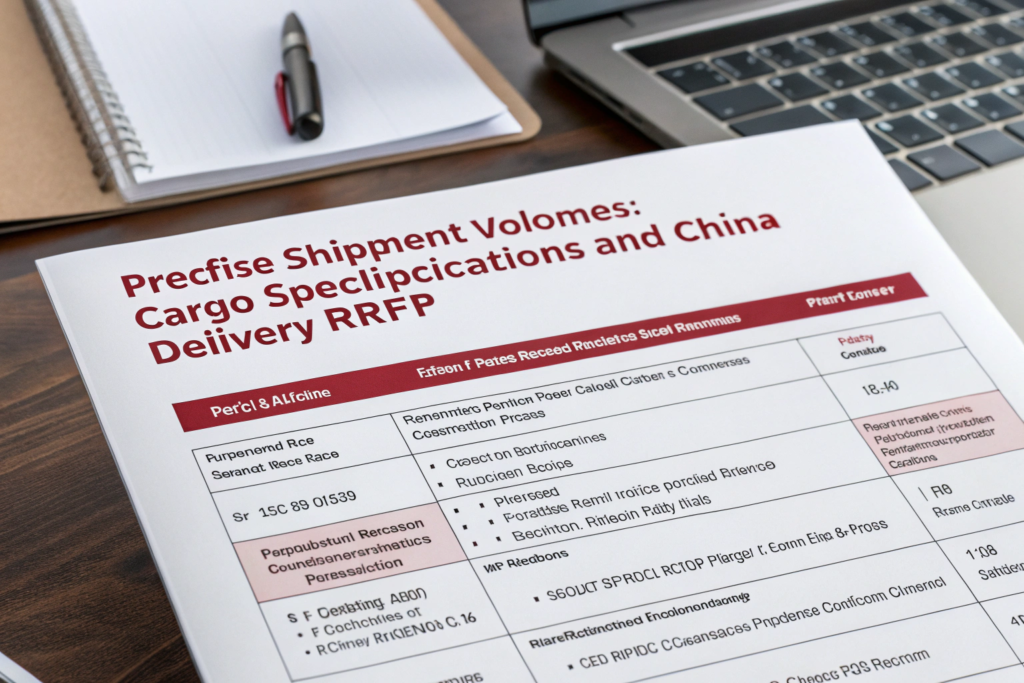
You must prepare precise shipment volumes, cargo specifications, and delivery deadlines before a freight RFP with China. You need to provide the exact HS codes for your clothing and accessories. You must share the pick-up address and the final delivery ZIP code. Without this core data, carriers will protect themselves with higher rates. GeeseCargo helps you structure this data so the carriers see zero risk and offer their absolute bottom price.
We see many owners confuse a "cheap quote" with a "good price." A cheap quote is just a number on an email. A good price is a locked-in rate that actually materializes on the final invoice. To get that good price, we need to hand the carrier a flawless shipment profile. We start by analyzing your historical shipping patterns over the last 12 months. We break this down into three distinct data buckets that matter for a China-US route.
How Do Inconsistent Cargo Forecasts Destroy Your Negotiating Power?
Spot market pricing is punishing if you ship irregularly. When we walk into a negotiation with an inconsistent spread of volume, the steamship line sees you as a "transactional" client. They will charge you a premium because there is no commitment. We fix this by aggregating your spot shipments into a block. I often sit down with clients and plan a loose "Volume Commitment" strategy. We might not sign a fixed annual contract, but we present a quarterly rolling forecast. For example, if you ship 5 containers one month and zero the next, we group that into a 30-container quarterly target. We show the carrier this aggregated number. Suddenly, you stop looking like a sporadic shipper and start looking like a mid-size buyer. This one shift in how we present your ocean freight data usually cuts the base rate by 10% to 15%.
Why Are Accurate HS Codes Critical for Avoiding Tariff Blowouts?
You import gifts and apparel. The tariff on a polyester jacket is different from a cotton jacket. A plush toy might fall under a completely different duty bracket than a plastic action figure. If we don’t lock down the HS codes before the RFP, the carrier will apply a blanket "high-risk" tariff surcharge just to stay safe. We never allow that. I ask you to send us a detailed SKU list. I get our China-based customs team to review the material composition and classification. We provide the exact 10-digit code to the bidding carriers. When they see that GeeseCargo has pre-classified the goods, they remove the unknown risk variable from their price. This prevents a tariff blowout when the goods hit US Customs. It also means we can accurately compare Landed Cost totals instead of just looking at the freight charges.
How Do You Source the Best Carrier Responses for China-US Routes?
Getting the price down is not about asking nicely. It is about creating a competitive environment where carriers feel the heat of losing the business. The route from major Chinese ports to the US is crowded with options. But quality varies wildly. You don’t just want the lowest bid. You want the ship that leaves on time and the trucker who doesn’t abandon the chassis at the rail yard. Our job is to filter out the risky cheap bids and make the premium carriers fight on price.
To source the best carrier responses for China-US routes, you target a mix of core partners and challengers. At GeeseCargo, we do not open a public bid. We privately invite three to five screened carriers who we know have vessel space and a strong track record on your specific trade lane. We leverage our relationships with port officials in Shanghai and Los Angeles to ensure the carriers submit honest transit times. This direct, curated approach stops the race-to-the-bottom pricing that sacrifices your delivery timeline.
Building a bid list is an art. You cannot just email the same spreadsheet to 20 freight forwarders. The good ones will ignore a mass mail shot. The bad ones will under-quote and hit you with surcharges later. We take a three-stage screening approach that relies heavily on our physical presence and professional network in the industry.
How Do We Vet Carriers Beyond Their Low Price Quotes?
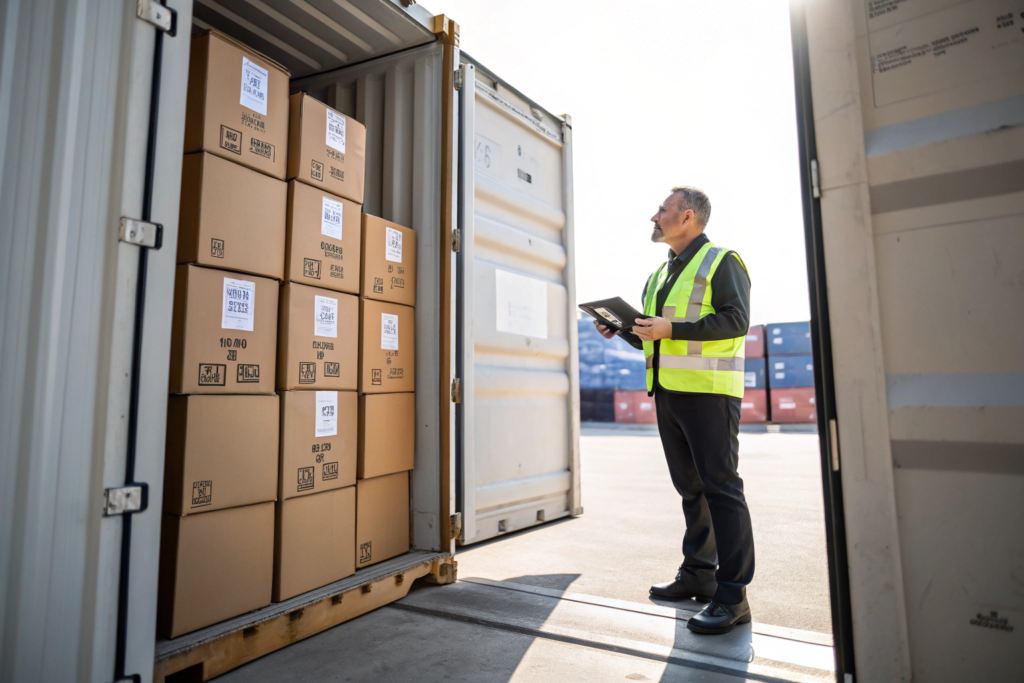
Price is a liar if you don’t check the balance sheet. We look at the financial stability of the NVOCC or trucking firm. I remember a bid round where an unknown forwarder offered a rate that was $800 cheaper. It looked beautiful. But my team in China checked their carrier bond and found it was close to expiry with a history of insurance claims. We rejected them. We always verify the Freight Forwarder license status through the FMC. We also talk to the terminal operators. Because we have officials and staff contacts at the major ports, we know if a carrier has a history of rolling cargo. If a carrier has missed three sailings in the past month, we don’t care how cheap they are. We cut them from the bid round. This protects your clothing inventory from sitting idle on a dock.
| Carrier Screening Criteria | Why It Matters for Your Rates |
|---|---|
| Financial Bond Status | Avoids risk of sudden bankruptcy or lien on cargo. |
| Historical Sailing Reliability | Prevents rolled bookings that cause missed sales windows. |
| Terminal Relationship | Ensures priority loading and faster customs clearance processing. |
Can a Narrow Bid List Actually Deliver Better Freight Rates?
It seems counter-intuitive. More bids usually mean cheaper prices. But in freight, a wide-open bid creates a "courtesy quote" culture. Carriers see they are one of 15 bidders and don’t even try. They throw a high number out, hoping to get lucky. We run a compact bid. We select a core carrier who knows 70% of your business, and we bring in two challengers who want to take that volume. We tell the incumbents, "We are consolidating the route." We tell the challengers, "This is your chance to prove your service level." We create a controlled pressure cooker. This structure forces the core carrier to sharpen their pencil to defend the turf. It forces the challengers to cut into their margin to win the lane. You get the benefit of that squeeze. You get better rates without the risk of using an untested, faceless vendor.
How Do Tariff Costs Change Your China Freight RFP Strategy?
Tariff costs are no longer a minor add-on. They are the main character in the story of your total landed cost. If your RFP focuses only on the freight rate and ignores the Trade War tariff structure, you are setting money on fire. You might pick a carrier who seems cheap on shipping but routes your goods through a port with a messy customs record. Or you might miss a legal duty-minimization strategy that your competitor is already using. Our RFP strategy flips the script. We look at the tariff first and the freight spend second.
Tariff costs force you to change the destination port and customs clearance strategy in your China freight RFP. We always run two parallel scenarios. We price the direct entry into a congested high-tariff gateway like Los Angeles. Then we price a re-route through an alternative port with lower broker fees. We also separate the customs bond costs from the freight line haul. By unbundling these fees, we identify exactly where the tariff burden sits. This allows us to legally minimize your overall tax bill through routing selection, not just shipping discounts.
Section 301 tariffs changed the game for importers of gifts and apparel. You can pay anywhere from 7.5% to 25% duty depending on the material. That means a $50,000 shipment could have a tax bill of $12,500. You cannot fix that just by saving $200 on the sea freight. We need to attack the cost structure from the inside out.

Why Should You Separate Customs Broker Fees from the Ocean Freight Bid?
Bundling is the oldest trick in the book. A carrier offers you a "DDP Door-to-Door" price that looks simple. But inside that bundle, they have marked up the customs clearance by 40% and the trucking by 25%. You can’t see it. We destroy that opacity. In our GeeseCargo RFP, we force a line-item breakdown. We separate the ocean freight, the terminal handling, the customs broker fee, and the import tariff payment. When we unbundle it, the carrier has to justify every single line. You can then see if the broker fee is inflated. We often bring in a specialist customs broker who only does apparel. They handle the clearance for a flat fee that is far cheaper than the steamship line’s default broker. This unbundling alone saves our clients hundreds of dollars per container simply by cutting out the middleman’s margin on the regulatory work.
Does Shipping to an Alternative US Port Avoid High Tariff Surcharges?
The tariff percentage is the same everywhere, but the surcharges and warehouse costs are not. The ports of LA/Long Beach get hammered by the Pier Pass and Clean Truck fees. Sometimes, a carrier adds a "congestion surcharge" that is actually just a profit center. We test this. If your distribution center is in the Midwest, we might run a bid that routes your cargo through a less congested port. We calculate the rail ramp cost versus the drayage cost at the primary port. We check the Free Trade Zone options. We present a matrix that shows the true end-to-end cost. You might see that shipping your accessories to Houston and putting them on a truck to Chicago is $400 more on the ocean side, but $600 cheaper on the duty management and warehousing side. You save a net $200. That is how you win against tariff costs. You don’t just accept the standard route. You engineer a smarter one.
How Do You Lock In a Reliable Transit Time on a China Freight RFP?
Speed without reliability is worthless. You need a transit time promise that actually sticks. A lot of freight RFPs fixate on the fastest recorded sailing. The carrier says 12 days. But that is the sea leg only. It ignores the dwell time. It ignores the cut-off dates. Then your shipment sits at the Yangshan port for 5 days because the vessel is overbooked. You miss your retail window. I have seen faces turn red because a client believed a "pier-to-pier" transit number. At GeeseCargo, we kill the nonsense by insisting on a "door-to-port availability" commitment.
To lock in a reliable transit time, you must include a free detention clause and a rolled cargo penalty in your China freight RFP. You cannot just write "12 days" in the bid sheet. You need to define the exact origin cut-off and the destination availability slots. At GeeseCargo, we write a service level agreement directly into the bid response. If the carrier rolls the booking, they pay a price. This forces the operations staff to allocate real steel on the vessel, not just a booking number on a screen.
Time equals money, but inaccuracy equals chaos. If you are shipping seasonal gifts for Christmas, a two-week delay means you are discounting your product by 50% to clear the inventory. Your freight savings disappear. We need to align the carrier’s schedule with your commercial reality.
What Penalty Clauses Ensure the Carrier Doesn’t Roll Your Cargo?
You need teeth in the contract. A standard booking confirmation is not a guarantee; it is a prayer. We insert a simple, commercial retaliation clause. If the carrier rolls the container without a force majeure reason, the rate drops by 15% on the next voyage. I do this because I know how load planners think. They overbook by 20% because they expect cancellations. They roll the customers who complain the least. When you have a penalty agreement with us, your booking gets a "Do Not Roll" flag in their system. We also manage the process physically. Our team is at the major Chinese ports. We confirm the empty container pickup 24 hours early. We confirm the terminal gate-in. We send photographic proof. This proactive supply chain monitoring stops the excuses before they start.
| Performance Metrics | Target |
|---|---|
| On-Time Gate-in Accuracy | 98% |
| Rolled Cargo Percentage | 0% |
| Late Delivery Penalty Discount | 15% of freight charges |
| Free Detention Days | 14 days standard |
Can You Use Multiple Sailing Schedules to Beat Congestion?
A single-threaded shipping plan is fragile. If you tell us you just need the cheapest slot, we fail you if the port closes for a day. We always build an RFP that asks for a primary and secondary sailing schedule. We look at the vessel schedules two weeks out. We book 70% of your volume on the fastest carrier. We book 30% on a different alliance that sails 3 days later. Why? Because alliances share vessels. If Alliance A cancels a sailing, all the cargo from that alliance is scrambling for the next slot. But your goods on Alliance B are still moving. This split strategy gives you a hedge. Yes, the rate might be $50 higher on the second carrier. But in the world of clothing imports, a sure arrival beats a "maybe" discount every time.
Conclusion
You don’t have to settle for vague rates and broken promises. You don’t have to accept that a freight invoice is a mystery you solve after your cargo has already landed. We have walked through the mechanics of how we handle an RFP. It starts with clean data. You cannot skip the homework on HS codes and shipment forecasts. It continues with a ruthless selection of carriers. We invite only the strong ones and we use our port-level contacts to scare away the liars. We look at tariff costs not as a tax you must pay blindly, but as a variable we can control by changing your entry point and unbundling the broker fees. Finally, we lock in the timeline. We use penalty clauses and split sailings to make sure your goods arrive when we say they will.
This is what professional, reliable, and competitive service actually looks like. It is not just a slogan on our website. It is a method. You are a business owner who values control and clarity. You wear the pressure of import deadlines every day. You need a partner who brings the fight to the carriers for you. I have been doing this on the China-US route for many years. I know the ports. I know the officials. I know when a price is fake and when it is real. Visit us at geesecargo.com. Let us run a freight RFP that gets you the rates you deserve, with the transparency you demand. Let’s move your cargo like we own it. Because in my head, I do.