You receive an email from your freight forwarder. "Force majeure declared." The vessel won’t sail. The port is closed. Your shipment is indefinitely delayed. You’re not a lawyer. You don’t care about the legal Latin. You care about the inventory that’s supposed to be on shelves next month. Suddenly, a term designed to protect parties from unforeseeable events becomes a shield behind which your logistics provider hides. You feel powerless. You feel betrayed. You feel the cash burning.
Force majeure in freight is a legal clause that frees carriers and forwarders from liability when extraordinary events outside their control prevent contract performance. At GeeseCargo, we don’t use it as an excuse. We handle force majeure events by activating pre-built contingency plans, securing alternative capacity, and honoring our commitment to your delivery timeline through our DDP service network.
I view force majeure differently than most in this industry. To many, it’s a get-out-of-jail-free card. To me, it’s the starting gun for a problem-solving race. When a typhoon closes a port or a labor strike halts a terminal, my first thought isn’t about legal liability. It’s about your cargo. How do I get it moving again? Let me explain how we turn this frightening legal concept into a manageable operational challenge.
What Exactly Qualifies as a Force Majeure Event in Ocean and Air Freight?
Force majeure sounds vague, but in logistics, it has specific triggers. Natural disasters. Wars and armed conflicts. Government acts like port closures or trade embargoes. Pandemics that restrict movement. Strikes by port workers or air traffic controllers. These are events that a carrier couldn’t reasonably foresee or control. When they happen, the carrier can legally suspend service without penalty.
We monitor force majeure triggers globally and classify them instantly. We don’t wait for the carrier’s legal notification. We anticipate the declaration and activate your contingency routing before the official notice hits your inbox. By the time force majeure is formally declared, your cargo is already on an alternative path.
I’ve seen too many importers learn about a force majeure event three days after it started. Their forwarder sat on the information. The forwarder waited for "official confirmation." We don’t do that. When a typhoon forms in the Pacific, I know which ports it might hit five days before landfall. I start rerouting immediately. You get a proactive phone call, not a legal letter.
How Do Natural Disasters Trigger Force Majeure at Major Asian Ports?
Typhoons in Shenzhen and Shanghai. Earthquakes in Japan. Tsunami warnings across Southeast Asia. These natural events close ports instantly. Cranes stop. Vessels flee to open water. Container terminals become inaccessible. The carrier’s obligation to load your cargo is legally suspended.
But your obligation to your customers isn’t suspended. We track weather systems obsessively. If a typhoon is projected to hit Ningbo, we accelerate your loading schedule. We pull the container early. We truck it to an alternative port outside the storm’s path. We put it on a vessel that sails before the closure. The carrier may declare force majeure, but your ocean freight is already steaming toward the US.
Can Labor Strikes and Political Unrest Be Considered Force Majeure?
Yes. Port worker strikes, customs officer walkouts, and civil unrest all fall under force majeure. These events can paralyze a terminal for weeks. Carriers aren’t liable for the delay. Your cargo sits. Demurrage clocks tick. Storage fees accumulate.
We maintain relationships with port authorities and union representatives at major gateways. We often receive early signals of labor actions before they become public. This intelligence lets us divert cargo to alternative ports. When a strike shuts down one terminal, your container is already discharging at another. The logistics network adapts before the legal clause is even cited.
How Does GeeseCargo’s Contingency Protocol Activate Before a Force Majeure Declaration?
Most forwarders are reactive. They wait for the disaster, then scramble. Our protocol is proactive. We built a global risk monitoring system that tracks weather, political stability, port congestion, and labor relations across every node in your supply chain. When a trigger threshold is crossed, our contingency plan fires automatically. We don’t need a carrier to tell us there’s a problem. We already know and we’re already acting.
Our contingency protocol identifies force majeure risks days before they materialize. We execute pre-authorized rerouting, secure alternative carrier space, and communicate the new delivery timeline to you before you even hear about the disruption. Force majeure is a legal event. Our response is an operational one.
I designed this system after watching a client lose a season to a port closure that everyone saw coming except the people paid to manage it. The weather service had warned of a super typhoon for a week. The forwarder did nothing. The port closed. The cargo sat. I promised myself that would never happen to one of my clients. Now, our protocols activate the moment a risk appears on our radar, not when it becomes a crisis.
What Risk Monitoring Systems Allow GeeseCargo to Act Before the Competition?
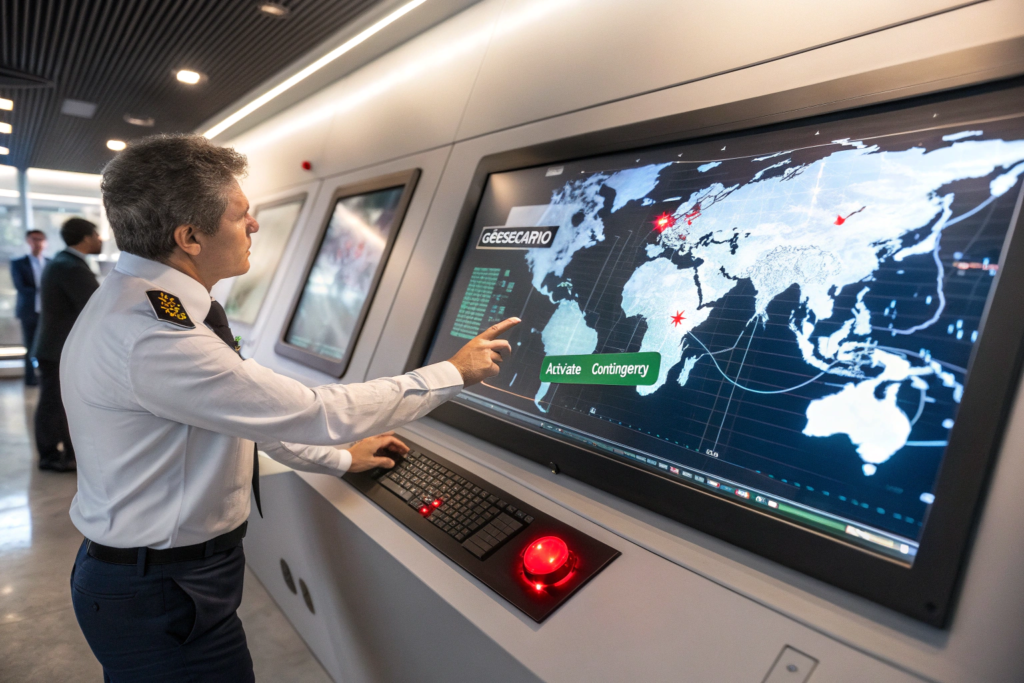
We don’t rely on news headlines. We subscribe to maritime intelligence platforms that provide real-time data on vessel movements, port conditions, weather patterns, and geopolitical risk indicators. We also maintain direct communication channels with port captains and terminal operators.
This layered intelligence gives us a time advantage. When a labor negotiation breaks down in Los Angeles, we know before the news wires. When a storm track shifts toward Shanghai, we see it on our meteorological feed. We act on this supply chain intelligence immediately. Our competitors often learn about the force majeure event from the carrier’s mass email, the same email you receive.
How Does Pre-Booked Alternative Capacity Keep Your Cargo Moving?
Knowing about a disruption is useless without an alternative. We pre-book backup capacity on secondary carriers and alternative routes as a standard practice for our contract clients. This isn’t theoretical. It’s paid, reserved space.
If your primary vessel is trapped by a port closure, we activate the backup booking. Your cargo shifts to a different vessel, a different alliance, or a different port of origin. The space is already secured. We don’t enter the spot market bidding war that erupts after a major disruption. Your freight forwarder has already reserved your seat on the lifeboat.
How Can Diversified Routing Strategies Neutralize Force Majeure Impact Zones?
A force majeure event is usually localized. A typhoon hits one port region. A strike affects one country. A canal blockage impacts one waterway. The disaster is contained geographically. Your cargo shouldn’t be trapped by it. Diversified routing means your supply chain isn’t pinned to a single geographic point that can fail.
We design your shipping strategy with geographic redundancy. If a force majeure event shuts down a primary port or route, your cargo diverts through pre-mapped secondary corridors. The disruption is contained to a location. Your goods are not.
I had a client shipping exclusively through Shanghai. When a COVID-related lockdown hit the terminal, he was frozen. We now split his volume across Shanghai, Ningbo, and Xiamen. A lockdown in any one port only affects a third of his flow. The other two-thirds maintain his inventory pipeline. This geographic diversification is the simplest, most powerful defense against localized force majeure.
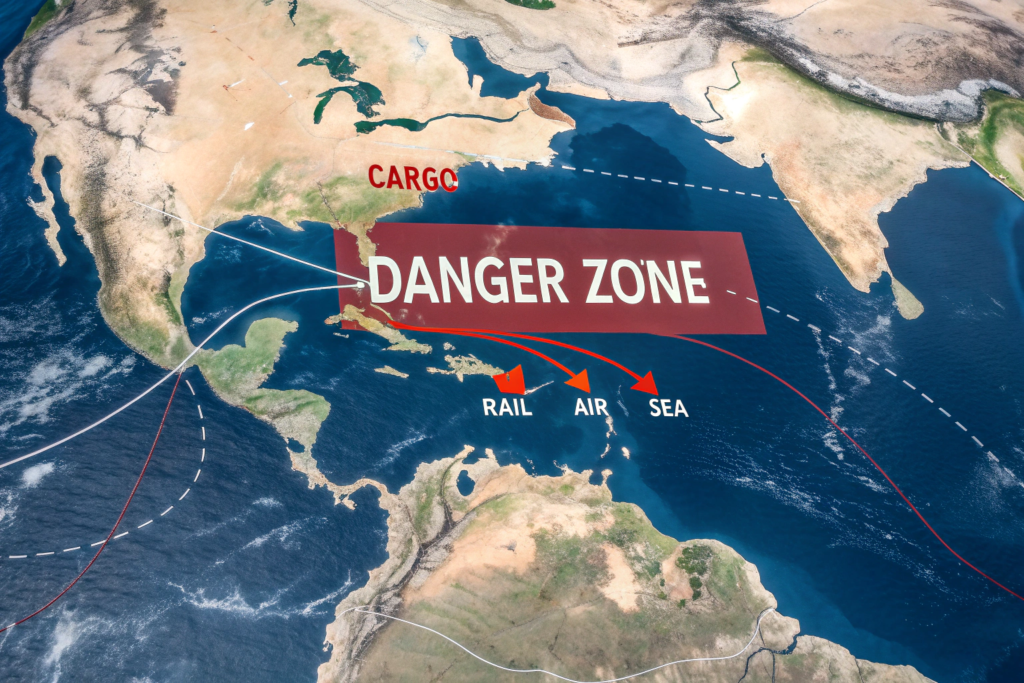
How Can the China-Europe Rail Link Serve as a Force Majeure Escape Hatch?
When ocean ports close on the Chinese coast, the trains still run. The rail link from inland China to Europe is insulated from typhoons and port strikes. It operates on fixed schedules over land.
For cargo destined for the US East Coast or Midwest, this rail link becomes a pressure release valve. We truck your goods from the factory to the rail terminal. They cross Eurasia by train. We transship in Europe and send them across the Atlantic. The ocean port closure in China becomes irrelevant. This rail freight bypass is not the cheapest option, but during a force majeure event, "moving" beats "cheapest but stuck" every time.
Is Multi-Port Discharge Planning Essential for Destination Force Majeure?
Force majeure hits destination ports too. A hurricane closes Houston. A strike shuts down LA. If your entire shipment is destined for one port, you’re trapped. Multi-port discharge planning splits your bill of lading to allow discharge at alternate gateways.
We often designate a primary and secondary discharge port on the shipping documents. If the primary is closed, the vessel proceeds to the secondary. Your cargo lands, clears customs, and delivers. The slight additional documentation cost is nothing compared to a three-week demurrage bill at a closed port.
How Does DDP Service Transfer Force Majeure Risk from You to GeeseCargo?
Under standard FOB or CIF terms, you are the Importer of Record. When force majeure strikes, the legal and financial consequences land on you. Demurrage at the destination port? Your bill. Storage fees while the strike continues? Your bill. Lost inventory due to a natural disaster? Your loss, unless your cargo insurance was perfect and the fine print favored you.
Under our DDP service, GeeseCargo assumes the Importer of Record role. We bear the financial consequences of force majeure events. Demurrage, storage, rerouting costs, and even cargo loss during a natural disaster are our risk, not yours. You pay the agreed fixed price. We manage the crisis.
This is the ultimate peace of mind I offer my clients. One of them, a giftware importer, had a container on a vessel that was caught in a port explosion. A true force majeure tragedy. Under his old FOB terms, he would have fought with insurance for months. Under our DDP terms, we handled everything. We filed the claims. We managed the recovery. His next shipment sailed on schedule. He didn’t lose a day of business.
How Does the Importer of Record Role Shift Liability During a Crisis?
As the Importer of Record, you are legally responsible for the cargo from the moment it leaves the factory. This includes liability during force majeure events. You pay the port fees. You argue with the carrier about detention charges.
When GeeseCargo is the Importer of Record, we carry that liability. We pay the unexpected costs. We negotiate with the terminal. We manage the legal interface with authorities. Your only involvement is receiving delivery updates. This customs clearance and liability shift transforms a force majeure crisis from your financial emergency into our operational task.
Can a Fixed Price DDP Contract Absorb the Financial Shock of a Disaster?
A fixed price DDP contract is a financial fortress. The price per unit is agreed upon before the shipment. It covers all costs: freight, duties, insurance, and delivery. If a force majeure event causes costs to spiral, we absorb the overrun.
Your landed cost doesn’t change. Your margin is protected. The financial shock of the disaster stays on our balance sheet, where we have the scale and expertise to manage it. This is not a standard logistics service. This is a risk transfer partnership. We take on the volatility of global shipping so you can run your DDP service based business with stable, predictable costs.
Conclusion
Force majeure is a legal term that too often becomes a shield for poor service. We’ve explored what triggers it: natural disasters, strikes, wars, and government acts. We’ve seen how carriers use it to suspend their obligations, leaving your cargo stranded and your business exposed. But we’ve also seen how a proactive logistics partner can render the term almost irrelevant to your daily operations.
At GeeseCargo, force majeure doesn’t end our responsibility. It activates our contingency protocols. We monitor risks before they become disasters. We pre-book alternative capacity so your cargo diverts, not delays. We diversify your routing so no single port or route can hold your inventory hostage. And through our DDP service, we transfer the financial risk of these extraordinary events from your books to ours.
You shouldn’t need a law degree to ship a container. You shouldn’t need to argue force majeure clauses while your shelves sit empty. I built GeeseCargo to be the partner who handles the crisis while you handle your customers. When the unexpected strikes, you’ll get a call from us with a solution, not a legal notice. Let’s discuss how to make your supply chain force majeure-proof. Contact us today.